
How to Choose a Fully Automatic Clay Bricks Making Machine: A Comprehensive Buyer’s Guide
Introducción
The clay brick industry is undergoing a quiet revolution. Gone are the days when production was synonymous with back-breaking labor and inconsistent output. Today, fully automatic clay bricks making machines are transforming workshops into streamlined, high-output factories, delivering unparalleled efficiency, consistency, and profitability. However, selecting the right machine is a critical decision—a significant capital investment that will define your business for years to come.
This guide is designed to cut through the technical complexity and marketing jargon. Compiled from industry standards, engineering specifications, and hard-won operational insights, it provides a clear, step-by-step framework for your purchase. We acknowledge the weight of this decision and promise an unbiased guide focused on one goal: helping you match a machine to your specific production goals, raw materials, and budget.
We will walk you through the essential decision factors, from foundational production planning and technical components to supplier vetting and financial analysis. By the end, you’ll be equipped to make a confident, informed choice.
Comprendiendo sus Requisitos de Producción: La Base de su Elección
Before you look at a single machine brochure, you must look inward. The most common and costly mistake is buying a machine that doesn’t fit your actual operation. This stage is about defining your needs with precision.
Defining Your Output Goals (Volume & Brick Type)
Your production targets are the primary drivers of machine size and configuration.
- Calculate Required Capacity: Move beyond vague goals. Calculate your required pieces per shiftypieces per month. Consider:
- Current market demand and confirmed orders.
- Realistic growth projections for the next 3-5 years.
- Number of working shifts per day (e.g., one 8-hour shift vs. continuous operation).
- A machine operating at 70-80% of its max capacity is often more sustainable than one running at 100% strain constantly.
- Determine Brick Types & Sizes: The product mix dictates the machine’s molding and cutting systems.
- Will you produce standard solid bricks, hollow blocks for insulation, paving bricks, or specialized interlocking blocks?
- Each type may require different extrusion pressures, die designs, and handling systems. A machine versatile enough to switch between types is valuable but may involve trade-offs in speed or complexity.
- Factor in Future Expansion: Is your plan to meet current demand, or are you building capacity for future growth? Some modular plants allow for easier capacity upgrades than others.
Analyzing Your Raw Material (Clay Composition is Key)
Your clay is not just an ingredient; it’s a specification. The machine must be engineered to handle it.
- Clay Quality is Paramount: The plasticity, moisture content, mineral composition, and presence of stones or sand drastically affect the process.
- Highly plastic clay requires different handling than sandy or shale-based material.
- The moisture content will determine the need for drying chambers and the required extrusion force.
- Material Dictates Machine Specs: Inform potential suppliers of your clay’s properties. They will need to specify:
- Mixing Unit Power: To achieve a homogeneous, aerated mix.
- Extrusion Force & Vacuum System: Harder, less plastic clays need higher pressure. A vacuum de-airing chamber is crucial for producing dense, strong bricks by removing air pockets.
- Need for Pre-Processing: You may need auxiliary equipment like crushers, rollers, or feeders to prepare your raw material for the main machine.
Site & Operational Considerations
The machine must fit into your real-world environment.
- Factory Space & Layout: Measure your available space not just for the machine, but for raw material storage, green brick drying, and finished product handling. Consider ceiling height, door access, and floor load-bearing capacity.
- Fuente de alimentación: Fully automatic machines are power-hungry. Confirm your available electrical supply (voltage, phase, amperage). A 380V, 3-phase supply is typical for industrial plants. Upgrading infrastructure can be a hidden cost.
- Labor & Skills: While automation reduces manual labor, it requires more skilled technicians for operation, monitoring, and maintenance. Assess your local labor pool for this skillset.
- Regulations & Environment: Be aware of local noise, dust emission, and wastewater regulations. Some machines come with better dust suppression and noise-dampening features.
Core Components & Features of a Fully Automatic Machine
Understanding the key subsystems will help you evaluate quality and performance beyond the sales pitch.
The Heart of the System: Automation & Control Panel
This is the “brain” of your operation. The level of automation dictates ease of use and reliability.
- PLC vs. Simpler Systems: A Programmable Logic Controller (PLC) is the industry standard for full automation. It’s a rugged industrial computer that controls the entire sequence—mixing, extrusion, cutting, and handling—with precision and reliability. Simpler relay-based systems are less expensive but far less flexible and more prone to failure.
- Interfaz Hombre-Máquina (HMI): This is the touchscreen or panel where operators interact with the machine. Look for an intuitive, graphical interface that displays real-time data, production counts, and fault diagnostics in a clear language.
- Integrated Automation: True fully automatic systems feature:
- Automatic Pallet/Carrier Circulation: Green bricks are set onto pallets that automatically cycle through the system for curing or drying.
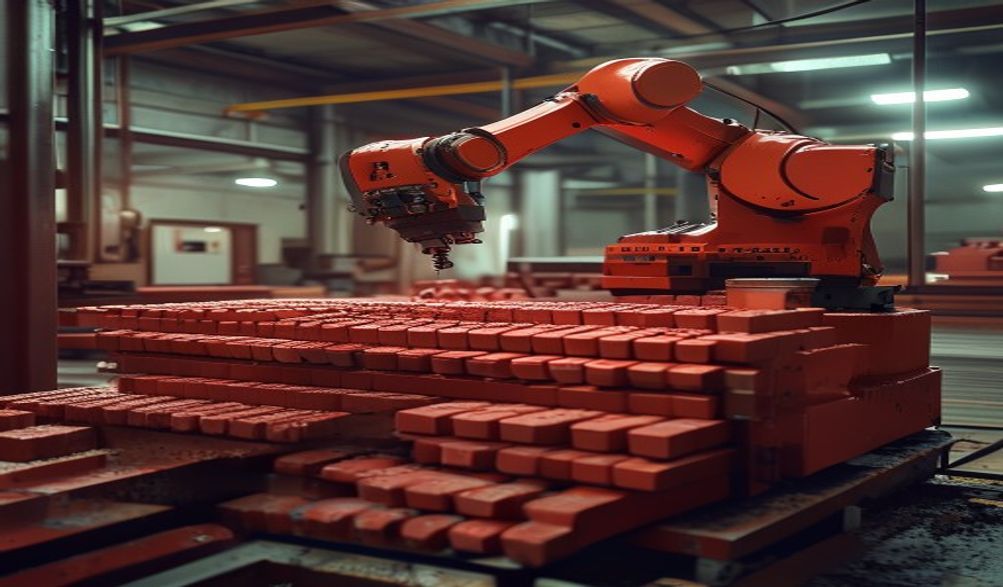
- Automatic Stacking & Unstacking: Robots or stackers arrange green bricks onto carts or kiln cars, eliminating heavy manual labor.
Key Mechanical Subsystems Explained
- Mixing & Extrusion Unit:
- Mezcladora: Look for a double-shaft mixer for a more consistent blend. Lining should be wear-resistant.
- Extruder & Vacuum Chamber: This is where the brick’s density is born. A powerful motor (measured in kW) drives the extrusion screw. The connected vacuum pump removes air, significantly increasing brick strength. Ask about the vacuum level achievable (e.g., -0.092 MPa or better).
- Sistema de Moldeo:
- Eldieomoho gives the brick its final shape. It must be made from high-chromium, hardened steel for longevity.
- Quick-Change Capability: If you produce multiple brick types, a system that allows for faster die changes minimizes downtime.
- Sistema de Corte:
- Wire-Cut Systems: Use a series of tensioned wires to slice the extruded clay column into bricks. Excellent for a smooth finish on all sides.
- Gang Cutters: Use a frame with multiple blades to stamp-cut bricks. Can be faster but may require more maintenance.
Durability & Build Quality: What to Look For
This machine will run for thousands of hours under significant stress. Build quality is non-negotiable.
- Critical Materials:
- Acero estructural The main frame should be made from heavy-duty, vibration-resistant steel sections.
- Piezas de Desgaste: Components like extrusion screws, liners, and dies should be made from hardened, alloyed steels. Ask for material specifications.
- Bearings & Gears: Use of reputable, branded bearings (e.g., SKF, NSK) is a strong indicator of quality.
- Robustness & Protection:
- The machine should feel solid, with minimal flex or shake during operation.
- Electrical components should have appropriate IP (Ingress Protection) ratings (e.g., IP65 for dust and water jets) to survive the harsh, dusty factory environment.
Navigating the Market: Types and Configurations
Stationary Fully Automatic Plants vs. High-Capacity Lines
- Stationary Fully Automatic Plants: These are the most common choice for medium to large-scale dedicated facilities. They are integrated systems where the mixer, extruder, cutter, and handling systems are all synchronized. They offer the best balance of high output and automation for most investors.
- High-Capacity Turnkey Lines: For very large-scale production, these are complete factories in a line, often with automated raw material feeding, robotic handling, and direct integration with tunnel kilns. They represent the peak of investment and automation.
Evaluating Supplier Credentials & Support
Your relationship with the manufacturer lasts decades, not just until delivery.
- Reputation & History: Research how long the company has been building brick machines. A long track record is a good sign of stability and accumulated expertise.
- Client Portfolio & References: Ask for a list of clients, preferably in your region or with similar clay. Crucially, insist on visiting an installation. See the machine running, talk to the operators, and ask about reliability and support.
- Servicio Postventa: This is arguably more important than the initial price.
- Is there a local service engineer or a dedicated support team?
- What is the guaranteed response time for technical issues?
- How readily available are spare parts, and what is their pricing policy?
- Do they provide comprehensive installation, commissioning, and on-site training?
The Role of Trials and Testing
Never buy a fully automatic brick machine without a production trial.
- Use Your Clay: Send a significant sample of your actual clay to the shortlisted suppliers. Have them run it through their machine.
- What to Observe:
- Calidad del Ladrillo: Are the bricks dense, well-formed, and free of laminations or cracks?
- Tiempo de Ciclo y Producción: Does the machine meet the promised production rate?
- Facilidad de Operación: Is the control system intuitive?
- Noise & Dust Levels: Is the working environment acceptable?
- Desperdicio de Material: How much clay is lost in the process?
Financial Analysis & Making the Final Decision
Understanding the Total Cost of Ownership (TCO)
The purchase price is just the entry ticket.
- Costos Iniciales: Machine price, shipping, insurance, import duties (if applicable).
- Instalación y Puesta en Marcha: Foundation work, electrical hookup, assembly, and calibration by technicians (often an extra cost).
- Costos Operativos: Electrical power consumption, water usage, lubricants, and routine maintenance supplies.
- Lifecycle Costs: The cost and frequency of replacing wear parts (dies, screws, wires), major overhauls, and potential downtime.
ROI Calculation: From Investment to Profit
A more expensive, robust machine with higher output and lower downtime can have a far better ROI than a cheaper, problematic one.
- Key Variables for Your Projection:
- Increased Output Value: Revenue from higher production volumes.
- Ahorro de Mano de Obra: Reduced wages from automated handling.
- Quality & Waste Reduction: Higher yield of first-quality bricks and less breakage.
- Consistencia: Reliable production allows for better business planning and customer contracts.
- Create a simple 3-5 year model comparing the TCO against projected increased profits.
Final Checklist Before Purchase
Use this list to compare final contenders:
- [ ] Production capacity matches my 5-year goal.
- [ ] Machine successfully passed a trial with mi clay.
- [ ] PLC control with user-friendly HMI is included.
- [ ] Key wear parts are made from specified hardened materials.
- [ ] Supplier provided verifiable client references and a site visit was conducted.
- [ ] Detailed after-sales service agreement is in writing, covering parts availability and support response.
- [ ] Total Cost of Ownership (TCO) and ROI projection is favorable.
- [ ] Contract clearly states warranty period, payment milestones tied to delivery/commissioning, and penalty clauses for delays.
Frequently Asked Questions (FAQ)
Q1: What is the typical price range for a fully automatic clay brick machine?
A: Prices vary enormously based on capacity, automation level, and brand, ranging from approximately $50,000 for a basic model to over $500,000 for a high-capacity turnkey line. Focusing solely on the sticker price is misleading. A comprehensive Total Cost of Ownership (TCO) analysis, which includes operational and maintenance costs, is far more important for long-term profitability.
Q2: How much manpower is required to operate a fully automatic plant?
A: A significant advantage of full automation is labor reduction. A typical setup might require only 2 to 4 skilled personnel per shift to oversee operations, monitor the control panel, perform basic maintenance, and manage material feeding and product off-take. This is a drastic reduction compared to semi-automatic operations.
Q3: What is the lead time from order to commissioning?
A: Generally, expect 3 to 8 months. This timeline depends on the machine’s complexity, level of customization, the manufacturer’s production schedule, and international shipping and customs clearance. Always get a detailed, written delivery schedule from the supplier.
Q4: Can one machine produce multiple brick types and sizes?
A: Yes, most machines are designed for flexibility. By using interchangeable molds (dies), you can produce different brick types and sizes. However, consider the time and labor required for changeover and the additional cost of purchasing multiple sets of tooling. Discuss modularity options with your supplier.
Q5: How do I ensure the machine works with my local clay?
A: This is the most critical step. Insist on a material test and a full production trial using a sample of your specific clay. This is the only way to verify brick quality, output rates, and system compatibility. A reputable supplier will encourage this.
Conclusión
Choosing the right fully automatic clay bricks making machine boils down to a single principle: the “best” machine is the one that optimally aligns with your unique production profile, not merely the most expensive or feature-rich model. It is a strategic investment in the future of your business.
Move forward by systematically working through the steps outlined here. Define your needs with rigor, research the core components with a critical eye, vet suppliers on their support capabilities as much as their technology, and analyze the finances with a long-term perspective.
Remember, this purchase is the beginning of a long-term technical partnership. Prioritize manufacturers who demonstrate proven expertise, offer transparent and reliable support, and show a genuine commitment to your operational success. When in doubt, consult with an independent industry expert to review your final plans. Your due diligence today will pave the way for a profitable and efficient operation for years to come.
<