
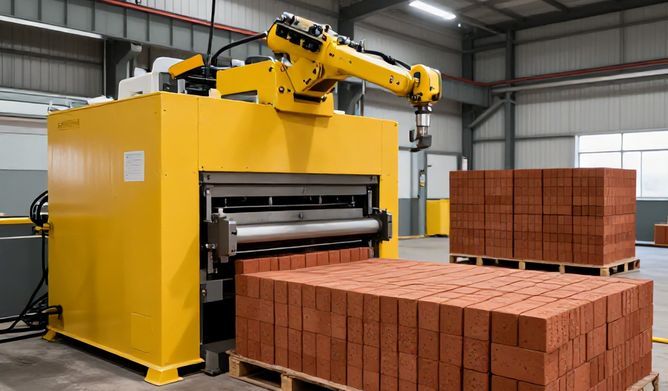
The Complete Guide to Bricks Machine Making: Inside the FUDA Brick Making Factory
Introducción
Navigating the world of industrial brick production can be a complex endeavor. This comprehensive guide is written based on years of direct industry experience and in-depth analysis of modern brick manufacturing. We will take you inside the operations of a leading manufacturer, the FUDA brick making factory, to explore the machinery, processes, and expertise that define efficient, high-quality brick production. Whether you are a construction professional sourcing materials, a project manager overseeing a build, or an entrepreneur evaluating a capital investment, this guide provides authoritative and trustworthy insights. By dissecting the ecosystem of bricks machine making through the lens of an established factory, we aim to equip you with the knowledge to make informed decisions in this foundational industry.
Understanding Modern Brick Manufacturing: From Clay to Construction
The journey from raw earth to a precisely formed building block is a marvel of engineering. Modern brick manufacturing is a symphony of material science, mechanical force, and controlled curing, a far cry from the manual processes of the past.
The Evolution of Brick Making: Hand-Molding to Full Automation
For millennia, brick making was a labor-intensive craft. The industrial revolution introduced steam-powered presses, but the true transformation came with full automation. Today’s automated brick making plants, like those designed by FUDA, address critical market demands: unprecedented consistency, massive scale, and reduced reliance on skilled manual labor. This evolution was driven by global construction booms and the need for standardized, affordable, and readily available building materials.
Core Raw Materials for Quality Bricks
The raw material is the soul of the brick, and the machine is its sculptor. The primary materials include:
- Arcilla: The traditional choice, offering excellent durability and a classic aesthetic.
- Shale: A fine-grained sedimentary rock that produces strong, dense bricks.
- Cenizas Volantes: A coal combustion by-product, enabling eco-friendly, high-strength bricks.
- Concreto: A mixture of cement, aggregates, and water for versatile concrete blocks and pavers.
A key aspect of expert machine operation is adjusting parameters—such as moisture content, compression force, and vibration frequency—to suit the specific properties of each material. A machine calibrated for soft clay will perform poorly with a dry concrete mix, highlighting the need for adaptable technology.
Why Automated Brick Making Machines are a Game-Changer
The shift to automation is not merely a convenience; it’s a strategic overhaul. The benefits are clear:
- Consistencia: Every brick from an automated line meets exact dimensional and strength tolerances, eliminating the variability of manual production.
- Escala: Machines can operate 24/7, producing thousands of uniform bricks per hour, a volume impossible to achieve manually.
- Eficiencia Laboral: Automation reduces the workforce needed for molding and handling, reallocating human skill to machine oversight, quality control, and maintenance.
- Relación Costo-Beneficio: While the initial investment is significant, the long-term reduction in labor costs, waste, and rework delivers a superior return on investment (ROI).
Inside the FUDA Brick Making Factory: A Model of Efficiency
To understand the principles of excellence in bricks machine making, one can look to the operations of an established manufacturer. The FUDA brick making factory serves as a practical case study in integrated, quality-focused production.
An Overview of FUDA’s Manufacturing Philosophy
FUDA’s approach is built on a triad of core principles:
- Ingeniería de Precisión: Machines are designed for robust performance and precise control over every production variable.
- Durabilidad: Utilizing high-grade steel components and proven hydraulic systems to ensure longevity in demanding industrial environments.
- Comprehensive Support: A philosophy that the sale is the beginning of the relationship, backed by after-sales service, technical training, and readily available spare parts.
The Production Line: A Step-by-Step Walkthrough
A tour through a model FUDA plant reveals a seamless, linear process:
- Raw Material Feeding & Primary Crushing: Bulk materials are fed into crushers to achieve a uniform, manageable size.
- Mezcla y Homogenización: Materials move to a mixer (pan or twin-shaft) where water and additives are blended to create a perfectly consistent, plastic mix.
- Moldeo/Conformado: The heart of the process. The mix is conveyed to the brick making machine—be it an extruder for clay or a vibratory press for concrete—where it is subjected to high pressure and vibration within a mold to form the green brick.
- Curado: The formed bricks are transferred to a curing rack or chamber. For concrete blocks, this is often a low-pressure steam cure for 12-24 hours to achieve initial strength. Clay bricks proceed to drying and kiln firing.
- Paletizado y Almacenamiento: The cured bricks are automatically stacked onto pallets by robotic stackers, ready for wrapping, storage, and shipment.
Quality Control Protocols at an Industry Leader
Quality is not an afterthought but an embedded process. Industry practice at a facility like FUDA involves rigorous, standardized testing:
- Resistencia a la Compresión: Samples are crushed in a press to measure their load-bearing capacity, reported in Megapascals (MPa), often exceeding local building code requirements (e.g., ASTM C67 in the US).
- Precisión Dimensional: A sample from each production batch is checked with precision calipers to ensure length, width, and height are within strict tolerances (typically ±1-2mm).
- Absorción de Agua: Bricks are weighed, saturated with water, and weighed again. A lower absorption rate generally indicates higher durability and frost resistance.
Key Machinery in the FUDA Brick Making Machine Lineup
The capability of a plant is defined by its machinery. FUDA, like other leading manufacturers, offers a range of equipment tailored to different products and production scales.
Clay Brick Making Machines: Features and Specifications
For traditional clay brick production, the core technology is the extruder. A FUDA clay brick line typically includes:
- Extrusora al Vacío: Removes air from the clay mixture, creating a denser, stronger column of material.
- Auto Cutter: Precisely slices the extruded clay column into individual bricks using wires or blades.
- Specific Models: These may range from smaller, de-airing extruders for artisanal production to fully automated tunnel kiln systems for mass production.
Concrete Block Making Machines: From Hollow Blocks to Pavers
This is where vibratory press technology shines. A FUDA concrete block machine uses a dual-action process: high hydraulic pressure compacts the mix, while simultaneous vibration removes air pockets and ensures flawless mold filling.
- Versatilidad del Molde: The true power lies in interchangeable molds. One machine can produce hollow blocks, solid blocks, interlocking pavers, curb stones, and landscaping products by simply changing the mold box.
- Capacidad de Salida: Models are defined by their cycle time and number of bricks per cycle. A standard machine might produce 4-6 blocks per 15-20 second cycle, translating to over 10,000 standard blocks in an 8-hour shift.
Automatic Fly Ash Brick Making Machines: Eco-Friendly Production
These machines specialize in utilizing industrial by-products. FUDA’s fly ash brick presses are engineered to optimally compact a mix of fly ash, lime, gypsum, and sand.
- El Proceso: The chemical reaction (pozzolanic reaction) between fly ash and lime, aided by pressure and steam curing, creates bricks with excellent strength and a smooth finish.
- Sustainability Angle: This process provides a valuable use for fly ash, diverting it from landfills and reducing the environmental footprint of construction.
Essential Auxiliary Equipment: Mixers, Crushers, and Stackers
The brick making machine is the star, but the supporting cast is vital for a fully automated plant (FAP).
- Mezcladores: Ensure a homogenous blend of raw materials.
- Trituradoras y Cribas: Process raw materials to the correct size.
- Block Stackers/Robotic Palletizers: Automatically organize and transfer cured bricks, eliminating the most labor-intensive part of the process.
- Batching Systems & Conveyors: Tie the entire line together into a continuous flow.
Choosing the Right Brick Making Machine for Your Project
Selecting machinery is a critical investment decision. Here is practical, experience-based advice to guide your evaluation.
Assessing Your Production Needs: Output, Brick Type, and Space
Begin by answering these key questions:
* What is my target daily or monthly production volume?
* What specific brick types and sizes do I need to produce (e.g., hollow block, paver, solid brick)?
* What is the physical space available for the production line and raw material storage?
* What are my local power and water supply capabilities?
Manual, Semi-Automatic, vs. Fully Automatic: A Cost-Benefit Analysis
- Manual/Small Mobile Machines: Lowest capital cost, high labor requirement, low output. Suitable for very small-scale or on-site projects.
- Máquinas Semiautomáticas: Moderate investment. Operators feed molds and remove bricks, but compression is automated. Good balance for medium-scale startups.
- Fully Automatic Machines (FAP): Highest initial investment. Automated from feeding to stacking. Delivers the highest output with minimal labor, offering the best long-term ROI for serious production. FUDA’s range typically caters to the semi- and fully-automatic segments.
Especificaciones Técnicas Críticas a Evaluar
Look beyond the brochure. Scrutinize these details:
* Tiempo de Ciclo: Seconds per production cycle. Directly impacts hourly output.
* Presión (Tonelaje): The compaction force (e.g., 150-ton press). Higher tonnage generally produces denser, stronger bricks.
* Requisitos de Energía: Total connected load (in kW) for the entire line.
* Tamaño del Palet: Determines the footprint of the curing and storage area.
* Mold Changeover Time: How quickly can you switch product types?
The Importance of Supplier Reputation and Service
The machine is only as good as the company behind it. Use a supplier like FUDA as a benchmark for what to look for:
- Experiencia en Manufactura: Do they design and build the machines themselves?
- Warranty & Guarantee: What is covered and for how long?
- Disponibilidad de Piezas: Is there a local or responsive central parts depot?
- Technical Training: Do they provide comprehensive training for your operators and maintenance staff?
- Installation & Commissioning Support: Will they send engineers to set up the plant and ensure it runs correctly?
Maximizing ROI with Your Brick Making Machine
Protecting your investment requires diligent operation and maintenance.
Best Practices for Machine Operation and Maintenance
- Daily Checks: Inspect for hydraulic leaks, loose bolts, and wear on mold liners and vibration mounts.
- Strict Lubrication Schedule: Follow the manual for greasing bearings, gears, and guide rails.
- Mold Care: Clean molds thoroughly after each shift to prevent material buildup. Store them properly when not in use.
- Capacitación de Operadores: Ensure all personnel understand startup, shutdown, and safety procedures.
Optimizing Raw Material Mixes for Cost and Performance
The recipe matters. Small adjustments can reduce cost without sacrificing quality.
* Conduct trial batches to find the minimum cement content needed for target strength.
* Use locally available aggregates and by-products (like fly ash) to lower material costs.
* Precisely control water content; too much weakens the brick, too little causes poor compaction.
Troubleshooting Common Brick Making Machine Issues
- Poor Compaction/Weak Bricks: Check material mix (too dry?), compression pressure, and vibration frequency.
- Surface Cracks: Often caused by too-rapid drying or an incorrect mix design. Review curing process and material ratios.
- Dimensional Flaws: Worn mold liners, misaligned feed shoes, or incorrect pallet height can cause size variations. Regular inspection is key.
FAQ: Your Questions on Bricks Machine Making Answered
Q: What is the average production capacity of a FUDA automatic brick making machine?
A: Capacity varies significantly by model and brick type. A standard concrete block machine might produce 8,000 to 15,000 pieces per 8-hour shift, while a high-capacity plant can exceed 30,000. Always refer to the specific technical data sheet for the model you are considering.
Q: How long does it take to set up and commission a new brick plant?
A: For a semi- or fully-automatic line, expect 4 to 8 weeks from delivery to production. This includes foundation work, machine installation, utility connection, and operator training. Reputable suppliers like FUDA provide detailed layout plans and often send engineers to supervise installation.
Q: Can one machine produce different types and sizes of bricks?
A: Yes, this is a major advantage of modern machines. By using interchangeable mold boxes, a single press can produce hundreds of different block, paver, and brick styles. FUDA’s systems are designed for relatively quick mold changeovers to maximize plant flexibility.
Q: What is the expected lifespan of a well-maintained brick making machine?
A: With proper operation and a strict preventive maintenance schedule, the core machine (press, frame, hydraulic system) can last 10 to 15 years or more. Wear parts like mold liners, vibration motors, and seals will need periodic replacement.
Q: How does FUDA ensure the durability and low maintenance of its machines?
A: Durability is engineered in through the use of high-grade steel plates and castings for critical components, precision CNC machining for alignment, and the selection of robust, name-brand hydraulic and electrical systems. This is complemented by structured service programs that provide scheduled maintenance guidance.
Conclusión
Investing in brick making machinery is a significant decision that hinges on a deep understanding of technology, process, and supplier reliability. As we’ve explored through the lens of the FUDA brick making factory, success in automated brick production is not about a single machine, but about a synergistic system. It combines robust engineering, precise operation, steadfast partner support, and an unwavering commitment to quality control. By prioritizing durable machinery from experienced manufacturers and adhering to operational best practices, businesses can build a truly solid foundation for long-term productivity and profitability in the vital construction materials industry. For any specific project, the final, most crucial step is to engage directly with technical experts to match the perfect machine to your unique requirements.
<