
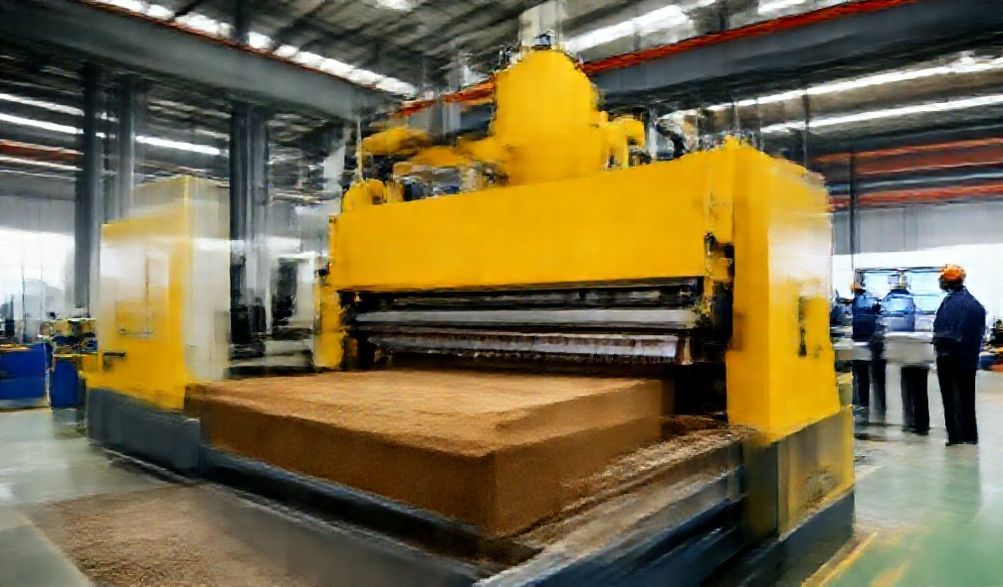
The Complete Guide to China’s Mud Bricks Making Machine Factory: Spotlight on FUDA Block Making Factory
In an era defined by the urgent need for sustainable and cost-effective building solutions, ancient materials are being reimagined with modern technology. Mud bricks, or more precisely, Compressed Earth Blocks (CEBs), are at the forefront of this green construction revolution. Offering remarkable thermal mass, low embodied energy, and significant material cost savings, CEBs present a viable future for building worldwide. However, the success of any earth-based construction project hinges on one critical factor: the quality and reliability of the brick production machinery.
As the undisputed global manufacturing hub, China produces a vast majority of the world’s construction equipment, with specialized factories leading the charge in innovation, scale, and value. For procurement officers, construction entrepreneurs, and builders looking to source this essential machinery, navigating this industrial landscape is key. This guide serves as your comprehensive resource. We will delve into the intricacies of mud brick making machines, explore what makes a leading manufacturer like the Fábrica de bloques FUDA a significant player, and provide a clear roadmap for making an informed, successful sourcing decision. By the end, you’ll understand machine types, factory capabilities, and the crucial considerations for partnering with a Chinese manufacturer.
Understanding Mud Brick (CEB) Making Machinery
Before evaluating factories, a firm grasp of the machinery itself is essential. This foundational knowledge empowers you to ask the right questions and assess a manufacturer’s true expertise.
What is a Mud Brick Making Machine?
At its core, a mud brick making machine is a device that compresses raw, damp earth—typically a blend of soil, clay, and sand—into high-density, geometrically uniform blocks. A small percentage of a stabilizer, like cement or lime (often 5-10%), is frequently added to enhance durability and water resistance.
- Key Differentiator from Fired Bricks: Unlike traditional clay bricks, CEBs are not fired in a kiln. The structural integrity comes from mechanical compression, eliminating the massive energy consumption and emissions associated with kiln firing.
- Key Differentiator from Concrete Blocks: While concrete blocks use Portland cement as a primary binder, CEBs use locally sourced soil as the main ingredient (over 90%), with cement acting only as a stabilizer. This makes them far more sustainable and often cheaper, depending on local material costs.
Core Types of Machines from a Factory like FUDA
Chinese factories like FUDA typically cater to a spectrum of needs, from small entrepreneurial ventures to large-scale industrial projects. The machinery falls into three broad categories:
- Prensas Manuales: These are low-capacity, lever or toggle-operated machines. Ideal for community projects, self-build homes, or very small businesses, they require significant human effort but have a very low initial cost and no power requirements.
- Máquinas Semiautomáticas: This is the most common category for serious small-to-medium enterprises. These electrically powered machines use hydraulic systems to apply consistent, high pressure. An operator feeds material and removes blocks, but the compression cycle is automated, ensuring uniform block quality and higher output than manual presses.
- Líneas de Producción Completamente Automáticas: This is where a large-scale factory like FUDA demonstrates its industrial capability. These are integrated systems where soil is automatically fed, mixed, conveyed to the press, compressed, ejected, and stacked onto pallets by robotic arms. Designed for maximum output with minimal labor, these lines represent the pinnacle of efficiency for high-volume commercial production.
Componentes Clave y Cómo Funcionan
Understanding the basic workflow and critical components helps in evaluating machine quality:
- Soil Preparation & Mixing: Raw soil is sieved and blended with the correct proportions of sand, clay, and stabilizer in a pan or paddle mixer.
- Alimentación: The moist mix is fed into the machine’s hopper, either manually or via conveyor.
- Compresión: The heart of the process. A hydraulic cylinder (in most industrial machines) exerts immense pressure (often measured in tons) on the soil within a precision-engineered steel mold/die. This pressure densifies the soil particles, forming a solid block.
- Eyección: The newly formed block is pushed out of the mold onto a platform or conveyor belt.
- Curado: Blocks are stacked and kept moist for a period (usually 14-28 days) to allow the stabilizer to fully hydrate and gain strength.
Componentes Críticos a Examinar:
* Sistema Hidráulico: The quality of the pump, valves, and cylinders determines pressure consistency and long-term reliability.
* Mold/Die Design: High-hardness, precision-machined steel molds are crucial for producing sharp-edged, dimensionally accurate blocks and withstanding wear.
* Sistema de Control: From simple relay logic to advanced Programmable Logic Controllers (PLC) with touchscreen interfaces for monitoring pressure, cycle time, and output.
* Marco Estructural: A heavy-duty, welded steel frame is necessary to withstand constant vibration and pressure without deformation.
Inside a Leading Manufacturer: The FUDA Block Making Factory
Moving from general machinery to a specific manufacturer adds concrete context. While this guide is informational, examining a factory like FUDA illustrates the hallmarks of a capable Chinese supplier.
FUDA’s Position in the Chinese Industrial Landscape
Factories specializing in block machinery are often clustered in major industrial provinces like Shandong, Fujian, or Guangdong. A manufacturer like FUDA is not a general machinery trader but a focused entity with deep domain expertise. Industry practice shows that such factories typically possess:
- Significant Scale: Operating from a large factory complex with dedicated workshops for fabrication, assembly, painting, and testing.
- Longitudinal Experience: Often established for a decade or more, giving them accumulated knowledge in metallurgy, hydraulic systems, and the practical demands of block production across different global markets.
- Export Focus: Their business model is built on serving an international clientele, which shapes their approach to documentation, packaging, and support.
Core Product Range and Technological Expertise
A factory’s catalog reveals its capabilities. A prominent manufacturer like FUDA would likely offer:
- A Comprehensive Model Line: Ranging from semi-automatic single-pallet machines (producing ~1000 blocks per 8-hour shift) to fully automatic, multi-layer palletizing lines (producing 10,000+ blocks per shift).
- Versatility in Output: Machines capable of producing not just standard rectangular CEBs, but also interlocking blocks for dry-stack construction, hollow blocks for insulation, and various paving stone shapes—all by changing the mold.
- Technological Hallmarks:
- Control PLC For easy operation, diagnostics, and parameter adjustment.
- Diseños de Eficiencia Energética: Such as variable displacement hydraulic pumps that save electricity.
- High-Pressure Systems: Capable of achieving the compression force needed for high-strength blocks.
- Construcción Duradera: Use of branded bearings, seals, and hardened steel for high-wear parts.
Demonstrating Experience: A credible factory will emphasize its R&D department for continuous improvement, a strict quality control process (often referencing ISO 9001 standards), and the use of CNC machines for precision part manufacturing. They should readily provide material certificates for critical components.
From Factory Floor to Global Client: FUDA’s Capabilities
The true test of a factory is its ability to deliver a working solution to your doorstep.
- Production Capacity & Customization: Can they handle a 10-container order? Can they modify a machine’s electrical system for 480V/60Hz or build a custom mold for a unique block design? A strong factory says “yes.”
- Testing & Quality Assurance: Before shipment, every machine should undergo a full no-load and load test. This means running the machine with actual block-making material to verify performance, pressure, and output rate, with video evidence provided to the client.
- Export Readiness: This includes professional export-standard packaging (wooden crate with steel frame, waterproof wrapping), complete shipping documentation (commercial invoice, packing list, bill of lading, certificate of origin), and experience navigating customs procedures for key markets.
Key Considerations When Sourcing from a Chinese Factory
Armed with product knowledge, your focus shifts to the procurement process. This is where due diligence separates successful projects from costly mistakes.
Defining Your Project Requirements
Clarity here prevents misunderstandings. Have answers to these questions ready:
* Salida: How many blocks do you need per hour or per 8-hour shift?
* Soil Profile: What is the general composition of your local soil (sandy, clayey, silty)? Can you provide a sample for testing?
* Especificaciones del Bloque: Desired dimensions, shape, and final compressive strength.
* Condiciones del Sitio: Available power supply (voltage, phase), factory space, and labor skill level.
* Presupuesto: Total investment cap, including machine, shipping, import duties, and installation.
Evaluating a Factory Like FUDA: A Due Diligence Checklist
Treat the factory selection as a partnership audit.
- Auditoría de Fábrica: Insist on a live video tour of the production floor, not just a promotional video. Look for organization, modern equipment, and inventory of raw materials and parts.
- Documentación Técnica: Request sample manuals, electrical diagrams, and parts lists. Are they available in clear, understandable English? This is a strong indicator of export experience.
- Estructura del Servicio Postventa: Get specific answers on:
- Garantía: What is covered (e.g., 12 months for main parts like hydraulic cylinder, frame)? What is excluded (wear parts like molds)?
- Refacciones: How quickly can common spare parts be shipped? Is there an online parts catalog?
- Support: Do they provide installation drawings and video guides? Is remote troubleshooting via video call (e.g., WhatsApp, Zoom) available? Will they send an engineer for onsite installation (at what cost)?
Navigating Logistics, Communication, and Payment
- Communication: Use clear, simple English in emails. For technical specs, use diagrams and part numbers. Appoint a single point of contact on your side.
- Logística: Understand Incoterms. FOB (Franco a Bordo) is common: you own the goods once they’re loaded on the ship in China and arrange the main shipping/insurance. CIF (Costo, Seguro y Flete) means the supplier arranges shipping to your nearest port. Know the pros and cons of each.
- Payment: A standard and secure term is 30% deposit by T/T (bank transfer), 70% balance against copy of shipping documents. For larger orders, a Letter of Credit (L/C) provides security for both parties. Never use insecure methods like Western Union for business transactions.
Advantages of Partnering with a Specialized Factory
Choosing a direct factory partner over a small trader or local reseller offers distinct, long-term benefits.
Cost-Effectiveness Without Sacrificing Quality
Eliminating middlemen margins means you can often afford a machine with better specifications—a more powerful hydraulic system, a PLC control panel, or higher-quality components—for the same budget. You are paying for the machine’s manufacturing cost and a reasonable factory profit, not multiple layers of markup.
Access to Customization and Technical Innovation
A local reseller sells a standard catalog. A factory can engineer solutions. They can adjust the compression force for your specific soil, design a mold for a proprietary block shape, or configure the electrical system for your country’s grid. This direct access to engineering talent is invaluable for optimizing your production.
Building a Long-Term Supply Relationship
Your relationship doesn’t end at delivery. A reliable factory becomes your partner for:
* Refacciones: Ensuring minimal downtime for years to come.
* Technical Upgrades: As your business grows, you can add automation (like auto-palletizers) or upgrade control systems.
* Future Purchases: Adding a second production line or different machinery becomes a streamlined process.
Frequently Asked Questions (FAQ)
Q1: What is the typical lead time for a machine order from a Chinese factory like FUDA?
A: For a standard model from a production-ready inventory, lead time can be 15-25 days after deposit. For custom configurations or large orders, expect 30-45 days for production, plus 5-10 days for testing and packing. Always factor in sea freight transit time (e.g., 30-45 days to most global ports).
Q2: Can the machines handle different types of soil?
A: Yes, but optimal results require soil preparation. Most factories provide general mix ratio guidelines (e.g., 30% clay, 60% sand, 10% stabilizer). For major projects, conducting a local soil test and sharing the results with the factory’s engineers is highly recommended. They can then advise on the ideal machine pressure and mix design.
Q3: What kind of after-sales support can I expect?
A: Standard professional support includes a parts warranty, detailed installation manuals and videos, and remote troubleshooting via video call. Some factories offer paid onsite installation and training services. The key is to clarify the exact scope of support antes placing your order and have it noted in the proforma invoice.
Q4: Are the machines compliant with international safety and electrical standards?
A: You must explicitly request this. While many machines are built to robust internal standards, international certifications like CE (for Europe) involve specific design protocols and third-party testing, which adds cost and time. Factories can typically build machines to your local voltage and frequency (e.g., 230V/50Hz or 460V/60Hz).
Q5: How do I verify the credibility of a factory before ordering?
A:
* Ask for 2-3 customer references in your region or a similar climate and contact them.
* Verify their business license (Business Registration Certificate).
* Request high-resolution photos and videos of the specific machine model you’re interested in, taken in the factory (not stock photos).
* Use platforms like Alibaba.com’s Trade Assurance, which holds payment in escrow until you confirm satisfactory delivery.
* Start with a smaller, less critical order to build trust before a major purchase.
Conclusión
Sourcing a mud brick making machine is a significant investment that forms the backbone of a sustainable construction venture. The choice of machinery and, more importantly, the manufacturing partner, will directly impact your project’s profitability, output quality, and long-term operational smoothness. As we’ve explored, specialized factories in China, exemplified by operations like the Fábrica de bloques FUDA, offer a compelling proposition: advanced, customizable technology combined with the cost advantages of large-scale manufacturing and direct access to engineering expertise.
The path forward is one of diligent research and clear communication. Begin by solidifying your project specifications. Then, engage with potential factory partners using the checklist and questions provided in this guide. Request detailed quotations, technical catalogs, and arrange a video conference for a factory tour and technical discussion. By approaching the process as an informed buyer seeking a long-term partner, you position yourself to secure not just a machine, but a foundation for success in the growing world of sustainable construction.
<