
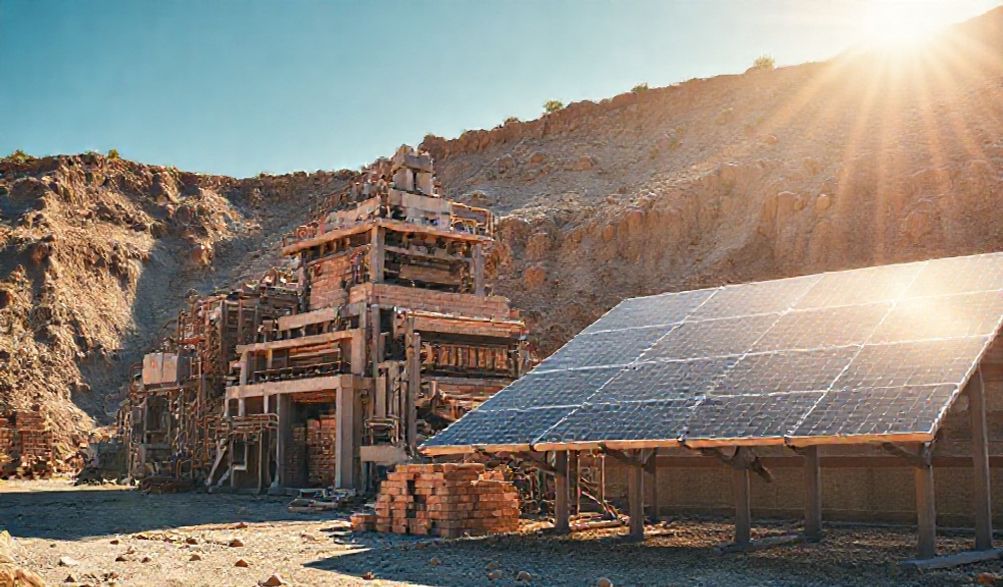
The Future of Sustainable Construction: Solar-Powered Brick Making Machinery
Introducción
The global construction industry is responsible for nearly 40% of the world’s total energy-related carbon dioxide emissions. Within this vast footprint, the production of fundamental building materials like bricks plays a significant, often overlooked role. For centuries, brick manufacturing has been synonymous with smokestacks, coal-fired kilns, and a heavy reliance on grid electricity or diesel generators. This legacy process comes with substantial operational costs, supply chain vulnerabilities, and a considerable environmental burden.
But what if the very machines that build our world could be powered by the sun? Enter solar-powered brick making machinery—a transformative innovation that merges robust construction technology with clean, renewable energy. This isn’t a distant-future concept; it’s a viable, operational solution reshaping how bricks are produced today.
This guide, crafted by industry experts analyzing the convergence of construction manufacturing and sustainable technology, draws on real-world case studies, manufacturer specifications, and energy efficiency reports. Our goal is to move beyond the hype and provide a comprehensive, trustworthy analysis. By the end of this article, you will have a clear understanding of how this technology works, its compelling economic and environmental advantages, the key practical considerations for adoption, and its potential to redefine the future of construction materials.
Understanding Solar-Powered Brick Making Technology
At its core, a solar-powered brick making machine replaces a traditional power source (grid or diesel) with a self-contained solar energy system. It’s a synergy of two mature technologies, creating a new, sustainable whole.
Componentes Principales del Sistema
A fully functional system comprises several key parts working in harmony:
- The Brick Making Machine: This is the familiar core—a hydraulic or pressure-based machine that compacts raw material (soil, clay, fly ash, cement) into precise, solid bricks or blocks. Its design is largely unchanged; only its power input is different.
- The Solar Power Array: These are the photovoltaic (PV) panels, typically mounted on the ground or a nearby structure. They capture sunlight and convert it into direct current (DC) electricity.
- Energy Storage Solutions: Battery banks are crucial for reliability. They store excess solar energy generated during peak sun hours, allowing the machine to operate during cloudy periods, at night, or when demand exceeds immediate solar production.
- The Power Inverter and Control System: This is the “brain” of the operation. The inverter converts the DC electricity from the panels and batteries into the alternating current (AC) required by most industrial machinery. The control system manages energy flow, prioritizing solar use and protecting components.
How It Works: From Sunlight to Solid Bricks
The process is a seamless chain of energy conversion:
- Energy Capture: Sunlight hits the PV panels, exciting electrons and generating DC electricity.
- Energy Conversion & Management: The DC electricity flows to the control system. It is either used immediately, directed to charge the batteries, or, if surplus, potentially fed back to the grid (in on-grid systems).
- Power Delivery: The inverter draws DC power from either the panels or the batteries, converting it to stable AC power.
- Machine Operation: This clean AC power drives the machine’s electric motor, powering the hydraulic pumps that compress the raw material into high-quality bricks, all with zero on-site emissions.
Configurations: On-Grid vs. Off-Grid
* Off-Grid: A completely independent system. It relies solely on solar panels and battery storage. This is ideal for remote sites with no grid access.
* On-Grid (or Hybrid): The system is connected to the local utility grid. Solar power is the primary source, but the grid acts as a backup during prolonged low-sun periods. Excess solar energy can sometimes be sold back, creating an additional revenue stream.
Types of Machines Compatible with Solar Integration
Virtually any electrically powered brick making machine can be adapted for solar:
- Máquinas Estacionarias para Hacer Bloques: High-output machines for large-scale, fixed-location factories. They benefit greatly from solar due to their consistent, high energy consumption.
- Máquinas Móviles para Fabricar Ladrillos: Trailermounted units perfect for on-site production. Pairing them with a mobile solar array and battery pack eliminates the need for noisy, polluting diesel generators at construction sites.
- Automatic vs. Semi-Automatic: Both types are suitable. Fully automatic machines with higher power demands require a larger, more precisely sized solar system.
The Compelling Advantages of Going Solar
Transitioning to solar power is more than an environmental statement; it’s a strategic business decision with multifaceted benefits.
Dramatic Reduction in Operational Costs
The most immediate impact is on the bottom line. Solar power effectively locks in your energy cost for decades.
- Eliminate Fuel Bills: No more purchasing diesel or propane for generators.
- Slash Grid Electricity Costs: Dramatically reduce or even zero out monthly utility bills for grid-powered plants.
- Retorno de Inversión a Largo Plazo: While the initial investment is higher, the “fuel” (sunlight) is free. Typical payback periods range from 3 to 7 years, after which the energy cost savings translate directly into higher profit margins and a significant competitive advantage.
Achieving True Environmental Sustainability
This is the core mission. Solar-powered brick production decouples manufacturing from fossil fuels.
- Zero Operational Emissions: The production process releases no CO2, particulate matter, or other pollutants on-site.
- Reduce Embodied Carbon: The “embodied carbon” of a brick—the total emissions from its creation—plummets, making buildings truly greener from the ground up.
- Certification Alignment: This process directly contributes to points under major green building standards like LEED and BREEAM, making the resulting bricks highly attractive to eco-conscious projects.
Operational Independence and Reliability
Solar power grants unprecedented control over your production schedule.
- Immunity from Grid Instability: Power outages and brownouts no longer halt production. Your schedule is yours to keep.
- Protection from Fuel Price Volatility: Your costs are insulated from the spikes and uncertainties of the global fuel market.
- Access Remote Sites: Enable brick production anywhere the sun shines, without the logistical nightmare and cost of extending grid lines or transporting large quantities of fuel. This is revolutionary for rural development and infrastructure projects.
Enhancing Brand Value and Market Appeal
Sustainability is a powerful market differentiator.
- Market “Green Bricks”: Offer a certified, low-carbon product that commands a premium from developers, architects, and government tenders focused on sustainable sourcing.
- Fulfill CSR & ESG Goals: Demonstrate tangible progress on Corporate Social Responsibility and Environmental, Social, and Governance metrics, which is increasingly important to investors and partners.
Key Considerations Before Investing
Successful adoption requires careful planning and a clear-eyed assessment of your specific situation.
Initial Investment and Financial Planning
The upfront cost is the primary barrier, but it must be viewed as a long-term capital investment.
- Cost Breakdown: Budget for the brick machine itself, the solar PV array, the battery storage bank, inverters/controllers, and professional installation.
- Financial Incentives: Actively research government grants, tax credits, subsidies for renewable energy, and green financing loans. These can substantially reduce the net capital outlay.
Site Assessment and Solar Potential
Not all locations are created equal for solar generation.
- Solar Irradiance Analysis: Use historical data tools to understand the average daily and seasonal sunlight hours at your exact production site.
- Space Requirements: Ensure you have adequate, unshaded land or roof space to install the necessary number of PV panels. A rule of thumb: 1kW of solar panels requires about 100 sq. ft.
Machine Power Requirements and Sizing the System
This is the most critical technical step. Undersizing leads to failure; oversizing wastes capital.
- Calculate Consumption: Determine the kilowatt-hour (kWh) consumption of your brick machine per day of operation. Consider both the base load and peak power draws during compression cycles.
- Right-Sizing: A qualified solar integrator will use your energy consumption data and site solar potential to design a system with:
- A solar array large enough to meet your daily energy needs.
- A battery bank with sufficient capacity to cover operations during non-sunny hours.
- Uninverter rated to handle the machine’s peak power demand.
Maintenance and Expertise
Solar systems are low-maintenance but not zero-maintenance.
- Routine Tasks: Regularly clean solar panels, check electrical connections, and monitor battery health (state of charge, electrolyte levels if lead-acid).
- Expertise Needed: You or a staff member will need basic training, or you must establish a service agreement with a reliable solar technician familiar with industrial applications.
Real-World Applications and Case Studies
The theory is proven in practice across diverse scenarios.
Small-Scale & Community-Led Housing Projects
In sub-Saharan Africa, a community housing cooperative utilized a mobile, solar-powered interlocking soil block press. Using locally sourced earth and the abundant sun, they produced bricks on-site for 50 new homes. This eliminated fuel costs, kept money within the community, and created a sustainable, replicable building model.
Large-Scale Commercial Brick Manufacturing
A brick factory in India, facing rising grid electricity costs and unreliable supply, integrated a 500 kW rooftop solar system. It now meets over 70% of its daytime operational energy needs from solar, with the grid as a secondary backup. The investment is on track for a 5-year payback, after which the savings will dramatically boost profitability.
Disaster Relief and Rapid Construction Scenarios
Following a major earthquake, NGOs deployed containerized, solar-powered brick making units to affected regions. With roads damaged and diesel scarce, these units used debris (crushed concrete) as raw material and solar energy to produce reconstruction bricks immediately, accelerating recovery without adding an energy logistics burden.
The Future of Solar in Construction Manufacturing
The integration of solar is just the beginning. We are moving towards smarter, more efficient systems.
Technological Innovations on the Horizon
- Hyper-Efficient Machines: Next-generation hydraulic systems and motors will do more work with less electrical input, making solar integration even easier and more effective.
- Advanced Battery Tech: The continued fall in lithium-ion battery prices and the advent of new chemistries (e.g., solid-state) will make longer, more powerful energy storage cheaper and more accessible.
- IoT and Smart Monitoring: Integrated sensors will allow remote, real-time monitoring of both machine performance (output, wear) and solar system health (energy production, battery status), enabling predictive maintenance and optimized production scheduling.
Policy Trends and Global Adoption
- Stricter Carbon Regulations: As governments implement carbon taxes and stricter emissions caps on industrial production, traditional brick kilns will face rising compliance costs, making solar-powered alternatives financially and legally attractive.
- Sustainable Public Procurement: Governments and large developers are increasingly mandating low-embodied-carbon materials for public infrastructure projects, creating a guaranteed market for bricks produced with renewable energy.
FAQ Section
Q1: Can a solar-powered brick machine run 24/7?
A: It can, but practical and economic considerations are key. For true 24/7 operation, you would need a very large solar array to generate enough daytime energy and an exceptionally large battery bank to power it all night. This is often cost-prohibitive. Most real-world systems are designed for 8-12 hours of daily operation, sometimes with a hybrid (solar + grid/generator) backup for extended runs.
Q2: What is the typical payback period for the solar investment?
A: The payback period typically ranges from 3 to 7 years. This depends heavily on local electricity/fuel costs you are replacing, the amount of sunlight at your site, available government incentives, and how many hours per day you operate the system. After the payback period, the energy is virtually free for the remaining 20+ year lifespan of the solar panels.
Q3: Are solar-powered machines less powerful than diesel or grid-powered ones?
A: No. The brick-making mechanism—the hydraulic pressure, compression force, and mold design—is identical. The power source is what changes. A properly engineered and sized solar system will deliver the exact voltage and current required for the machine to operate at its full rated power and production capacity.
Q4: Is this technology suitable for all geographical locations?
A: It is most efficient and cost-effective in regions with high solar irradiance (e.g., the “Sun Belt”). However, modern PV panels are surprisingly effective even in areas with moderate or diffuse sunlight (e.g., parts of Northern Europe). The key is a detailed, site-specific energy assessment to correctly size the system for your local climate.
Q5: Where can I find reputable suppliers of solar-powered brick making machinery?
A: Look in two places: 1) Established brick machinery manufacturers who now offer factory-integrated solar hybrid options, and 2) Specialist solar engineering firms that can professionally retrofit an existing electric brick machine with a custom solar power system. Always verify certifications, ask for detailed case studies, and request client references.
Conclusión
Solar-powered brick making machinery represents a decisive leap toward a sustainable, resilient, and profitable future for construction manufacturing. It is a proven technology that directly addresses the twin challenges of high operational costs and significant environmental impact. By harnessing the sun, producers gain energy independence, future-proof their operations against regulatory shifts, and tap into a growing market for green building materials.
Adopting this technology is more than an equipment purchase; it is a strategic business decision that positions your company at the forefront of the industry’s inevitable green transformation. The initial investment is a down payment on decades of lower costs, enhanced brand reputation, and meaningful contribution to a cleaner planet.
Ready to calculate your potential savings? Contact our expert team for a free, no-obligation feasibility assessment tailored to your specific project location and production goals.
Download our detailed guide on technical specifications and the essential checklist for transitioning your brick production to solar power.
The information presented here is based on rigorous analysis of current technology, market trends, and real-world applications, curated to help industry leaders make informed, trustworthy decisions for a sustainable and competitive future.
<