Introducción a la Tecnología de Producción No Tripulada en Materiales de Construcción
El panorama contemporáneo de la construcción está experimentando una transformación fundamental, impulsada por las demandas de una eficiencia, precisión y escalabilidad sin precedentes. A la vanguardia de esta revolución se encuentran las máquinas automáticas para fabricar bloques de ladrillo, que representan la cumbre de la tecnología de fabricación en el sector de materiales de construcción. Estos sistemas no son meras herramientas; son plantas de producción completamente integradas que operan con mínima intervención humana, entregando unidades de mampostería consistentes y de alta calidad las 24 horas del día. Para los distribuidores, gerentes de adquisiciones e inversionistas industriales, comprender esta tecnología es crucial para capitalizar el futuro de la construcción.
Análisis Integral de Sistemas Automatizados de Producción de Ladrillos y Bloques
1.1 La Arquitectura de las Líneas de Producción Automatizadas
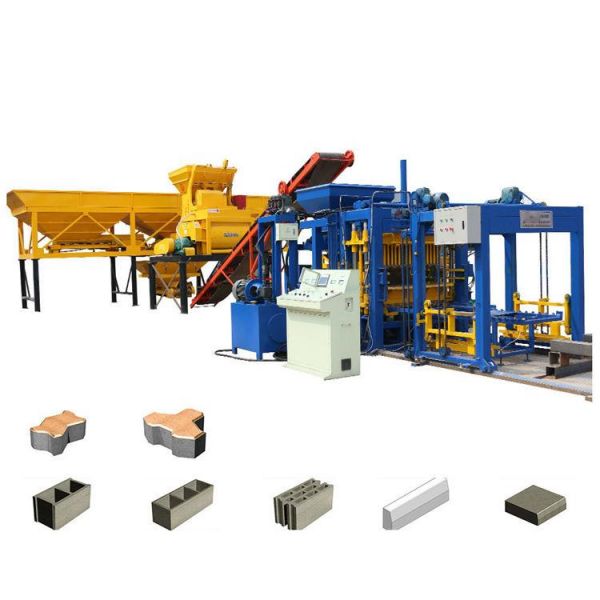
Los sistemas completamente automáticos representan una desviación total del equipo independiente, funcionando en cambio como ecosistemas industriales sincronizados donde cada componente opera con precisión robótica.
- Gestión Integrada de Materias Primas:El proceso comienza con sistemas automatizados de manejo de materiales que reciben, miden y transfieren materias primas con precisión. Estos sistemas generalmente incluyen silos a granel para cemento, transportadores automatizados para agregados y sistemas de medición precisa de agua. La dosificación controlada por computadora garantiza proporciones de mezcla perfectas de manera consistente, eliminando errores humanos y desperdicio de materiales.
- Control Centralizado y Sincronización:La inteligencia central reside en un Controlador Lógico Programable (PLC) de grado industrial, acoplado con una Interfaz Hombre-Máquina (HMI) de pantalla táctil. Este centro de control orquesta cada aspecto de la producción, desde la frecuencia de vibración y la presión hidráulica hasta la temperatura de la cámara de curado y el ciclo de los pallets. Los sistemas modernos a menudo incluyen conectividad IoT para monitoreo remoto y análisis de datos, lo que permite mantenimiento predictivo y optimización de la producción.
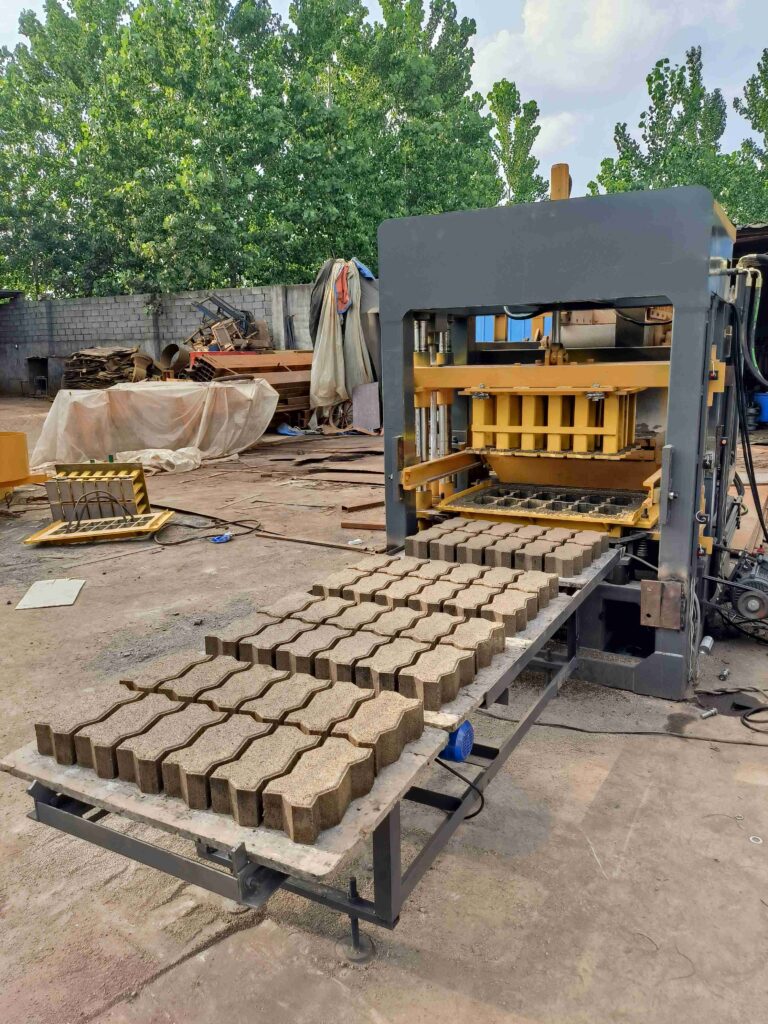
- Moldeo y Compactación de Alta Velocidad:El corazón del sistema es una unidad de compresión de alta velocidad que utiliza vibración multidireccional y una inmensa presión hidráulica para lograr una densidad óptima del material. A diferencia de las máquinas más simples, estos sistemas suelen incluir el moldeado simultáneo de múltiples bloques en una sola paleta, con tiempos de ciclo medidos en segundos. En algunos modelos avanzados, las cajas de molde de ingeniería de precisión pueden cambiarse automáticamente para alternar la producción entre diferentes tipos de bloques sin tiempo de inactividad.
- Curado Automatizado y Manejo Logístico:Una vez moldeados, los bloques inician un recorrido completamente automatizado a través del proceso de curado. Brazos robóticos o carros de transferencia sofisticados colocan los productos verdes en bastidores de curado, que luego son transportados mediante vehículos de guiado automático (AGV) o sistemas de transporte a través de cámaras de curado con temperatura y humedad controladas. La etapa final involucra el desapilado, apilado y embalaje automatizados, resultando en pallets listos para enviar sin manipulación manual.
1.2 Clasificación por Metodología de Producción y Escala de Producción
Los sistemas automáticos pueden clasificarse según su metodología operativa y sus capacidades de volumen de producción.
- Líneas de Producción con Sistema de Paletas Estáticas: In these configurations, pallets remain stationary during the molding process while the molding head moves between stations. These systems are renowned for their exceptional product quality and density, making them ideal for producing high-strength concrete blocks, paving stones, and specialized masonry units where supreme quality is paramount.
- Mobile Pallet System Production Lines: Characterized by pallets that move in a continuous circuit through various stations—filling, compaction, curing, and destacking. These systems typically offer higher production speeds and are optimized for manufacturing standard hollow blocks, solid bricks, and similar construction elements where volume production is the primary objective.
- Fixed Table Press Systems with Robotic Handling: Featuring a stationary pressing table surrounded by robotic arms for all material and product handling. This configuration provides maximum flexibility for producing complex, specialized products while maintaining high levels of automation, suitable for manufacturers requiring frequent product changeovers and custom designs.
1.3 The Strategic Business Advantages of Automation
The implementation of automatic production systems delivers transformative benefits that extend far beyond basic production.
- Unprecedented Operational Efficiency and Labor Optimization: A single automated line can replace 20-50 manual workers while producing 3-5 times more output. The 24/7 operational capability, with only minimal supervision, fundamentally alters production economics, making large-scale projects feasible and profitable.
- Mathematical Precision and Quality Assurance: Every unit produced is identical in dimension, weight, and density. This level of consistency enables construction projects to proceed with perfect predictability, reducing mortar consumption, simplifying bricklaying, and ensuring compliance with the most stringent international quality standards.
- Total Production Cost Minimization: While the capital investment is substantial, the per-unit production cost reaches unprecedented lows. Savings accumulate from reduced labor costs, optimized material usage, minimized waste, lower energy consumption per unit, and dramatically reduced product damage from automated handling.
- Data-Driven Production Management and Optimization: Modern systems generate comprehensive production data, allowing managers to analyze efficiency, identify bottlenecks, predict maintenance needs, and optimize every parameter of the operation. This data intelligence becomes a strategic asset for continuous improvement and competitive advantage.
1.4 Implementation Scenarios and Market Applications
Automatic systems serve specific, high-volume market segments where scale, consistency, and reliability are non-negotiable.
- Major Infrastructure and Development Projects: These systems are indispensable for supplying the massive quantities of uniform blocks required for large-scale housing developments, industrial parks, commercial complexes, and government infrastructure projects.
- Specialized Product Manufacturing at Scale: The technology enables economically viable production of specialized blocks such as interlocking masonry systems, insulated concrete forms (ICFs), architectural facing stones, and permeable pavers at commercial volumes.
- Export-Oriented Production Facilities: The consistent international quality standards achieved by automated production make them ideal for manufacturers targeting export markets where product certification and uniformity are critical requirements.
- Integrated Industrial Complexes: These systems form the core of comprehensive construction material plants that may also produce ready-mix concrete, precast elements, and other complementary products, creating powerful synergies and market dominance.
1.5 Strategic Procurement and Implementation Framework
The acquisition and implementation of an automatic production system requires meticulous planning and strategic consideration.
- Comprehensive Production Requirement Analysis: Prior to procurement, a detailed analysis must determine the required production capacity, product mix, quality specifications, and future expansion plans. This analysis should project 5-10 year requirements to ensure the system remains viable as the business grows.
- Total Cost of Ownership and Financial Modeling: Beyond the initial investment, a sophisticated financial model must account for installation costs, training expenses, maintenance contracts, energy consumption, spare parts inventory, and expected ROI. Financing options and potential government incentives for industrial automation should be explored.
- Technical Support and Service Level Agreements: The supplier’s technical support capability is arguably as important as the machine itself. Comprehensive service level agreements should guarantee response times, spare parts availability, remote troubleshooting support, and periodic maintenance services.
- Infrastructure and Regulatory Compliance Assessment: The implementation site must be evaluated for adequate power supply, foundation requirements, material storage areas, and environmental regulations. Compliance with industrial safety standards and building codes must be thoroughly addressed before installation.
Conclusión
Automatic brick and block making systems represent the definitive evolution of construction material production, transitioning from a labor-intensive craft to a technology-driven industrial process. For serious players in the building materials supply chain, these systems offer a pathway to market leadership through unassailable efficiency, impeccable quality, and unprecedented scale. The substantial capital investment demands rigorous due diligence and strategic planning, but the回报—in terms of market share, profitability, and long-term business sustainability—can be transformative. As global construction continues to evolve toward industrialization and standardization, automated production technology will increasingly become the benchmark for competitive relevance in the building materials industry.
Frequently Asked Questions (FAQ)
Q1: What is the typical installation and commissioning timeline for a complete automatic production line?
A: The timeline varies based on system complexity but typically spans 4-8 months. This includes: factory foundation preparation (4-6 weeks), machine manufacturing and shipment (8-12 weeks), on-site assembly and installation (4-6 weeks), and commissioning with operator training (2-3 weeks). Pre-installation planning can significantly optimize this timeline.
Q2: How many operators are typically required to run a fully automatic production line?
A: A complete system typically requires 2-3 operators per shift for monitoring, quality control, and managing raw material input. This represents a reduction of approximately 80-90% in direct labor compared to semi-automatic production methods for equivalent output.
Q3: What level of technical expertise is required to maintain these systems?
A: Maintenance requires trained technicians with knowledge of industrial hydraulics, pneumatics, electrical systems, and PLC operations. Most suppliers provide comprehensive training programs, and many systems now feature predictive maintenance alerts that notify technicians of potential issues before they cause downtime.
Q4: Can these systems produce different types of blocks without significant downtime?
A: Modern systems are designed for rapid product changeover. While switching between dramatically different products (e.g., from hollow blocks to paving stones) may require mold changes taking 1-2 hours, many systems can adjust parameters for similar product variations through the control panel in minutes.
Q5: What are the primary power requirements for operating an automatic production line?
A: Most industrial-scale systems require a high-voltage three-phase power supply (typically 380V-480V) with substantial amperage capacity. Total connected power can range from 80kW to over 200kW depending on the system size and configuration, with significant power factor correction capabilities.
Q6: How does the product quality from automatic systems compare to traditional methods?
A: The quality is substantially superior in every measurable aspect. Automatic systems produce blocks with consistent dimensional accuracy (±1mm), uniform density distribution, higher compressive strength (due to optimized vibration and pressure), and perfect surface finish, far exceeding what is achievable through manual or semi-automatic methods.