
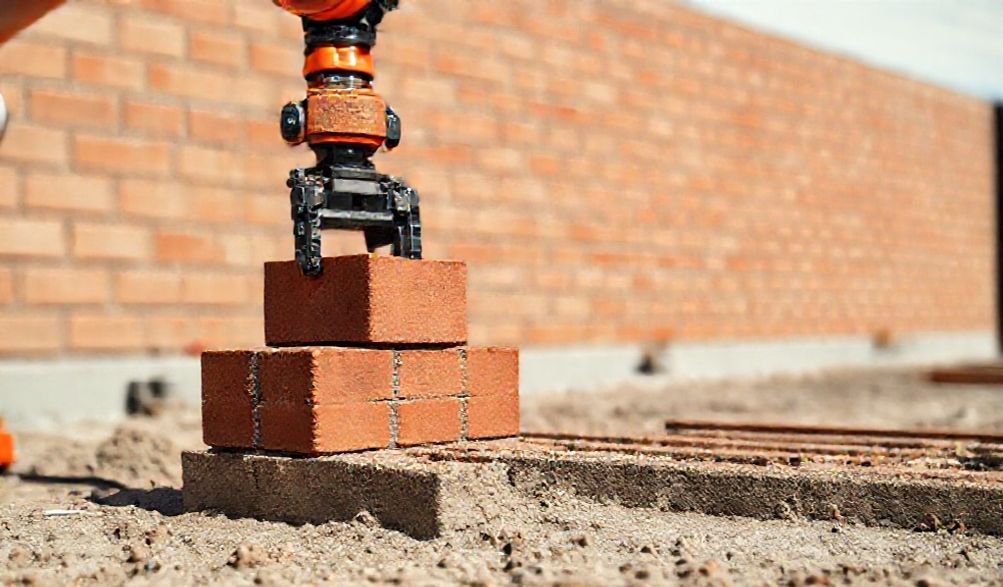
La Guía Definitiva de Máquinas para Colocar Ladrillos en la Construcción con Ladrillos de Arcilla
Por generaciones, el arte de construir con ladrillo de arcilla ha sido definido por el trabajo hábil y rítmico del albañil. Sin embargo, este oficio tradicional enfrenta presiones modernas: una escasez persistente de mano de obra calificada, costos de proyecto en aumento, plazos ajustados y el desgaste físico del trabajo. ¿El resultado? Los proyectos se estancan, los presupuestos se inflan y el atractivo eterno del ladrillo de arcilla se convierte en un lujo que pocos pueden permitirse construir de manera eficiente.
Ingrese a la máquina colocadora de ladrillos de arcilla: una pieza de tecnología transformadora que está remodelando fundamentalmente el panorama de la construcción en mampostería. Ya no es una fantasía futurista, esta automatización está aquí, resolviendo problemas del mundo real y ofreciendo un retorno de inversión convincente. Esta guía integral está diseñada para contratistas, constructores y dueños de negocios con visión de futuro. Vamos a desmitificar las exageraciones para ofrecer una mirada experta y clara sobre cómo funcionan estas máquinas, sus beneficios tangibles y los factores críticos que necesita considerar antes de invertir. Al final, tendrá el conocimiento para determinar si una máquina colocadora de ladrillos es la clave para desbloquear mayor productividad, consistencia y rentabilidad en sus proyectos con ladrillos de arcilla.
¿Qué es una Máquina para Colocar Ladrillos? Revolucionando el Trabajo con Ladrillos de Arcilla
En esencia, una máquina colocadora de ladrillos automatiza los aspectos más repetitivos y físicamente exigentes de la albañilería: colocar ladrillos y aplicar mortero. Es un sistema mecanizado diseñado para realizar estas tareas con una velocidad, consistencia y precisión sobrehumana, aumentando directamente o reemplazando la mano de obra manual.
Definición y Función Central
Una máquina para colocar ladrillos es un dispositivo—que va desde una herramienta de asistencia motorizada hasta un robot completamente autónomo—que se encarga del proceso de colocar ladrillos de arcilla. Sus funciones principales son:
* Aplicación de Mortero:Dispensando con precisión una cama uniforme de mortero.
* Colocación de Ladrillos:Colocando cada ladrillo en su posición designada.
* Alineación:Asegurando que cada ladrillo esté perfectamente posicionado, tanto horizontal como verticalmente.
Considéralo como un multiplicador de fuerza para tu equipo, permitiendo que un grupo más pequeño logre la producción de uno mucho más grande, sin sacrificar la calidad inherente a la construcción con ladrillos de arcilla.
Breve Historia y Evolución Tecnológica
La búsqueda por mecanizar la colocación de ladrillos tiene más de un siglo de antigüedad, pero las últimas décadas han visto un progreso explosivo.
* Primeros Intentos:Las primeras patentes para dispositivos de colocación de ladrillos aparecieron a finales del siglo XIX, pero a menudo resultaban engorrosas e imprácticas.
* Asistencia Semi-Automática:A finales del siglo XX se introdujeron bombas para transportar mortero y colocadores mecánicos simples, lo cual ayudó pero no revolucionó el flujo de trabajo.
* La Era Robótica:El siglo XXI, impulsado por avances en robótica, diseño asistido por computadora (CAD) y tecnología de sensores, nos ha brindado sistemas inteligentes comoSAM (Albañil Semiautomático) de Construction RoboticsyEl Hadrian X de FBREstas máquinas pueden interpretar planos digitales y ejecutar patrones de colocación complejos con mínima intervención humana, lo que marca un verdadero cambio de paradigma.
Cómo Funciona: El Proceso Básico
Si bien los modelos varían, el proceso automatizado fundamental es una maravilla de simplicidad ingenieril:
1. Alimentación:Los ladrillos y el mortero se cargan en el sistema de suministro de la máquina. Algunos sistemas utilizan paletas precargadas; otros se alimentan de forma continua.
2. Aplicación de Mortero:Una boquilla o mecanismo de esparcimiento aplica una capa perfectamente uniforme de mortero sobre el curso o sobre el ladrillo mismo.
3. Recoger y Colocar:Un brazo robótico o cabezal de colocación, guiado por láseres y sensores, recoge un ladrillo, unta su extremo (si es necesario) y lo coloca con precisión milimétrica.
4. Alineación y Compresión: The machine gently presses the brick into the mortar bed, ensuring proper alignment and a uniform joint. The system constantly self-checks against digital plans for wall position, plumb, and level.
Key Benefits of Using a Machine for Clay Brick Laying
Investing in a brick layer machine isn’t just about buying a tool; it’s about upgrading your entire operational capability. The benefits cascade across your business.
Unmatched Speed and Increased Productivity
This is the most immediate and dramatic advantage. While a highly productive human mason might lay 300-500 bricks in a day, a machine operates relentlessly.
* Máquinas semiautomáticas can help a small crew double or triple their daily output.
* Fully robotic systems can lay 1,000 to 2,000+ bricks per day, effectively working at 3x to 10x the pace of a human crew. This directly translates to shorter project timelines and the ability to take on more work.
Significant Reduction in Labor Costs and Strain
The construction industry’s skilled labor crisis is real. Machines provide a powerful solution.
* Labor Mitigation: One machine, operated by 1-2 trained individuals, can replace the output of several masons, dramatically reducing labor costs on large-scale projects.
* Ergonomic Revolution: It eliminates the back-breaking, repetitive motions of bending, lifting, and troweling. This reduces workplace injuries, lowers insurance costs, and helps retain valuable workers by transitioning them into less physically taxing operator and supervisor roles.
Superior Consistency, Precision, and Quality
Human fatigue leads to variation. A machine does not tire, ensuring every single brick is laid to the same exacting standard.
* Perfect Mortar Beds: Eliminates voids and ensures consistent mortar thickness, which is critical for structural integrity and weather resistance.
* Uniform Joints: Creates perfectly even horizontal and vertical joints, enhancing the aesthetic appeal and structural uniformity of the wall.
* Plumb and Level Walls: Laser-guided placement results in walls that are perfectly straight, reducing the need for time-consuming corrections and minimizing material waste from errors.
Ahorro de Costos a Largo Plazo y Retorno de la Inversión
View the machine as a capital investment with a calculable return, not an expense.
* Reduced Direct Labor Costs: The savings on wages and benefits for multiple masons can quickly offset the machine’s cost.
* Lower Indirect Costs: Faster completion means lower site overhead, earlier project monetization, and reduced financing costs.
* Fewer Callbacks: Higher build quality means fewer defects and warranty issues, protecting your reputation and bottom line.
Types of Brick Laying Machines for Clay Bricks
Not all machines are created equal. Understanding the categories is key to matching the technology to your needs.
Semi-Automatic Mortar Spreaders and Brick Placers
These machines augment the mason rather than replace them. An operator guides the machine, which automates specific, strenuous tasks.
* Ejemplos: Mortar pumping and spreading units, mechanical brick feeders and placers.
* Mejor para: Small to medium-sized contractors, specialty contractors, or companies looking to automate a specific bottleneck (like mortar application) without a massive capital outlay or workflow overhaul.
Fully Automated Robotic Bricklaying Systems
These are the “game-changers.” Programmable, often CAD-driven, they operate with a high degree of autonomy.
* Ejemplos: SAM (works alongside masons to lay bricks), Hadrian X (a fully robotic system that builds structural walls from a truck-mounted boom).
* Cómo funcionan: They upload a 3D digital model of the structure and execute the bricklaying plan with minimal human intervention, handling both mortar and brick placement.
* Mejor para: Large-scale commercial, industrial, and residential projects (like apartment complexes) with long, repetitive wall sections. They offer the highest potential for labor savings and speed.
Mobile On-Site Machines vs. Static Factory Systems
This distinction is about ¿dónde? the building happens.
* Mobile On-Site Machines: These are brought to the traditional construction site. They build the walls in place, just like a human crew, but much faster. Most robotic systems (SAM, Hadrian X) fall into this category.
* Static Factory Systems: These are used in Modular or Panelized Construction (DfMA – Design for Manufacture and Assembly). The machine builds entire clay brick wall panels in a controlled factory environment. These panels are then shipped to the site and craned into position. This method offers the highest quality control and weather-independent production.
How to Choose the Right Brick Layer Machine
Selecting a machine is a major decision. A systematic evaluation will ensure you choose a partner, not just a piece of equipment.
Assess Your Project Scale and Brick Type
Start with your core business.
* Project Volume: Are you consistently working on large, multi-thousand-brick projects, or is your work more varied? High, consistent volume justifies a larger robotic investment.
* Clay Brick Compatibility: This is critical. Not all machines handle all bricks. You must verify:
* Brick Size & Tolerances: Machines often require bricks with very consistent dimensions.
* Textura: Extremely rough or irregular handmade bricks may pose feeding or gripping challenges.
* Special Shapes: Standard modular bricks are ideal. Corners, bullnoses, or other specials may need to be placed manually.
Key Machine Specifications to Evaluate
Look beyond the marketing brochure. Key specs include:
* Laying Speed: Bricks per hour (BPH) under real-world conditions.
* Positioning Accuracy: Measured in millimeters. Tighter tolerance means higher quality.
* Required Crew Size: How many people are needed to operate and support the machine?
* Fuente de Energía: Electric, diesel, hybrid? Impacts operating cost and site suitability.
* Footprint & Mobility: How much space does it need? Can it move easily around a site?
Análisis del Costo Total de Propiedad
The purchase price is just the beginning. A responsible analysis includes:
* Purchase Price / Lease Cost
* Entrenamiento: Vendor and in-house training for your crew.
* Maintenance & Parts: Regular service costs and the price/availability of wear parts (nozzles, grippers).
* Potential Downtime: What is the vendor’s service response time? Downtime is lost revenue.
Vendor Reputation and Support
Your relationship with the manufacturer is paramount. Do your due diligence:
* History & Track Record: How long have they been in business? Can they provide verifiable case studies?
* Servicio Postventa: Is there a dedicated support line? What is their onsite service network like?
* Programas de Capacitación: Do they offer comprehensive operator and maintenance training?
* Community & Reviews: Talk to other contractors who own the machine. Their firsthand experience is invaluable.
Operational Insights and Best Practices
Success with a brick layer machine depends as much on process as on the technology itself.
Site and Foundation Preparation
Machines often require a higher standard of site readiness.
* Foundation/Footing Tolerance: The starting course is critical. Foundations need to be exceptionally level and true to provide a perfect starting point for the machine.
* Clear Access & Layout: Ensure a clear, stable path for the machine and its material delivery systems. Plan for where bricks and mortar silos will be placed.
Crew Training and Workflow Integration
This is a cultural shift. Your masons become machine operators, supervisors, and quality controllers.
* Emphasize Upskilling: Frame training as a career advancement opportunity.
* Formal Training is Key: Leverage the vendor’s training program. Don’t try to learn entirely on the job.
* Redefine Roles: Crew members will handle machine feeding, operation, detail work (corners, openings), and constant quality checks. Planning this workflow in advance is crucial.
Routine Maintenance for Longevity
Treat the machine like the precision asset it is. Daily and weekly maintenance prevents major issues.
* Clean Thoroughly: Mortar residue is the enemy. Clean all dispensing nozzles, grippers, and sensors at the end of every shift.
* Lubricate: Follow the manual’s lubrication schedule for all moving parts.
* Inspect Wear Parts: Regularly check nozzles, gaskets, and brick grippers for wear and replace them proactively.
* Calibrate Sensors: Periodically verify the calibration of lasers and positioning sensors to maintain accuracy.
Addressing Common Challenges and Limitations
A realistic view acknowledges that no technology is a magic bullet. Planning for these challenges is a sign of expert implementation.
Handling Complex Designs and Corners
Most machines excel at long, straight runs. Complexity requires planning.
* The 80/20 Rule: Often, the machine handles 80% of the straightforward wall, while your skilled masons focus on the 20% of complex details: corners, arches, lintels, and intricate patterns. This is an efficient division of labor.
* Software Solutions: Some advanced systems have software that can plan for certain corners and openings, but manual finishing is often still required.
Weather and On-Site Conditions
Robotics prefer the controlled environment humans often lack.
* Extreme Weather: High winds can affect precision. Heavy rain can stop mortar setting and operation. Most machines have operational limits.
* Site Terrain: Highly uneven or muddy sites can pose mobility challenges for larger machine platforms.
Initial Investment and Financing Options
The upfront cost is the single biggest barrier. Frame it strategically.
* Honest Budgeting: Calculate the ROI based on your specific project pipeline.
* Explore Pathways: Many vendors offer leasing programs to reduce upfront capital. Equipment rental is an option for a one-off large project. Some contractors explore co-op ownership models.
FAQ: Brick Layer Machines for Clay Bricks
Q1: How many bricks can a machine lay compared to a human mason?
A: It varies significantly by machine type. A semi-automatic system might help a crew lay 800-1,200 bricks per day. A fully robotic system can consistently lay 1,000 to 2,000+ bricks in an 8-hour shift, which is 3 to 10 times the output of a single highly productive mason.
Q2: Can these machines work with all types of clay bricks?
A: Not automatically. Most are engineered for standard, modular clay bricks with consistent dimensions and tolerances. Special shapes, extremely rough textures, or oversized bricks may require custom grippers or may not be compatible. Always test your specific brick with the manufacturer before purchasing.
Q3: What is the typical payback period for such an investment?
A: There’s no one-size-fits-all answer, but a well-utilized machine on appropriate projects can see a payback period of 1 to 4 years. This depends entirely on the machine’s cost, the local cost of labor you’re offsetting, and how consistently you can keep it working on suitable projects.
Q4: Do I still need skilled masons if I have a machine?
A:Absolutely, but their role evolves. You will need fewer masons for the repetitive laying, but you critically need skilled personnel to:
* Operate and maintain the machine.
* Supervise the process and perform quality control.
* Handle all complex detailing, corners, and finishing work.
* Set up the site and foundation to machine-grade tolerances.
Q5: Are robotic bricklayers a threat to jobs in the construction industry?
A: They are better viewed as a necessary evolution of the job. The industry faces a severe skilled labor shortage. These machines don’t eliminate jobs; they shift them. They take over the most physically taxing and repetitive tasks, allowing the existing workforce to focus on higher-skill areas like machine operation, supervision, complex detailing, and project management. They make careers in masonry more sustainable and attractive.
Conclusión
The brick layer machine for clay brick construction represents more than just a new tool; it signifies a smarter, more sustainable future for the masonry trade. By directly addressing the critical challenges of labor scarcity, cost inflation, and physical demand, this technology empowers builders to preserve the timeless quality and beauty of clay brick in a modern, competitive market.
The future points toward even greater integration—machines with enhanced AI for handling complexity, improved mobility for difficult sites, and broader accessibility for mid-sized contractors. For the forward-thinking construction business, the question is no longer si this technology will become standard, but wheny¿cómo? to adopt it strategically.
Embrace this evolution as an opportunity. Assess your upcoming projects, engage with reputable manufacturers for demonstrations, and run the numbers for your business. The investment in a brick layer machine is ultimately an investment in building better, faster, and more profitably with one of humanity’s most enduring and beloved building materials.
Ready to explore how automation can transform your clay brick projects? Start by researching specific models, reach out to manufacturers for a site demo, and talk to fellow contractors who have made the leap. The foundation for your company’s next evolution is ready to be laid.
<