
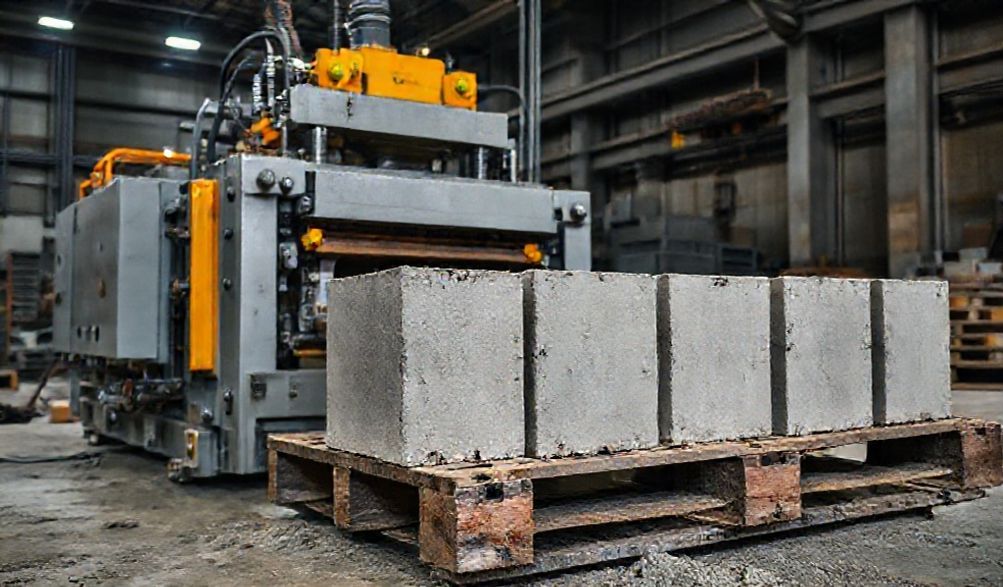
The Ultimate Guide to Cement Block Production Machines: Types, Costs, and How to Choose
Introducción
The global construction industry runs on a simple, yet profound, need: affordable, durable, and readily available building materials. At the heart of meeting this demand, especially for walls, pavements, and infrastructure, lies the humble cement block (often called concrete block or masonry unit). But behind every consistent, high-strength block is a critical piece of technology—the cement block production machine.
This guide serves as a comprehensive, unbiased resource for entrepreneurs, construction firms, project managers, and investors. Our purpose is to demystify the world of block-making machinery, empowering you with the knowledge to make an informed decision. The information herein is compiled from industry specifications, direct manufacturer data, and decades of collective operational best practices shared by plant owners.
We want to be unequivocally clear: this is an informational guide designed to aid your research and decision-making process. It is not a sales pitch. We will objectively cover the pros, cons, costs, and critical considerations without favoring any specific brand or supplier.
If you’re asking, “What type of machine do I actually need?”, “What’s the real investment?”, or “How does the entire process work?”, you’ve come to the right place. We’ll break down everything from core concepts and machine types to the step-by-step manufacturing process and a detailed investment analysis. Let’s build your knowledge from the ground up.
Understanding Cement Block Production: Core Concepts and Benefits
Before investing in machinery, it’s crucial to understand what you’re producing and why machine-made blocks have become the industry standard.
What Are Cement Blocks?
Cement blocks are precast construction units made from a mixture of cement, sand, aggregates (like gravel or crushed stone), and water. They are not a single product but a family of building materials:
* Bloques Huecos: Feature voids to reduce weight and cost, while allowing for rebar and concrete filling for added strength. Common for load-bearing and non-load-bearing walls.
* Bloques Sólidos: Dense, heavy units used where high compressive strength and sound insulation are needed, like in foundations.
* Adoquines: Dense, thin blocks designed for flooring, driveways, walkways, and patios. They often feature interlocking designs.
* Bloques de Especialidad: Include interlocking blocks (for dry-stack construction), chimney blocks, and partition blocks.
Why Choose Machine-Made Blocks?
The shift from manual molding to mechanized production is driven by tangible benefits:
* Consistencia y Calidad: Machines apply precise vibration and pressure, producing blocks with uniform dimensions, density, and superior structural integrity (measured in MPa).
* High Production Speed: An automatic machine can produce hundreds of blocks per hour, a volume impossible to achieve manually.
* Relación Costo-Beneficio: While the initial investment is higher, the per-unit cost plummets due to scale, efficiency, and lower labor dependency.
* Versatilidad: Modern machines can quickly switch molds, allowing a single production line to make different block types, maximizing market responsiveness.
Key Components of a Block Production Line
A full production line, especially for automatic setups, is more than just the block-making machine. It’s a synchronized system:
1. Raw Material Silos/Bins: For storing cement, sand, and aggregates.
2. Weighing & Batching System: Ensures precise proportioning of raw materials.
3. Mezcladora: (Pan mixer or planetary mixer) Blends materials with water to form a homogeneous concrete mix.
4. Sistema de Transportador: Transports the mixed concrete to the block machine.
5. Máquina para Hacer Bloques: The core unit where molding happens via vibration and compaction.
6. Pallet Feeder/Circulator: Supplies the steel or wooden pallets on which blocks are formed.
7. Sistema de Curado: This can be a simple storage rack for water sprinkling or an advanced steam curing chamber for accelerated strength gain.
8. Block Stacker/Cuber: Automatically collects and stacks finished blocks onto pallets for transport.
Types of Cement Block Making Machines: A Detailed Breakdown
The market offers a spectrum of machines, categorized primarily by their level of automation and output capacity.
Máquinas Manuales para Hacer Bloques
Estas son las prensas más básicas, accionadas por fuerza humana.
* Proceso de Operación: Workers manually fill the mold with concrete, engage a lever to apply pressure, and then strip the mold to release the green block. Vibration, if any, is provided by a separate table.
* Ideal Para: Very small-scale projects, community-led builds, or entrepreneurs testing the market with minimal capital. Production is often on-site.
* Salida: 200-500 blocks per 8-hour shift, depending on crew size.
* Pros: Extremely low cost, simple to understand, no power required.
* Contras: Labor-intensive, low and inconsistent output, highly variable block quality, physically demanding.
Máquinas Semiautomáticas para Fabricar Bloques
This category strikes a balance, mechanizing the core molding process but requiring manual handling for some steps.
* Descripción: These are electrically powered machines with a dedicated mold and a vibrating table. The concrete filling and block removal (stripping) may be manual or partially assisted. Pallet handling is often manual.
* Ideal Para: Small to medium-sized businesses (SMBs) with steady demand. They offer a significant upgrade from manual production without the complexity of a full automatic line.
* Salida: 1,000 to 4,000 blocks per 8-hour shift.
* Pros: Good balance of cost and output, better quality consistency than manual, more energy-efficient than large automatics, easier to maintain.
* Contras: Still requires a crew of 3-5 operators, output is limited by human speed in feeding and collecting.
Máquinas Automáticas para Fabricar Bloques
These are complete, computer-controlled production lines with minimal human intervention.
* Descripción: The system integrates a mixer, conveyor, block maker, pallet feeder, and stacker. The entire process—from batching and mixing to molding, curing, and stacking—is automated. Operators primarily monitor the control panel and perform quality checks.
* Ideal Para: Large-scale commercial production for supplying construction companies, retailers, or major projects. Requires significant market demand to justify the investment.
* Salida: 5,000 to 20,000+ blocks per 8-hour shift.
* Pros: Maximum output and efficiency, exceptional consistency, lowest labor cost per block, can run nearly continuously.
* Contras: Very high capital investment, complex installation and maintenance, requires stable three-phase power, needs significant factory space.
Máquinas Móviles para Fabricar Bloques
A niche but valuable category designed for portability.
* Unique Advantages: Mounted on a trailer, these machines can be driven directly to a construction site. This eliminates block transportation costs for large, remote projects.
* Use Cases: Large housing projects, road construction (for curbs and pavers), military or disaster-relief building operations. They are typically diesel-powered and semi-automatic in function.
The Cement Block Manufacturing Process: Step-by-Step
Understanding the process highlights the importance of each machine component and operational best practice.
Step 1: Raw Material Selection & Proportioning
The quality of the final block is dictated here. A standard mix ratio might be 1 part cement : 3 parts sand : 5 parts aggregate (by volume), but this varies based on desired strength. Materials must be clean, well-graded, and free of impurities. In automatic plants, this is done via precise electronic batching.
Step 2: Mixing: Achieving the Perfect Consistency
Dry materials are blended first, then water is added. The goal is a cohesive, “semi-dry” mix—moist enough to bind under pressure but dry enough to hold its shape immediately after molding. Over-watering is a common cause of block deformation.
Step 3: Molding: How the Machine Forms the Blocks
This is the heart of the operation. The concrete mix is fed into the machine’s mold box on a pallet. The machine then employs:
* Vibración de Alta Frecuencia: To consolidate the mix and remove air pockets.
* Hydraulic or Mechanical Pressure: To compact the mix into the precise shape of the mold.
The combined force of vibration and pressure creates a dense, strong “green” block.
Step 4: Curing: The Critical Stage for Strength
Freshly molded “green” blocks are fragile. Curing is the controlled process of hydration that gives them strength.
* Water Curing: Blocks are stored in a shaded area and kept moist by sprinkling water for 14-28 days. This is low-cost but slow.
* Steam Curing: Blocks are placed in a curing chamber and exposed to steam at 60-80°C for 8-24 hours. This accelerates strength gain, allowing blocks to be sold or used within days, freeing up pallets and space.
Step 5: Cubing & Storage: Preparing for Dispatch
Once cured, blocks are automatically or manually gathered and stacked into stable cubes (e.g., 10 blocks high x 5 wide x 2 deep) on wooden pallets. These cubes are then moved with a forklift to a storage yard for final drying and eventual dispatch.
How to Choose the Right Cement Block Machine: 8 Critical Factors
Selecting a machine is not about buying the “best”; it’s about buying the derecha one for your specific context. Use this checklist.
1. Projected Daily/Annual Production Output
This is the most critical factor. Analyze your local market demand and sales projections. Never buy a machine 50% larger than what you can realistically sell. A semi-automatic machine sitting idle is a better financial outcome than an underutilized, expensive automatic line.
2. Available Budget (Machine, Installation, Maintenance)
Account for the Costo Total de Propiedad:
* Machine purchase price.
* Shipping, import duties (if applicable).
* Foundation and installation costs.
* Initial raw material inventory.
* Training and labor for operation.
* A maintenance fund (5-10% of machine cost annually).
3. Type of Blocks to be Produced
Your target product mix dictates the machine’s required capabilities. Ensure the machine can accommodate the mold sizes and shapes you need (hollow, solid, paver). Check the mold changeover time and cost.
4. Level of Automation Required
Weigh your local labor costs against capital investment. In regions with low labor costs, a semi-automatic machine with a few more workers might offer a better ROI than a fully automatic one. Where labor is expensive or scarce, automation becomes more attractive.
5. Available Space and Factory Layout
Map out your production area. A fully automatic line needs a linear flow for raw material delivery, production, curing, and storage. Ensure you have adequate headroom, floor strength (for heavy machines), and space for forklift movement.
6. Local Availability of Raw Materials & Spare Parts
Your business depends on a steady supply of quality cement, sand, and aggregates. Also, investigate the availability of critical spare parts (hydraulic seals, vibration motors, mold liners). Long lead times for parts can shut down production for weeks.
7. Power Requirements (Electricity, Hydraulic)
Check your local power supply. Semi and fully automatic machines typically require robust, stable three-phase electricity. Voltage fluctuations can damage sensitive electronic controls. Understand the machine’s kWh consumption.
8. After-Sales Service & Supplier Reputation
This factor is often underestimated. A reliable supplier should provide:
* Clear machine documentation and wiring diagrams.
* Comprehensive operator training.
* Availability of technical support (phone, online).
* A reasonable warranty and a network for spare parts.
Always ask for and contact references from past customers.
Investment Analysis: Cost of Cement Block Production Machines
Let’s translate the types into financial ranges. Note: Prices are broad estimates and vary wildly by region, brand, and configuration.
Price Ranges: Manual vs. Semi-Auto vs. Fully Automatic
- Prensas Manuales: $1,000 – $5,000 USD.
- Máquinas Semiautomáticas: $15,000 – $50,000 USD.
- Líneas de Producción Completamente Automáticas: $80,000 – $500,000+ USD.
Beyond the Machine: Hidden & Recurring Costs
The machine invoice is just the beginning. Budget for:
* Foundation & Installation: Concrete foundation, electrical wiring, compressed air lines.
* Ancillary Equipment: Forklift, water pump, generator (for backup), pallets.
* Recurring Costs: Raw materials, electricity/fuel, labor wages, routine maintenance supplies, mold wear-and-tear replacement.
Calculating ROI: A Simplified Framework
- Calculate Total Investment: Machine + Installation + Ancillary Equipment + 3 months of working capital.
- Estimate Monthly Profit: (Selling Price per Block – Production Cost per Block) x Monthly Production Volume.
- Simple ROI Period (Months): Total Investment / Monthly Profit.
A well-run semi-automatic plant in a good market might see an ROI in 18-30 months.
Financing Options and Government Schemes
Research local opportunities. Many governments offer subsidized loans or grants for small-scale industrial and construction-related businesses. Equipment financing or leasing from the supplier or a bank is also common.
Essential Tips for Operation and Maintenance
Your machine’s longevity and performance depend on disciplined care.
Daily, Weekly, and Monthly Maintenance Checklists
- Daily: Clean the machine thoroughly after each shift, check hydraulic oil levels, inspect mold and pallets for wear or concrete buildup, tighten any loose bolts.
- Weekly: Grease all lubrication points, check vibration motor mounts, inspect hydraulic hoses for leaks, clean the mixer blades.
- Monthly: Change hydraulic oil filters, check electrical connections, calibrate the batching system (if automatic), perform a full bolt-torquing.
Common Operational Issues and Troubleshooting
- Blocks Sticking in Mold: Caused by worn mold liners, insufficient vibration, or an over-wet mix. Remedy: Polish/coat mold, adjust mix consistency.
- Poor Block Strength: Incorrect mix ratio, insufficient curing, or inadequate compaction. Remedy: Review mix design, ensure proper curing time/moisture.
- Surface Defects (Cracks, Chips): Often due to rough handling of green blocks, improper pallet condition, or sudden drying. Remedy: Train handlers, ensure pallets are flat and clean.
Safety Protocols for Machine Operators
- Always wear safety glasses, gloves, and steel-toe boots.
- Never place hands in the mold area or under the press during operation.
- Lock out/Tag out (LOTO) the power supply before performing any maintenance.
- Ensure all safety guards are in place.
Sourcing Quality Raw Materials for Consistent Output
Establish relationships with reliable suppliers. Test new batches of sand and aggregate for silt content and grading. Use fresh, properly stored cement. The marginal extra cost for quality materials prevents massive losses from rejected batches of blocks.
Frequently Asked Questions (FAQ) About Cement Block Machines
Q1: What is the average lifespan of a cement block making machine?
With proper maintenance, a quality machine can last 15-25 years. Critical components like hydraulic systems and vibration motors may need overhaul or replacement sooner, but the main frame and structure should endure.
Q2: Can one machine produce different types and sizes of blocks?
Yes, by changing the mold. However, mold changeover takes time (from 30 minutes to a few hours). It’s crucial to plan production in batches of the same block type to maximize efficiency.
Q3: How many workers are needed to operate a semi-automatic/fully automatic plant?
* Semiautomático: Typically requires 3-5 people for feeding, operating, removing blocks, and handling pallets.
* Completamente Automático: Can be run by 2-3 people primarily for monitoring, quality control, and managing the curing/storage area.
Q4: What is the difference between a stationary and a mobile block machine?
Stationary plants are installed on a fixed foundation in a factory or yard for high-volume, centralized production. Mobile machines are trailer-mounted for temporary, on-site production, eliminating transport costs for the final product.
Q5: How important is after-sales service when choosing a supplier?
It is paramount. A machine is a long-term investment. A supplier with strong after-sales support provides training, troubleshooting, and spare parts, which drastically reduces downtime and protects your investment. Always prioritize this over a marginally lower purchase price.
Q6: What are the most common mistakes first-time buyers make?
1. Overestimating Market Demand: Buying too large a machine.
2. Ignoring Total Costs: Focusing only on the machine price.
3. Choosing the Cheapest Supplier: Sacrificing quality and after-sales support.
4. Neglecting Raw Material Quality: Assuming any sand/aggregate will do.
5. Skipping Operator Training: Leading to poor output, high waste, and machine damage.
Conclusión
Choosing a cement block production machine is a significant decision that hinges on a clear-eyed assessment of your production goals, budget, and local market conditions. There is no universal “best” machine—only the most suitable one for your specific business plan.
Our final, expert recommendation is to conduct thorough due diligence. Use this guide as a foundational checklist. Then, take the next steps: visit existing block manufacturing plants to see machines in action, solicit detailed quotes from multiple reputable suppliers, and start with conservative, realistic production targets. Where possible, consult with an independent industry expert or a qualified mechanical engineer to review your plans before finalizing an investment.
As you move forward, keep an eye on evolving industry trends, such as the growing demand for eco-friendly blocks using fly ash or recycled aggregates, and the continuous push towards smarter, more energy-efficient automation. Armed with knowledge and careful planning, your venture into block production can build a solid foundation for success.
<