
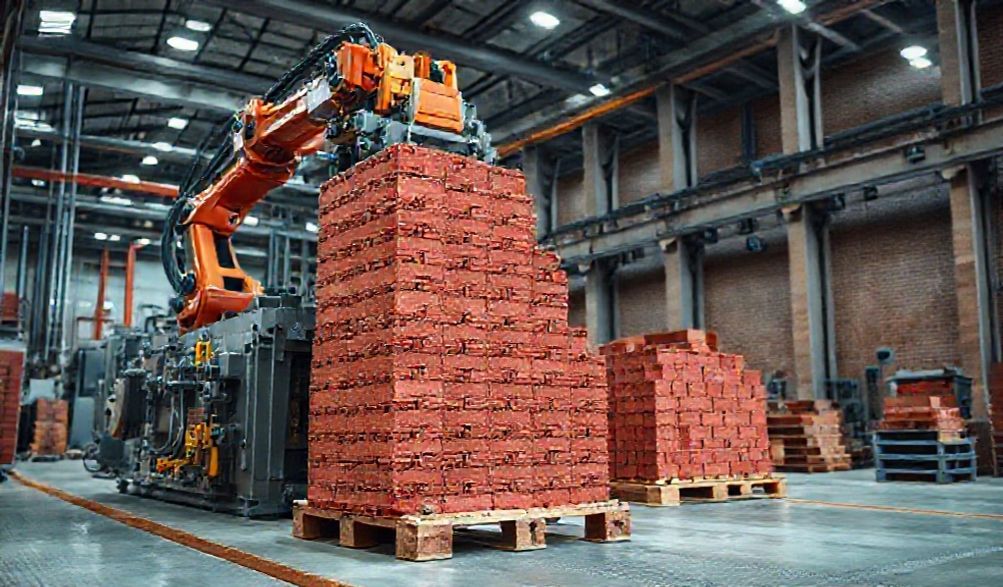
La Guía Definitiva de Máquinas de Ladrillos Industriales: Tipos, Beneficios y Cómo Elegir
Introducción
El mundo se construye con ladrillos. Desde los cimientos de las casas hasta las fachadas de los rascacielos, cada año se colocan miles de millones de ladrillos para dar forma a nuestro entorno. Para satisfacer esta demanda colosal, la industria ha evolucionado del trabajo manual a las maravillas tecnológicas. En el corazón de este ecosistema moderno de construcción se encuentra lamáquina industrial para fabricar ladrillosun gigante de eficiencia que transforma la tierra bruta y el agregado en los pilares de la civilización.
Esta guía integral está diseñada para dueños de negocios, gerentes de planta y especialistas en adquisiciones que navegan el complejo mercado de maquinaria para producción de ladrillos. Nuestro objetivo es eliminar el ruido mercadotécnico y proporcionar un recurso claro, imparcial y profundamente práctico. Compilada a partir de especificaciones de la industria, datos directos de fabricantes y décadas de mejores prácticas operativas, esta guía ofrece la información precisa que necesitas para realizar una inversión informada y con confianza. Aprenderás sobre los diferentes tipos de máquinas industriales para ladrillos, sus beneficios transformadores, una lista detallada de verificación para la selección y perspectivas operativas cruciales. Al final, contarás con el conocimiento necesario para elegir un sistema que se alinee perfectamente con tus objetivos de producción e impulse un crecimiento empresarial sostenible.
¿Qué es una Máquina de Ladrillos Industrial? Función Principal y Evolución
Una máquina industrial de ladrillos es un sistema automatizado de alta capacidad diseñado para la producción masiva de ladrillos, bloques y adoquines. Procesa materias primas —como arcilla, concreto (cemento, arena, agregados) o cenizas volantes— a través de una serie de operaciones controladas que incluyen mezclado, moldeado, compactación y, en ocasiones, curado o cocción. El resultado es un producto consistente y de alta calidad fabricado a una escala imposible de alcanzar con métodos manuales o semiautomáticos.
To appreciate the modern industrial brick machine, consider its evolution:
* Moldeo Manual: The centuries-old method of hand-packing clay into wooden molds, entirely dependent on skilled labor and weather conditions.
* Mechanical Revolution: The 19th century introduced steam-powered presses, increasing output but still requiring significant manual handling.
* The Age of Automation: Today’s systems integrate computerized controls, automated material handling, robotic palletizing, and sophisticated hydraulic or vibration technology. This evolution represents a shift from artisanal craft to precision engineering, where the focus is on repeatability, volume, and operational efficiency.
Key Types of Industrial Brick Machines and Their Applications
Understanding the core technologies is the first step in selecting the right equipment. The type of machine you need is fundamentally dictated by your available raw materials and target product line.
Máquinas para Fabricar Ladrillos de Arcilla
These machines are designed for the traditional and highly durable clay brick, commonly used in facing bricks, pavers, and high-strength construction applications.
- Proceso: It typically starts with an extruder. Pugged (mixed and de-aired) clay is forced through a die to form a continuous column of clay, which is then wire-cut into individual brick blanks. These “green” bricks are then dried and fired in a kiln.
- Key Sub-Types:
- Vacuum Extruders: Use a vacuum chamber to remove air from the clay, resulting in a denser, stronger brick with fewer imperfections.
- Automatic Cutters: Precisely slice the extruded clay column into bricks of uniform size.
- Mejor Para: Producers with access to good-quality clay deposits, those manufacturing traditional or architectural facing bricks, and markets where high compressive strength and weathering resistance are paramount.
Máquinas para Bloques de Concreto
This is the workhorse for producing a vast array of concrete masonry units (CMUs), including hollow blocks, solid blocks, paving stones, and interlocking bricks for landscaping and retaining walls.
- Proceso: A mix of cement, sand, and aggregate is vibrated under high pressure in a steel mold. This vibration compacts the material, removing air pockets and ensuring a dense, strong block. The machine then ejects the block onto a pallet for curing.
- Key Sub-Types:
- Máquinas de Bloques Estacionarias: High-output machines where the mold vibrates, and the pallet moves. Ideal for large, fixed plants.
- Mobile Block Machines (“Egg Layers”): The machine moves over a concrete slab, laying blocks directly on the curing floor. Offers lower initial cost and flexibility.
- Mejor Para: High-volume production of construction blocks, pavers, and landscaping products. Ideal where aggregate is readily available.
Máquinas para Hacer Ladrillos de Ceniza Volante
These machines support sustainable construction by utilizing fly ash, a by-product of coal-fired power plants, as a primary raw material.
- Proceso: Fly ash is mixed with a small amount of lime, gypsum, and water. The mixture is then compacted under high hydraulic pressure (or vibration) in a mold, where a chemical reaction (lime-pozzolanic reaction) occurs, giving the brick its strength without the need for firing.
- Highlight: The process offers significant environmental benefits by diverting industrial waste from landfills and reducing the carbon footprint associated with fired clay or Portland cement production.
- Mejor Para: Eco-conscious producers, regions with abundant fly ash supply, and projects aiming for green building certifications.
Automatic vs. Semi-Automatic Brick Plants
Beyond material type, the level of automation is a critical decision point.
- Plantas Completamente Automáticas: Integrate all processes—raw material feeding, mixing, molding, curing, stacking, and palletizing—into one continuous, computer-controlled line. They require minimal human intervention, primarily for monitoring and maintenance.
- Pros: Maximum output, exceptional consistency, low labor costs, high safety.
- Contras: High capital investment, complex installation, requires reliable utilities.
- Plantas Semiautomáticas Mechanize the core molding process but require manual intervention for tasks like feeding raw materials, moving pallets, or stacking finished products.
- Pros: Lower initial cost, simpler operation and maintenance, easier to adapt.
- Contras: Higher labor dependency, lower overall output, greater potential for product variation.
Critical Benefits of Investing in Modern Industrial Brick Machinery
Justifying the capital expenditure for an industrial brick machine requires a clear understanding of its return on investment. The benefits extend far beyond simple production speed.
Unmatched Production Efficiency & Scale
Modern machinery shatters the output limitations of manual methods.
* Tarifas de Salida: A medium-sized automatic concrete block machine can produce 4,000 to 10,000 standard blocks in an 8-hour shift. Large clay brick extrusion lines can exceed 50,000 bricks per day.
* Operación 24/7 These robust systems are designed for continuous operation, allowing you to scale production to meet large project deadlines or sustained market demand.
Calidad y Consistencia Superior del Producto
Precision engineering ensures every unit meets exact specifications.
* Uniformidad: Automated processes guarantee identical dimensions, weight, and density for every brick or block, which is critical for efficient bricklaying and structural integrity.
* Fuerza Controlada: Hydraulic pressure and vibration are precisely calibrated to achieve target compressive strengths (e.g., 15 MPa, 20 MPa, etc.), minimizing reject rates and ensuring compliance with building codes.
Significant Reduction in Operational Costs
The investment pays for itself through long-term operational savings.
* Optimización de Mano de Obra: One automated line can replace dozens of manual workers, transforming labor costs from a variable, scaling expense into a fixed, manageable one.
* Eficiencia de Materiales: Precise mixing and molding minimize raw material waste. Modern systems often include recycling loops for unused material.
* Energy Savings: Newer machines incorporate energy-efficient motors, pumps, and optimized cycles, reducing per-unit power consumption.
Seguridad Mejorada del Trabajador y Diseño Ergonómico
Automation directly addresses the high-risk environment of traditional brickyards.
* Risk Mitigation: Machines handle the most hazardous tasks: heavy material lifting, high-pressure molding, and moving products through hot kilns or curing chambers.
* Ergonomía: Designed with operator safety in mind, featuring guards, emergency stops, and controls that reduce physical strain and the potential for repetitive stress injuries.
How to Choose the Right Industrial Brick Machine: A Buyer’s Checklist
Selecting the ideal machine is a strategic process. Rushing this decision based on price alone is the most common and costly mistake. Follow this expert checklist.
Assess Your Raw Material Availability
Your local resources dictate the technology.
* Do you have access to good, plastic clay? → Clay Brick Machine.
* Is sand and aggregate plentiful and affordable? → Concrete Block Machine.
* Are you near a thermal power plant with fly ash? → Fly Ash Brick Machine.
* Action: Conduct a formal analysis of material cost, quality, and long-term supply stability.
Define Your Production Output Requirements
Match the machine’s capacity to your business plan.
* Calculate current and projected 5-year market demand.
* Factor in a capacity buffer (e.g., 20-30%) for growth and maintenance periods.
* Remember: It’s often more cost-effective to slightly overspec a machine than to outgrow an underpowered one too quickly.
Evaluate Key Machine Specifications
Look beyond the brochure. Scrutinize the technical details.
* Tiempo de Ciclo: How many seconds per mold cycle? This directly defines hourly output.
* Presión de Operación: For hydraulic machines, higher pressure (measured in tons or MPa) generally correlates with better brick density and strength.
* Versatilidad del Molde: How easy and quick is it to change molds? What is the cost of additional molds for different products?
* Requisitos de Energía: Ensure your facility can supply the necessary voltage and amperage (e.g., 380V, 50Hz industrial power).
Consider Total Cost of Ownership (TCO)
The purchase price is just the entry ticket.
* Instalación y Puesta en Marcha: Costs for foundation work, utility hookups, and technician travel.
* Entrenamiento: Budget for comprehensive operator and maintenance training.
* Refacciones: Inquire about the cost and lead time for critical wear parts (molds, liners, hydraulic seals).
* Consumo de Energía: Request specific power consumption data for a full production cycle.
Verify Manufacturer Reputation and Support
This is the single most important factor for long-term success and embodies the principle of Confianza.
* Experiencia: How long has the manufacturer been building industrial-grade machines? Ask for client references and visit existing installations if possible.
* Certificaciones: Look for valid international quality and safety certifications (ISO, CE). These are indicators of standardized manufacturing processes.
* Soporte Postventa: A reliable partner offers:
* Clear warranty terms.
* Availability of detailed manuals and schematics.
* A network of service technicians or trained local agents.
* A readily available inventory of spare parts.
Essential Operation and Maintenance Best Practices
Protecting your investment requires disciplined operation and proactive care.
Daily and Weekly Maintenance Routines
Preventative maintenance is far cheaper than emergency repairs.
* Diariamente Check and top up hydraulic oil and lubricants. Clean excess material from molds, hoppers, and conveyors. Visually inspect for loose bolts or leaks.
* Semanal Thoroughly clean the entire system. Check wear parts like mixer blades, mold liners, and conveyor belts. Calibrate sensors and pressure gauges.
Solución de problemas comunes de funcionamiento
Quick diagnosis minimizes downtime.
* Poor Brick Density/Strength: Likely causes: incorrect raw material mix (too dry/too wet), insufficient compaction pressure, or worn mold liners.
* Surface Cracks: Often due to too-rapid drying (concrete) or improper clay preparation and extrusion speed.
* Bricks Sticking to Molds: Caused by worn or poorly maintained mold surfaces, or an incorrect release agent mixture.
Ensuring Operator Safety and Training
Safety is non-negotiable.
* Entrenamiento: Every operator must be formally trained on startup/shutdown procedures, safe operation, and emergency protocols.
* Protocols: Enforce lockout-tagout (LOTO) during maintenance. Ensure all safety guards and emergency stop buttons are functional and used.
Frequently Asked Questions (FAQ) About Industrial Brick Machines
Q: What is the average production capacity of a standard industrial brick machine?
A: Capacities vary dramatically by type and automation. A medium automatic concrete block machine produces 4,000-10,000 blocks per 8-hour shift. Large clay brick extruders can output over 50,000 bricks daily. Always define “standard” by your specific product and mold configuration.
Q: What is the typical lead time for delivery and installation?
A: For standard models, expect 30-60 days for manufacturing and shipping. Complex, customized lines take longer. On-site installation and commissioning with factory engineers typically require an additional 1-3 weeks.
Q: Can one machine produce different brick sizes and styles?
A: Yes, through interchangeable molds. However, factor in mold changeover time (which affects productivity) and the cost of purchasing additional molds. Discuss the changeover process and mold pricing with the manufacturer upfront.
Q: How important is after-sales service when purchasing?
A: Critical. The machine’s long-term value is directly tied to the manufacturer’s support. Reliable technical assistance, available spare parts, and proper training are essential for minimizing costly downtime and ensuring a return on your investment. Prioritize service reputation over a marginally lower price.
Q: What are the main cost drivers for an industrial brick plant?
A: The five major cost centers are: 1) The brick machine itself, 2) Raw material handling and batching systems, 3) Land, factory shed, and foundation, 4) High-capacity power connection and utilities, and 5) Skilled labor for operation and maintenance.
Conclusión
Navigating the world of industrial brick machinery is a significant undertaking, but armed with the right knowledge, it becomes a strategic opportunity. We’ve explored the core technologies—from clay extruders to concrete block makers and eco-friendly fly ash systems—and detailed how they deliver unparalleled efficiency, quality, and safety. The path to a successful investment is not about finding the cheapest machine, but the right machine.
Remember the cornerstone advice that defines expert, authoritative, and trustworthy guidance: conduct a thorough needs assessment, focus relentlessly on the Total Cost of Ownership, and above all, partner with a manufacturer whose reputation for quality and support is beyond reproach. Use this guide as your foundational resource. Your logical next step is to engage with shortlisted manufacturers, request detailed quotations and factory audit reports, and consult with a production expert to finalize a project plan that will build the foundation of your business for years to come.
<