
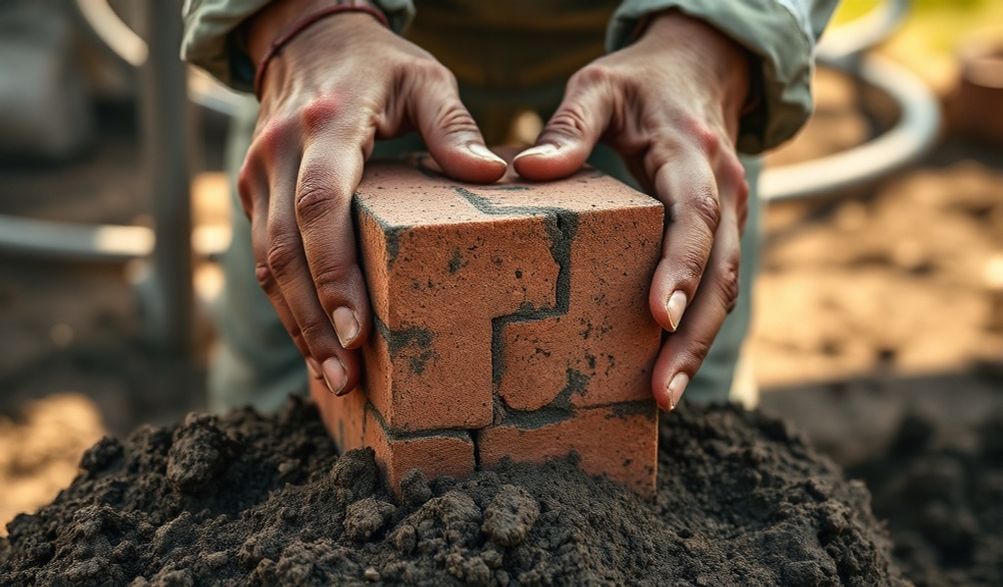
The Ultimate Guide to Soil Interlocking Brick Block Making Machines: Build Sustainably
The global construction industry stands at a crossroads. On one side, there’s an ever-growing need for affordable housing and infrastructure. On the other, the urgent imperative to reduce environmental degradation and carbon emissions. For builders, entrepreneurs, and communities worldwide, this presents a critical challenge: how can we build durable, safe structures without exacerbating ecological and economic burdens?
The answer may lie not in a futuristic material, but in one of humanity’s oldest building resources: the earth beneath our feet. Enter the soil interlocking brick block making machine—a transformative piece of technology that turns local, raw soil into precision-engineered, high-strength building blocks. Also known as compressed earth block (CEB) machines, these devices empower users to create sustainable bricks with an interlocking design, drastically reducing the need for mortar and skilled labor.
This comprehensive guide is designed to be your authoritative resource. Whether you’re a builder exploring eco-friendly methods, an entrepreneur assessing a new business venture, an NGO planning a community project, or simply an eco-conscious individual, we will provide the expertise, experience, and trustworthy information you need. We’ll demystify the technology, break down the tangible benefits, guide you through selecting the right machine, detail the production process from soil to structure, and explore the viable business potential this technology unlocks.
What is a Soil Interlocking Brick Machine? Understanding the Technology
At its core, a soil interlocking brick machine is a mechanical press. It’s a tool designed to solve a fundamental problem: how to efficiently form soil into a consistently strong, geometrically precise building unit without the energy-intensive process of kiln-firing.
Core Principle: Compression and Interlock
The magic lies in two key principles: high-pressure compressionyinterlocking geometry.
- Compresión: Damp, stabilized soil is compacted under immense pressure (often measured in tons) within a steel mold. This force eliminates air pockets, aligns soil particles, and creates a dense, cohesive block with remarkable compressive strength.
- Interbloqueo: Unlike a standard rectangular brick, these blocks feature designed ridges, grooves, or knobs. Like LEGO® bricks, they fit together seamlessly. This interlocking system provides mechanical stability, minimizes lateral movement, and reduces the volume of mortar required by up to 50-70%, sometimes even allowing for “dry-stacking” in certain applications.
Componentes Clave y Cómo Funcionan
While designs vary, most machines share these fundamental components:
- Hopper:La cámara donde se carga la mezcla de suelo preparada.
- Molde/Matriz: A hardened steel cavity that defines the block’s final shape and interlocking pattern.
- Sistema de Compresión: The heart of the machine. This can be a manual lever system, a mechanically driven piston, or a hydraulic ram that applies the necessary pressure.
- Mecanismo de Eyección:Una vez comprimido, un mecanismo empuja el bloque terminado fuera del molde, listo para el curado.
Soil Interlocking Bricks vs. Traditional Fired Bricks
Let’s look at a direct comparison:
| Feature | Soil Interlocking (Compressed Earth) Bricks | Traditional Fired Clay Bricks |
| :— | :— | :— |
| Energy Use | Very low (only for compression) | Extremely high (kiln firing ~1000°C+) |
| Carbon Emissions | Negligible to low (from minimal stabilizer) | Very high (from burning fuel & chemical reactions) |
| Primary Material | On-site or local soil (up to 95%) | Topsoil clay, often mined |
| Material Cost | Very low (mostly soil) | Higher (clay, fuel, transport) |
| Thermal Insulation | Excellent (high thermal mass, regulates temperature) | Poor (conducts heat/cold more readily) |
| Skill Required for Production | Moderate (focus on soil prep & machine operation) | High (kiln operation is a specialized skill) |
Key Benefits of Using an Interlocking Earth Block Machine
Adopting this technology isn’t just about making bricks; it’s about embracing a smarter, more resilient approach to construction.
Ventajas Ambientales y Económicas
- Ultra-Low Carbon Footprint: Eliminating the firing process removes the largest source of CO2 in brick production. You’re building with a near-zero embodied energy material.
- Hyper-Local Material Sourcing: Up to 95% of your material is underfoot. This slashes material transport costs, fuel use, and supply chain dependencies.
- Minimal Waste: Any broken blocks or construction waste can be crushed and reintroduced into the production cycle. There’s no toxic byproduct.
Construction Efficiency and Strength
- Faster Building Times: The interlocking design simplifies alignment and reduces the need for extensive mortar work. Walls go up significantly faster.
- Proven Structural Strength: Properly made compressed earth blocks can achieve compressive strengths exceeding 5 MPa (over 700 psi), which is more than adequate for single and even multi-story load-bearing walls, as per building codes in many countries.
- Natural Climate Control: Earth blocks have high thermal mass. They absorb heat during the day and release it at night, naturally regulating indoor temperatures and reducing heating/cooling costs.
Empowerment and Accessibility
This is perhaps the most profound benefit. This technology is a great democratizer.
* Community Empowerment: It enables community-led housing projects, putting construction capability directly into the hands of residents.
* Self-Build Feasibility: With some training, individuals can build their own homes, drastically reducing costs.
* Local Entrepreneurship: A single machine can form the basis of a small business, supplying blocks to a local market and creating jobs in production, construction, and finishing.
Types of Soil Interlocking Brick Machines: Choosing the Right One
Selecting the correct machine is critical to your project’s success. The choice hinges on scale, budget, and context.
Manual Press Machines
- Caso de Uso Ideal: Perfect for small-scale projects (a single home, a community center), remote locations with no grid power, NGO-led development work, and pilot/testing phases.
- Pros:
- Lowest upfront capital cost.
- Zero operating energy costs—fully human-powered.
- Highly portable and simple to maintain.
- Excellent for training and understanding the core process.
- Contras:
- Lower output. A skilled two-person team can produce 300-500 blocks in an 8-hour day.
- Physically demanding. Consistency depends on operator strength and stamina.
- Block density may have slight variations.
Semi-Automatic & Fully Automatic Electric/Hydraulic Machines
- Caso de Uso Ideal: Tailored for small-to-medium enterprises (SMEs), commercial block production yards, and larger housing projects requiring consistent, high-volume output.
- Operación: These machines use an electric motor to drive a hydraulic pump. The hydraulic ram applies consistent, high pressure with minimal manual effort. Loading and ejection may be manual (semi-auto) or fully automated.
- Pros:
- High, Consistent Output:Puede producir1,000 to 3,000+ blocks per day.
- Calidad Uniforme: Hydraulic pressure ensures every block has identical density and strength.
- Easier Operation: Reduces physical labor significantly.
- Contras:
- Higher initial investment cost.
- Requires a reliable power source (grid or generator).
- More complex, requiring basic mechanical knowledge for maintenance.
Critical Selection Factors for Your Project
Making an informed decision requires honest assessment. Use this checklist:
- Escala del Proyecto: How many blocks do you need per day/week? Is this a one-off build or an ongoing business?
- Available Power: Do you have reliable grid electricity, or will you operate off-grid (favoring manual or generator-powered options)?
- Soil Type Compatibility: Have you tested your soil? Ensure the machine supplier provides guidance on suitable soil parameters.
- Presupuesto: Account for the total cost: machine price, shipping, import duties, stabilizer, and labor.
- Mano de Obra Disponible: Do you have a team? Manual machines require able-bodied operators.
- Desired Block Specs: What block size, shape, and interlocking pattern do you need for your designs? Machines have fixed molds.
The Complete Process: From Soil to Building Block
Success with this technology is 90% preparation and 10% pressing. Respect this process.
Step 1: Soil Testing and Stabilization (The Most Crucial Step)
This step cannot be skipped. The right soil mix is the foundation of a strong block.
* Composición del Suelo: You need a balanced mix of arcilla (acts as the binder), siltysand (provides skeletal strength). A “loamy” soil is often ideal. Pure clay will shrink and crack; pure sand will not bind.
* Estabilización: A small percentage (typically 5-10%) of a stabilizer is added to improve durability and water resistance.
* Estabilización con Cemento: Most common. Provides strong, water-resistant blocks suitable for most climates.
* Estabilización con Cal: Good for certain clay types, offers a more flexible, vapor-permeable block.
* Simple Field Tests: The “drop” test (a ball of soil shouldn’t crack excessively when dropped) and the “sausage” test (rolling soil to see if it holds together) provide initial clues. For serious projects, professional lab testing is recommended.
Step 2: Material Preparation: Mixing and Curing
- Cribado: Remove stones, roots, and large organic matter from the soil.
- Mezcla: Combine sieved soil with the precise amount of stabilizer. Add water gradually to achieve the optimal moisture content (usually around 10-15%). The mixture should hold its shape when squeezed but not be soggy. A mechanical mixer is essential for consistency beyond very small scales.
- Curado: After pressing, blocks are not ready to use. They must be cured. This involves keeping them under damp burlap or plastic sheeting for 7-14 days, allowing the stabilizer (especially cement) to hydrate and gain strength. After curing, they should be air-dried for a further 2-3 weeks before use in construction.
Step 3: Machine Operation and Block Production
- Configuración: Ensure the machine is on a level, stable base.
- Cargando: Fill the hopper/mold cavity with the prepared mix. Avoid over or under-filling for consistent block height.
- Compresión: Apply pressure according to the machine’s instructions. Hold for a moment.
- Eyección: Release and eject the block onto a pallet or level curing area.
- Safety: Always wear gloves and safety glasses. Keep hands clear of moving parts.
Step 4: Quality Control and Construction Basics
- Verificaciones de Calidad: Perform a simple drop test (a cured block should not break when dropped from waist height onto a hard surface). Visually inspect for consistent edges and lack of major cracks.
- Construction Best Practices:
- Cimiento Requires a solid, raised foundation (plinth) to protect earth blocks from ground moisture and splashback.
- Poniendo: Use a thin slurry mortar (made from the same soil mix) only in the horizontal joints. The interlock handles vertical stability.
- Roof: A good, wide overhanging roof (at least 18 inches) is the primary weather protection for an earth wall.
- Finishing: While blocks can be left exposed, a breathable plaster (like lime or earth-based) offers enhanced weather protection and aesthetics.
Building a Viable Business with a Block Making Machine
For the entrepreneur, this technology is a scalable opportunity rooted in sustainability.
Market Opportunity and Business Models
- Target Markets: Individual homeowners, local contractors, government affordable housing programs, eco-resorts, schools, and disaster-reconstruction NGOs.
- Potential Business Models:
- Mobile On-Site Production: Bring the machine to a client’s plot, using their soil to produce blocks for their project.
- Centralized Block Yard: Establish a production facility supplying blocks to a local region.
- Integrated Service: Offer a package: machine supply, soil testing, training, and technical support.
Cost Analysis and ROI Considerations
Disclaimer: The following are illustrative estimates. Costs vary dramatically by region, scale, and local material prices.
* Inversión Inicial: Manual machine: $1,000 – $3,000. Semi-automatic hydraulic: $5,000 – $15,000.
* Operational Costs (per block estimate): Soil (negligible), Stabilizer (e.g., cement for 5% mix), Labor, Site overhead.
* Revenue Potential: Price per block competitively against fired bricks. Your major selling point is lower cost for the client (no transport) and environmental benefits. A clear 20-40% margin is often achievable. A small block yard with one hydraulic machine can become profitable within the first year with consistent sales.
Sourcing a Reliable Machine and Finding Support
- Research Suppliers: Look for manufacturers with a long track record, transparent technical specifications, and positive testimonials. Ask for videos of their machines in operation.
- Critical Questions:
- Is there local availability of spare parts (like hydraulic seals or mold faces)?
- Do you provide assembly, operation, and maintenance manuals?
- Is training included or available?
- Can you provide technical data sheets for block strength?
- Find Community: Seek out online forums, social media groups, and workshops dedicated to earth building. Learning from experienced practitioners is invaluable.
Frequently Asked Questions (FAQ)
Q1: What type of soil is best for an interlocking brick machine?
A: A balanced mix of clay, silt, and sand—often called “loam.” Pure clay or pure sand will not work well. Conducting a simple soil test is the essential first step for any project.
Q2: Are these bricks strong and waterproof enough for my climate?
A: Properly stabilized and compressed bricks have high compressive strength suitable for family homes. They are water-resistant, not waterproof. Key to durability in wet climates are: a strong stabilizer (cement), wide roof overhangs, a raised foundation, and a breathable, protective render like lime plaster.
Q3: Can I start this business with no prior experience?
A: Yes, but a commitment to learning is non-negotiable. Start with soil science and small trial batches. Many reputable suppliers offer basic operational training. Partnering with or learning from an experienced earth builder is the fastest path to success.
Q4: How many blocks can a manual machine produce per day?
A: A skilled, efficient two-person team operating a manual press can typically produce between 300 and 500 blocks in an 8-hour workday, depending on workflow organization and mix preparation.
Q5: Do I need any special permits to build with earth blocks?
A: Building codes vary globally. In many regions, earth construction is a recognized, codified method (e.g., ASTM E2392). Always consult your local building authority early. Having engineered strength data for your blocks and designs from a qualified professional will greatly facilitate permit approval.
Conclusión
Elsoil interlocking brick block making machine is far more than a piece of equipment; it represents a practical, sustainable, and economical paradigm shift in how we think about construction. It bridges the gap between ecological responsibility and the urgent need for affordable, dignified shelter.
As we’ve outlined, true success with this technology hinges on respecting the science behind it. The machine is a tool, but the pillars of success are soil knowledge, precise stabilization, and meticulous quality control. It is a technology that empowers, reduces environmental impact, and builds resilience from the ground up.
Your journey starts not with a purchase order, but with a handful of soil. We encourage you to test your local earth, connect with the global community of earth builders, and seek hands-on demonstrations from potential suppliers. By investing time in this foundational knowledge, you invest in the long-term success of your sustainable building project or enterprise.
<