
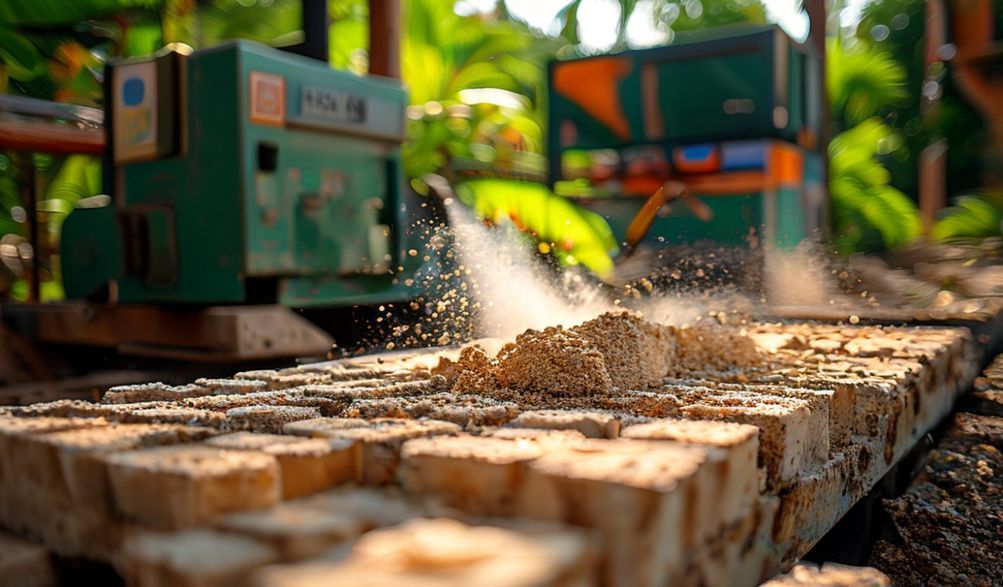
Your Complete Guide to Block Machines in Jamaica: Types, Costs, and Top Suppliers
Introducción
If you’re a contractor, developer, or entrepreneur in Jamaica searching for “block machine,” you’re likely looking for clarity, not just a list of products. The Jamaican construction sector is robust, but navigating the market for essential machinery like block-making equipment can be daunting. With varying information on costs, suppliers, and suitability, making an informed investment feels challenging.
This guide is designed to be your definitive resource. Drawing on deep industry experience within the Caribbean context, we cut through the noise to provide authoritative, trustworthy, and actionable advice. Whether you’re pouring the foundation for a single-family home in St. Ann or launching a block-supply business in Kingston, understanding your options is the first critical step. We’ll explore the core technology, break down the types of machines available locally, analyze costs, and guide you to reputable suppliers. Consider this your foundational blueprint for making a sound, profitable decision in Jamaica’s dynamic construction landscape.
Understanding Block Machines: Core Technology and Applications
Before diving into models and price tags, it’s crucial to understand what a block machine does and why it’s the backbone of modern Jamaican construction.
¿Cómo Funciona una Máquina de Bloques?
At its heart, a block machine automates and perfects the process of making concrete blocks. While sophistication varies, the core principles remain consistent:
- Mezcla: Pre-measured quantities of cement, sand (often local limestone dust or river sand), and aggregate are mixed with water to form a consistent, semi-dry concrete mix.
- Moldeo: This mix is fed into a mold box, which defines the block’s shape (e.g., 4-inch, 6-inch, hollow, solid, interlocking).
- Compactación: The machine applies significant pressure, often combined with high-frequency vibration. This force removes air pockets and compresses the material, ensuring the block’s density and structural strength.
- Expulsión/Endurecimiento: The freshly formed (or “green”) block is ejected onto a pallet or the ground. It then undergoes a critical curing process, where it is kept moist for several days to achieve its full strength through hydration.
This mechanized process ensures uniformity, strength, and speed that manual methods cannot match.
Primary Applications in the Jamaican Context
The versatility of block machines makes them indispensable across the island:
- Construcción Residencial: The primary driver. Used to produce blocks for foundations, load-bearing walls, interior partitions, and fencing for houses, townhouses, and apartment complexes.
- Proyectos Comerciales e Industriales: Demands higher, consistent output for offices, warehouses, hotels, and retail spaces. Often requires specialized blocks for specific architectural or structural needs.
- Entrepreneurial Ventures: Starting a block-making business is a common and viable enterprise. It supplies local builders, hardware stores, and direct clients, addressing consistent market demand.
- Infrastructure & Community Projects: Useful for producing paving stones for walkways, interlocking blocks for drainage systems, and standard blocks for community centers or schools.
Types of Block Machines Available in Jamaica
The Jamaican market offers a spectrum of machines, from simple manual setups to fully automated factories. Your choice hinges on scale, budget, and labor considerations.
Máquinas de Bloqueo Manual
- Descripción y Proceso: These are human-powered machines. An operator manually fills the mold, engages a lever mechanism to apply pressure, and then releases the block to dry. Output is entirely dependent on operator strength and stamina.
- Mejor Para: Extremely small, personal projects (e.g., a backyard wall), DIY enthusiasts, or very remote areas with no access to electricity. It’s an entry point with minimal investment.
- Ventajas y Desventajas:
- Pros: Very low upfront cost, no power required, simple to understand and repair.
- Contras: Extremely labor-intensive, very low production (e.g., 100-300 blocks per day), inconsistent block quality, physically demanding.
Semi-Automatic Block Machines
- Descripción y Proceso: This is the most popular category for small-to-medium businesses in Jamaica. The machine uses an electric motor or diesel engine to power the vibration and compaction. Operators manually feed the raw mix and remove finished blocks, but the core forming process is mechanized.
- Mejor Para: Small to medium-sized contractors, housing developers, and block-making startups. They offer a excellent balance between productivity and affordability.
- Ventajas y Desventajas:
- Pros: Significantly higher and more consistent output than manual machines (e.g., 1,000 – 3,000 blocks per 8-hour shift), reasonable cost, good block quality, less physically demanding labor.
- Contras: Still requires a small crew for operation, output is limited by manual feeding/removal.
Fully Automatic Block Machines
- Descripción y Proceso: These are production-line systems. They automate the entire process: batching, mixing, conveying, molding, compacting, curing, and even stacking. Often controlled by programmable logic controllers (PLCs).
- Mejor Para: Large block manufacturing plants, major construction companies undertaking massive developments, and established suppliers aiming for island-wide distribution.
- Ventajas y Desventajas:
- Pros: Very high, consistent output (e.g., 5,000 – 20,000+ blocks per shift), superior and uniform block quality, minimal manual labor required, highest efficiency.
- Contras: Very high capital investment, requires significant space and stable three-phase power, complex maintenance needing specialized technicians.
Máquinas de Bloques Móviles
- Descripción y Proceso: These are block-making plants mounted on a trailer or truck bed. They are typically semi- or fully-automatic systems designed for portability.
- Mejor Para: Large-scale housing developments (like NDX or NHT projects) where producing blocks directly on-site drastically cuts transport costs. Also ideal for remote infrastructure projects.
- Ventajas y Desventajas:
- Pros: Eliminates block transportation costs and damage, allows for just-in-time production on large sites, flexible deployment.
- Contras: Higher machine cost due to mobility features, requires on-site setup of raw material and power sources.
Key Considerations When Choosing a Block Machine in Jamaica
Selecting the right machine is more than picking a type. Use this authoritative checklist to evaluate your needs against local realities.
Evaluando Sus Necesidades de Producción
- Producción Diaria/Semanal: Calculate your current and near-future block requirements. A machine for a single house project has vastly different needs than one supplying multiple contractors.
- Variedad de Bloques: Do you need only standard 4” and 6” blocks? Or will you market hollow blocks, interlocking paving stones, or decorative blocks? Ensure the machine’s mold options match your product lineup.
- Growth Plan: Are you planning to scale? Investing in a machine that can handle 20-30% more capacity than your initial need can save you from a costly upgrade too soon.
Power Source and Utility Requirements
- Jamaican Grid: Most electric machines are configured for Jamaica’s standard 220V/50Hz single-phase or 440V three-phase power. Verify your site’s electrical capacity.
- Engine Option: In parishes with less reliable electricity, a machine with a diesel or petroleum engine is a wise, albeit noisier and more expensive-to-run, alternative.
- Water Supply: Consistent, clean water access is non-negotiable for mixing and curing. Calculate your daily water needs.
Machine Durability and After-Sales Support
- Calidad de Construcción: Look for robust steel frames, high-quality vibration motors, and hardened steel molds. Jamaica’s climate demands corrosion-resistant materials.
- The Critical Local Factor: This cannot be overstated. Does the supplier have a technician in Jamaica? Are spare parts (molds, springs, motors) readily available on the island? A machine is useless if it’s down for weeks waiting for a part from overseas.
- Warranty & Reputation: Choose a supplier with a proven track record. A solid warranty (1+ years on core parts) and positive testimonials from other Jamaican clients are invaluable.
Budget and Total Cost of Ownership
- Upfront Cost: Includes the machine price, import duties (if applicable), shipping, and installation.
- Operating Costs: Factor in electricity/fuel, labor wages, raw material costs (cement, aggregate), and routine maintenance.
- ROI for Business: If starting a venture, create a detailed business plan. Calculate your cost per block versus the selling price to understand your payback period and profit margins.
The Jamaican Block Machine Market: Suppliers and Logistics
Navigating the supply chain requires trustworthy insight. Here’s a balanced view of your procurement options.
Local Dealers and Distributors
- Resumen: Established machinery suppliers in Kingston, Montego Bay, and Spanish Town often carry brands from China, India, or Turkey. They may have demonstration units.
- Ventajas: Easier communication, potential for in-person inspection, local warranty handling, and faster access to basic spare parts and service.
- Consideración: Prices may include a markup for their service and overhead.
Importing Directly from Manufacturers
- El Proceso: You source from manufacturers in China, India, Turkey, or the USA. You are responsible for freight, insurance, Jamaican customs clearance, duties (which can be significant for machinery), and port fees.
- Key Sourcing Countries: China offers competitive pricing, Turkey is known for good quality semi-automatic machines, and the USA/EU often have higher-end, durable models.
- Risks & Benefits: Potentially lower unit cost, but you assume all logistical, financial, and technical risk. After-sales support can be challenging across time zones and languages.
The Used Equipment Market
- Finding Them: Check online marketplaces like JAMAQ.com, Facebook Marketplace, and industry networks. Sometimes, upgrading businesses sell their old machines.
- Inspection Checklist: MUST include: inspection of the frame for cracks/welds, test-running the motor and vibrator, checking mold wear, verifying hydraulic systems for leaks, and reviewing maintenance history.
- Caveats: Can offer major savings but comes with “as-is” risk. Factor in potential immediate repair costs. Ensure critical spare parts are still available for the model.
Getting Started: Setup, Operation, and Best Practices
With your machine selected and purchased, proper setup and operation are key to longevity and profitability.
Site Preparation and Installation
- Espacio: Ensure a level, concrete-paved area large enough for the machine, raw material storage (protected from rain), block curing, and finished product storage.
- Cimiento Some heavier machines require a simple concrete foundation to stabilize operation and reduce vibration.
- Safety: The site must be well-organized. Operators should use personal protective equipment (PPE): gloves, safety glasses, and steel-toe boots.
Sourcing Raw Materials in Jamaica
- Cemento: Source consistently from major brands (Caribbean Cement, etc.) through reputable hardware stores or direct distributors.
- Agregados: Use clean, well-graded limestone chips or river sand. The quality of your aggregate directly impacts block strength. Establish a reliable relationship with a quarry or sand pit.
- Pigmentos: For colored blocks, imported oxide pigments are available through specialty construction chemical suppliers.
- Consistency is Key: A standardized mix design (e.g., a 1:6 cement-to-aggregate ratio) and consistent material quality are essential for producing blocks that meet the Jamaican Bureau of Standards (BSJ) JS 2:1997 specification.
Basic Operation and Maintenance Routine
- Diariamente Clean the machine thoroughly at the end of each shift to prevent cement buildup, which can seize moving parts. Check for loose bolts and nuts.
- Semanal Lubricate all moving parts (pivots, bearings) as per the manual. Inspect mold liners for wear and check vibration motor mounts.
- Troubleshooting Common Issues:
- Poor Compaction/Weak Blocks: Check vibration motor function, ensure mix is not too dry/wet.
- Blocks Sticking in Mold: Mold may need cleaning or a release agent; check for wear.
- Entrenamiento: Invest time in properly training your operators. They should understand the machine’s functions, safety protocols, and basic troubleshooting.
Frequently Asked Questions (FAQ) About Block Machines in Jamaica
Q1: What is the average cost of a block machine in Jamaica?
A: Prices vary dramatically. Basic manual machines can start around JMD $150,000. A quality semi-automatic machine suitable for a small business typically ranges from JMD $800,000 to JMD $3 million. Fully automatic systems begin around JMD $5 million and can go much higher. Always get detailed quotes including delivery and installation.
Q2: Do I need any special license to operate a block-making business in Jamaica?
A: Yes. You must register your business with the Companies Office of Jamaica (COJ). Depending on your location and scale, you may need environmental permits from NEPA and approval from your local Parish Council. For compliance, always consult with the relevant authorities.
Q3: Can I produce blocks that meet Jamaican Bureau of Standards (BSJ) requirements?
A: Absolutely. Meeting the JS 2:1997 standard is a strong selling point. It requires using a capable machine, the correct mix design, proper curing, and quality materials. You can submit sample blocks to the BSJ for testing and certification, which builds immense trust with clients.
Q4: What is the typical profit margin for a block-making business in Jamaica?
A: Margins are highly dependent on operational efficiency, scale, and material costs. A well-managed, medium-scale operation can often achieve net profit margins between 20% and 35%. Creating a detailed business plan with realistic local cost inputs is essential to project your specific margin.
Q5: How do I maintain my machine in Jamaica’s climate?
A: Jamaica’s humidity and heat require diligent care. Prioritize: 1) Immediate cleaning to prevent cement corrosion, 2) Protecting electrical panels and motors from moisture and dust, 3) Using appropriate lubricants that won’t wash away easily, and 4) Storing spare parts in a dry place. Choose a supplier who understands these climate-specific challenges.
Conclusión
Choosing the right block machine in Jamaica is a pivotal decision that blends technical understanding with sharp business acumen. It’s not merely a purchase; it’s an investment in the foundation of your construction project or the launchpad for your entrepreneurial venture. This guide has equipped you with the expert framework—from demystifying core technology and comparing machine types to navigating local suppliers and operational best practices.
The path forward is clear. Define your specific needs with precision, consult multiple reputable suppliers, and insist on seeing machines in operation if possible. Ask the hard questions about after-sales support and parts availability. By taking this prudent, well-researched approach, you will transform your investment into a reliable, productive asset, driving your contribution to Jamaica’s built environment and your own financial growth.
- For Contractors: Use your project specifications to request and compare detailed quotes from 2-3 local suppliers.
- Para Emprendedores: Connect with the Jamaica Manufacturers and Exporters’ Association (JMEA) or a local business development agency for guidance on formalizing your venture.
- For All: Prioritize building a relationship with a supplier who offers not just a machine, but lasting partnership and support.