
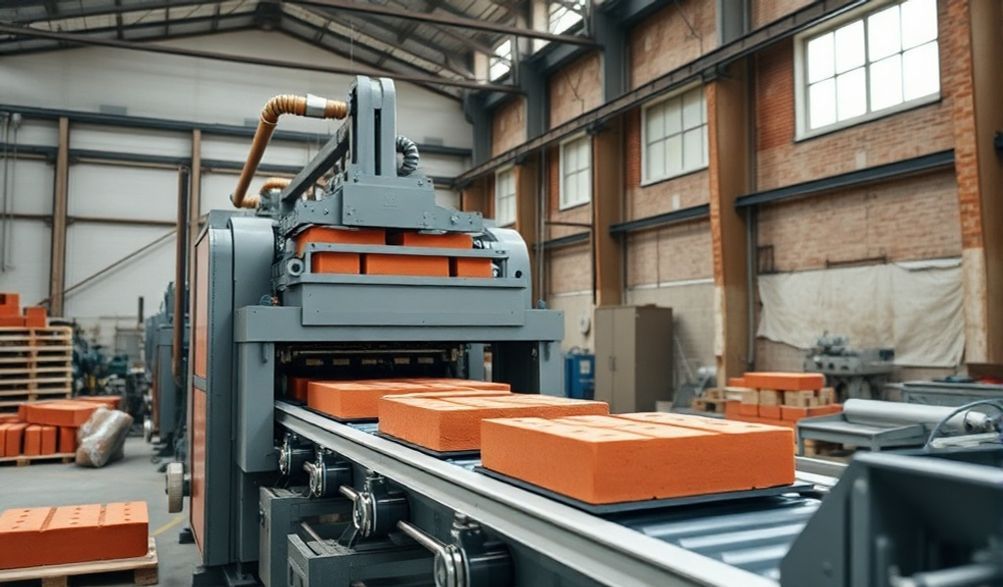
Your Complete Guide to Finding a Brick Making Machine for Sale in Belgium
Introducción
In the heart of Europe, Belgium’s construction sector is a dynamic force, characterized by a steady demand for residential projects, commercial renovations, and critical infrastructure. A recent focus on sustainable, energy-efficient building within the EU has only solidified the position of durable, thermally efficient bricks as a material of choice. For entrepreneurs, construction firms, and savvy investors, this presents a significant opportunity: establishing or expanding a brick production line. However, the pivotal first step—sourcing the right machinery—can be a complex maze of technical specs, suppliers, and regulations.
This comprehensive guide is designed to be your definitive roadmap. Whether you’re a startup looking at a small manual press or a large enterprise investing in a fully automated line, finding a reliable brick making machine for sale in Belgium requires careful navigation. Compiled from industry insights, technical analysis, and an understanding of the local market, this article will equip you with the knowledge to make a confident, informed investment. We’ll cut through the noise to answer your core questions about types, features, costs, and, most importantly, where to find trustworthy suppliers. By the end, you’ll have a clear action plan to procure equipment that aligns with your production goals, budget, and the high standards of the Belgian market.
Understanding the Belgian Market for Brick Production
Succeeding in brick manufacturing isn’t just about the machine; it’s about understanding the ecosystem it will operate within. The Belgian and broader Benelux market has specific drivers and requirements that every buyer must consider.
The Demand for Bricks in Belgium and the EU
The demand for bricks remains robust, driven by several key trends:
* Sustainability Mandates: EU directives on nearly Zero-Energy Buildings (nZEB) have increased demand for high-performance building envelopes. Clay and concrete bricks, with their inherent thermal mass and potential for excellent insulation, are well-positioned to meet these standards.
* Renovation Wave: A significant portion of construction activity is in renovating and retrofitting Belgium’s existing building stock, which often requires compatible, high-quality bricks.
* Aesthetic & Functional Value: Beyond structure, bricks are valued for their durability, fire resistance, noise insulation, and timeless aesthetic, ensuring continued demand from architects and builders.
Key Considerations for Buyers in Belgium
Navigating the local landscape is crucial for a smooth setup and operation:
* Local Building Codes and Standards: Any machine you purchase must produce blocks that comply with Belgian (NBN) and European (EN) norms. The machine itself should carry the CE marking, indicating it meets EU safety, health, and environmental protection requirements. This is non-negotiable for commercial sale of your products.
* After-Sales Service is Paramount: A machine is a long-term investment. The availability of local technical support for maintenance, troubleshooting, and spare parts can mean the difference between profitability and prolonged downtime. Proximity matters.
* Logistics and Installation: Consider the logistics of delivering a heavy, often oversized machine to your site in Belgium. Factor in costs for specialized transport, crane offloading, and the supplier’s support for on-site installation and commissioning.
Tipos de Máquinas para Fabricar Ladrillos Disponibles
The term “brick making machine” encompasses a wide range of equipment. Your choice will fundamentally shape your business model, output, and operational workflow.
Máquinas Manuales vs. Semiautomáticas vs. Automáticas
| Type | Investment Cost | Output Capacity | Labor Required | Ideal For |
| :— | :— | :— | :— | :— |
| Manual | Low (€1,000 – €10,000) | Low (100-500 blocks/day) | High | Startups, small-scale projects, niche/specialty products. |
| Semiautomático | Medium (€15,000 – €80,000) | Medium (1,000-5,000 blocks/day) | Moderate | Small to medium businesses looking to scale with better consistency. |
| Totalmente Automático | High (€100,000 – €500,000+) | High (10,000-50,000+ blocks/day) | Low | Large-scale commercial production, requiring high volume and minimal manual intervention. |
By Product Type: What Can You Produce?
Your target product dictates the machine type:
* Solid Bricks & Hollow Blocks: The backbone of construction. Hollow blocks are favored for their lighter weight and insulation properties.
* Adoquines y Bordillos: For landscaping and civil projects. Require high-pressure compaction for durability.
* Bloques de Interconexión: Used for retaining walls and construction without mortar, gaining popularity.
* Material Specificity: Crucially, machines are often optimized for either concrete (cement-based)oarcilla production. The raw material process (e.g., extrusion for clay, vibration and pressure for concrete) is fundamentally different.
By Technology and Process
- Prensas Estáticas: Often hydraulic, these are common for concrete blocks. They compress material in a fixed mold under high pressure. Ideal for producing dense, high-strength pavers and blocks.
- Máquinas Móviles para Fabricar Bloques: These units can produce blocks directly on the ground (e.g., on a concrete slab), eliminating the need for pallets. Excellent for on-site production for large projects.
- Líneas de Producción Estacionarias: These are integrated systems with automatic mixers, conveyors, block makers, and stackers. They represent the pinnacle of automated, high-volume production.
Key Features to Evaluate Before You Buy
Looking beyond the basic type, these features separate adequate machines from exceptional, long-lasting investments.
Especificaciones Principales de la Máquina
- Capacidad de Producción: Don’t just look at “blocks per cycle.” Evaluate realistic output per 8-hour shift, accounting for mold changes, maintenance, and material loading. Industry practice shows that actual output is often 70-80% of theoretical maximum.
- Motor Power & Energy Efficiency: Higher power (in kW) typically relates to higher pressure and output. However, newer models with efficient hydraulic systems and PLC controls can offer better performance per kilowatt-hour, reducing your operating costs.
- Mold Versatility & Changeover: How quickly and easily can you switch molds to produce a different block type? A system that allows for changeovers in under 30 minutes maximizes your operational flexibility.
Calidad de Construcción y Durabilidad
This is where upfront cost savings can lead to long-term expenses.
* Prioritize machines with robust, welded steel frames, high-quality hydraulic cylinders and pumps from reputable brands (e.g., Bosch Rexroth, Parker), and hardened, wear-resistant mold liners.
* Brand reputation and manufacturing origin matter. Established European manufacturers (German, Italian) are known for precision engineering, while some Turkish and Asian suppliers offer competitive pricing. Always balance cost with proven durability.
Automation and Ease of Operation
- Sistemas de Control: A Controlador Lógico Programable (CLP) with a user-friendly touchscreen interface allows for precise control over pressure, cycle times, and vibration. It also simplifies troubleshooting.
- Safety Features: Look for emergency stop buttons, protective guards on moving parts, and safety interlocks. This protects your workforce and is a core part of CE compliance.
- Operator Skill Level: A semi-automatic machine may require a skilled technician for optimal output, while a fully automated line might need an operator with basic PLC knowledge. Factor training into your plan.
Where to Find Brick Making Machines for Sale in Belgium
Local Dealers and Distributors
- Ventajas: They provide a physical presence. You can often visit a showroom, see a machine in operation, and benefit from local language support. They handle import logistics and typically offer faster service calls.
- Vetting a Dealer: Check their business history, ask for a list of local client references, and visit an existing installation if possible. A reputable dealer will be transparent about the machines’ origins and their own service capabilities.
Direct Import from European Manufacturers
- Manufacturing Hubs: Key production centers within the EU include Germany (precision engineering), Italy (innovation in design), and Turkey (competitive pricing with good quality).
- Pros y Contras: You may get a better price by going directly to the source. However, you must manage international communication, shipping, customs clearance into Belgium, and potentially more complex after-sales support. Lead times can be longer.
Online B2B Marketplaces and Auctions
- Platforms: Sites like Europages, MachineryZoneoIndustryStock list numerous suppliers.
- Safety Tips:
- Red Flags: Be wary of prices that seem too good to be true, suppliers who avoid video calls or site visits, and requests for full payment upfront via wire transfer.
- Best Practices: Use secure payment methods with buyer protection, insist on a detailed commercial invoice and technical datasheet, and always request a live video demonstration of the exact model you’re considering.
Cost Analysis and Budgeting for Your Investment
Price Range Breakdown
Prices are highly variable, but these brackets provide a general guide for the Belgian market:
* Máquinas Manuales: €1,000 – €15,000
* Máquinas Semiautomáticas: €20,000 – €100,000
* Líneas Completamente Automáticas: €120,000 – €500,000+
Variation Factors: Brand prestige, level of automation, production capacity, and the quality of core components (hydraulics, PLC) are the primary drivers of cost.
Total Cost of Ownership (Beyond the Sticker Price)
The machine’s price is just the beginning. Experienced operators recommend budgeting for these critical additional costs:
1. Shipping & Installation: Can range from 5% to 15% of the machine cost, depending on origin and complexity.
2. Materias Primas: Secure a reliable and cost-effective supply of cement, aggregates, sand, and any pigments.
3. Servicios públicos The energy consumption of motors and hydraulic systems will be a recurring operational cost.
4. Maintenance & Spares: Annual maintenance (seals, hydraulic fluid, wear parts) should be budgeted. Ensure your supplier stocks or can quickly source critical spare parts.
Ensuring a Successful Purchase and Setup
The Pre-Purchase Checklist
Before signing any contract, complete this due diligence:
* Site Assessment: Confirm you have adequate space, a level and reinforced concrete foundation, and the correct electrical supply (voltage, phase) as specified by the machine manufacturer.
* Detailed Quotations: Obtain and compare itemized quotes from at least 3 suppliers. They should include FOB/CIF costs, delivery time, warranty details, and a list of included services (installation, training).
* References & Visits: Ask each supplier for 2-3 customer references, preferably in a similar industry. If feasible within the Benelux region, visiting an operational machine is invaluable.
Installation, Training, and After-Sales Support
- Negotiate Services: Clearly define what installation, commissioning, and operator training are included in the price. On-site training from the supplier’s engineer is highly recommended.
- Understand Warranty: What is covered (parts, labor)? How long does it last? What is the process for making a claim?
- Soporte Técnico: Clarify the support channels (phone, email, remote desktop). What is the typical response time, and are there local technicians available for on-site visits if needed?
FAQ Section
Q1: What is the average price of a small brick making machine in Belgium?
For a small, semi-automatic machine suitable for a startup or small business, you should budget between €25,000 and €60,000. This typically covers a machine with a daily output of 2,000 to 4,000 standard blocks, excluding delivery and installation.
Q2: Are there any Belgian manufacturers of brick making machines, or are they all imported?
While Belgium has a strong engineering sector, most brick making machines are imported. The key Belgian advantage lies in the network of specialized distributors and dealers who provide localized sales, service, and technical support for machines manufactured elsewhere in Europe and beyond.
Q3: What kind of after-sales service should I expect from a supplier?
At a minimum, expect a comprehensive parts and labor warranty (commonly 12 months), access to technical manuals and diagrams, and remote troubleshooting support. The best suppliers offer on-site installation supervision, operator training, and a guaranteed spare parts supply with short delivery times within the EU.
Q4: How do I ensure the machine I buy complies with Belgian and EU regulations?
Insist that the machine bears the CE mark and request a copy of the Declaration of Conformity. The supplier should also provide documentation stating that the blocks produced will meet relevant product norms (e.g., EN 771-1 for concrete blocks). Your local dealer should be knowledgeable about NBN standards.
Q5: Can I get financing or leasing options for this equipment in Belgium?
Yes. Many equipment dealers partner with financial institutions to offer leasing or financing plans. Additionally, Belgian banks offer business loans for capital equipment. Leasing can be attractive as it often preserves working capital and may include service agreements.
Q6: What is the typical lead time from order to delivery for a machine in Belgium?
For a standard model in stock with a European dealer or manufacturer, expect 4 to 8 weeks. For customized machines or those shipped from outside the EU (e.g., Asia), lead times can extend to 3 to 6 months. Always get a confirmed delivery date in writing.
Conclusión
Finding the right brick making machine for sale in Belgium is a strategic decision that hinges on aligning technology with your specific business objectives, production volume, and budget. Throughout this guide, the recurring themes are the critical importance of build quality, supplier reputation, and accessible after-sales support. While the initial purchase price is a major factor, prioritizing these elements safeguards your long-term investment and operational continuity.
Our final expert recommendation is to treat the purchase as a partnership. The right supplier acts as a technical ally for years to come. Conduct thorough due diligence: visit showrooms, speak to existing customers, and don’t hesitate to request material samples produced by the machine you’re considering. By taking these measured, informed steps, you’ll be well-positioned to establish a productive and profitable brick manufacturing operation that meets the high standards of the Belgian construction market.
<