
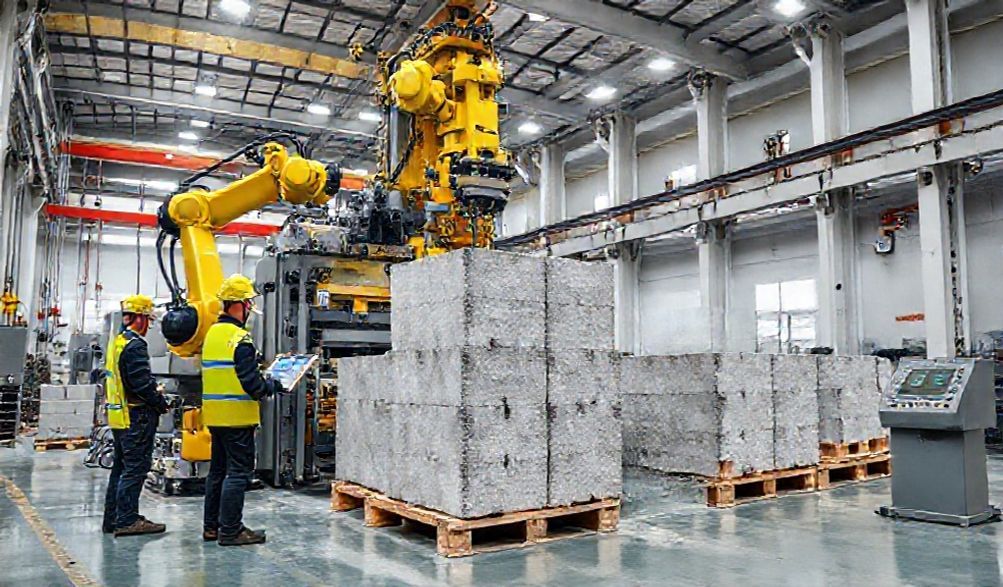
Your Ultimate Guide to Finding a Reliable China Block Bricks Making Machine Supplier
Introducción
In the fast-paced world of construction, the demand for durable, affordable, and quickly produced building materials is relentless. At the heart of meeting this demand lies the block bricks making machine, a pivotal piece of equipment for any modern masonry or construction business. For entrepreneurs and companies worldwide, sourcing this machinery often leads to a single, dominant marketplace: China. However, navigating the vast landscape of manufacturers to find a trustworthy China block bricks making machine supplier can be a daunting task, filled with both immense opportunity and potential risk.
This guide is designed to be your definitive compass. We move beyond simple directory listings to provide a strategic framework built on industry expertise. Choosing the right supplier isn’t just a purchase; it’s a long-term partnership that will dictate your production quality, operational efficiency, and bottom line for years to come. Whether you’re establishing a new plant in Africa, expanding output in Southeast Asia, or modernizing a facility in South America, the principles of a successful sourcing journey remain the same. Let’s embark on a detailed exploration of how to identify, evaluate, and partner with a Chinese supplier that delivers not just a machine, but a complete, reliable production solution.
Why China is the Global Hub for Block Making Machinery
China’s position as the world’s factory for block making machinery is no accident. It’s the result of a powerful convergence of scale, evolving expertise, and strategic economic positioning. Understanding this “why” is the first step in leveraging the market effectively and setting realistic expectations.
Scale and Manufacturing Expertise
China’s manufacturing dominance is built on an unparalleled industrial ecosystem.
* Complete Supply Chains: Entire cities and regions are dedicated to heavy machinery and its components. This means a block machine supplier has immediate access to high-quality hydraulic systems, precision molds, control panels, and steel frames from specialized local vendors, reducing lead times and costs.
* Decades of Specialization: Many Chinese manufacturers have been refining their craft for 20-30 years, accumulating vast practical knowledge in producing machines that work in diverse global conditions, from arid climates to high-humidity regions.
* Clustering Effect: The concentration of competitors and suppliers in areas like Fujian, Shandong, and Guangdong fosters intense competition, driving incremental improvements in durability and design.
Cost-Effectiveness and Value
While competitive pricing is a major draw, the real advantage lies in the propuesta de valor.
* Economías de Escala: Massive production volumes allow suppliers to source materials and produce components at lower costs, savings that are passed on to international buyers.
* Technological Accessibility: Today, you can acquire a semi-automatic or fully automatic machine from China at a price point often comparable to a basic manual machine from other regions. This democratizes access to higher productivity.
* The “Cheap” Misconception: The market is stratified. While budget options exist, leading suppliers compete on Costo Total de Propiedad (CTP)—focusing on machine longevity, energy efficiency, and low maintenance costs, not just the initial invoice.
Adopción Tecnológica e Innovación
Gone are the days of purely imitative manufacturing. Chinese suppliers are now at the forefront of several key innovations.
* Rapid Integration: They are quick to adopt global technological trends, integrating programmable logic controllers (PLCs), touch-screen HMIs (Human-Machine Interfaces), and energy-saving hydraulic systems as standard.
* Focus on Green Tech: In response to global sustainability trends, leading manufacturers are pioneering machines designed to utilize industrial by-products like fly ash, slag, and recycled construction aggregate.
* Software and Connectivity: The most advanced suppliers are developing proprietary software for machine monitoring and data collection, paving the way for the smart factories of tomorrow.
Key Factors to Evaluate a Chinese Supplier (Beyond Price)
Fixing your gaze solely on the price tag is the fastest route to long-term problems. A sophisticated evaluation looks at the supplier’s holistic capabilities. Here are the critical factors that separate order-takers from true partners.
Technical Capabilities and Machine Portfolio
A supplier’s product range reveals their depth of understanding.
* Versatilidad de Materiales: Can they provide machines for concrete hollow blocks, solid bricks, paving stones, interlocking blocks, and even clay bricks? A broad portfolio indicates wider engineering experience.
* Automation Spectrum: Do they offer the full range—from simple manual egg-laying machines to high-speed, fully automatic lines with robotic palletizers? This shows scalability.
* Especificaciones Clave: Scrutinize details like cycle time (blocks per hour), pressure (tonnage), mold customization options, and overall machine dimensions to ensure it fits your production and space requirements.
Production Capacity and Factory Audit Importance
A shiny website can be deceiving. Verifying physical operations is non-negotiable.
* Request a Virtual Tour: A reputable supplier will readily offer a live video tour of their factory floor, showcasing assembly lines, quality control stations, and raw material inventory.
* Look for Evidence of Scale: Observe the organization, cleanliness, and technology in use. Are they welding frames or just assembling imported kits? A strong in-house manufacturing capability is a major positive indicator.
* Procesos de Control de Calidad: Ask to see their QC checklist. How do they test hydraulic systems, vibration motors, and structural integrity before shipment?
Quality Certifications and Compliance
Certifications are your first line of objective defense. They are not mere paperwork but a commitment to standards.
* ISO 9001: Indicates a certified quality management system is in place throughout the manufacturing process.
* Marcado CE: For the European market, this is mandatory. It signifies the machine meets EU safety, health, and environmental protection requirements. Ensure it’s a genuine certification, not just a logo stuck on.
* SGS or Other Third-Party Inspection: While not a supplier certificate, you can hire firms like SGS, BV, or TÜV to conduct a pre-shipment inspection, providing an unbiased report on quality and specification compliance.
R&D Investment and Customization Ability
A supplier that invests in R&D is investing in your future.
* Customization Inquiries: Pose a specific challenge. For example, “I need to produce a unique block size with a specific aggregate mix.” Their response will reveal their engineering flexibility.
* Ask About Recent Improvements: “What have you changed in your flagship model in the last two years?” Progressive suppliers will eagerly discuss enhancements in vibration efficiency, control system upgrades, or durability improvements.
* Patent Portfolio: While not essential, owning patents for specific mechanisms or designs is a strong sign of innovation.
Navigating the Sourcing Process: A Step-by-Step Guide
With your evaluation criteria in hand, it’s time to navigate the process methodically. A structured approach minimizes risk and maximizes outcomes.
Step 1: Define Your Project Specifications
Clarity here prevents misunderstandings later. Create a detailed project brief:
* Daily/Annual Output Target: Be realistic about your market needs.
* Tipos y Tamaños de Bloques: List all products you plan to make, including dimensional drawings if possible.
* Materias Primas: Specify the type of aggregate, cement, and potential additives (e.g., fly ash) you will use.
* Nivel de Automatización: Consider your available labor, budget, and desired consistency.
* Condiciones del Sitio: Power supply (voltage, phase), available space, and local climate.
Step 2: Shortlisting Potential Suppliers
Cast a wide net, then filter aggressively.
* Sources: Use B2B platforms (Made-in-China, Alibaba.com), search Google for specific machine types, and seek referrals from industry associations or existing importers.
* Red Flags to Watch For:
* Prices significantly lower than the market average.
* Vague company addresses or refusal to provide a factory video.
* Poor communication, broken English in technical documents.
* No clear warranty terms or after-sales policy.
Step 3: Due Diligence and Communication
This is where you separate the contenders from the pretenders.
* RFQ Template: Your Request for Quotation should include your project brief, demand a detailed technical specification sheet, a commercial invoice (FOB/CIF price), warranty terms, delivery time, and payment terms.
* Preguntas Clave para Hacer:
* “What is included in the quoted price? (e.g., standard molds, spare parts kit?)”
* “Can you provide contact details for 2-3 overseas clients for reference?”
* “What is the structure of your after-sales support? Do you have English-speaking engineers for remote assistance?”
* “What is the lead time for critical spare parts like hydraulic pumps or control panels?”
Step 4: Securing the Deal and Logistics
Finalize the partnership with clear, protective agreements.
* Negotiation Points: Price is one lever; others include warranty extension, inclusion of extra spare parts, or commissioning support.
* Payment Terms: Secure terms like 30% deposit, 70% against copy of Bill of Lading. Consider using a Letter of Credit (L/C) for larger orders for added security.
* Incoterms: Understand your responsibilities. FOB (Franco a Bordo) means you own the goods and assume risk/cost once loaded on the ship in China. CIF (Costo, Seguro y Flete) means the supplier pays freight and insurance to your port. FOB often offers more control and can be cheaper.
Common Pitfalls and How to Avoid Them
Forewarned is forearmed. Here are the most frequent mistakes buyers make and how to sidestep them.
The “Too Good to Be True” Price Trap
A suspiciously low price is a liability, not a saving.
* Costos Ocultos: It often signals inferior materials (low-grade steel, non-branded hydraulics), leading to frequent breakdowns, massive downtime, and exorbitant long-term maintenance costs.
* La Solución: Always benchmark. Get 4-5 quotes for similar specifications. If one is an extreme outlier, investigate why deeply, or simply discard it.
Inadequate After-Sales and Technical Support
The machine will eventually need help. If support is absent, your investment becomes a paperweight.
* The Risk: Being stranded with a malfunctioning machine, unable to source correct spare parts or get diagnostic help.
* La Solución: Prioritize suppliers who offer clear, written after-sales agreements. Demand evidence of English manuals, video tutorials, and a proven track record of providing remote support via WhatsApp, Skype, or TeamViewer. Ask if they have technicians who travel for commissioning.
Spare Parts Availability and Supply Chain Delays
A machine is only as good as its most vulnerable part.
* The Risk: A two-week shutdown waiting for a simple seal or sensor to be shipped from China.
* La Solución: During negotiation, request a recommended critical spare parts list and their prices. Inquire about their parts inventory policy and standard shipping methods (air vs. sea). Consider purchasing a starter spare parts kit with the machine.
The Future of Block Making: Trends from Leading Chinese Suppliers
Partnering with a forward-thinking supplier means your investment remains relevant. Here’s what the innovators are focusing on.
Green Technology and Sustainable Production
Sustainability is becoming a core engineering principle, not just a marketing term.
* Machines for Recycled Aggregates: Advanced vibration and compression systems are being designed to optimally process fly ash, slag, and crushed construction waste into high-strength blocks.
* Eficiencia Energética: New designs feature variable-frequency drives (VFDs) on motors, heat recovery systems in curing chambers, and optimized hydraulic circuits that reduce overall power consumption by 15-25%.
Smart Factories and Industry 4.0 Integration
Data is the new currency of efficiency.
* IoT-Enabled Machines: Sensors collect real-time data on production counts, motor temperature, hydraulic pressure, and vibration frequency. This data can be monitored via cloud dashboards on your phone or computer.
* Predictive Maintenance: The system can alert you to abnormal patterns (e.g., rising motor temperature) before a catastrophic failure occurs, allowing for scheduled, low-cost maintenance.
Enhanced Automation for Labor Cost Reduction
The drive is towards complete, touchless production lines.
* Robotic Integration: Beyond automatic block molding, leading lines now incorporate robots for precise pallet handling, stacking finished blocks, and even packaging.
* Control Centralizado: A single operator can monitor and control the entire line—from raw material feeding in the mixer to the final stacked product—from one central console, dramatically reducing labor requirements and human error.
Frequently Asked Questions (FAQ)
Q1: What is the typical lead time for a block making machine from China?
A: Lead times vary significantly. Standard models can ship in 15-30 days. For large, customized, or fully automatic production lines, expect 60-90 days for manufacturing, testing, and preparation for shipment. Always get a written commitment in the proforma invoice.
Q2: Can Chinese suppliers provide installation and commissioning services overseas?
A: Yes, most reputable suppliers offer this crucial service for an additional fee. Their engineers will travel to your site to install the machine, calibrate it, test it with your local materials, and train your operators. Clarify visa requirements, duration of stay, and cost coverage (flights, accommodation) upfront.
Q3: How do I ensure the machine meets my local safety and quality standards?
A: Proactive communication is key. Inform suppliers of your local standards at the RFQ stage. Rely on international certifications (CE) as a baseline. For absolute assurance, contract a third-party inspection company to conduct a pre-shipment inspection (PSI) to verify quality, specifications, and safety compliance.
Q4: What is the standard warranty for a block making machine, and what does it cover?
A: A standard warranty from a good supplier is typically 12-24 months for core components like the hydraulic system, mainframe, and electrical controller, starting from the date the machine arrives at your port. Crucially, the warranty covers parts replacement but usually excludes labor for repairs, freight costs for parts, and damage due to improper operation or maintenance.
Q5: Is it better to buy a complete production line or just the core block making machine?
A: For a greenfield project (starting from scratch), a complete production line from a single supplier is highly recommended. It ensures all components (concrete mixer, conveyor, block maker, pallet feeder, stacker) are perfectly synchronized, with one point of accountability for service. For upgrading an existing plant, sourcing just the core block machine may be sufficient and more cost-effective.
Conclusión
Seleccionar el adecuadoChina block bricks making machine supplier is a defining decision that sets the trajectory for your business’s productivity and profitability. The Chinese market offers an unmatched combination of technological sophistication, manufacturing scale, and competitive value. However, unlocking this potential requires a disciplined, informed approach that looks beyond the initial price to evaluate technical prowess, verifiable quality controls, and a genuine commitment to after-sales partnership.
By using this guide as your roadmap—defining your needs, conducting rigorous due diligence, and prioritizing long-term support over short-term savings—you transform a complex international procurement challenge into a strategic advantage. Your goal is not just to buy a machine, but to forge a relationship with a supplier who acts as a reliable extension of your team, ensuring your block manufacturing operation is built on a foundation of quality, efficiency, and innovation for years to come.
<