
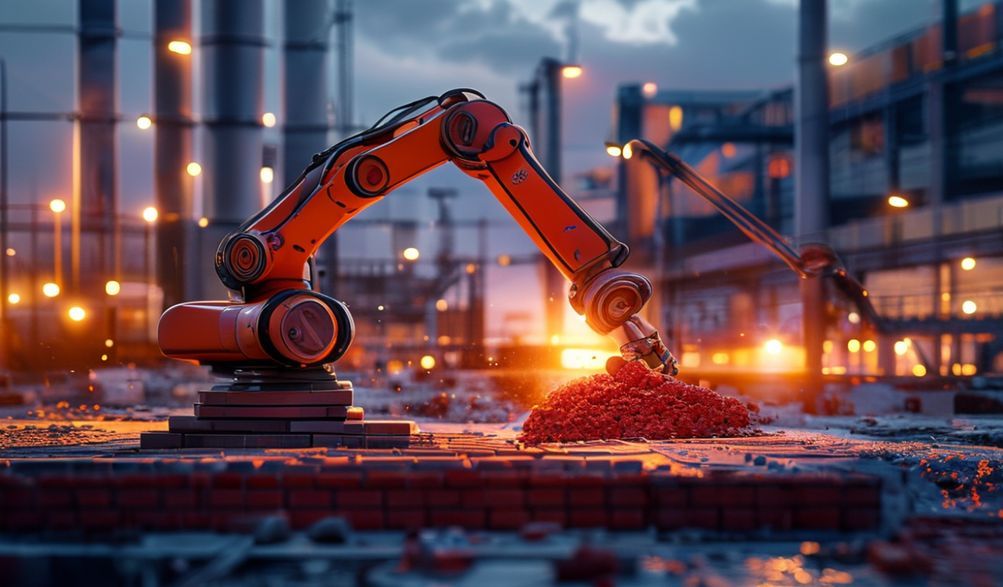
The Ultimate Guide to Choosing a Brick Laying Machine Factory
Introducción
The global construction industry is at a tipping point. According to a recent report by McKinsey, automation could address 20-30% of the current global construction labor shortage, with bricklaying being one of the most impactful areas for transformation. For contractors, builders, and developers, the pressure has never been greater: projects are more complex, timelines are tighter, and skilled masons are increasingly hard to find.
This reality underscores the traditional challenges of manual bricklaying. Labor-intensive processes lead to soaring costs, inconsistent quality that depends on individual skill, susceptibility to weather delays, and a physical ceiling on productivity. The solution? The modern brick laying machine. These robotic and automated systems promise to lay bricks with superhuman speed, unerring precision, and relentless consistency.
However, the success of this transformative investment doesn’t just hinge on the machine itself—it fundamentally depends on the brick laying machine factory that designs, engineers, and builds it. Choosing the wrong manufacturer can lead to a costly paperweight; choosing the right one can redefine your business’s efficiency and profitability.
This comprehensive guide will walk you through the critical factors to consider when selecting a brick laying machine factory. We’ll move beyond glossy brochures and sales pitches to focus on the manufacturer’s core expertise, technological integrity, and long-term support, ensuring you invest in reliable, efficient, and cost-effective automation for your construction projects. Synthesizing industry knowledge, technical specifications, and procurement best practices, this guide serves as a trustworthy, expert-driven resource for making a decision that will impact your bottom line for years to come.
Why Your Choice of Factory Matters More Than You Think
Selecting a brick laying machine isn’t like buying a standard power tool. It’s a significant capital investment and a new operational process. The factory behind the machine is your long-term partner, and their capabilities directly dictate your on-site outcomes.
The Direct Impact on Project ROI (Return on Investment)
Your machine’s return on investment isn’t just a function of its laying speed. It’s determined by the factory’s build quality.
- Minimizing Costly Downtime: A machine from a factory with superior engineering and quality control is inherently more reliable. It starts when you need it and runs through shifts without unexpected failures. Every hour of downtime on a fast-paced site represents hundreds, if not thousands, of dollars in lost productivity and delayed timelines.
- Reducing Material Waste: Precision is profit. A factory that masters precision engineering produces machines that place bricks and apply mortar with exacting accuracy. This drastically reduces the waste from misaligned bricks, excess mortar squeeze-out, and breakage, directly saving on material costs—one of the largest expenses in any masonry project.
- Costo Total de Propiedad (CTP): The cheapest machine often carries the highest long-term cost. A factory cutting corners on components or durability will lead to higher maintenance, more frequent part replacements, and a shorter operational lifespan. Investing in a quality factory means a higher initial price but a significantly lower total cost of ownership over 5 or 10 years.
Quality, Safety, and Compliance are Built at the Source
A machine’s safety and durability aren’t added on—they are engineered in from the first blueprint.
- Factory Standards Dictate Site Safety: The structural integrity of the machine, the safety interlocks on moving parts, and the stability of the system are all determined during manufacturing. A reputable factory designs for the harsh realities of a construction site.
- The Certification Benchmark: Look for factories with recognized international quality certifications. ISO 9001 for quality management systems is a fundamental indicator of a structured, process-driven operation. Compliance with regional machinery safety directives (like CE in Europe or similar standards elsewhere) is non-negotiable for legal and safe operation.
- Proactive Compliance: A top-tier factory doesn’t just build to a standard; it stays ahead of evolving safety and environmental regulations, ensuring your equipment remains compliant throughout its service life.
Key Factors to Evaluate in a Brick Laying Machine Manufacturer
To separate market leaders from the rest, you must scrutinize several core areas of a factory’s operation.
Proven Expertise and Industry Experience
History and specialization matter in heavy equipment manufacturing.
- Track Record & Legacy: How long has the factory been dedicated to construction automation, specifically bricklaying? A proven history suggests accumulated problem-solving knowledge and refined designs.
- Specialized R&D Investment: Does the factory have a dedicated Research and Development department? Continuous innovation in mechanics, software, and material handling is what keeps a machine relevant. Ask about their R&D investment as a percentage of revenue.
- Portfolio of Proof: Request detailed case studies and a project portfolio. Seeing machines from a specific factory deployed on real, completed projects—especially ones similar in scale or challenge to yours—is the strongest validation of their claims.
Technological Innovation and Machine Capabilities
This is where specifications come to life. Understand what the factory’s technology can actually do.
- Spectrum of Solutions: Factories may offer different types:
- Static/Prefab Station Machines: For high-volume production in a controlled yard setting.
- Mobile On-Site Machines: Track-mounted or vehicle-integrated systems that move along the wall.
- Robotic Arm Solutions: Highly flexible, programmable arms often used for complex layouts or in conjunction with other automation.
- Critical Feature Analysis: Compare these key specs across manufacturers:
- Laying Speed: Measured in bricks per hour. Contextualize this with precision claims.
- Precisión: Tolerances for joint thickness and alignment (e.g., ±0.5mm).
- Versatilidad: Ability to handle different brick sizes (including blocks), types (clay, concrete), and mortar systems (thin-bed, traditional).
- User Interface: Is the control system intuitive? Can operators be trained quickly?
- The Software & IoT Edge: The “brain” is as important as the “brawn.” Advanced factories integrate sophisticated software for pattern design, path planning, and real-time adjustments. IoT connectivity allows for remote diagnostics, performance monitoring, and predictive maintenance, moving you toward smart construction.
Manufacturing Integrity and Quality Control Processes
This is a look behind the curtain. How is the machine actually built?
- Component Sourcing: High-reliability factories use branded, industrial-grade components—think Siemens or Allen-Bradley PLCs, Bosch Rexroth or SEW motors and drives, and high-strength, often powder-coated, structural steel. Ask for a bill of materials for critical subsystems.
- Protocolos de Pruebas Rigurosos: Before shipping, machines should undergo:
- Stress Testing: Running at full capacity for extended periods.
- Precision Calibration: Using laser trackers and metrology tools to ensure alignment.
- Functional Testing: A full cycle test with actual bricks and mortar.
- Calidad de Construcción: Visit the factory if possible, or take a detailed virtual tour. Look for clean, organized production lines, skilled welders, and meticulous assembly practices. The use of corrosion-resistant materials is crucial for long-term durability.
Beyond the Machine: The Critical Role of Factory Support
The relationship with the factory begins at purchase, but its value is proven over years of operation.
Comprehensive After-Sales Service and Training
The best machine is only as good as the support behind it.
- Puesta en Marcha y Capacitación: Will factory engineers supervise installation and provide comprehensive, on-site training for both operators and maintenance technicians? This is critical for a successful start-up.
- Warranty & Service Agreements: Scrutinize the warranty length and what it covers. Look for clear Service Level Agreements (SLAs) that define response times for technical support.
- Global Parts Network: Ensure the factory has a reliable, well-stocked spare parts supply chain. How quickly can you get a critical component? Do they provide recommended spare parts lists?
Customization and Adaptability to Your Needs
Off-the-shelf is good; tailored is better.
- Project-Specific Customization: Can the factory modify grippers, mortar application systems, or software to handle your unique brick type or a specific architectural pattern? This flexibility is a mark of advanced engineering.
- Scalability for Your Business: Does the factory offer solutions appropriate for your size? The market now includes options for ambitious small contractors, not just multinational developers. Some offer financing or leasing models.
- Preparación para el futuro: Technology evolves. Inquire about software update policies and the potential for hardware upgrades down the line to protect your investment.
Conducting Your Due Diligence: A Step-by-Step Checklist
Turn evaluation from a daunting task into a structured process.
Research and Shortlisting Phase
- Leverage Industry Resources: Use specialized construction equipment directories. Identify factories that exhibit at major trade shows like bauma, CONEXPO, or BAUMA CHINA.
- Seek Professional Referrals: Talk to industry peers or associations.
- Analyze Digital Footprint: Study their website for technical white papers, detailed videos, and authentic customer testimonials. A lack of detailed information is a red flag.
The Inquiry and Evaluation Phase
- Prepare Essential Questions: Ask the sales and engineering teams about:
- Machine uptime statistics.
- Details of their quality control process.
- The timeline and process for obtaining spare parts.
- References from past clients in your region.
- Request and Review Documentation: Ask for:
- Full technical specifications sheets.
- Copies of relevant certifications (ISO, CE, etc.).
- A list of client references you can contact.
- Insist on a Demonstration: A live demo is ideal. If not possible, a live video demonstration from the factory floor is essential. Ask them to run your specific brick type if you can provide samples.
Making the Final Decision
- Compare Total Cost of Ownership (TCO): Create a spreadsheet for your shortlist. Factor in: purchase price, estimated maintenance costs, expected energy consumption, training costs, and potential productivity gains.
- Evaluate the Partnership Feel: Were they responsive, transparent, and knowledgeable? You will need their support for a decade or more.
- Finalize Terms: Clearly agree on delivery schedules, payment milestones, warranty activation, and the exact scope of after-sales support before signing any contract.
Frequently Asked Questions (FAQ)
Q1: What is the typical price range for a brick laying machine from a reputable factory?
A: Prices vary dramatically based on automation level and capability. Semi-automatic or compact machines can start around 50 000 – 100 000 dólares. Mid-range, fully automated on-site systems typically fall between $150,000 – $350,000. Large-scale, fully robotic solutions for prefab yards or major projects can exceed $500,000. A detailed quote based on your specific requirements is essential.
Q2: How do I ensure the machine will work with the specific brick type and mortar we use?
A: Reputable factories have material labs and testing procedures. During the evaluation phase, provide physical samples of your bricks and full specifications of your mortar (type, grain size, adhesion properties). The factory should conduct tests and confirm in writing that their machine can handle your materials, potentially with minor calibrations.
Q3: What kind of training and technical support can we expect after purchase?
A: A comprehensive support package from a quality factory includes: on-site installation supervision by a factory engineer, multi-day training for operators and maintenance staff, detailed digital and physical manuals, access to a 24/7 technical support hotline (often with remote diagnostics), and a guaranteed spare parts supply with defined delivery timelines.
Q4: Are brick laying machines suitable for small-scale contractors, or only for large firms?
A: The market has evolved. While large systems exist for mega-projects, many factories now design scalable, compact, and more affordable models specifically for small to mid-sized contractors. Some also offer lease-to-own or rental options, making the technology accessible for businesses looking to complete jobs faster and bid more competitively.
Q5: How do we measure the productivity and ROI of a brick laying machine on our site?
A: Track these key metrics against your manual baseline:
* Salida: Bricks laid per day/machine vs. per manual crew.
* Trabajo: Reduction in number of masons and laborers required on the task.
* Calidad: Reduction in rework due to misalignment or inconsistent joints.
* Waste: Measured decrease in brick breakage and mortar waste.
* Horario: Acceleration of the overall masonry timeline and project completion.
Conclusión
Choosing a brick laying machine is not merely a procurement decision; it is a strategic partnership decision. The machine’s capabilities, reliability, and longevity are a direct reflection of the brick laying machine factory you select—a partner that embodies engineering excellence, robust manufacturing integrity, and unwavering customer support.
Our final recommendation is to prioritize long-term value and partnership potential over the lowest initial bid. A trustworthy factory is an investment in the future efficiency, safety, and growth of your construction business. They become an extension of your team, ensuring your automation investment delivers on its promise for years to come.
Ready to evaluate your options with confidence? Download our free, detailed checklist for vetting brick laying machine factories to ensure you don’t miss a critical step in your evaluation process.
Have specific project requirements? Contact our industry experts for a personalized consultation on identifying the best manufacturers tailored to your unique needs, scale, and challenges.
This guide was designed as an objective, expert-driven resource to cut through the marketing noise and empower you with the knowledge to make a truly informed decision in the dynamic world of construction automation.
<