1. Introducción
En la industria global de construcción y desarrollo de infraestructura, la demanda de materiales de pavimentación de alta calidad, eficientes y rentables continúa en aumento. Los adoquines, como componente clave de carreteras urbanas, parques, zonas residenciales y espacios comerciales, desempeñan un papel crucial para garantizar la seguridad vial, mejorar la estética ambiental y aumentar la durabilidad. Con la aceleración de la urbanización y el énfasis en la construcción sostenible, los métodos tradicionales de producción manual o semiautomática de adoquines han sido incapaces de satisfacer los requisitos de producción a gran escala, estandarizada y de alta calidad que exige el mercado. En este contexto, las máquinas automáticas para fabricar adoquines han surgido como una solución transformadora, revolucionando el proceso de producción y generando importantes oportunidades de negocio para los actores del sector.
2. Cuerpo
2.1 Principios de Funcionamiento Central de las Máquinas Automáticas para Fabricar Ladrillos de Pavimento
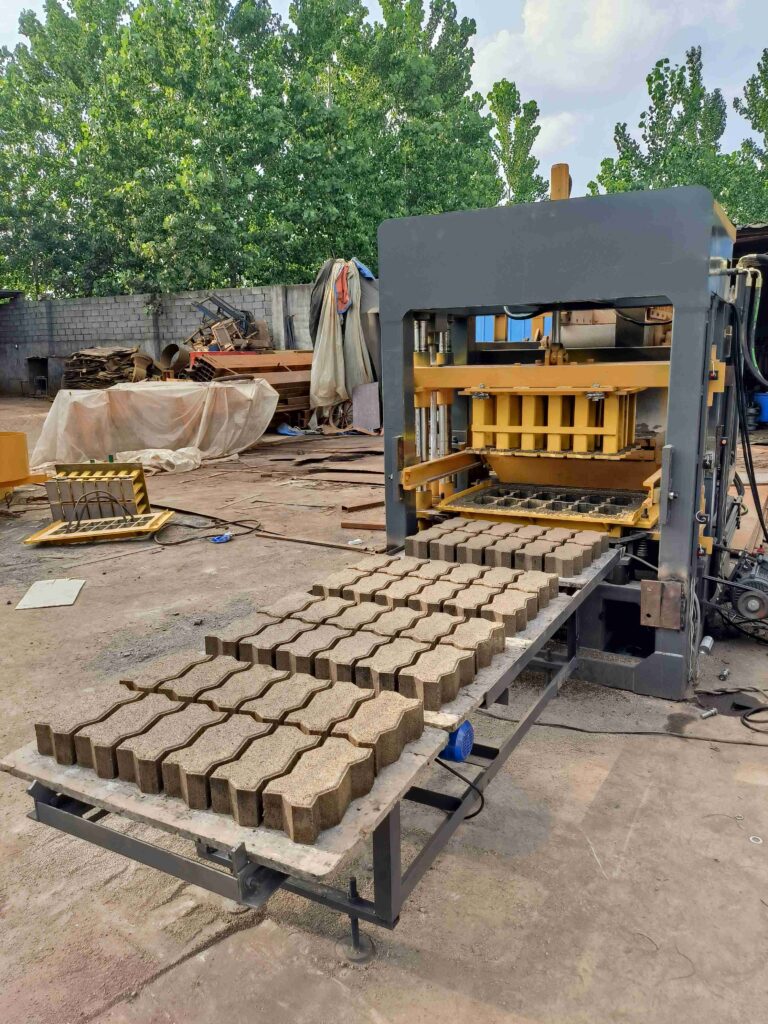
Las máquinas automáticas para fabricar adoquines son sistemas de producción integrados diseñados para convertir materias primas como concreto, cemento, arena, grava y agregados reciclados en adoquines de alta calidad mediante una serie de procesos automatizados. El principio de funcionamiento central gira en torno a cuatro etapas clave: preparación de materias primas, mezcla, moldeo y curado.
En la etapa de preparación de materias primas, la máquina pesa y transporta automáticamente diversas materias primas según las proporciones preestablecidas. Esto garantiza la consistencia y estabilidad de la mezcla para ladrillos, lo cual es crucial para la calidad del producto final. Las máquinas avanzadas están equipadas con sistemas de pesaje de precisión y silos de almacenamiento de materiales, reduciendo el error humano y mejorando la eficiencia de producción.
La etapa de mezclado implica combinar las materias primas con agua para formar una mezcla homogénea. Los mezcladores automáticos utilizan rotación de alta velocidad y palas en espiral para garantizar una mezcla completa, mejorando la cohesión y resistencia de los ladrillos. El tiempo de mezclado y la proporción de agua pueden ajustarse según las características de las materias primas y las especificaciones de los ladrillos, proporcionando flexibilidad para diferentes necesidades de producción.
El moldeo es el proceso central de la máquina. Existen dos tecnologías principales de moldeo: prensado hidráulico y moldeo por vibración. Las máquinas de prensado hidráulico utilizan alta presión para comprimir la mezcla en la forma deseada, produciendo ladrillos densos, de alta resistencia y con dimensiones precisas. Por otro lado, las máquinas de moldeo por vibración emplean vibración de alta frecuencia para compactar la mezcla, siendo adecuadas para producir ladrillos con patrones complejos o tamaños más grandes. Ambas tecnologías están completamente automatizadas, con la máquina alimentando automáticamente la mezcla en el molde, compactándola y expulsando el ladrillo terminado.
Después del moldeo, los ladrillos se transfieren a la etapa de curado. Los sistemas automáticos de curado controlan la temperatura, la humedad y el tiempo de curado para garantizar que los ladrillos alcancen su máxima resistencia. El curado puede realizarse mediante curado natural, curado al vapor o curado eléctrico, dependiendo de la escala de producción y las condiciones locales. Las máquinas avanzadas integran cámaras de curado con la línea de producción, logrando un proceso de producción continuo y eficiente.
2.2 Características Clave y Ventajas para las Operaciones Empresariales
Para los distribuidores, mayoristas y compradores, la elección del equipo afecta directamente la rentabilidad del negocio y la competitividad en el mercado. Las máquinas automáticas para fabricar adoquines ofrecen una serie de características clave y ventajas que las convierten en una inversión ideal:
2.2.1 Alta Eficiencia de Producción
Una de las ventajas más significativas de las máquinas automáticas es su alta capacidad de producción. En comparación con los equipos manuales o semiautomáticos, las máquinas automáticas pueden producir cientos o incluso miles de ladrillos por hora, dependiendo del modelo. Por ejemplo, una máquina automática de tamaño mediano puede producir entre 3000 y 5000 ladrillos estándar para pavimentación por hora, mientras que los modelos a gran escala pueden alcanzar entre 8000 y 10,000 ladrillos por hora. Esta alta eficiencia permite a las empresas cumplir con grandes pedidos rápidamente, acortar los tiempos de entrega y ampliar su base de clientes.
2.2.2 Calidad Consistente del Producto
La consistencia es crítica en el mercado de ladrillos para pavimentación, ya que los proyectos de construcción requieren ladrillos con tamaño, resistencia y apariencia uniformes. Las máquinas automáticas utilizan sistemas de control de precisión para garantizar que cada ladrillo cumpla con los mismos estándares de calidad. Los procesos automatizados de pesaje, mezcla y moldeo eliminan el error humano, lo que resulta en ladrillos con dimensiones consistentes, superficies lisas y alta resistencia a la compresión. Esta consistencia no solo mejora la satisfacción del cliente, sino que también fortalece la reputación de distribuidores y compradores en el mercado.
2.2.3 Reducción de Costos
Automatic pavement bricks making machines help reduce production costs in multiple ways. Firstly, they minimize labor costs, as a single operator can monitor and control the entire production line, replacing dozens of manual workers. Secondly, the precise raw material proportioning reduces material waste, lowering the cost of raw materials. Additionally, the high efficiency and low maintenance requirements of the machines reduce operational costs over the long term. For distributors and purchasers, these cost savings translate into higher profit margins and the ability to offer competitive prices in the market.
2.2.4 Versatility and Customization
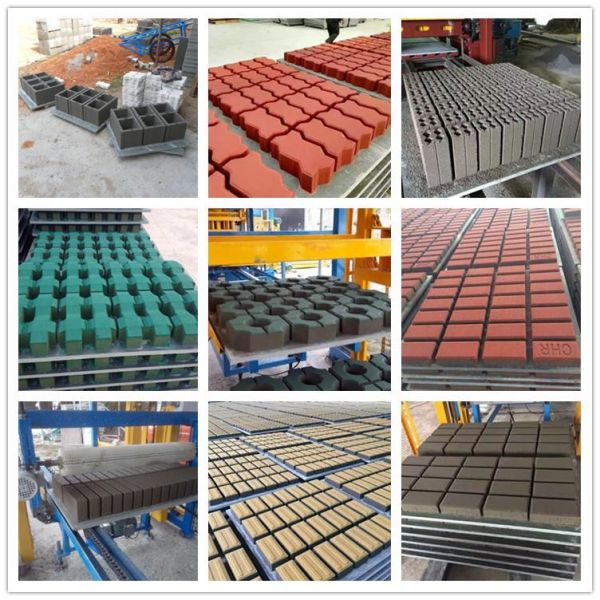
The market demand for pavement bricks is diverse, with different projects requiring bricks of various sizes, shapes, colors, and patterns. Automatic machines offer strong versatility, supporting the production of a wide range of pavement bricks, including interlocking bricks, permeable bricks, hollow bricks, and decorative bricks. By changing the mold, the machine can quickly switch between different product specifications, allowing businesses to meet the specific needs of different customers. This versatility enables distributors and purchasers to expand their product ranges, cater to more market segments, and increase business opportunities.
2.2.5 Environmental Friendliness
Sustainable development has become a global trend, and the construction industry is increasingly focused on environmental protection. Automatic pavement bricks making machines align with this trend by promoting the use of recycled materials and reducing energy consumption. Many machines can use recycled aggregates such as crushed concrete, asphalt, and construction waste as raw materials, reducing the demand for natural resources and minimizing environmental pollution. Additionally, advanced energy-saving technologies, such as variable frequency drives and efficient motors, reduce the machine’s energy consumption, lowering carbon emissions. For distributors and purchasers, offering environmentally friendly products can attract environmentally conscious customers and comply with government environmental regulations, enhancing business sustainability.
2.3 Technical Specifications to Consider for Procurement
When selecting an automatic pavement bricks making machine, it is essential to consider various technical specifications to ensure the equipment meets business needs and production requirements. The following are key technical parameters that distributors, distributors, and purchasers should pay attention to:
2.3.1 Production Capacity
Production capacity is usually measured in bricks per hour (or per day) and varies depending on the machine’s size and model. It is important to choose a machine with a production capacity that matches the expected market demand. For small-scale distributors or local markets, a machine with a production capacity of 1000-3000 bricks per hour may be sufficient. For large-scale distributors or national/international markets, a machine with a production capacity of 5000-10000 bricks per hour or more is more suitable. It is also worth considering the machine’s scalability, as business growth may require increasing production capacity in the future.
2.3.2 Brick Specifications
Different machines support different brick sizes, shapes, and thicknesses. The standard pavement brick size is usually 200mm×100mm×60mm, but there are also other common sizes such as 250mm×125mm×80mm and 300mm×150mm×100mm. It is important to ensure the machine can produce the brick specifications required by the target market. Additionally, the machine’s mold compatibility is crucial, as it determines the range of product styles that can be produced. High-quality machines usually have interchangeable molds, allowing for easy customization of brick patterns and shapes.
2.3.3 Power and Energy Consumption
Power consumption is an important factor affecting operational costs. Automatic pavement bricks making machines typically have a power range of 15kW-100kW, depending on the production capacity and technology. It is advisable to choose a machine with high energy efficiency, such as those equipped with variable frequency drives (VFD) or energy-saving motors. These technologies can reduce power consumption by 10%-30% compared to traditional machines, resulting in significant cost savings over the long term.
2.3.4 Material Compatibility
The machine’s ability to handle different raw materials is another key consideration. Pavement bricks can be made from various materials, including concrete, cement, sand, gravel, recycled aggregates, and even clay. It is important to ensure the machine is compatible with the raw materials available in the target market. For example, if the local market has abundant recycled construction waste, choosing a machine that can efficiently process recycled aggregates will help reduce raw material costs and enhance environmental friendliness.
2.3.5 Automation Level
The automation level of the machine determines the degree of human intervention required. Fully automatic machines integrate raw material feeding, mixing, molding, curing, and stacking into a single production line, requiring only 1-2 operators to monitor the process. Semi-automatic machines may require more manual operation, such as manually transferring bricks to the curing area. For distributors and purchasers looking to minimize labor costs and improve production efficiency, fully automatic machines are the preferred choice. However, semi-automatic machines may be more suitable for small-scale operations or markets with lower labor costs.
2.3.6 Durability and Maintenance
The durability of the machine directly affects its service life and operational reliability. High-quality machines are made from wear-resistant materials such as high-strength steel and alloy, ensuring they can withstand the high pressure and vibration of the production process. Additionally, the machine’s maintenance requirements should be considered. Machines with simple structures, easy-to-replace parts, and comprehensive after-sales support will reduce downtime and maintenance costs. It is advisable to choose a machine from a manufacturer that provides regular maintenance services, spare parts supply, and technical training.
2.4 Application Scenarios and Market Demand Analysis
Automatic pavement bricks making machines have a wide range of application scenarios, covering various construction projects in both urban and rural areas. Understanding these application scenarios and market demand trends is crucial for distributors, distributors, and purchasers to identify business opportunities.
2.4.1 Urban Infrastructure Construction
Urban infrastructure projects, such as road construction, sidewalk renovation, park construction, and square paving, are the main application areas for pavement bricks. With the acceleration of urbanization in many countries, governments are investing heavily in urban infrastructure improvement, creating a huge demand for pavement bricks. For example, in emerging economies, the construction of new cities, residential districts, and transportation networks requires large quantities of high-quality pavement bricks. Automatic machines can meet this large-scale demand, making them an essential equipment for distributors targeting urban infrastructure projects.
2.4.2 Commercial and Residential Construction
Commercial buildings, such as shopping malls, hotels, and office buildings, often require decorative pavement bricks to enhance the overall aesthetic appeal. Residential areas, including villas, apartments, and gated communities, also use pavement bricks for parking lots, walkways, and garden paths. These projects usually have higher requirements for brick quality, appearance, and customization. Automatic machines’ ability to produce consistent, high-quality bricks with various patterns makes them suitable for commercial and residential construction markets. Distributors can cooperate with real estate developers, construction companies, and interior designers to supply customized pavement bricks for these projects.
2.4.3 Industrial and Logistics Parks
Industrial parks, factories, and logistics centers require durable, load-bearing pavement bricks to withstand heavy vehicle traffic and harsh working environments. Automatic pavement bricks making machines can produce high-strength, wear-resistant bricks that meet the requirements of industrial and logistics applications. Additionally, permeable pavement bricks, which can improve water drainage and reduce flooding, are increasingly used in industrial and logistics parks. Distributors can target this market segment by supplying permeable pavement bricks produced by automatic machines.
2.4.4 Rural Construction and Renovation
Rural construction, such as village road paving, farmland irrigation channels, and rural housing renovations, is another growing market for pavement bricks. With the promotion of rural revitalization policies in many countries, the demand for affordable, durable pavement bricks in rural areas is increasing. Automatic machines can produce low-cost pavement bricks using local raw materials, making them suitable for rural construction projects. Distributors can expand their business to rural areas by cooperating with local governments, construction teams, and rural development organizations.
2.4.5 Market Demand Trends
The global market for pavement bricks is expected to grow steadily in the coming years, driven by urbanization, infrastructure investment, and sustainable construction trends. According to market research reports, the global pavement bricks market size is projected to reach USD XX billion by 2028, with a compound annual growth rate (CAGR) of X%. Key demand trends include:
- Increasing demand for permeable pavement bricks: As cities face increasing flooding and water scarcity issues, permeable pavement bricks, which allow rainwater to infiltrate into the ground, are gaining popularity. Governments and construction companies are increasingly adopting permeable pavement solutions, creating a growing market for permeable pavement bricks.
- Growing preference for eco-friendly and recycled materials: Consumers and governments are becoming more environmentally conscious, leading to a higher demand for pavement bricks made from recycled materials. Automatic machines that can process recycled aggregates have a competitive advantage in this market.
- Rising demand for customized and decorative bricks: With the emphasis on urban aesthetics and architectural design, there is a growing demand for pavement bricks with unique patterns, colors, and shapes. Automatic machines’ ability to produce customized bricks allows distributors to cater to this trend and differentiate their products in the market.
2.5 Profitability and Return on Investment (ROI) Analysis
For distributors, distributors, and purchasers, the profitability of investing in automatic pavement bricks making machines is a key consideration. To assess the ROI, it is necessary to analyze the initial investment, operational costs, and potential revenue.
2.5.1 Initial Investment
The initial cost of an automatic pavement bricks making machine varies depending on the model, production capacity, and technical specifications. Small-scale machines (production capacity: 1000-3000 bricks per hour) typically cost between USD 20,000-50,000. Medium-scale machines (3000-5000 bricks per hour) cost between USD 50,000-100,000. Large-scale machines (5000-10000 bricks per hour or more) cost over USD 100,000. In addition to the machine cost, there are other initial investments, such as factory space rental, raw material storage facilities, and curing equipment. The total initial investment for a small-scale production line is usually between USD 50,000-100,000, while a large-scale production line can cost over USD 200,000.
2.5.2 Operational Costs
Operational costs include raw material costs, labor costs, energy costs, maintenance costs, and other miscellaneous expenses. Raw material costs account for the largest proportion of operational costs, typically 50%-70% of the total cost. The cost of raw materials varies by region, but using local materials and recycled aggregates can significantly reduce this cost. Labor costs are relatively low for automatic machines, as only 1-2 operators are required per production line. Energy costs depend on the machine’s power consumption and local electricity prices. Maintenance costs are usually 5%-10% of the machine’s initial cost per year, including spare parts replacement and regular maintenance.
2.5.3 Revenue and Profit Margin
The revenue from pavement brick sales depends on the production capacity, product price, and market demand. The price of pavement bricks varies by quality, specification, and market segment. Standard concrete pavement bricks usually sell for USD 0.5-2 per brick, while decorative or high-strength bricks can sell for USD 2-5 per brick. Assuming a medium-scale machine produces 4000 bricks per hour, 8 hours a day, 25 days a month, the monthly production is 800,000 bricks. If the average selling price is USD 1 per brick, the monthly revenue is USD 800,000. After deducting operational costs (e.g., raw materials: USD 400,000, labor: USD 30,000, energy: USD 20,000, maintenance: USD 10,000), the monthly profit is USD 340,000. With this profit level, the initial investment can be recovered within 6-12 months for a medium-scale production line.
2.5.4 Factors Affecting ROI
Several factors can affect the ROI of automatic pavement bricks making machines, including market demand, product quality, pricing strategy, and operational efficiency. To maximize ROI, distributors and purchasers should:
- Conduct thorough market research to identify high-demand product segments and set competitive prices.
- Ensure product quality to build customer loyalty and increase repeat orders.
- Optimize operational processes to reduce costs and improve production efficiency.
- Establish a strong sales and distribution network to expand market coverage and increase sales volume.
2.6 Procurement Guidelines and Best Practices
Procuring an automatic pavement bricks making machine is a significant investment, and following best practices can help distributors, distributors, and purchasers make the right decision and avoid potential risks.
2.6.1 Define Business Requirements
Before purchasing a machine, it is essential to clearly define business requirements, including production capacity, target product specifications, budget, and market demand. For example, if the target market mainly requires small-sized standard bricks, a medium-scale machine with a production capacity of 3000-5000 bricks per hour may be sufficient. If the market requires customized decorative bricks, a machine with strong mold compatibility and customization capabilities should be chosen. Defining business requirements helps narrow down the options and select a machine that meets specific needs.
2.6.2 Research and Compare Manufacturers
There are many manufacturers of automatic pavement bricks making machines worldwide, and it is important to research and compare different manufacturers to find a reliable supplier. Key factors to consider when evaluating manufacturers include:
- Reputation and experience: Choose manufacturers with a good reputation in the industry and years of experience in producing automatic pavement bricks making machines.
- Product quality and technology: Evaluate the machine’s technical specifications, quality control systems, and technological innovation. It is advisable to visit the manufacturer’s factory to inspect the production process and test the machine’s performance.
- After-sales support: Ensure the manufacturer provides comprehensive after-sales support, including installation, commissioning, training, maintenance, and spare parts supply. A reliable after-sales service ensures the machine operates smoothly and minimizes downtime.
- Price and payment terms: Compare the prices of different manufacturers and negotiate favorable payment terms, such as installment payments or letters of credit. However, price should not be the only determining factor; product quality and after-sales support are equally important.
2.6.3 Inspect and Test the Machine
Before finalizing the purchase, it is recommended to inspect and test the machine to ensure it meets the required standards. This can be done by visiting the manufacturer’s factory or requesting a sample production. During the inspection, pay attention to the machine’s structure, components, operation stability, production efficiency, and product quality. Testing the machine with actual raw materials can help evaluate its performance in real production conditions.
2.6.4 Review and Negotiate the Contract
When signing a purchase contract with the manufacturer, it is important to review all terms and conditions carefully, including product specifications, delivery time, installation and commissioning services, warranty period, after-sales support, and payment terms. Negotiate any unclear or unfavorable terms to protect your interests. It is also advisable to include clauses regarding quality assurance and penalty for late delivery or non-compliance with specifications.
2.6.5 Plan for Installation and Training
After purchasing the machine, plan for installation and training to ensure the machine is set up correctly and operators are familiar with its operation. The manufacturer should provide professional installation and commissioning services to ensure the machine operates at optimal performance. Additionally, operators should receive comprehensive training on machine operation, maintenance, and troubleshooting to avoid operational errors and reduce downtime.
2.6.6 Establish a Maintenance Plan
Regular maintenance is essential to extend the machine’s service life and ensure stable operation. Establish a maintenance plan based on the manufacturer’s recommendations, including daily inspections, weekly maintenance, monthly maintenance, and annual overhauls. Keep records of maintenance activities and spare parts replacement to track the machine’s performance and identify potential issues in a timely manner. It is also important to stock up on essential spare parts to avoid delays in maintenance.
3. Conclusion
Automatic pavement bricks making machines have become an indispensable tool in the modern construction materials industry, offering high production efficiency, consistent product quality, cost reduction, versatility, and environmental friendliness. For distributors, distributors, and purchasers, investing in these machines presents significant business opportunities, allowing them to meet the growing market demand for high-quality pavement bricks, expand their product portfolios, and enhance profitability.
This guide has provided a comprehensive overview of automatic pavement bricks making machines, covering their working principles, key features, technical specifications, application scenarios, market demand trends, ROI analysis, and procurement guidelines. By understanding these aspects, distributors and purchasers can make informed decisions when selecting a machine, optimize their operations, and gain a competitive edge in the market.
As the construction industry continues to evolve, automatic pavement bricks making machines will undergo further technological innovations, such as improved automation, energy efficiency, and customization capabilities. Distributors and purchasers who stay updated with the latest trends and invest in advanced equipment will be well-positioned to capitalize on future market opportunities and achieve long-term business success.
4. FAQ
4.1 What is the production capacity range of automatic pavement bricks making machines?
Automatic pavement bricks making machines have a wide production capacity range, from small-scale models producing 1000-3000 bricks per hour to large-scale models producing 8000-10000 bricks per hour or more. The specific production capacity depends on the machine’s size, model, and molding technology.
4.2 Can automatic machines produce different types of pavement bricks?
Yes, automatic machines are highly versatile and can produce various types of pavement bricks, including interlocking bricks, permeable bricks, hollow bricks, solid bricks, and decorative bricks. By changing the mold, the machine can quickly switch between different brick sizes, shapes, and patterns to meet diverse market demands.
4.3 What raw materials can be used in automatic pavement bricks making machines?
Automatic machines can use a variety of raw materials, including concrete, cement, sand, gravel, crushed stone, recycled aggregates (such as crushed concrete, asphalt, and construction waste), and even clay. The choice of raw materials depends on the desired brick properties, local material availability, and environmental requirements.
4.4 How long does it take to recover the initial investment of an automatic machine?
The payback period of an automatic pavement bricks making machine varies depending on factors such as production capacity, product price, operational costs, and market demand. For a medium-scale machine with a monthly production of 800,000 bricks and an average profit margin of USD 0.4 per brick, the initial investment can be recovered within 6-12 months. Small-scale machines may have a longer payback period (12-18 months), while large-scale machines with higher production capacity and profit margins can recover the investment in 3-6 months.
4.5 What kind of after-sales support do manufacturers provide?
Reliable manufacturers usually provide comprehensive after-sales support, including:
- Installation and commissioning services to ensure the machine is set up correctly.
- Operator training on machine operation, maintenance, and troubleshooting.
- Warranty period (usually 1-2 years) covering parts and labor.
- Regular maintenance services and spare parts supply.
- Technical support via phone, email, or on-site visits to resolve any issues.
4.6 Are automatic pavement bricks making machines environmentally friendly?
Yes, automatic machines are more environmentally friendly than traditional production methods. They promote the use of recycled materials, reducing the demand for natural resources and minimizing waste. Additionally, advanced energy-saving technologies, such as variable frequency drives and efficient motors, reduce energy consumption and carbon emissions. Permeable bricks produced by automatic machines also help improve water drainage and reduce flooding, contributing to sustainable urban development.
4.7 What is the difference between hydraulic pressing and vibration molding technologies?
Hydraulic pressing machines use high pressure (usually 100-300 tons) to compress the raw material mixture into bricks, resulting in dense, high-strength bricks with precise dimensions. They are suitable for producing high-quality, load-bearing bricks such as interlocking bricks and solid bricks. Vibration molding machines use high-frequency vibration (usually 3000-5000 vibrations per minute) to compact the mixture, making them suitable for producing bricks with complex patterns, larger sizes, or lower density, such as decorative bricks and permeable bricks. The choice of technology depends on the desired brick properties and production requirements.
4.8 How much space is required to install an automatic pavement bricks making machine?
The space required depends on the machine’s size and production capacity. A small-scale machine (production capacity: 1000-3000 bricks per hour) typically requires a factory space of 100-200 square meters, including raw material storage, production area, and curing area. A medium-scale machine requires 200-400 square meters, while a large-scale production line may need 500 square meters or more. Additionally, space should be reserved for material handling, maintenance, and office areas.