Los Factores Multifacéticos que Dictan el Precio de las Máquinas
El espectro de precios para las máquinas de fabricar ladrillos de hormigón es amplio, y va desde unos pocos miles de dólares para los modelos básicos hasta varios cientos de miles para los sistemas totalmente integrados. Esta variación no es arbitraria, sino que está directamente vinculada a una serie de factores definibles, técnicos y comerciales.
I. Especificaciones Principales de la Máquina: La Base del Costo
Las especificaciones intrínsecas de la máquina en sí constituyen el principal impulsor de costos.
A. Capacidad de Producción y Producción
- Ciclos por Hora y Producción de Ladrillos:El precio aumenta proporcionalmente con la capacidad de producción. Una máquina que produce 1,000 bloques estándar por hora será fundamentalmente menos costosa que una que produce 10,000. Una mayor producción requiere motores más potentes, sistemas hidráulicos más grandes, estructuras más robustas y tiempos de ciclo más rápidos.
- Tipo de Máquina y Nivel de Automatización:
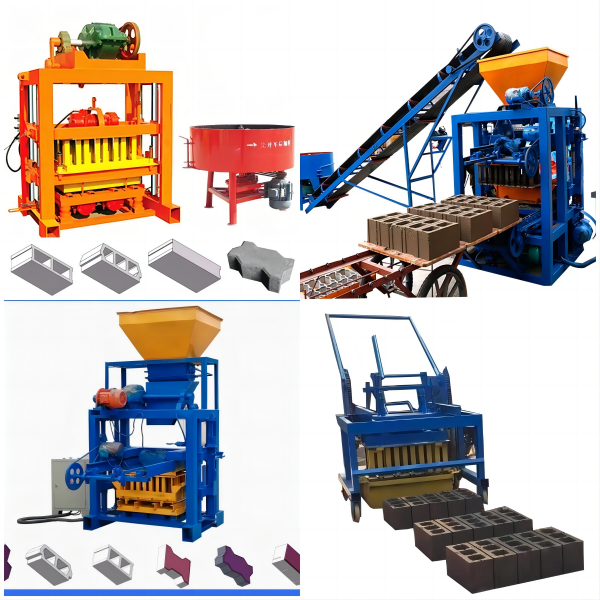
- Máquinas Manuales/Semiautomáticas:Estas requieren una intervención significativa del operador para la alimentación y la remoción de bloques. Representan el punto de precio más bajo, pero tienen costos laborales más altos y menor consistencia.
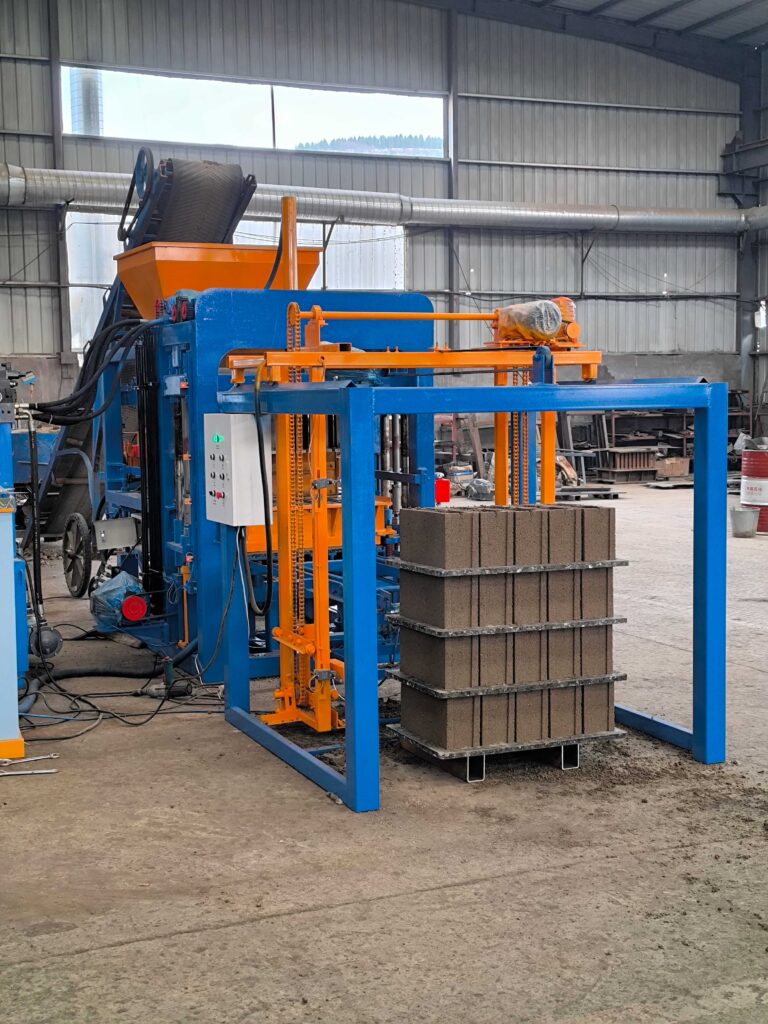
- Máquinas Independientes Totalmente Automáticas:Estos automatizan los procesos de alimentación, compactación y eyección, controlados por un Controlador Lógico Programmable (PLC). Comandan un precio más alto debido a sus sofisticados sistemas de control y su eficiencia mejorada.
- Líneas de Producción Totalmente Automatizadas:Estas integran múltiples máquinas (mezcladora, transportadora, fabricadora de bloques, apiladora, paletizadora) en una línea sincronizada. Esto representa el segmento de precio premium, justificado por los requisitos mínimos de mano de obra y el rendimiento máximo.
B. Diseño Técnico y Calidad de los Componentes
- Integridad Estructural y Bastidor:Las máquinas con marcos de acero reforzados de alta resistencia, diseñadas para operación continua bajo alto estrés, cuestan más de fabricar pero ofrecen una longevidad y estabilidad muy superiores a las contrapartes ligeras.
- Sistema de Vibración y Compactación:El corazón de la máquina. Los sistemas que cuentan con mesas vibratorias de alta frecuencia, de doble eje (o multieje) acopladas con presión hidráulica controlada garantizan una densidad y resistencia superior en los bloques. Mecanismos de vibración más avanzados y motores de vibración más potentes aumentan el costo.
- Sistema Hidráulico:La calidad y capacidad de las bombas hidráulicas, válvulas, cilindros y la sofisticación del sistema de control de presión son factores importantes de costo. Componentes premium y fiables de fabricantes establecidos de piezas hidráulicas garantizan un rendimiento constante, pero aumentan el precio inicial.
- Sistema de Control:Un panel eléctrico básico difiere enormemente en costo de una interfaz táctil basada en PLC que permite almacenamiento de recetas, diagnóstico de fallas y monitoreo de datos de producción.
C. Versatilidad y Configuración de Moldes
- Número de Moldes e Intercambiabilidad:Una máquina capaz de producir múltiples productos (bloques huecos, bloques macizos, adoquines, bordillos) mediante el uso de moldes intercambiables es más valiosa y costosa que una máquina de un solo propósito.
- Complejidad del Molde y Material:Los moldes para formas geométricas complejas (como bloques entrelazados o fachadas texturizadas) requieren mecanizado CNC de precisión y acero de alto cromo resistente al desgaste, lo que incrementa significativamente el costo. Los moldes para bloques estándar son menos costosos.
II. Beyond the Machine: Ancillary Costs and Commercial Considerations
The initial machine quotation is only part of the financial picture. Several ancillary factors directly or indirectly influence the total investment.
A. Logistics and Destination
- Shipping and Insurance (FOB, CIF, etc.): The Incoterm agreed upon determines cost responsibility. Free on Board (FOB) pricing means the buyer arranges and pays for main shipping and insurance, while Cost, Insurance, and Freight (CIF) includes these to a named port. Landlocked destinations or sites with poor infrastructure can incur substantial additional haulage costs.
- Machine Weight and Dimensions: Larger, heavier machines incur higher shipping costs. Container optimization can affect pricing.
B. Supplier Value-Added Services and Terms
- Technical Support and Training: Suppliers offering comprehensive installation supervision, commissioning, and on-site operator training provide immense value, which may be reflected in the price or offered as a separate service package.
- Warranty Scope and Duration: A longer, more inclusive warranty on critical parts (frame, hydraulics, vibration system) often correlates with a higher initial price but lower long-term risk.
- Spare Parts Policy and Local Availability: A supplier with a structured spare parts supply chain and local or regional stock reduces future downtime costs. This logistical support is a value component.
III. Strategic Pricing Analysis for B2B Decision-Making
For a distributor, the evaluation must shift from “sticker price” to “total cost of ownership” and “potential for return.”
A. Calculating Total Cost of Ownership (TCO)
TCO analysis is essential for comparing different machine options accurately. It includes:
- Initial Purchase Price.
- Shipping, Insurance, and Import Duties.
- Installation and Foundation Costs.
- Cost of Ancillary Equipment (e.g., a concrete mixer, loader, pallets).
- Estimated Annual Costs for Maintenance, Spare Parts, and Energy Consumption.
- Labor Cost Differential between a semi-automatic and a fully automatic line.
A machine with a 20% higher purchase price but 40% lower labor costs and 30% less downtime over five years presents a far superior TCO.
B. Aligning Machine Choice with Market Strategy
The “right” machine is the one that best serves your target market segment.
- For Serving Small Entrepreneurs/Startups: Affordable, robust semi-automatic machines with good local service support may be the ideal product, focusing on lower entry price.
- For Supplying Large Contractors or Government Projects: High-output, fully automatic lines that guarantee consistent quality and volume are necessary. The business case justifies the higher investment through large-scale, recurring orders.
- For Niche Markets (Architectural Pavers, Special Shapes): Versatile machines with advanced mold technology are key. The price is justified by the higher profit margins on specialized products.
C. The Critical Role of Due Diligence
- Auditoría de Fábrica: Insist on visiting the manufacturing facility. Assess the scale, quality control processes, and the engineering prowess firsthand. The build quality observed directly explains price differentials.
- Request Detailed Breakdowns: Ask for a component-level cost justification or specification sheet that clarifies the quality of key parts (e.g., brand of hydraulic pump, thickness of steel plate).
- Reference Checks: Contact existing clients of the supplier, preferably in a similar market, to get unfiltered feedback on machine performance, reliability, and the true cost of operation and support.
Conclusión
Navigating the pricing of concrete brick making machines requires a disciplined, analytical approach that transcends initial price comparisons. For the professional distributor or purchaser, price is a function of capability, durability, and the supplier’s ability to ensure long-term, profitable operation. The most economically sound decision is rarely the cheapest upfront option. It is the machine whose specifications—output, automation, component quality, and versatility—precisely match the demands of the target end-user market, and whose total cost of ownership, supported by a reliable partner, delivers the strongest and most sustainable return on investment. By meticulously evaluating engineering substance over surface features and calculating TCO, B2B stakeholders can transform a capital expenditure into a powerful engine for market growth and profitability.
FAQ (Frequently Asked Questions)
Q1: What is a realistic budget range for a machine that can start a viable block-making business?
A viable business-starting setup typically requires a minimum of a semi-automatic machine with a daily output of 4,000-8,000 blocks (e.g., 4″ hollow block). Including a medium-sized mixer, mold sets, and accounting for basic shipping, a realistic budget range is between $5,000 and $25,000. This provides a balance between investment scale and production capability for a small to medium enterprise.
Q2: Does a higher price always guarantee better quality and after-sales service?
Not always, but there is a strong correlation. A price significantly below market average often indicates compromises in material thickness, component quality, or engineering. However, due diligence is key. A reputable supplier in the mid-to-high price range should transparently demonstrate the quality of their components and provide verifiable evidence of their after-sales network, training programs, and spare parts availability. The price should be justified by tangible value propositions.
Q3: How do shipping costs typically impact the final landed price, and how can we estimate them?
Shipping costs can add 10% to 25% or more to the FOB machine price, depending on distance, mode of transport (sea vs. air), and destination port logistics. To estimate, you need the machine’s total packed volume (CBM) and weight. Your freight forwarder can provide a quote based on this. Always clarify the Incoterms with the supplier to avoid unexpected charges.
Q4: What are the most common hidden costs after purchasing the machine?
Buyers should budget for:
- Site Preparation: A level, reinforced concrete foundation.
- Installation & Utility Hook-up: Costs for local technicians, cranes, and electrical/water connections.
- Initial Raw Materials: Inventory of cement, aggregates, and pigments.
- Operational Training: If not fully included, may be an extra cost.
- Initial Spare Parts Kit: Purchasing a recommended set of wear parts (like seal kits, springs) upfront saves future downtime.
Q5: Is financing or leasing options commonly available from manufacturers?
Many established manufacturers work with financial partners or export credit agencies to offer financing or leasing plans to qualified buyers. This is more common for large, high-value orders. For smaller machines, suppliers may offer structured payment plans (e.g., 30% deposit, 70% before shipment). It is always advisable to inquire directly about available financial solutions to ease capital expenditure.