
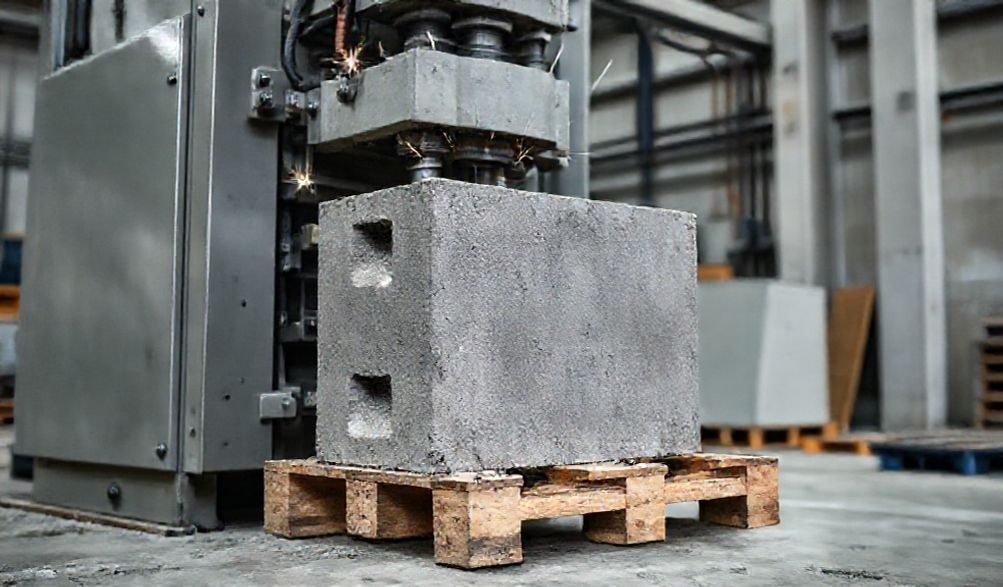
La Guía Completa sobre Máquinas para Hacer Bloques de Cemento: Tipos, Costos y Cómo Elegir
Observa cualquier ciudad, suburbio o desarrollo rural y los verás. Los bloques de cemento, más conocidos como Unidades de Mampostería de Concreto (CMU), son los héroes anónimos de la construcción moderna. Forman los cimientos de nuestros hogares, las paredes de nuestros almacenes y los límites de nuestros jardines. Su durabilidad, resistencia al fuego y rentabilidad los convierten en un elemento básico de la construcción a nivel mundial.
Sin embargo, producir estos bloques a mano es una receta para la frustración. Es lento, físicamente exigente y produce resultados inconsistentes. Para cualquier proyecto que vaya más allá de un pequeño muro de jardín, o para cualquiera que esté considerando un negocio de fabricación de bloques, la producción manual simplemente no se sostiene.
Aquí es donde entra en escena la máquina para fabricar bloques de cemento. Transforma una labor intensiva en un proceso eficiente, preciso y escalable. Pero con opciones que van desde simples palancas manuales hasta fábricas completamente robotizadas, ¿cómo elegir? Esta guía integral sintetiza especificaciones de la industria, datos de fabricantes y experiencia operativa para desmitificar estas máquinas. Nuestro objetivo es brindarte el conocimiento para realizar una inversión segura e informada, ya sea para un proyecto personal en una granja familiar o para un emprendimiento comercial a gran escala.
¿Qué es una máquina para fabricar bloques de hormigón?
En esencia, una máquina para fabricar bloques de hormigón automatiza el proceso de moldear mezcla de concreto cruda en bloques densos y uniformes de una forma y tamaño específicos. Reemplaza la variabilidad del esfuerzo humano con precisión mecánica, garantizando que cada bloque cumpla con el mismo estándar.
Función Principal y Mecánicas Básicas
La operación de la máquina sigue una secuencia lógica, reflejando—pero mejorando enormemente—el método manual:
- Mezcla y Alimentación: Raw materials (cement, aggregates, water) are combined, either manually or via an integrated mixer, and fed into the machine’s hopper.
- Compactación: This is the heart of the process. The mix is transferred into a mold (or die). Here, powerful forces are applied:
- Vibración: Most common in smaller machines. A vibrating table shakes the mold intensely, settling the concrete and removing air pockets.
- Presión Hidráulica: Used in more advanced machines. A hydraulic ram applies immense, controlled pressure to compress the material into a very dense block.
- Moldeo y Expulsión: The compacted material takes the exact shape of the mold cavity (e.g., standard 8x8x16 inch, hollow, paving stone). The mold then opens or lifts, and the “green” (uncured) block is ejected onto a pallet or conveyor.
- Curado: The green block is moved to a curing area where it gains strength over time through controlled hydration, often in a specialized chamber.
Componentes Clave y sus Funciones
Comprender las partes principales desmitifica la máquina:
* Hopper: The funnel that holds and feeds the raw concrete mix into the molding system.
* Mezcladora: Often integrated in semi- and fully-automatic models, it ensures a consistent, homogenous mix.
* Mold/Die Set: The customizable steel form that defines the block’s shape, size, and surface texture. Interchangeable molds allow one machine to produce multiple products.
* Sistema de Compactación: Either a motor de vibración (for high-frequency settling) or a hydraulic power pack and ram (for high-pressure compression).
* Sistema de Control: Ranges from simple levers to sophisticated Programmable Logic Controller (PLC) panels that automate the entire cycle.
* Alimentador/Transportador de Paletas: Moves pallets into position to receive the newly formed blocks and transports them to the curing area.
Types of Cinder Block Making Machines
The right machine for you depends entirely on your scale and goals. The market is segmented into three primary categories.
Máquinas Manuales para Hacer Bloques
- Descripción: These are human-powered, lever-operated devices. You manually fill the mold with mix, engage a lever to apply mechanical pressure, and then release the block.
- Mejor Para: DIY enthusiasts, hobbyists, very small-scale projects (like a single garden shed), or locations with absolutely no power access.
- Capacidad de Salida: Very low, typically 100 to 500 blocks per 8-hour day, heavily dependent on operator stamina.
- Pros y Contras:
- Pros: Extremely low cost, no power required, portable, simple to maintain.
- Contras: Labor-intensive, slow, inconsistent output quality, limited to simple block designs.
Máquinas Semiautomáticas para Fabricar Bloques
- Descripción: These electrically or diesel-powered machines handle the critical compaction (via vibration or hydraulics) but require operators to feed material and sometimes remove finished blocks. They often feature a “egg-laying” design, where the machine moves over a line of pallets.
- Mejor Para: Small to medium-sized businesses, contractors undertaking large projects (e.g., building a housing estate), and municipal works.
- Capacidad de Salida: Medium, ranging from approximately 1,000 to 5,000 blocks per day.
- Pros y Contras:
- Pros: Good balance of affordability and output, consistent block quality, reduces physical labor, offers mold flexibility.
- Contras: Still requires a small crew, output is limited by manual feeding/removal speed.
Máquinas de Fabricación de Bloques Completamente Automáticas
- Descripción: These are complete production plants. Computer-controlled systems manage automatic material batching, mixing, molding, curing, and even robotic stacking. Operators primarily monitor the process.
- Mejor Para: Large-scale commercial block production plants supplying construction companies and retailers.
- Capacidad de Salida: High to very high, from 10,000 to 30,000+ blocks per 8-hour shift.
- Pros y Contras:
- Pros: Maximum output and efficiency, minimal labor requirements, unparalleled consistency, integrated curing systems.
- Contras: Very high capital investment, complex installation, requires significant space and stable utility supply, specialized maintenance.
Mobile vs. Stationary Block Plants
This is a crucial strategic decision:
* Mobile Block Plants: Built on a trailer chassis, these are typically semi-automatic. Their key advantage is on-site production, eliminating transport costs for the heavy finished blocks. Ideal for large, remote construction projects.
* Plantas de Bloques Estacionarias: Fixed installations, which can be semi- or fully-automatic. They benefit from optimized workflow, permanent utility connections, and easier integration of advanced curing systems. Ideal for supplying a local market from a central location.
Critical Factors for Choosing the Right Machine
Moving beyond basic type, here are the key details that will determine your success and satisfaction.
Evaluando Sus Necesidades de Producción
Start by asking the right questions:
* Daily/Weekly Output: Be realistic. How many blocks do you realmente need to produce? Factor in future growth, but don’t overbuy dramatically.
* Product Variety: Will you only make standard hollow blocks? Do you need paving slabs, solid blocks, or interlocking landscaping bricks? Your required product catalog dictates the need for interchangeable molds.
* Block Strength: Different projects require different compressive strengths (measured in psi or MPa). Ensure the machine you choose can achieve the necessary density.
Machine Specifications to Scrutinize
When comparing models, dig into these specs:
* Tiempo de Ciclo: How many seconds/minutes does it take to produce one block or one pallet of blocks? This directly determines maximum output.
* Presión de Compactación: For hydraulic machines, higher pressure (measured in tons) generally produces denser, stronger blocks.
* Personalización de Moldes: Can you easily source additional mold designs from the manufacturer or third parties?
* Requisitos de Energía: Does it run on standard single/three-phase electricity or a diesel engine? Ensure your site can support it.
Raw Material Considerations
Not all machines work well with all mixes. Verify compatibility with your intended materials:
* Standard concrete mix (cement, sand, gravel)
* Fly ash or slag-based mixes (eco-friendly and often cheaper)
* Lightweight aggregates (like pumice or perlite for lighter blocks)
The particle size and moisture content of your aggregate can significantly affect how the machine feeds and compacts.
Budget and Total Cost of Ownership
The machine’s price tag is just the beginning. A holistic view is essential:
* Upfront Cost: Includes the machine, delivery, and installation.
* Costos Operativos: Ongoing expenses for power/fuel, raw materials, and labor.
* Maintenance & Parts: What is the availability and cost of wear parts (molds, liners, hydraulic seals)? A cheaper machine with no local service support can become a costly paperweight.
* Servicio Postventa: Perhaps the most critical factor. Does the supplier offer training, technical support, and a clear warranty? Prioritize suppliers with a strong service reputation.
The Business Case: ROI and Profitability
For entrepreneurs, a block-making machine is a capital investment. A clear business plan is non-negotiable.
Understanding the Market and Demand
Conduct local research:
* Who are your potential customers? (Contractors, developers, retail stores, direct to public?)
* What is the current price per block in your area?
* Who are your competitors, and what is their capacity?
Calculating Startup and Operational Costs
Create a detailed breakdown:
* Startup Costs: Land lease/purchase, shed/warehouse, machine purchase & installation, initial raw material inventory, business licensing.
* Operational Costs (Monthly): Raw materials, labor wages, utilities, maintenance fund, transportation/logistics.
Projecting Revenue and Break-Even Analysis
Use simple math to model profitability:
1. Revenue per Block: Selling Price – Cost of Raw Materials per Block.
2. Daily Gross Profit: (Revenue per Block) x (Number of Blocks Sold per Day).
3. Break-Even Analysis: (Total Monthly Fixed Costs) / (Gross Profit per Block) = Number of blocks you need to sell each month to cover costs.
This exercise will tell you if your planned output and local market prices can support the business.
Operation, Maintenance, and Best Practices
Proper care ensures longevity, safety, and consistent product quality.
Setting Up for Success: Installation and Calibration
- Foundation: A level, solid concrete pad is mandatory, especially for vibrating machines, to prevent settling and misalignment.
- Utilities: Ensure your power supply matches the machine’s requirements. Have a reliable water source for mixing.
- Calibration: Follow the manufacturer’s instructions to calibrate vibration time, pressure, or feed volume for your specific mix. Test runs are essential.
Daily Operation and Safety Protocols
- Pre-Start Checklist: Verify all guards are in place, check oil/hydraulic fluid levels, ensure the hopper and mold are clean.
- Safety First: Mandatory Personal Protective Equipment (PPE) includes safety glasses, hearing protection (for loud machines), gloves, and steel-toe boots. Never bypass safety interlocks.
- Shutdown Procedure: Clean the machine thoroughly after use, especially all concrete residue from the mold and hopper.
Routine Maintenance Schedule
Preventive maintenance prevents catastrophic downtime:
* Daily: Clean entire machine, check for loose bolts, inspect mold for damage.
* Weekly: Lubricate all moving parts as per the manual, check vibration motor mounts, inspect hydraulic lines for leaks.
* Monthly: Perform more thorough inspections, check electrical connections, calibrate sensors (on automatic machines).
Frequently Asked Questions (FAQ)
Q1: What is the price range for a cinder block making machine?
A: Prices vary enormously based on type and automation. A basic manual machine can start around $1,000. A quality semi-automatic machine typically ranges from $15,000 to $50,000. Fully automatic production plants can start at $80,000 and exceed $250,000. The final cost is driven by output capacity, level of automation, and brand.
Q2: Can I make other products besides standard cinder blocks?
A: Absolutely. With interchangeable molds, a single machine can often produce a wide range of concrete products, including paving stones, curb stones, hollow blocks in various thicknesses, solid bricks, and interlocking landscaping blocks. Confirm mold availability with your supplier.
Q3: What is the curing process, and how long does it take?
A: Curing is the process where the concrete gains strength through continued hydration. Fresh “green” blocks are typically kept in a humid, temperature-controlled environment (a curing chamber or under plastic sheeting) for 24-48 hours. They can then be handled and stacked. However, concrete reaches its specified design strength (e.g., 3000 psi) over a period of 28 days under proper curing conditions.
Q4: How much space do I need for a block-making operation?
A: Space needs vary drastically. A manual machine might only need a 10×10 foot yard. A semi-automatic operation requires space for the machine, raw material storage (sand, gravel, cement), a mixing area, and a curing/storage yard—often at least 5,000-10,000 square feet. A full automatic plant with conveyor lines and curing racks can require a warehouse or a large, covered industrial plot.
Q5: Where can I find reliable machine manufacturers or suppliers?
A: Seek out established companies with a verifiable track record. Look for industry certifications, genuine customer testimonials or case studies, and clear warranties. Attending international construction or machinery trade shows is an excellent way to see machines in person and meet suppliers. Always consult with multiple vendors, request detailed quotations, and, if possible, speak to existing customers or visit a working installation.
Conclusión
Choosing a cinder block making machine is a significant decision that hinges on a clear understanding of your production needs, a careful analysis of machine specifications, and a realistic assessment of costs—both upfront and ongoing. From the simplicity of a manual press to the awe-inspiring efficiency of a fully automatic plant, the right machine can elevate a construction project or launch a profitable business.
Our final, strongest recommendation is to prioritize quality and service over the lowest price. This machine is a long-term asset. A reliable supplier who offers robust after-sales support is worth a premium, as it protects your investment and ensures operational continuity.
Use this guide as your foundational research. Your next step is active due diligence: contact multiple reputable suppliers, request comprehensive quotations and specification sheets, and, crucially, seek references or site visits. Armed with the knowledge from this guide, you are now prepared to ask the right questions and invest in the equipment that will build your vision, block by consistent block.
<