
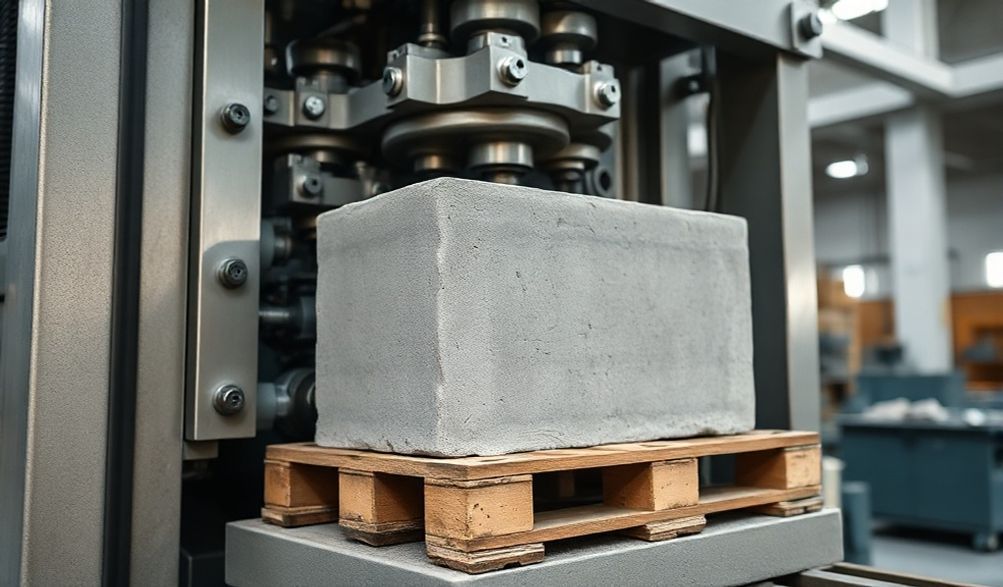
Brick Machine Price: A 2024 Buyer’s Guide & Cost Breakdown
Navigating the market for a brick making machine can feel overwhelming. You’re not just buying a piece of equipment; you’re making a strategic investment in the future of your construction business, manufacturing plant, or entrepreneurial venture. With over a decade of experience analyzing construction machinery markets and advising buyers worldwide, I’ve seen the common pitfalls and celebrated the success stories.
This guide cuts through the noise. We’ll move beyond a simple Google search for “brick machine price” and delve into what truly defines cost and value. We’ll combine real-world pricing data, insights from leading manufacturers, and a rigorous total cost of ownership framework. Our goal is to empower you with the knowledge to choose a machine that doesn’t just fit your budget, but actively builds your profitability through superior efficiency, reliability, and product quality. Let’s build a solid foundation for your decision.
Key Factors That Determine Brick Machine Price
The price tag on a brick machine is the sum of numerous engineering, operational, and commercial decisions. Understanding these variables is the first step to making an intelligent purchase. Here are the core factors that dictate cost.
1. Production Capacity & Output
This is the most direct driver of price. Capacity is measured in bricks or blocks per hour.
* Low Output (e.g., 500-1,500 bricks/hour): Machines in this range are simpler, smaller, and less expensive. They are suitable for niche production or supplementing on-site construction.
* High Output (e.g., 10,000-30,000+ bricks/hour): This requires a heavy-duty, complex system with faster cycles, larger mixers, automated material handling, and sophisticated controls. The price increases exponentially with capacity due to the need for more powerful motors, heavier-duty frames, and advanced automation.
La conclusión final: Be ruthlessly realistic about your needed output. Overbuying wastes capital, while underbuying cripples your growth.
Nivel de Automatización: Manual, Semiautomático, Totalmente Automático
Automation is the primary spectrum along which price and capability vary.
* Máquinas Manuales: Operated entirely by hand levers or simple mechanical presses. They have the lowest upfront cost but the highest long-term labor cost and lowest consistency.
* Máquinas Semiautomáticas: The sweet spot for many growing businesses. Key processes like compression and ejection are powered (hydraulic or mechanical), but an operator is needed to feed molds or remove products. They offer a great balance of productivity and investment.
* Máquinas Completamente Automáticas: Computer-controlled (PLC) powerhouses. They autonomously handle mixing, feeding, compacting, curing, and stacking. The initial investment is high, but they minimize labor, maximize consistency, and provide the lowest cost-per-brick at high volumes.
3. Machine Type & Brick Production Process
The raw materials you plan to use dictate the machine type, each with its own price points.
* Máquinas para Fabricar Ladrillos de Arcilla: Range from traditional manual molders to modern extruders that cut and wire-cut bricks from a continuous clay column. Modern extruders with vacuum chambers for higher density are more costly.
* Máquinas para Bloques de Concreto: The most common type. Prices vary widely:
* Máquinas Móviles "Ponedoras de Huevos": Lower cost, produce blocks directly on the ground.
* Máquinas Estáticas: Higher output, produce blocks on pallets fed into a curing rack.
* Máquinas para Ladrillos de Ceniza Volante: Designed to use fly ash (a waste product from coal plants) as a primary raw material. Prices are similar to concrete block machines but may include specific pressure settings for optimal ash bonding.
* Máquinas para Ladrillos de Encaje: Produce specialized bricks that lock together without mortar, often using soil-cement. Can range from simple manual presses to semi-automatic systems.
4. Brand, Origin, and Build Quality
A machine is only as good as its weakest component.
* Established International Brands (e.g., Zenith, Hess): Command premium prices due to decades of R&D, globally proven durability, and extensive service networks. You pay for peace of mind and resale value.
* Regional Manufacturers (e.g., in India, Turkey): Often offer excellent value, balancing good quality with competitive pricing and better understanding of local market needs.
* Budget Manufacturers (primarily from certain regions): Offer the lowest sticker prices. Critical due diligence is required to assess the quality of components like hydraulics, PLCs, and steel frames. Lower quality can lead to higher downtime and maintenance costs.
5. Additional Features and Customization
The base machine is just the start.
* Multi-Cavity or Changeable Molds: A machine that can produce multiple block types (solid, hollow, paving, curb) is more versatile but more expensive than a single-purpose model.
* Automation Add-Ons: Each adds cost but also efficiency:
* Automatic pallet feeders and stackers.
* Color feeders for surface coating.
* Robotic arms for handling.
* Custom Engineering: Modifications to handle unique raw materials (e.g., fibrous waste, specific aggregate sizes) or create custom brick designs will increase the price.
Brick Machine Price Ranges in 2024
These are general market price ranges. Specific quotes will vary based on the factors above, shipping, and tariffs.
Manual & Small-Scale Machines
- Rango de Precio: $1,000 – $10,000
- Salida Típica: Up to 1,500 bricks per day (not per hour).
- Mejor Para: Entrepreneurs starting a micro-business, community projects, or on-site production for a single home build.
- Ejemplos: A basic manual interlocking brick press may cost $1,500-$3,000. A small, electrically-powered single-block concrete machine might be $5,000-$8,000.
Semi-Automatic Brick Machines
- Rango de Precio: $10,000 – $50,000
- Salida Típica: 2,000 – 5,000 bricks per hour.
- Mejor Para: Small to medium-sized enterprises (SMEs), block yards supplying local builders, and growing construction companies.
- What’s Included: In this range, you typically get a hydraulic or vibration-based machine with a basic control panel, one or two standard molds, and possibly a simple conveyor or mixer. A robust semi-automatic model producing 3,000 blocks/hour might cost $25,000-$35,000.
Plantas de Fabricación de Ladrillos Completamente Automáticas
- Rango de Precio: $50,000 – $500,000+
- Salida Típica: 10,000 – 30,000+ bricks per hour.
- Mejor Para: Large-scale commercial plants, industrial building material suppliers, and major infrastructure projects.
- The Investment Breakdown: This price isn’t for one machine; it’s for a complete plant. It includes:
- The main block-making machine (often with a high-pressure hydraulic system).
- A large-capacity pan mixer or planetary mixer.
- Belt conveyors for raw materials and finished blocks.
- A fully programmable PLC control cabinet.
- Automatic pallet circulation system and stacker.
- Batching and weighing systems for raw materials.
Beyond the Sticker Price: Calculating Total Cost of Ownership (TCO)
The smartest buyers analyze the total cost over 5-10 years, not just the purchase price.
Initial Setup and Installation Costs
Budget for these often-overlooked initial expenses:
* Foundation & Site Prep: Heavy machines need a solid, level concrete foundation. Cost varies by location.
* Electrical & Power Setup: High-horsepower machines may require three-phase power installation.
* Instalación y Puesta en Marcha: Factor in costs for a technician from the supplier to install, calibrate, and test-run the machine.
* Initial Spares & Molds: Your first set of replacement molds and a recommended spare parts kit are an upfront cost.
Operational Costs: Power, Labor, and Raw Materials
This is where your daily profits are made or lost.
* Consumo de energía: A fully automatic plant with multiple motors and hydraulics is a significant energy user. Calculate your local electricity costs.
* Trabajo: This is the big trade-off. A manual machine may need 6-8 people to match the output of one semi-automatic machine operated by 2-3 people, or a fully automatic plant run by 1-2 operators.
* Compatibilidad de Materias Primas: The best machine for you is one designed to optimize your locally available materials—whether it’s local soil, crusher dust, or fly ash. This minimizes input costs.
Maintenance, Spare Parts, and Downtime
- Mantenimiento Preventivo: Regular lubrication, filter changes, and bolt tightening are low-cost but critical.
- Piezas de desgaste: Molds, liners, seal kits, and hydraulic hoses are consumables. Factor in their replacement cost and frequency.
- The High Cost of Downtime: When the machine stops, revenue stops. A reliable machine with accessible service support has immense hidden value. A cheap machine with no local support can become a very expensive paperweight.
How to Get the Best Value for Your Investment
Follow this actionable, experience-driven roadmap to secure the right machine.
Step 1: Accurately Assess Your Needs
- Conduct a Market Study: How many bricks can you realistically sell per day? What types are in demand (solid, hollow, paving)?
- Analyze Raw Materials: Get your soil/clay/aggregate tested. The machine must be matched to its properties.
- Plan for Growth: Consider a machine that can handle 20-30% more capacity than your current need to accommodate growth without another major purchase.
Step 2: Source Reputable Suppliers and Compare Quotes
- Verify Credentials: Ask for business licenses, factory audit reports, and contactable client references in a similar climate/region to yours.
- Create a Detailed RFQ (Request for Quotation): Don’t just ask for “a brick machine price.” Specify your required output, raw materials, finished product dimensions, and preferred automation level. This ensures you compare apples to apples.
- Visit if Possible: If the investment is significant, visiting the factory or, even better, a client’s working machine is invaluable.
Step 3: Negotiate and Understand the Contract
- Focus on Key Clauses:
- Garantía: What is covered (parts, labor)? For how long? What is the process?
- Delivery Terms: Who handles shipping and insurance (e.g., FOB vs. CIF)?
- Payment Terms: Avoid paying 100% upfront. A common structure is 30% deposit, 60% before shipment, 10% after successful commissioning.
- Negotiate Packages: Often, you can get a better deal on a bundle (Machine + 3 extra molds + 1-year spare parts).
Step 4: Plan for Installation and Operator Training
- Prepare Your Site Early: Have the foundation and power ready before the machine arrives to avoid daily delays.
- Demand Comprehensive Training: Ensure the supplier’s commissioning engineer trains your key operators on daily operation, routine maintenance, and basic troubleshooting. Well-trained operators prevent most major breakdowns.
Frequently Asked Questions (FAQ) About Brick Machine Prices
Q1: What is the cheapest type of brick machine available?
A: Manual or hand-operated presses are the least expensive, starting around $1,000-$3,000. However, they have very low output and high labor intensity, making them suitable only for very small-scale or occasional use.
Q2: Does a higher price always mean better quality?
A: Generally, yes, as it reflects better materials, precision engineering, and robust components. However, it’s crucial to research the brand’s reputation and after-sales service. The most expensive machine isn’t always the best for your specific needs.
Q3: Are used brick machines a good way to save money?
A: They can be, but carry significant risk. A thorough inspection by a qualified technician is essential to assess wear on critical parts like the hydraulic system and mold. Factor in potential immediate refurbishment costs. For a primary production machine, a new unit with a warranty is often a safer investment.
Q4: How much should I budget for installation and setup?
A: This varies widely but typically ranges from 5% to 15% of the machine’s price. It covers foundation work, electrical connections, and initial commissioning. Always get a detailed setup estimate from your supplier.
Q5: What ongoing costs should I expect?
A: Key ongoing costs include electricity, routine maintenance (lubricants, filters), replacement wear parts (like mold liners), and labor for operation and basic upkeep. Budgeting 2-5% of the machine’s initial cost annually for maintenance is a prudent rule of thumb.
Conclusión
As we’ve explored, the true “brick machine price” is a multi-faceted calculation. It encompasses the initial capital outlay, the ongoing operational expenses, and the often-hidden costs of downtime and inefficiency. The right machine is not a cost center; it is a profit center that enhances your competitive edge through consistent quality, reliable output, and controlled production costs.
Drawing from years of industry observation, our strongest recommendation is to prioritize long-term value and supplier reliability over the allure of the lowest bid. Forge a partnership with a supplier who demonstrates transparency, offers robust technical support, and stands behind their product with comprehensive training and service. By clearly defining your goals and using this guide as your framework, you can transform the complex decision of purchasing a brick machine into a confident strategic investment—one that will lay the foundation for a profitable and sustainable business for years to come.
<