
The Ultimate Guide to Automatic Concrete Block Machines: Efficiency, Cost, and Selection
The global construction industry is projected to reach a staggering $15.2 trillion by 2030, driven by relentless urbanization and infrastructure development. At the heart of this growth lies a constant demand for reliable, high-quality building materials. Concrete blocks, the ubiquitous backbone of modern construction, are more crucial than ever. Yet, for builders, contractors, and manufacturing entrepreneurs, meeting this demand with manual or semi-automatic methods is a constant battle against inefficiency, inconsistency, and physical limitation.
If you’re grappling with labor-intensive processes, unpredictable output quality, or the inability to scale production profitably, you’re not alone. The solution lies in embracing industrial automation. An Máquina automática de bloques de hormigón represents a transformative leap, turning raw materials into precision building components with minimal human intervention. This guide, distilled from engineering principles and real-world operational experience, will demystify this pivotal technology. We’ll equip you with the knowledge to understand its workings, evaluate its true cost, and make a selection that powers your productivity and profit for years to come.
What is an Automatic Concrete Block Machine? (Understanding the Core Technology)
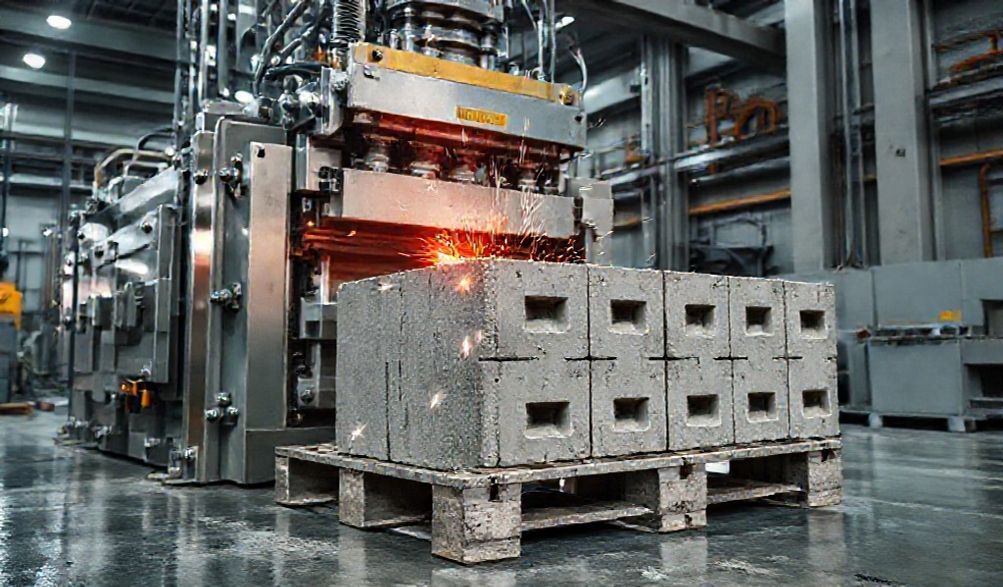
An automatic concrete block machine is a fully integrated manufacturing system designed to produce concrete blocks—such as hollow blocks, solid blocks, pavers, and curbstones—through a sequenced, computer-controlled process. Unlike manual methods where every step is hands-on, or semi-automatic machines that require significant operator input, these systems automate the entire cycle from feeding to stacking.
Componentes Principales y Cómo Funcionan en Conjunto
The efficiency of an automatic machine comes from the synchronized operation of its key subsystems:
- Sistema Hidráulico: The powerhouse. It provides the immense pressure needed to compact the concrete mix within the mold with consistent force every cycle.
- Sistema de Vibración: Critical for quality. High-frequency vibrations, often combined with hydraulic pressure, work to eliminate air pockets and ensure the mix fully fills the mold, resulting in dense, strong blocks.
- Panel de Control (PLC): The “brain.” A Programmable Logic Controller allows operators to set parameters like vibration time, pressure duration, and cycle count. It orchestrates the entire sequence with precision and repeatability.
- Ensamblaje de Moldes: The defining component. Interchangeable molds determine the block’s shape, size, and design (e.g., hollow core pattern). They are built from hardened steel for durability.
- Conveyor/Pallet System: The logistics network. A system of steel pallets carries the freshly molded blocks through a curing chamber (like a brick dryer) and often to an automatic stacker or de-palletizer.
The automated cycle is a marvel of efficiency: raw material is fed, precisely measured, and poured into the mold. The mold is then subjected to simultaneous vibration and high-pressure compaction. The formed block is ejected onto a pallet, which is conveyed away for curing, while the system immediately resets for the next cycle—all in a matter of seconds.
Key Advantages Over Manual & Semi-Automatic Machines
The shift to full automation delivers undeniable competitive advantages:
- Producción Incrementada Dramáticamente: Production soars from hundreds to thousands of blocks per hour, enabling you to take on larger projects or supply bigger markets.
- Consistencia Inigualable: Every block is identical in dimensions, density, and strength, ensuring structural integrity and simplifying the building process.
- Ahorro Significativo de Mano de Obra: One automatic machine, operated by 2-3 people, can replace a large manual workforce, reducing wage costs and management complexity.
- Enhanced Safety & Precision: The automation of heavy lifting and high-pressure tasks reduces workplace injuries, while the PLC ensures precise, repeatable operations.
Key Features to Evaluate When Choosing a Machine
Selecting the right machine is not about finding the cheapest option; it’s about finding the most suitable partner for your business. Here are the critical features to scrutinize.
Capacidad de Producción y Especificaciones de Producción
Capacity is typically measured in cycles per hour or blocks per 8-hour shift. However, output varies dramatically by block type.
* A machine might produce 2,000 solid blocks per hour but 5,000 pavers in the same time due to mold cavity count and cycle time.
* Consejo práctico: Match the machine’s capacity to your realistic sales projections with room for growth, not just peak theoretical demand. An over-sized machine is a capital drain; an under-sized one stifles opportunity.
Automation Level and Control Systems
The sophistication of the control system dictates ease of use and flexibility.
* PLC Systems are the industry standard for true automatics. They allow for programming multiple block recipes, fault diagnostics, and production data tracking.
* Simpler systems may be less expensive but offer less control and troubleshooting insight. A user-friendly touchscreen interface is a valuable feature for operator training and daily use.
Machine Durability and Build Quality
This is where upfront cost connects directly to long-term return on investment (ROI).
* Inspect the robustness of the main frame (heavy-duty steel is best), the quality of hydraulic cylinders and pumps (reputable brands matter), and the hardness of mold steel.
* A machine built with superior components will have less downtime, lower maintenance costs, and a operational lifespan measured in decades, not years.
Versatility: Molds and Block Types
Market demand can shift. A versatile machine protects your investment.
* Ensure the machine can accommodate molds for various products: standard hollow blocks, solid blocks, interlocking bricks, landscaping pavers, and curb stones.
* Crucial Question: Ask the supplier about the mold changeover process. How long does it take? Is it a complex procedure requiring technicians, or can trained operators manage it? What is the cost of additional molds?
Analyzing the Cost: Investment vs. Return (ROI)
A transparent financial analysis separates a wise investment from a burdensome expense.
Upfront Purchase Price Factors
The price tag of an automatic concrete block machine is influenced by:
* Brand & Origin: Established brands with proven track commands a premium.
* Nivel de Automatización: Fully automatic, computer-controlled systems cost more than basic automated ones.
* Capacidad de Producción: Higher output machines require heavier-duty components.
* Included Features: Does the price include a brick dryer, automatic stacker, or mixer? Often, these are separate.
* Realistic Range: Prices can vary widely, from approximately $50,000 for a smaller, basic model to over $250,000 for a high-capacity, fully-equipped production line.
Operational and Hidden Costs
The purchase price is just the beginning. Budget for:
* Installation & Foundation: Requires a level, reinforced concrete foundation.
* Fuente de alimentación: Most industrial machines require a stable 3-phase electrical connection.
* Raw Material Storage & Handling: Costs for silos (for cement), covered storage for aggregates, and conveying systems.
* Trabajo: While reduced, you still need skilled operators and maintenance personnel.
* Spare Parts Fund: Setting aside a budget for wear-and-tear parts (like mold liners, hydraulic seals) is prudent.
Calculating Your Potential Return on Investment
A simplified ROI framework provides clarity:
1. Estimate Daily Revenue: (Blocks Produced per Day) x (Local Selling Price per Block)
2. Calculate Daily Operational Cost: (Raw Materials + Labor + Power + Maintenance + Depreciation)
3. Analyze the Margin: The difference is your daily profit from the machine.
Factors that dramatically improve ROI: High local demand and selling price, efficient operation minimizing waste, and maximizing machine uptime through preventative maintenance. A well-chosen machine in a healthy market can often pay for itself in 1-3 years.
Critical Considerations Before You Buy
Beyond the machine specs, your business environment is key to success.
Assessing Your Local Market and Demand
Conduct thorough research. Are builders using standard hollow blocks or moving toward interlocking systems? Is there demand for decorative pavers for landscaping? Your machine’s mold selection should reflect what you can sell profitably.
Raw Material Availability and Quality Requirements
The machine can only be as good as the mix you feed it. You need consistent access to:
* Cemento: Fresh, high-grade Portland cement.
* Agregados: Well-graded sand and crushed stone (typically 0-5mm). They must be clean and free of clay or organic matter. The moisture content needs to be relatively consistent for the automated batching to be accurate.
Space, Power, and Infrastructure Needs
A typical automatic block plant needs:
* Adequate Covered Space: For the machine, curing area (brick dryer), raw material storage, and finished block storage.
* Robust Power: A reliable 3-phase electrical connection (voltage as per machine specs).
* Water Supply: For mixing concrete and basic cleaning.
After-Sales Support: The Make-or-Break Factor
This cannot be overstated. A machine is a long-term asset. Ensure your supplier provides:
* Installation Supervision & Commissioning: On-site setup by a technician.
* Entrenamiento Integral para Operadores: For both operation and routine maintenance.
* Clear Warranty: Understand what is covered and for how long.
* Ready Spare Parts Availability: Quick access to critical spare parts is essential to minimize downtime.
Best Practices for Operation and Maintenance
Treat your machine well, and it will be the engine of your business for years.
Daily and Weekly Maintenance Checklists
- Daily: Clean excess concrete from the mold, frame, and conveyor. Check hydraulic oil levels and for any visible leaks. Lubricate all guide rods and moving parts as per the manual.
- Weekly: Inspect mold liners for wear. Tighten any loose bolts or fittings. Check the vibration motor mounts and electrical connections.
Troubleshooting Common Issues
- Blocks Sticking in Mold: Likely caused by a worn mold, insufficient mold release agent, or an overly wet concrete mix.
- Poor Block Density/Strength: Often due to incorrect vibration time, low compaction pressure, or a poor material mix design.
- Hydraulic Issues (Slow Cycle, Weak Pressure): Check hydraulic fluid level and temperature. Look for leaks. Could indicate a failing pump or valve.
Maximizing Lifespan and Efficiency
- Use only the concrete mix ratios and aggregate sizes recommended by the machine manufacturer.
- Train operators thoroughly on the correct procedures for mold changes and cleaning.
- Never ignore small problems; a minor leak or strange noise is a warning sign. Address it immediately.
Frequently Asked Questions (FAQ)
Q1: What is the average production output of a standard automatic block machine?
A: Output varies significantly. A standard machine can produce between 4,000 to 20,000 standard hollow blocks (e.g., 4″, 5″, 6″) in an 8-hour shift. The exact number depends on the block size, mold cavity count, and the machine’s cycle time.
Q2: Can one machine produce different types and sizes of blocks?
A: Yes, this is a primary advantage. By changing the mold assembly, a single machine can produce various products. However, mold changeover requires time (from 30 minutes to a few hours) and technical skill, and each additional mold is a separate purchase.
Q3: How much manpower is required to operate an automatic machine?
A: Typically, 2-3 persons are sufficient: one to oversee the control panel and operation, and one or two to manage raw material feeding and the movement of loaded pallets. This is a drastic reduction from the 10-15 people often needed for equivalent manual output.
Q4: What is the typical lead time and process for delivery and installation?
A: After order confirmation, lead time can range from 30 to 90 days. The process usually involves factory testing, disassembly for shipping, sea or land freight, and finally, reassembly and commissioning by a supplier technician at your site.
Q5: Are there financing options available for such equipment?
A: Yes. Many reputable equipment suppliers offer in-house financing or leasing plans. Alternatively, third-party equipment financiers, bank loans, or government grants for industrial machinery (location-dependent) are common avenues to explore.
Conclusión
Investing in an automatic concrete block machine is a decisive step toward modernizing your construction or manufacturing business. It represents a commitment to unparalleled efficiency, consistent quality, and scalable growth. As we’ve outlined, this decision hinges not just on the machine’s specifications, but on a holistic view of your market, your infrastructure, and the long-term partnership with your supplier.
Remember, this is a significant capital investment where expertise matters. The insights from engineering and operational experience highlight that due diligence—researching suppliers, demanding demonstrations, and clarifying support terms—is the foundation of a successful purchase. Don’t just buy a machine; invest in a production solution and a support partnership.
Ready to transform your block production? Your next step is to move from research to direct engagement. Contact reputable suppliers to request detailed quotations and, most importantly, ask for live video demonstrations of the specific Máquina automática de bloques de hormigón models you’re considering. If feasible, arrange to visit an existing plant to see the equipment in action and speak directly with an owner-operator. Your future in efficient production starts with that first informed inquiry.
<