Deconstructing Cost-Effectiveness in Large-Volume Brick Supply
Cost-effectiveness is measured not by the lowest sticker price per unit, but by the lowest total cost of ownership and implementation for the project, combined with the reliable attainment of performance specifications. Machine-made bricks impact every variable in this equation.
1. The Manufacturing Efficiency Advantage: Driving Down Unit Cost
The core economic principle at play is the economy of scale and consistency inherent to mechanized production.
1.1. Unmatched Production Speed and Volume
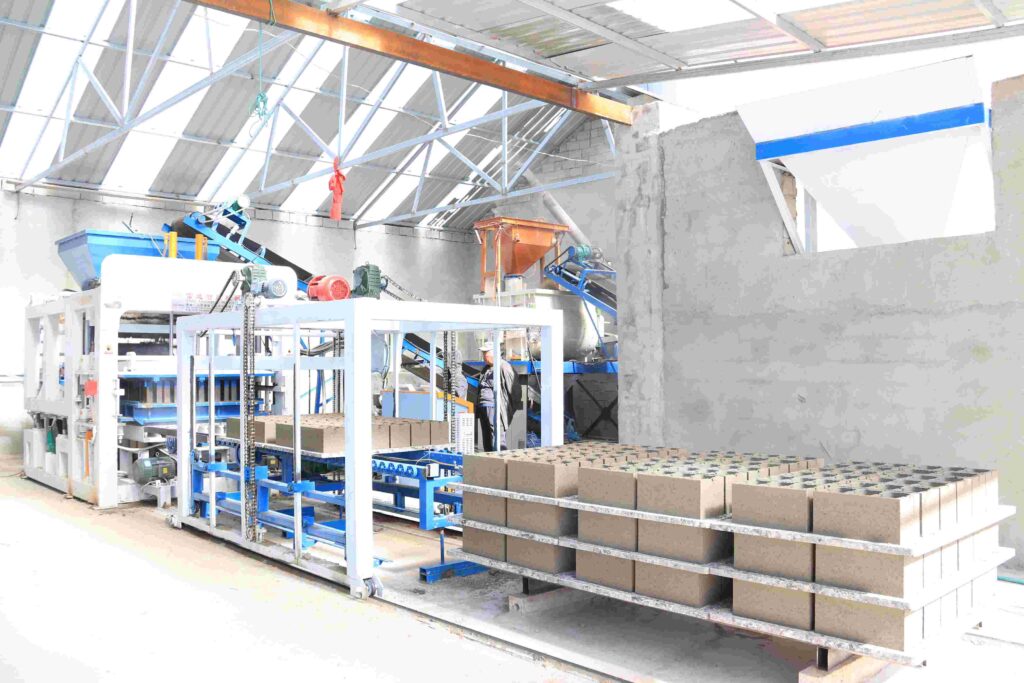
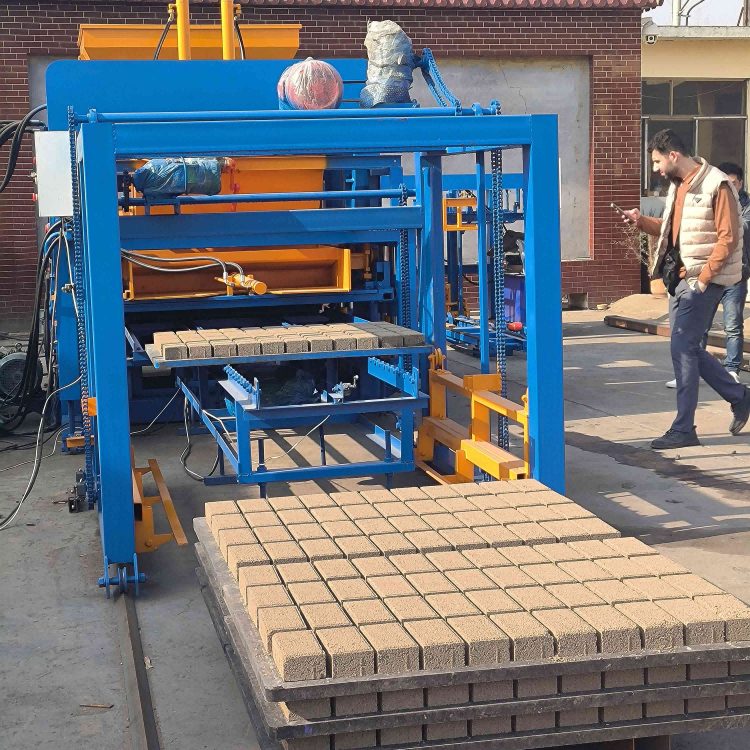
- Capacidad de Salida: A single modern automated brick production line can consistently output between 20,000 to 100,000+ standard brick equivalents per day, depending on the machine type and product. This volume is simply unattainable through non-mechanized methods.
- Impact on Project Planning: For a project requiring 5 million bricks, a supplier with high-volume machine capacity can guarantee supply within a predictable, compressed timeframe. This eliminates the risk of supply bottlenecks that can cripple a construction schedule, a cost risk far exceeding any minor per-unit price difference.
1.2. Radical Reduction in Direct Labor Costs
- Factory Labor Intensity: Mechanization automates the most labor-intensive processes: material handling, mixing, forming, and palletizing. While a plant requires skilled technicians and maintenance crews, the labor cost per thousand bricks produced is drastically lower than in settings reliant on manual molding and handling.
- Consistency and Predictability: Machine production schedules are not subject to the variability and scale limitations of a manual workforce. This predictability translates into more reliable delivery schedules and stable pricing for long-term contracts.
1.3. Optimized Material Utilization and Waste Minimization
- Precision in Measurement and Forming: Computer-controlled batching and precision molds ensure near-exact material usage per brick. Overuse of raw materials (a hidden cost) is minimized.
- Tasas de Rechazo Reducidas: Advanced process control in drying and firing (for clay) or curing (for concrete) leads to a consistently high yield of saleable, specification-grade product. Lower factory rejection rates mean less wasted material and energy cost absorbed into each unit sold.
2. The Logistical and Construction Efficiency Multiplier
The benefits of machine-made bricks extend powerfully from the factory gate to the finished wall.
2.1. Standardization Enables Supply Chain Optimization
- Uniformidad Dimensional: Machine-made bricks exhibit extremely tight tolerances in length, width, and height. This uniformity is not an aesthetic luxury; it is a logistical and construction asset.
- Palletization and Transport: Uniform bricks can be stacked and shrink-wrapped into dense, stable cubic pallets. This maximizes the weight and volume efficiency of every truckload, reducing transportation cost per unit. It also allows for mechanical handling with forklifts at both the distributor’s yard and the construction site, slashing loading/unloading times and costs.
2.2. Accelerated On-Site Construction Velocity
- Impact on Masonry Labor: Uniform dimensions and consistent shape allow masons to work at peak efficiency. There is no time lost selecting or trimming irregular units. Mortar joint thickness can be standardized, speeding up laying rates and reducing mortar consumption. Studies indicate productivity gains of 15-25% are achievable with highly consistent machine-made bricks compared to irregular alternatives.
- Reduced On-Site Waste and Handling: Lower breakage rates during transport and handling, combined with near-zero culling of defective units on-site, mean more purchased bricks end up in the wall. This reduces the required over-order percentage (the “waste factor”) from potentially 10-15% to 5% or less, creating significant savings on large quantities.
3. Analyzing the Total Cost of Ownership (TCO)
A sophisticated procurement analysis must look beyond the purchase order.
3.1. Upfront Cost (Purchase Price)
- Posición de Mercado: Due to the efficiencies above, machine-made bricks typically offer a highly competitive, stable, and transparent upfront price for large volumes. They are the commodity benchmark in most markets.
3.2. Transaction and Logistics Cost
- Lower: As outlined, efficiency in palletization, transport, and on-site handling reduces these ancillary costs substantially.
3.3. Cost of Construction (Installation)
- Significantly Lower: The dramatic reduction in masonry labor time, often the single largest cost component in brickwork, represents the most potent argument for cost-effectiveness. Faster construction also reduces site overheads and accelerates project revenue generation.
3.4. Cost of Quality and Risk
- Greatly Reduced: The structural and aesthetic consistency of machine-made bricks minimizes the risk of call-backs, localized failures, or aesthetic rejections by clients. This mitigates the potentially enormous costs of remediation, a critical consideration for large projects where reputation is paramount.
4. Scenario Comparison: Large Project Procurement
Consider a project requiring 10 million standard facing bricks.
- Option A: Sourcing from a Manual/Semi-Mechanized Producer.
- Lower potential upfront price (in some markets).
- Higher risk of supply delays and volume uncertainty.
- Higher variance in dimensions, leading to slower laying, more mortar use, and potential aesthetic issues.
- Higher on-site waste factor.
- Total Project Cost Impact: Unpredictable, with high hidden costs and schedule risk.
- Option B: Sourcing from a Fully Mechanized, High-Volume Producer.
- Competitive, firm upfront price with volume discounts.
- Guaranteed, phased delivery schedule aligned with construction pace.
- Maximum bricklaying efficiency and minimal waste.
- Predictable, specification-compliant quality.
- Total Project Cost Impact: Lower, predictable, and optimized for speed.
For the general contractor or developer, Option B reduces financial uncertainty and protects the project’s critical path, offering value that far exceeds any minimal upfront price differential.
Conclusion: The Definitive Economic Logic for Scale
For large construction projects, machine-made bricks are not merely an option; they represent the logistically and economically rational default. Their cost-effectiveness is derived from a powerful synergy: the high-volume, low-variable-cost production model creates a reliable, low-cost commodity, while the inherent product consistency of this model drives out inefficiency and cost throughout the downstream supply and construction chain.
The role of the distributor and procurement specialist is to articulate and quantify this total value proposition. It involves:
- Educating Clients: Moving the conversation with contractors and developers from “price per thousand” to “total installed cost per square foot of wall.”
- Selecting Strategic Suppliers: Partnering with manufacturers whose scale, process control, and quality assurance systems guarantee the uniformity and reliability that unlocks these downstream savings.
- Leveraging Data: Using case studies and productivity metrics to demonstrate the tangible time and labor savings achieved with high-consistency machine-made products.
In an industry where time is the ultimate currency, the ability of machine-made bricks to compress schedules through reliable supply and rapid installation translates directly into improved cash flow, reduced financing costs, and earlier return on investment. For the large project, this holistic cost-effectiveness is not an advantage—it is a necessity for competitive and successful delivery.
FAQ
Q1: Couldn’t we achieve lower costs by using even cheaper, non-standard or irregular bricks?
A: This is a classic false economy. The significantly higher labor cost to lay irregular units, combined with increased mortar use and higher waste, will almost always erase any upfront savings and likely lead to a higher total installed cost. Furthermore, the risk of aesthetic rejection or performance issues introduces potential liabilities that are unacceptable on major projects.
Q2: Do machine-made bricks limit architectural design due to their uniformity?
A: On the contrary, modern manufacturing offers vast design flexibility. While each unit is uniform, the range of available colors, textures, sizes, and shapes (from standard modular to large-format, thin brick) is extensive. Architects specify machine-made products for complex facades globally. The uniformity ensures the design intent is executed accurately and consistently across the entire building envelope.
Q3: How does the cost-effectiveness analysis change for a very small, bespoke project?
A: For small, specialized projects (e.g., a historic restoration requiring custom blends), the economy of scale flips. The high setup costs for a machine production run of a unique product may make hand-made or small-batch mechanized production more economically viable. The cost-effectiveness of machine-made bricks is most pronounced and undeniable at scale.
Q4: As a distributor, how can I prove the on-site labor savings to a skeptical contractor?
A: Provide third-party case studies or time-motion analyses from industry associations. Offer to coordinate a product demonstration or site visit to an ongoing project using your bricks, where the contractor can speak directly to the masons about lay rates. You can also model the total cost: compare your brick price + estimated lower labor hours/mortar use against a cheaper brick price + standard labor estimates. The savings in labor, often billed at $X per hour, will be stark.
Q5: Are there any hidden costs associated with machine-made bricks?
A: The potential “hidden cost” is not in the product but in procuring from a low-tier machine producer. If a manufacturer cuts corners on raw material quality, process control, or curing to achieve a low price, it can result in bricks with high absorption (leading to durability issues), inconsistent color, or low strength. The hidden cost then emerges as higher on-site culling, call-backs, or premature facade failure. Therefore, the focus must be on value, not just price—partnering with reputable manufacturers whose quality systems ensure the promised efficiencies are fully realized.