
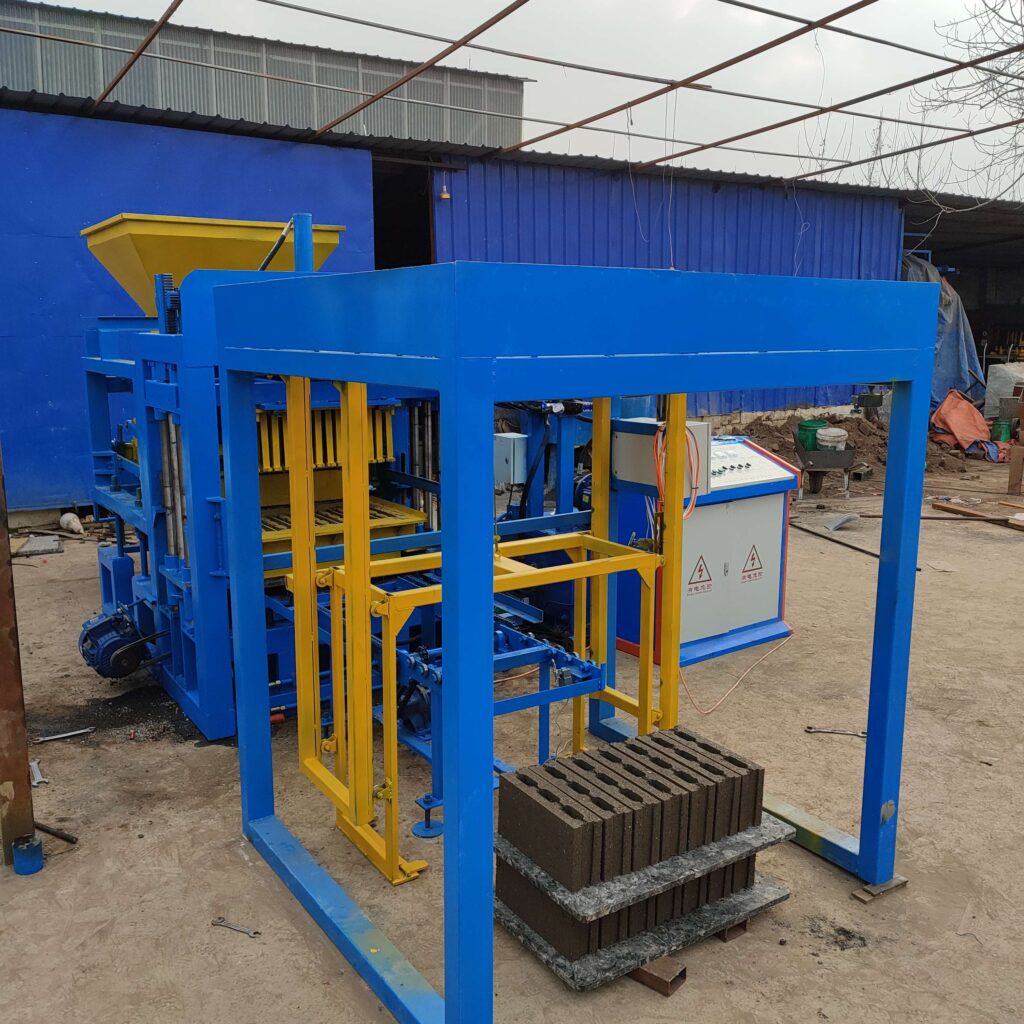
La Filosofía Central de Producción: Densificación y Moldeado
En esencia, una máquina para fabricar bloques de ladrillo opera bajo el principio de compactar una mezcla de partículas en una masa densa y sólida de forma y tamaño predeterminados. La calidad del producto final es una función directa de la composición de la materia prima, la fuerza de compactación aplicada y la precisión del molde.
- El Papel Crítico de la Mezcla de Materias Primas:A diferencia de los procesos que dependen de la unión química mediante cocción, estas máquinas suelen utilizar una mezcla de hormigón "semiseco". La composición estándar incluye un aglutinante (generalmente cemento o cal), áridos (como arena, polvo de piedra o grava) y posibles materiales cementicios suplementarios (como cenizas volantes o escoria). El contenido de humedad en esta mezcla se controla meticulosamente: muy poca agua no activa el aglutinante, mientras que demasiada hace que el bloque se deforme tras la eyección. La mezcla óptima logra la máxima compactabilidad sin adherirse al molde.
- La Dinámica de Compactación: Presión y Vibración.El corazón de la operación de la máquina reside en su sistema de compactación. Las máquinas de gama alta emplean un mecanismo dual: potente presión hidráulica desde arriba y vibración de alta frecuencia desde la mesa del molde. La presión compacta la mezcla, eliminando huecos y aumentando la densidad, mientras que la vibración fluidifica el material, permitiéndole fluir sin problemas hacia cada rincón de la cavidad del molde. Esta combinación es crucial para producir bloques con aristas definidas, densidad uniforme y alta "resistencia en verde" inmediata, lo que permite manipularlos inmediatamente después de la producción.
1.2 El Espectro de la Automatización: Desde Sistemas Manuales hasta Sistemas Totalmente Integrados
El término "máquina para construir bloques de ladrillo" describe un amplio rango tecnológico, donde cada nivel atiende a diferentes capacidades de capital y objetivos de producción.
- Máquinas Manuales y Semiautomáticas:Estos son el punto de entrada de la tecnología. Una máquina manual requiere que un operario accione una palanca de prensado, produciendo un bloque a la vez. Las versiones semiautomáticas utilizan una prensa hidráulica activada por el operador, pero la alimentación y la extracción de los bloques aún pueden ser manuales. Se caracterizan por una baja inversión inicial y son adecuadas para proyectos a muy pequeña escala o liderados por comunidades, pero adolecen de baja producción, alta intensidad de mano de obra y una calidad de producto inconsistente.
- Máquinas Completamente Automáticas:Este es el estándar de la industria para la producción comercial. Estos sistemas son unidades integradas donde un Controlador Lógico Programable (PLC) orquesta todo el ciclo: dosificación y mezcla automática de materiales, alimentación de la mezcla a la tolva mediante transportadores, llenado preciso del molde, compactación y vibración simultáneas, expulsión del bloque terminado y transferencia automatizada a un área de apilado o curado. La intervención humana se limita a monitoreo y mantenimiento, lo que genera una producción que puede alcanzar miles de bloques por turno con una notable consistencia.
- Plantas de Producción Totalmente Integradas:En la cúspide de la automatización se encuentran las plantas completas. Estas incorporan no solo la máquina para fabricar bloques, sino todos los sistemas auxiliares. Esto incluye silos automatizados para cemento y cenizas volantes, cintas transportadoras para áridos, sistemas de dosificación computarizados, mezcladoras industriales, paletizadores robóticos que apilan los bloques en carros de curado, y cámaras de curado automatizadas que controlan la temperatura y la humedad para acelerar el desarrollo de resistencia. Estas plantas representan el pináculo de la eficiencia, la producción y el control de calidad.
El Universo del Producto: Versatilidad en la Construcción de Soluciones
El verdadero valor de estas máquinas radica en su capacidad para producir una cartera diversa de productos de construcción, simplemente cambiando el molde. Esta versatilidad permite a los fabricantes atender múltiples segmentos de mercado simultáneamente.
2.1 Bloques Sólidos y Huecos Estándar
Los caballos de batalla de la industria, utilizados en todo, desde muros de carga en edificios de baja altura hasta muros de relleno en estructuras con marco. Los bloques huecos reducen el peso y el costo de material mientras proporcionan aislamiento inherente.
2.2 Pavers and Landscape Products
These include interlocking concrete pavers for roads, driveways, and walkways, as well as retaining wall blocks and landscaping bricks. This segment often commands higher profit margins and requires machines capable of high-vibration and high-pressure for dense, durable, and aesthetically pleasing products.
2.3 Specialized Masonry Units
- Bloques de Interconexión: Designed with profiled edges that lock together without mortar, enabling rapid, dry-stack construction for walls with excellent seismic resistance.
- Cellular Lightweight Blocks: Produced using a specialized mix that includes a foaming agent, these blocks are lightweight, offering superior thermal and acoustic insulation. Their production requires specific machine adaptations.
- Curved and Architectural Blocks: For aesthetic applications, machines can be fitted with molds to produce blocks for decorative walls, arches, and other architectural features.
Strategic Imperatives for Distribution and Procurement
3.1 Quantifying the Value Proposition for End-Users
For your clients, the investment in a block brick building machine is justified by a clear and compelling financial and operational calculus.
- Unmatched Economic Velocity: The production capacity of an automatic machine can be 10 to 50 times that of a manual operation. This high-volume output enables manufacturers to secure large contracts, achieve economies of scale, and realize a rapid return on investment. The reduction in labor costs further accelerates the payback period.
- Assured Quality and Regulatory Compliance: Machine-made blocks guarantee dimensional consistency, which translates to faster bricklaying, reduced mortar consumption, and lower skilled labor requirements. The controlled production process ensures that every batch meets or exceeds the compressive strength standards mandated by national building codes, a critical factor for structural integrity and market acceptance.
- Operational Independence and Supply Chain Resilience: By establishing their own production facility, construction companies or entrepreneurs gain independence from volatile market prices and unreliable supply chains for bricks. They can produce on-demand, reducing inventory costs and ensuring a consistent supply for their projects.
3.2 Critical Technical Evaluation for Procurement
Selecting the right machine requires a meticulous assessment of technical specifications against market demands.
- Production Capacity Analysis: Move beyond simple “blocks per hour” claims. Evaluate the cycle time for the specific block type the client intends to produce most frequently. Calculate the potential output in cubic meters of concrete per day, as this is a more universal metric for comparing different machines and product mixes.
- Core System Robustness: Scrutinize the heart of the machine. The hydraulic system should be powerful, reliable, and energy-efficient (preferably with variable frequency drives). The vibration system should have multiple, balanced motors capable of delivering high-frequency vibrations for optimal compaction. The mold frame and pressing head must be constructed from high-grade, wear-resistant steel to maintain precision over thousands of cycles.
- After-Sales Ecosystem: The machine’s value is inextricably linked to the support behind it. A supplier must offer comprehensive training, a readily available inventory of critical spare parts (mold liners, hydraulic seals, vibration motors), and access to responsive technical support, ideally with remote diagnostics capabilities. The availability of detailed technical documentation is non-negotiable.
Conclusion: Positioning at the Forefront of Industrialized Construction
The block brick building machine is far more than a piece of factory equipment; it is the cornerstone of a more efficient, resilient, and accessible model of construction. It democratizes the production of high-quality building materials, empowering local businesses and driving regional development. For the astute distributor and procurement specialist, this technology represents a dynamic and high-growth market segment.
Success in this field demands a strategic partnership with manufacturers who demonstrate unwavering commitment to engineering excellence and customer success. By providing your clients with not just a machine, but a comprehensive business solution—including technical guidance on mix design, plant layout, and market strategy—you elevate your role from a vendor to an indispensable partner in their growth. The future of construction is prefabricated, standardized, and locally produced, and the block brick building machine is the vehicle to that future.
Frequently Asked Questions (FAQ)
Q1: What is the fundamental difference between a block making machine and a brick making machine?
A: The terms are often used interchangeably, but a key distinction lies in the product size and the machine’s power. “Block making machines” are generally heavier, more powerful units designed to produce larger concrete masonry units (CMUs), like hollow blocks, which are typically 8x8x16 inches in nominal size. “Brick making machines” may refer to equipment producing smaller, solid units akin to traditional clay bricks. However, most modern automatic machines are versatile and can produce both, depending on the mold installed.
Q2: How long does it take for machine-made blocks to cure and gain full strength?
A: While blocks gain enough “green strength” from high-pressure compaction to be handled within minutes, they require a curing period to achieve their specified compressive strength. With proper water curing or steam curing, blocks can achieve over 70% of their final strength within 3-7 days. Full strength (100%) is typically attained after 28 days, in line with standard concrete curing practices.
Q3: Can these machines use local soil or clay as a primary raw material?
A: While specialized machines exist for compressed earth blocks (CEBs), the vast majority of commercial block brick building machines are designed for a concrete-based mix requiring cement as a binder. Local soil can sometimes be incorporated as a partial aggregate replacement, but its properties must be tested. The standard and most reliable raw materials remain cement, sand, and stone aggregates.
Q4: What is the single most important factor for achieving high-quality blocks?
A: Consistency. This applies to three areas: a consistent and well-graded raw material mix, a consistent moisture content in that mix, and a consistent compaction force and vibration time from the machine. Any variation in these parameters will directly lead to variations in the block’s weight, density, strength, and appearance.
Q5: What level of technical expertise is required to operate and maintain an automatic machine?
A: For daily operation, a competent operator with basic literacy and mechanical aptitude can be trained to run the machine via the user-friendly PLC interface. However, for maintenance and troubleshooting, a more skilled technician is required. The machine supplier should provide training covering daily operation, routine maintenance (greasing, cleaning, inspection), and basic electrical and hydraulic troubleshooting.
Q6: How should a client prepare their site for installing a medium-to-large automatic machine?
A: Site preparation is critical for stability and performance. Key requirements include:
- A Level, Reinforced Concrete Foundation: Designed to absorb the dynamic loads and vibrations of the machine.
- Adequate Space: A covered production area for the machine and auxiliary equipment (mixer, conveyor, curing racks).
- Robust Utilities: A stable and powerful three-phase electrical connection and a reliable source of clean water for the mixing process.
- Raw Material Storage: Designated, organized areas for storing cement (in silos or a dry place), aggregates, and other materials.
