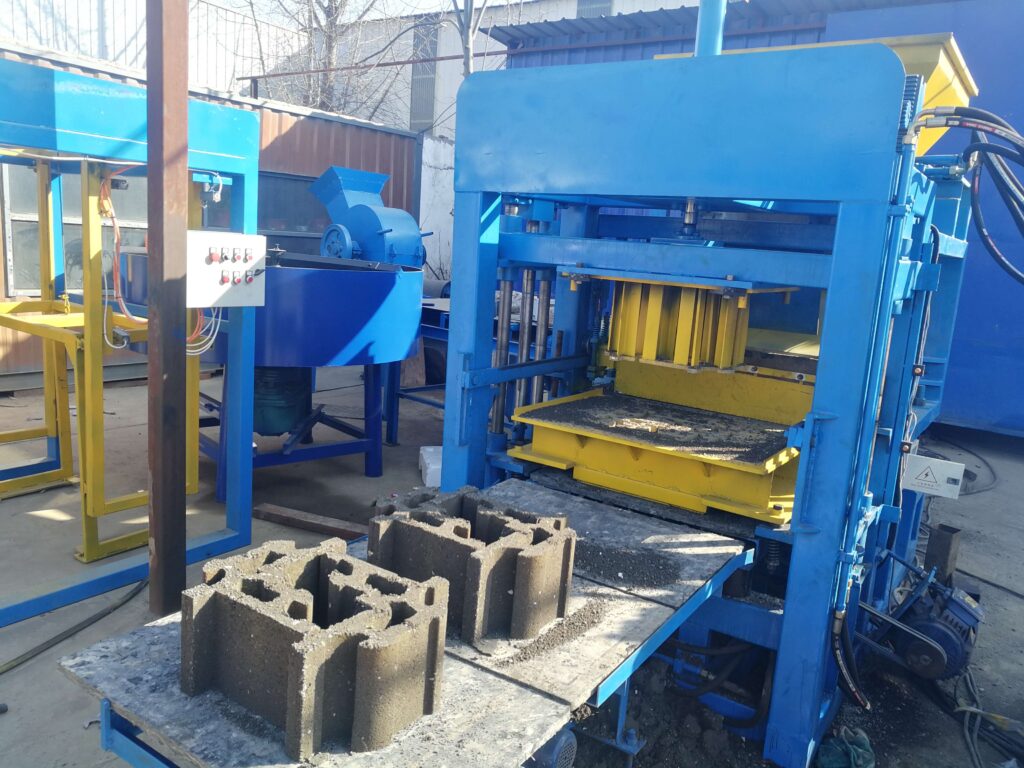
Raw Material Processing and Batching Systems
The foundation of any successful production line begins with sophisticated raw material management systems designed to ensure consistent input quality and automated supply. Modern installations incorporate multiple storage silos for cementitious materials with capacity ratings from 50 to 200 tons, featuring integrated level monitoring and automated refill triggering. Aggregate handling systems typically include receiving hoppers, conveyor networks, and screening equipment that automatically removes oversize particles and contaminants. The batching process employs precision weigh hoppers with accuracy within ±0.5% of target weights, controlled by computerized batching systems that automatically adjust for moisture content and material density variations. Advanced lines incorporate real-time material tracking that maintains optimal inventory levels and automatically generates purchase orders when predetermined thresholds are reached. This level of automation in raw material processing eliminates quality variations at the source and ensures consistent mix proportions 24/7, regardless of operator expertise or attention levels.
Mixing Technology and Material Transport
The heart of production consistency lies in mixing technology that thoroughly blends materials while maintaining precise water-cement ratios critical for product strength development. Modern production lines utilize twin-shaft mixers with capacities ranging from 750 to 5,000 liters per batch, featuring wear-resistant blades and liners that maintain mixing efficiency throughout their operational life. Water measurement systems incorporate flow meters with ±1% accuracy, while advanced systems include moisture sensors that automatically adjust water addition based on aggregate moisture content. Mixing cycle times are precisely controlled from 90 to 180 seconds depending on material characteristics, with programmable logic controllers ensuring identical mixing action for every batch. Material transport from mixer to block machine typically employs belt conveyor systems with scrapers and covers to prevent material segregation and moisture loss. The integration between mixing and molding stages includes buffer systems that ensure continuous machine operation even during mixer maintenance or cleaning cycles.
Production Core and Automation Systems
Molding Technology and Compaction Mechanics
The central production module features high-capacity block machines engineered for continuous operation with minimal supervision. These systems employ hydraulic pressure ranging from 140 to 320 bar, combined with high-frequency vibration at 4,000 to 7,000 RPM, to achieve optimal material compaction and product density. Modern machines incorporate quick-change mold systems that reduce product changeover time from hours to minutes, enabling flexible production scheduling to match market demands. Pallet circulation systems automatically feed curing pallets into the machine and transport freshly molded products to curing areas without manual handling. Advanced machines feature automatic height adjustment that compensates for mold wear and material variations, ensuring consistent product dimensions throughout the equipment’s operational life. Production capacities for complete lines range from 10,000 to 60,000 standard blocks per 8-hour shift, with some specialized systems exceeding 100,000 units daily through optimized cycle times and parallel processing arrangements.
Automated Handling and Curing Management
Post-molding handling represents a critical phase where automation significantly reduces product damage and labor requirements. Robotic palletizers carefully transfer green products from production pallets to curing racks with positional accuracy within ±2mm, preventing edge damage and deformation. Curing system configurations vary from natural atmospheric curing to fully controlled chamber systems that accelerate strength development through temperature and humidity management. Advanced lines incorporate automated storage and retrieval systems for curing racks, optimizing space utilization while maintaining precise curing schedules. Climate-controlled curing chambers maintain temperatures between 40-70°C and relative humidity above 90%, reducing curing time from weeks to hours while ensuring uniform strength development throughout the product stack. The integration of energy recovery systems captures and reuses heat from various process stages, reducing curing energy requirements by 30-50% compared to conventional systems.
Quality Management and Process Optimization
Integrated Quality Control Systems
Modern production lines incorporate comprehensive quality monitoring at multiple process stages, ensuring consistent output that meets or exceeds relevant standards. Laser measurement systems continuously monitor product dimensions with accuracy to ±0.2mm, automatically triggering machine adjustment when tolerances are approached. Compression testers randomly select samples from the production stream, measuring compressive strength development and providing data for automatic mix adjustment. Color consistency is monitored using spectrophotometers that detect minute color variations before they become commercially significant. The data from all quality monitoring stations feeds into a central manufacturing execution system that correlates process parameters with product quality, enabling predictive adjustments and continuous process improvement. This integrated approach to quality management typically reduces product rejection rates to below 0.5%, compared to 3-8% in semi-automated operations, while ensuring consistent compliance with customer specifications and regulatory requirements.
Process Analytics and Optimization Tools
The digital transformation of production lines enables data-driven optimization that maximizes efficiency and minimizes operating costs. Energy management systems monitor power consumption across all equipment components, identifying opportunities for load shifting and efficiency improvement. Production analytics track equipment utilization, identifying bottlenecks and optimizing production schedules to maximize throughput. Predictive maintenance systems analyze equipment vibration, temperature, and performance data to schedule maintenance before failures occur, typically increasing equipment availability by 8-15%. Advanced systems incorporate artificial intelligence algorithms that continuously analyze production data to identify optimal machine parameters for different material combinations and product types. These optimization tools typically deliver 12-25% improvements in overall equipment effectiveness while reducing energy consumption by 15-30% and maintenance costs by 20-40% compared to conventionally operated production lines.
Strategic Implementation and Operational Considerations
Project Planning and Implementation Timeline
The successful deployment of an integrated production line requires meticulous planning and phased implementation. Site preparation typically requires 3-6 months for civil works including foundation construction, utility connections, and building modifications. Equipment installation and mechanical commissioning generally span 4-8 weeks, followed by 2-4 weeks for electrical and control system integration. Process optimization and production ramp-up typically require an additional 4-6 weeks to achieve design capacity and quality standards. The complete project timeline from order placement to full production generally ranges from 8 to 14 months, depending on line complexity and site conditions. Successful implementation requires detailed project management with clearly defined milestones, regular progress reviews, and contingency planning for potential delays in equipment delivery or regulatory approvals.
Staffing Requirements and Skill Development
While automated lines significantly reduce direct labor requirements, they create demand for higher-skilled technical personnel. A typical production line operates with 4-8 personnel per shift including a line supervisor, machine operator, quality technician, and maintenance support. Technical support teams typically include mechanical and electrical technicians with specialized training in hydraulic systems, programmable controllers, and automation technology. Comprehensive training programs spanning 4-8 weeks ensure operational proficiency, covering equipment operation, routine maintenance, troubleshooting, and safety procedures. Many operations implement continuous improvement programs that engage operational staff in identifying efficiency opportunities and process enhancements, leveraging their daily exposure to equipment performance and production challenges.
Conclusión
Integrated brick and block production lines represent the current zenith of masonry manufacturing technology, delivering unparalleled levels of productivity, quality consistency, and operational efficiency. The strategic implementation of these systems transforms traditional masonry manufacturing from a labor-intensive craft to a technology-driven industrial process, creating sustainable competitive advantages through superior economics and product quality. The significant capital investment required is justified through dramatically reduced operating costs, minimal product rejection, and the ability to consistently meet the exacting requirements of modern construction projects. As construction methodologies continue to evolve toward greater precision and faster project timelines, the role of fully integrated production systems becomes increasingly vital for masonry manufacturers seeking to maintain market relevance and profitability. The ongoing digital transformation of these systems promises further improvements in efficiency, flexibility, and sustainability, ensuring their continued evolution as the manufacturing platform of choice for quality-conscious masonry producers worldwide.
Frequently Asked Questions (FAQ)
Q1: What are the typical space requirements for a complete production line installation?
A: Space requirements vary based on production capacity and configuration, but generally range from 2,000 to 8,000 square meters for the production facility itself. This includes areas for raw material storage (400-1,200 m²), production equipment (800-2,500 m²), product curing (600-3,000 m²), and finished goods storage (500-1,800 m²). Additional outdoor space is typically required for raw material stockpiles and ancillary facilities. The layout efficiency significantly impacts operational workflow, with optimized designs reducing material handling distances by 30-50% compared to conventional arrangements.
Q2: How does the operational cost structure differ between automated lines and conventional manufacturing?
A: Automated lines demonstrate fundamentally different cost structures: labor costs typically reduce from 25-35% of production cost to 8-15%; energy costs increase from 8-12% to 15-22% due to automation systems but with lower energy cost per unit produced; maintenance costs rise from 4-6% to 7-10% but with higher equipment availability; and raw material utilization improves by 8-15% through precise batching and reduced product damage. The overall production cost per unit typically decreases by 25-40% despite higher capital investment, creating compelling economic justification for automation.
Q3: What infrastructure utilities are required for optimal production line operation?
A: Key utility requirements include: electrical power ranging from 400-1,200 kVA depending on line capacity; water supply of 10-40 m³ per day with consistent pressure and quality; compressed air at 7-10 bar with sufficient volume for automation systems; and drainage capacity for process water and stormwater. Additional considerations include natural gas connections for curing systems where applicable, telecommunications infrastructure for data systems, and appropriate road access for material delivery and product shipment. Utility reliability significantly impacts production consistency, making backup power systems and water storage economically justified in many locations.
Q4: What environmental considerations and compliance requirements apply to modern production lines?
A: Environmental compliance typically addresses: air quality management through dust collection systems with 99.9% efficiency; water management through closed-loop systems that minimize consumption and discharge; noise control through acoustic enclosures and isolation systems; and waste management through material recycling and byproduct utilization. Modern systems typically incorporate sustainability features including energy recovery systems, water recycling, and the use of industrial byproducts as raw materials. Regulatory compliance generally requires environmental impact assessments, continuous emissions monitoring, and regular reporting to relevant authorities.
Q5: How does production line flexibility accommodate different product types and market demands?
A: Modern lines achieve remarkable flexibility through: quick-change mold systems that enable product changeovers in 15-45 minutes; programmable recipes that automatically adjust machine parameters for different products; modular material handling that accommodates various product dimensions and weights; and sophisticated production planning software that optimizes production sequences for efficiency. Advanced systems can simultaneously produce multiple product types through parallel processing arrangements or rapid changeover protocols. This flexibility enables manufacturers to maintain optimal inventory levels across product ranges while responding quickly to changing market demands and custom orders.