
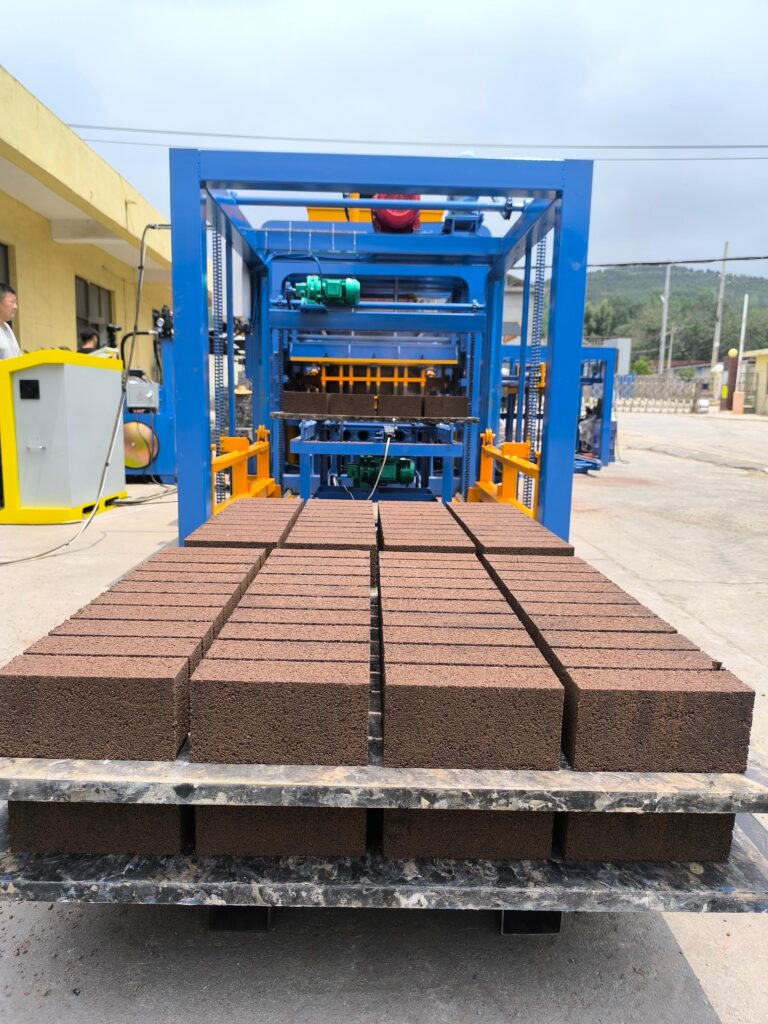
El Papel de las Máquinas Modernas de Ladrillos en la Producción Ecológica
Redefiniendo la Matriz de Materias Primas: Incorporando Insumos Sostenibles
La oportunidad más significativa para la mejora ambiental se encuentra al inicio del proceso de producción: la formulación de la mezcla de ladrillos. Las máquinas modernas están diseñadas para manejar una amplia gama de materiales alternativos.
1.1 Utilización de Subproductos Industriales y Áridos Reciclados
Los sistemas avanzados de dosificación y mezcla permiten la incorporación precisa de materiales que desvían residuos de los vertederos.
- Materiales Cementantes Suplementarios (SCS):Una estrategia principal implica reemplazar parcialmente el cemento Portland con subproductos industriales comocenizas volantes(proveniente de la combustión de carbón) yescorias granuladas de alto horno molidas(ESGB, procedente de la producción de acero). Estos SCM reaccionan químicamente en presencia de agua y cemento, contribuyendo a la resistencia a largo plazo mientras reducen significativamente la huella de carbono asociada a la producción de clínker. Las máquinas modernas garantizan que estos finos polvos se dispersen uniformemente en la mezcla.
- Residuos de Construcción y Demolición (C&D) ProcesadosEl hormigón triturado y clasificado, junto con mampostería de sitios de demolición, puede utilizarse como árido primario. La fuerza de compactación constante de una máquina de ladrillos es capaz de unir eficazmente estos áridos reciclados en una nueva unidad de alta integridad, cerrando el ciclo del material.
- Otros residuos postindustriales y posconsumoDependiendo de la disponibilidad regional, materiales como vidrio reciclado triturado, arena de fundición o residuos minerales procesados pueden integrarse en diseños de mezcla específicos, reduciendo la demanda de recursos naturales vírgenes.
1.2 Optimización del consumo de recursos naturales
La fabricación de precisión promueve inherentemente la eficiencia de materiales.
- Varianza de Material Reducida: Computer-controlled batching ensures that each mix contains the exact proportion of cement, aggregates, and water required to meet strength specifications, eliminating the overuse of high-impact binders like cement that is common in less controlled settings.
- Design for Lightweighting: Machines can produce optimized brick geometries, such as larger format blocks with complex internal void structures. These designs use less raw material per unit of wall area while maintaining structural and thermal performance, a concept known as “resource efficiency by design.”
Energy and Emission Efficiency in the Manufacturing Process
The mechanized production process itself offers multiple levers for reducing energy consumption and associated greenhouse gas emissions.
2.1 Advancements in Curing Technology
Moving beyond energy-intensive kiln firing, modern curing methods for concrete-based products are far more efficient.
- Low-Temperature Curing: The dominant method for cementitious bricks is hydration curing, which occurs at ambient temperatures or with modestly elevated heat (e.g., 50-70°C in steam curing chambers). This requires a fraction of the energy used in sintering clay bricks in kilns operating at over 1000°C.
- Optimized Curing Cycles: Automated curing systems precisely control temperature and humidity profiles, ensuring maximum strength development with minimum energy input. Heat recovery systems can capture waste heat from the hydration process or compressors to pre-heat water or air.
- Alternative Curing Methods: Some systems utilize carbonation curing, where freshly molded bricks are exposed to captured carbon dioxide (CO2) in a controlled chamber. The CO2 reacts with calcium compounds in the mix, permanently sequestering the gas and accelerating strength gain without thermal energy.
2.2 Plant-Wide Energy Management
The integration of machinery into a coherent production line facilitates systemic energy savings.
- High-Efficiency Motors and Drives: Modern machines utilize variable frequency drives (VFDs) on motors for vibration, conveyance, and hydraulic systems. These drives match power output to real-time demand, reducing electricity consumption significantly compared to older constant-speed systems.
- Integrated Production Flow: A well-designed plant minimizes the need for intermediate handling and transportation of green products. Direct transfer from the molding station to curing racks or chambers reduces fuel use from forklifts and minimizes product damage (and associated waste).
Waste Minimization and Water Stewardship
Environmental stewardship extends to managing the by-products of the manufacturing process itself.
3.1 Near-Zero Production Waste Systems
A hallmark of a technologically advanced and environmentally conscious plant is the virtual elimination of production waste.
- Closed-Loop Material Recycling: Fresh, uncured waste material from startup, shutdown, or trimmings is immediately fed back into the mixing system. Rejected cured bricks are crushed and reintroduced as a high-quality recycled aggregate. This circular approach within the factory gates minimizes landfill dependence.
- Precision Molding and Consistency: The high dimensional accuracy and consistent quality of machine-made bricks result in an extremely low reject rate. When nearly every unit produced is a saleable product, the environmental cost per usable brick plummets.
3.2 Responsible Water Management
Water is a critical resource in brick production, primarily for mixing and curing.
- Water Recycling Systems: Process water from equipment washdown and curing operations is collected, settled, and treated for reuse in the mixing process. This dramatically reduces freshwater withdrawal and prevents contaminated runoff.
- Moisture-Controlled Curing: Methods like sealed plastic sheeting or membrane-forming curing compounds drastically reduce or eliminate the need for continuous water spraying during the curing period, conserving substantial volumes of water.
Lifecycle Performance: Enhancing the Environmental Footprint of Buildings
The eco-friendly attributes of machine-made bricks extend beyond the factory, contributing to sustainable building performance over decades.
4.1 Thermal Performance and Operational Energy Savings
Bricks produced with specific ecological goals often enhance a building’s energy efficiency.
- Insulating Properties: By designing bricks with optimized void patterns and incorporating lightweight aggregates (including some recycled materials), manufacturers can significantly improve the thermal resistance (R-value) of the masonry unit. This contributes to reduced heating and cooling loads in the building, saving operational energy for its entire lifespan.
- Masa Térmica: The inherent mass of concrete bricks allows them to absorb, store, and slowly release heat, moderating indoor temperature fluctuations and further contributing to energy efficiency and occupant comfort.
4.2 Durability and Longevity
The most sustainable building material is one that lasts.
- Engineered for Resilience: The controlled production of high-density, low-permeability bricks results in exceptional durability. They resist moisture ingress, freeze-thaw damage, and environmental degradation, ensuring building envelopes remain intact and functional for generations without replacement.
- Low Maintenance Requirements: Durable, color-fast bricks do not require frequent painting, sealing, or chemical treatments, reducing the long-term environmental burden associated with building maintenance.
Conclusión
For the forward-thinking distributor or procurement manager, the question of eco-friendly brick production presents not a challenge, but a significant market opportunity. Modern brick manufacturing machines are fundamentally enablers of sustainability. They provide the precision, control, and flexibility necessary to incorporate recycled content, optimize resource use, minimize energy and water consumption, and produce durable, high-performance building envelopes. By partnering with manufacturers who leverage this technological potential, industry professionals can curate a product portfolio that meets the stringent requirements of green building certifications (such as LEED, BREEAM, or Green Star), responds to the values of environmentally conscious clients, and future-proofs their business. In the transition to a more sustainable construction industry, the machine-made brick, reimagined through ecological principles, is poised to be a cornerstone material, and those who understand its green potential will be positioned as leaders in the market.
FAQ
Q1: Do “eco-bricks” or bricks with high recycled content compromise on strength or durability?
A: When properly engineered and produced on well-calibrated equipment, there is no inherent compromise. In fact, many supplementary materials like fly ash can enhance long-term strength and chemical resistance. The key is rigorous mix design and quality control. Bricks produced with recycled aggregates or industrial by-products must be tested to the same ASTM, EN, or other relevant standards for compressive strength, absorption, and durability. A reputable manufacturer will provide this certification, proving performance parity or even improvement over conventional units.
Q2: As a distributor, how can I verify and communicate the environmental claims of a brick supplier?
A: Demand transparent, quantifiable data and third-party verification. Key documents include:
- Environmental Product Declarations (EPDs): These are standardized, lifecycle-based reports that quantify environmental impacts (global warming potential, resource use, etc.) based on verified data.
- Recycled Content Certificates: Documentation from suppliers of recycled aggregates or SCMs, or third-party audited plant records.
- Energy and Water Use Metrics: Ask for data on energy consumption per thousand bricks produced and details on water recycling systems.
- Product Certifications: Look for bricks that contribute to points under recognized green building rating systems.
Q3: Are bricks produced using carbon capture technology commercially available?
A: Yes, this is an emerging and commercially viable technology. Several manufacturers globally now offer bricks and pavers cured using captured industrial CO2. The process not only reduces the product’s carbon footprint but can also enhance early strength. While not yet ubiquitous, it represents a cutting-edge segment of the market. Inquire with manufacturers about their R&D activities in this area; it indicates a strong commitment to sustainable innovation.
Q4: Is there a cost premium associated with eco-friendly machine-made bricks?
A: The cost dynamic is complex. While some innovative materials or processes may carry a premium, many factors can lead to cost neutrality or even savings:
- Use of low-cost or negatively priced waste materials (like some fly ash) can reduce raw material costs.
- Governmental incentives or tax breaks for using recycled content or reducing carbon emissions in some regions can improve economics.
- Demanda del Mercado: As demand for green building materials grows, economies of scale are improving. Furthermore, the ability to command a slight premium from projects targeting sustainability certifications can improve margins for the entire supply chain.
Q5: How does the durability of an eco-friendly brick impact its lifecycle assessment (LCA)?
A: Durability is arguably the most important factor in a positive LCA. A brick that lasts 100 years instead of 50 effectively halves the environmental impact of manufacturing, transportation, and installation when amortized over its service life. Even if the production of a durable, eco-friendly brick has a slightly higher initial impact than a conventional one (which is often not the case), its extended lifespan and reduced maintenance needs almost always result in a superior overall environmental profile. This “long-life” argument is a powerful one when discussing sustainability with architects and builders.
