
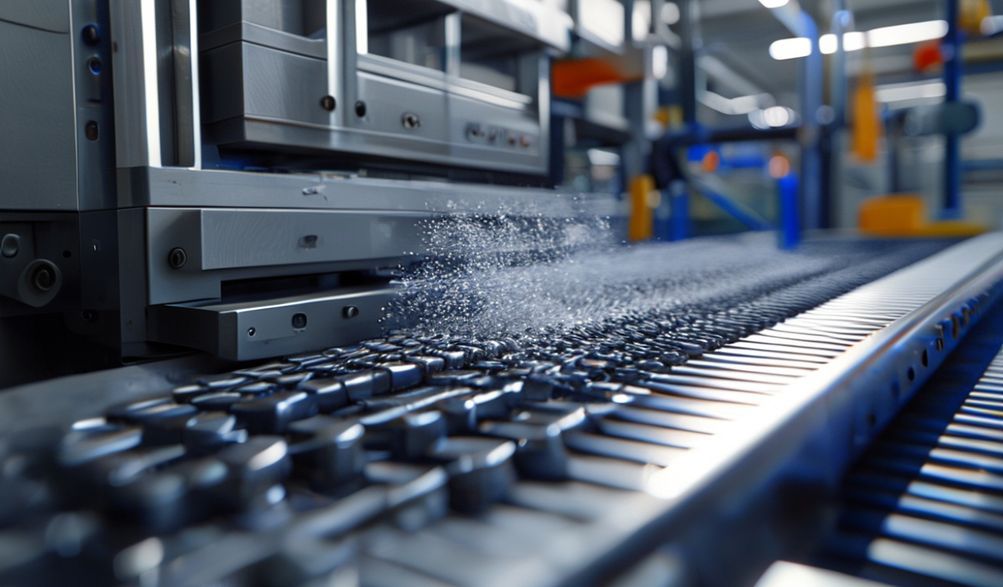
Costo de la Máquina para Fabricar Bloques de Cubrimiento: Guía de Inversión 2026 de FUDA Fábrica de Bloques
Introducción
En el mundo de alto riesgo de la construcción, cada proyecto es un acto de equilibrio. Por un lado, están las demandas no negociables de integridad estructural, cumplimiento de códigos y calidad. Por el otro, la presión constante por controlar costos y plazos. Para los contratistas y fabricantes de prefabricados, un componente crítico pero a menudo pasado por alto en esta ecuación es el modesto separador. Producirlos de manera ineficiente puede drenar silenciosamente las ganancias y comprometer la calidad.
En FUDA Block Making Factory, con más de dos décadas de experiencia especializada en maquinaria de construcción de ingeniería, hemos guiado a innumerables empresas a través de este desafío preciso. Entendemos que la decisión de invertir en una máquina para fabricar bloques de cubierta no se toma a la ligera. Es un movimiento estratégico que impacta el núcleo operativo de su negocio.
Este artículo sirve como tu guía definitiva de experto. Vamos a ir más allá de un simple precio para ofrecer un desglose transparente y detallado deCosto de la máquina para hacer bloquesDesde la perspectiva de un fabricante líder, obtendrá una comprensión clara de los factores que influyen en el precio, cómo evaluar el valor real y el marco para calcular su posible retorno de la inversión. Al final, estará preparado para tomar una decisión de compra segura e informada que se alinee con sus objetivos empresariales para 2026 y más allá.
¿Qué es una Máquina para Hacer Bloques de Cubierta y Por Qué es Esencial?
Antes de sumergirse en los costos, es crucial comprender el producto y la maquinaria que lo crea.
Definición de Bloques de Cubierta (Separadores)
Cover blocks, also known as concrete spacers or rebar chairs, are small but vital components in reinforced concrete construction. They are placed between the rebar (steel reinforcement) and the formwork to ensure a specified, consistent layer of concrete—called “cover”—encases the steel.
This concrete cover is not a minor detail; it is critical for:
* Corrosion Prevention: Protecting the rebar from moisture and environmental elements.
* Integridad Estructural: Ensuring proper bonding between steel and concrete for load-bearing strength.
* Resistencia al Fuego: Providing insulation to the steel in case of fire.
* Code Compliance: Meeting strict national and international building standards.
El Rol de la Máquina
Traditionally, cover blocks were made manually or purchased from third-party suppliers. A dedicated cover block making machine automates this process, transforming raw materials (concrete or mortar) into precise, high-quality spacers at scale. It replaces inconsistent manual labor with reliable, programmable efficiency, ensuring every block meets exact dimensional and strength specifications.
Beneficios Clave para Su Negocio
Investing in your own production capability offers transformative advantages:
* Consistencia Inigualable: Machines produce identical blocks, eliminating the quality variance of manual work.
* Dramatic Labor Savings: Automate a repetitive task, freeing skilled labor for higher-value activities.
* Producción Bajo Demanda: Produce exactly what you need, when you need it, reducing inventory costs and waste.
* Control de Costos: Significantly lower your per-unit cost compared to outsourcing.
* Personalización: Produce specialized sizes and shapes required for unique projects.
Key Factors Influencing Cover Block Making Machine Cost
The price of a cover block machine isn’t arbitrary. It’s a direct reflection of its capabilities, durability, and the value it delivers. Understanding these factors is key to comparing options effectively.
Tipo de Máquina y Nivel de Automatización
Este es el principal impulsor del costo.
* Máquinas Manuales: Operator-dependent for feeding and molding. Lowest upfront cost, suitable for very low-volume needs.
* Máquinas Semiautomáticas: Automate the core pressing/vibration process with operator assistance for feeding or unloading. Offers an excellent balance of productivity and cost for small to mid-sized businesses.
* Máquinas Completamente Automáticas: Integrated systems with auto-feeders, conveyors, and pallet stackers. High-output, minimal labor required. Commands the highest investment, justified for large-scale or continuous production.
Capacidad de Producción y Producción
Cost scales with output. A machine rated for 1,000 blocks per hour will be in a different price tier than one capable of 5,000+ blocks per hour. It’s essential to match the machine’s capacity with your actual and projected demand to avoid over or under-investing.
Mold Variety and Customization
The mold defines the final product. A basic machine with one standard mold is the starting point. Costs increase with:
* Multiple Mold Sets: The ability to quickly change between different block sizes (e.g., 20mm, 25mm, 30mm cover).
* Custom Mold Design: Engineering molds for proprietary or project-specific spacer shapes. FUDA’s in-house mold design service is a key value-add here.
Build Quality and Component Source
This is where “price” separates from long-term “cost.” A cheaper machine may use:
* Lower-grade steel in the frame and molds, leading to faster wear.
* Non-standard or low-quality hydraulic cylinders and valves, risking leaks and failure.
* Generic PLCs and electrical components, complicating troubleshooting.
A FUDA machine invests in:
* High-tensile steel and precision machining for longevity.
* Renowned component brands (e.g., Siemens for controls, Rexroth for hydraulics) ensuring reliability and easier service.
* Robust vibration systems for optimal concrete compaction.
This superior build quality minimizes downtime—the single largest hidden cost of equipment ownership.
Requisitos de Energía y Eficiencia Energética
Machines can be powered by:
* Full Electric: Clean, quiet, and precise, often with lower operational energy costs in the long run.
* Hidráulico Powerful and robust, but may have higher ongoing maintenance and energy consumption.
* Hybrid Systems: Combine efficiency and power. The choice impacts both the initial setup (electrical requirements) and your ongoing utility bills.
Detailed Cost Breakdown: What to Expect in 2026
Based on current market trends and manufacturing inputs, here is a transparent look at the investment ranges you can anticipate. (Note: Prices are indicative and subject to final quotation based on configuration.)
Entry-Level (Manual/Semi-Auto) Machines
- Rango de Precio: $5,000 – $25,000
- Ideal para: Small construction firms, workshops, or contractors with intermittent, project-based needs. Focus is on basic automation and quality improvement over manual methods.
Mid-Range (Semi-Auto/Fully Auto) Machines
- Rango de Precio: $25,000 – $80,000
- Ideal para: Growing precast businesses, established contractors, and suppliers aiming for steady, daily production. This range offers significant automation, higher output, and better ROI for active businesses.
High-Capacity Fully Automatic Production Lines
- Rango de Precio: $80,000 – $200,000+
- Ideal para: Large-scale manufacturers, dedicated precast plants, and businesses supplying cover blocks to the market. These are complete systems with automated batching, mixing, molding, curing, and stacking.
Beyond the Sticker Price: Additional Costs
A responsible budget accounts for the total cost of ownership:
* Envíos y Logística: Varies by destination.
* Instalación y Puesta en Marcha: Professional setup is crucial.
* Entrenamiento de Operadores: Essential for safety and efficiency.
* Initial Raw Materials: Cement, aggregates, pigments.
* Maintenance Tools & Spares Kit.
* Potential Utility Upgrades: Electrical or compressed air supply.
The FUDA Advantage: Balancing Cost with Quality and Value
Choosing FUDA is not just buying a machine; it’s investing in a partnership built on engineering excellence and unwavering support.
Our Manufacturing Philosophy
Our commitment is to build machines that last. Every FUDA cover block machine is the product of extensive in-house R&D and relentless quality control. We design for real-world workshop conditions—focusing on user-friendly operation, ease of maintenance, and energy efficiency without compromising on power or durability.
Transparent Pricing and Consultation
We believe in clarity. Our quotes are detailed, breaking down costs for the machine, optional features, and services. More importantly, our sales engineers act as consultants. We ask detailed questions about your production goals to recommend a configuration that fits your budget and needs, ensuring you get optimal value without paying for unnecessary capacity.
Comprehensive After-Sales Support
Our support package is designed to protect your investment and guarantee productivity:
* Standard Warranty: Comprehensive coverage on parts and workmanship.
* Lifelong Technical Consultation: Remote support via phone or video.
* Piezas de Repuesto Genuinas: Readily available inventory to minimize downtime.
* On-Site Service: Available for complex installation or troubleshooting.
Success Snapshot: A Contractor’s Story
A mid-sized contractor was spending approximately $1,500 monthly on outsourced cover blocks and facing delivery delays. They invested $32,000 in a FUDA semi-automatic machine. By producing in-house, their monthly material cost dropped to under $400, and they eliminated delivery worries. With labor savings factored in, they calculated an ROI of under 18 months, while gaining complete control over their supply chain.
How to Calculate Your Return on Investment (ROI)
An ROI analysis turns an expense into a measurable investment.
The ROI Formula for Equipment
A simplified formula is:
ROI = (Annual Savings + Annual Increased Profit) / Total Investment Cost
Variables to Consider in Your Calculation
- Ahorro en Costos Laborales: Calculate wages for manual production vs. machine operation.
- Material Cost Savings: Cost of producing in-house vs. purchasing.
- Reducción de Residuos: Savings from consistent quality and fewer rejects.
- Revenue Opportunity: Ability to take on more projects or sell excess blocks.
- Intangible Benefits: Improved scheduling control and client trust.
Sample ROI Calculation
Escenario: A business buys 10,000 blocks/month at $0.30 each ($3,000 monthly cost).
FUDA Machine Investment: $40,000 (including basic setup).
In-House Production Cost: $0.10 per block in materials ($1,000 monthly).
Monthly Labor for Machine: $500 (vs. $1,200 for manual making).
Monthly Savings: ($3,000 – $1,000) + ($1,200 – $500) = $2,700
Simple Payback Period: $40,000 / $2,700 ≈ 14.8 months.
After the payback period, the savings translate directly into increased profit.
Making the Right Purchase Decision: A Step-by-Step Guide
- Assess Your Needs: Forecast your annual block volume and list required sizes/shapes.
- Define Your Total Budget: Include machine, shipping, installation, and initial operating capital.
- Research Manufacturers: Prioritize those with proven industry experience, strong references, and transparent communication—like FUDA.
- Request Detailed Quotes: Compare specifications, not just prices. Ensure quotes include key components and warranty terms.
- Scrutinize Support & Parts: Ask specific questions about warranty length, spare parts availability, and technical support channels.
- Seek a Demonstration: Request a video demo or, if possible, visit a showroom or existing client site to see the machine in action.
Frequently Asked Questions (FAQ)
Q: What is the cheapest cover block making machine available?
A: While basic manual models have the lowest initial price, we advise evaluating the Total Cost of Ownership. A slightly higher investment in a robust semi-automatic machine often yields a faster ROI through superior efficiency, quality, and durability, making it more cost-effective in the long run.
Q: Can FUDA customize a machine for a specific cover block design?
A: Absolutely. Custom mold design and fabrication is a core specialty at FUDA. Our engineering team can work from your drawings or samples to produce blocks that meet exact project specifications.
Q: How long does it typically take to see an ROI on a cover block machine?
A: The timeframe varies based on usage volume and labor costs. However, most of our clients operating at a commercial scale achieve a full return on their investment within 12 to 24 months through direct material and labor savings.
Q: What kind of after-sales support does FUDA provide?
A: We provide a comprehensive support package, including installation guidance, operator training, a standard warranty, lifelong remote technical support, and guaranteed access to genuine spare parts to ensure your machine remains productive for years.
Q: Do you offer financing options or payment plans?
A: We understand this is a significant capital investment. FUDA offers flexible payment structures and can assist clients in exploring financing solutions with partner institutions. Please contact our sales team to discuss options tailored to your financial situation.
Conclusión
The decision to invest in a cover block making machine transcends a simple purchase. It is a strategic commitment to operational efficiency, uncompromised quality, and sustainable business growth. As we’ve outlined, the true “cost” is a holistic calculation of initial investment, operational savings, and the value of reliability.
At FUDA Block Making Factory, we provide more than just machinery; we deliver engineered solutions backed by decades of expertise and a partnership-focused approach. We are committed to helping you find the perfect balance between cost and capability, ensuring your investment pays dividends for the lifetime of the machine.
Ready to get a precise quote tailored to your production needs? Contact the FUDA engineering team today for a free, no-obligation consultation and see how we can build your success, block by block.
<