
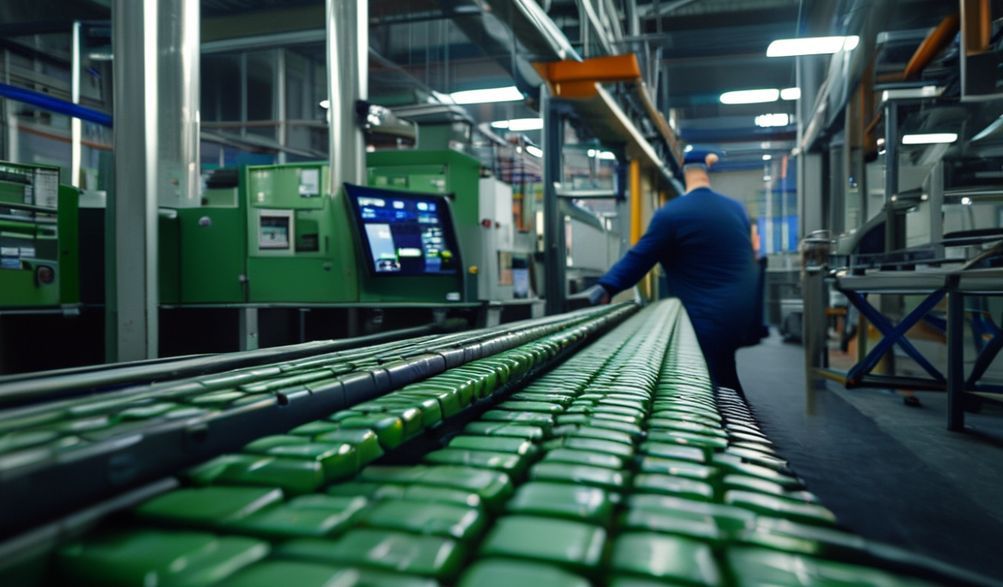
Precio de la Máquina de Ladrillos de Ceniza Volante Totalmente Automática: Una Guía para 2026 por Expertos de la Fábrica de Bloques FUDA
Introducción
El panorama global de la construcción está cambiando. Con un enfoque cada vez mayor en la sostenibilidad y la rentabilidad, los ladrillos de cenizas volantes han surgido como el material del futuro. Más resistentes, uniformes y ecológicos que los ladrillos de arcilla tradicionales, su demanda se está disparando. En el centro de esta revolución se encuentra una pieza crítica de equipo: la máquina totalmente automática para fabricar ladrillos de cenizas volantes. Pero para cualquier emprendedor o empresa que busque invertir, una pregunta sobresale por encima de las demás:¿Cuál es el precio real y por qué estoy pagando realmente?
Las listas de precios genéricas en línea suelen ser engañosas. No pueden captar los matices de tu proyecto específico ni explicar por qué dos máquinas con capacidades de producción similares pueden tener precios muy diferentes. Aquí es donde la experiencia importa.
Durante más de dos décadas,Fábrica de Bloques FUDAha estado a la vanguardia de esta industria. Nuestro equipo de ingenieros y expertos en campo ha diseñado, fabricado y brindado soporte a maquinaria automatizada para fabricación de ladrillos para clientes en seis continentes. Hemos visto proyectos triunfar y fracasar, y sabemos que la máquina adecuada es una inversión, mientras que la incorrecta es una carga costosa.
Esta guía está diseñada para eliminar la confusión. No solo enumeraremos números. Te proporcionaremos lasmarco de expertos para comprender¿Qué determina el precio?de una máquina totalmente automática para fabricar ladrillos de ceniza volante. Al final, estarás preparado para evaluar proveedores, entender cotizaciones y tomar una decisión de inversión que maximice tu rendimiento.
Aprenderás:
* Los componentes y tipos principales de los sistemas completamente automáticos.
* Los 4 factores principales que determinan el precio final de la máquina.
* Rangos de precios realistas y el concepto crucial de "Costo Total de Propiedad".
* Cómo calcular el ROI y elegir la máquina adecuada para tus objetivos.
* Por qué la asociación con una fábrica establecida es tu decisión estratégica más importante.
Construyamos los cimientos para tu éxito.
Entendiendo las máquinas automáticas para fabricar ladrillos de ceniza volante
Antes de discutir el precio, es esencial entender lo que estás comprando. Una máquina totalmente automática no es solo una versión más grande de una prensa manual; es un sistema de producción sofisticado e integrado.
¿Qué es una máquina de ladrillos de ceniza volante totalmente automática?
Una máquina completamente automática para fabricar ladrillos de ceniza volante es una línea de producción controlada por computadora. Ejecuta sin problemas todo el proceso de fabricación de ladrillos con una mínima intervención humana:
1. Lotes y Mezclado Automático:Pesa y mezcla con precisión ceniza volante, cemento, arena y agua.
2. Moldeo Automático:Transfiere la mezcla a una cavidad de molde de alta presión.
3. Compactación Automática:Utiliza un potente sistema hidráulico para comprimir el material y formar un ladrillo denso y resistente.
4. Expulsión y Manejo Automáticos:Expulsa el ladrillo verde sobre una paleta, que luego se transporta a un área de curado, a menudo con apilado automático.
Contraste con otros tipos:
* Máquinas Manuales: Require significant labor for feeding, pressing, and brick removal. Output is low, and consistency depends entirely on the operator.
* Máquinas Semiautomáticas: Automate the pressing cycle but require manual feeding of raw material and removal of finished bricks. A middle ground in price and output.
The fully automatic system’s core value lies in its unmatched efficiency, consistent high quality, and dramatic reduction in labor costs.
Componentes Clave que Afectan el Rendimiento y el Precio
The price and long-term reliability of your machine are directly tied to the quality of its core subsystems. Here’s what to scrutinize:
- Panel de Control PLC (El Cerebro): A premium-brand PLC (e.g., Siemens, Mitsubishi) ensures stable, fault-free operation and easy troubleshooting. Cheap, generic controllers are a common point of failure.
- Hydraulic System (The Muscle): The heart of the pressure. Look for reputed pump and valve brands. The system should be designed for continuous duty with efficient cooling to prevent overheating.
- Unidad de Mezcla: A robust, wear-resistant pan mixer or twin-shaft mixer ensures a homogeneous mixture, which is critical for brick strength.
- Calidad y Diseño del Molde: Molds made from high-chromium alloy steel last exponentially longer than ordinary steel, maintaining precise brick dimensions over millions of cycles.
- Sistema de Transportador y Paletizador: Heavy-duty conveyors and precisely machined pallets ensure smooth transfer without damaging the soft green bricks.
- Marco y Estructura: The machine must be built from high-grade, reinforced steel to withstand years of constant vibration and pressure without deformation.
At FUDA, we consider each component an investment in your uptime. Compromising here leads to higher maintenance costs and production stoppages.
Why Choose a Fully Automatic System?
From a production manager’s perspective, the advantages are quantifiable:
* Alto Rendimiento: Produce 8,000 to 30,000+ bricks per hour, enabling you to scale and meet large contract demands.
* Calidad Consistente: Every brick has identical dimensions, density, and compressive strength, enhancing your market reputation.
* Ahorro de mano de obra: One or two operators can manage the entire line, reducing wage costs and management complexity.
* Improved Working Conditions: Automating heavy and repetitive tasks creates a safer, more sustainable work environment.
* Better Resource Utilization: Precise batching minimizes raw material waste.
Primary Factors Determining the Machine Price
The price of a fully automatic fly ash brick machine is not arbitrary. It is a direct reflection of its capabilities, quality, and the support behind it. Here are the four primary drivers.
Capacidad de Producción (Ladrillos por Hora)
This is the most straightforward factor. Price scales significantly with output capacity. You must align the machine’s capacity with your market demand and growth plans.
- Entry-Level (8,000 – 12,000 Bricks/Hour): Ideal for starting a business or serving a local market. Lower initial investment.
- Mid-Range (15,000 – 22,000 Bricks/Hour): The sweet spot for many growing businesses, balancing output with cost.
- High-Capacity (25,000 – 35,000+ Bricks/Hour): For large-scale plants and industrial projects. Requires higher investment but offers the lowest cost per brick.
A Note from FUDA: Buying a machine at the absolute limit of your current need can be shortsighted. A 20-30% capacity buffer is often a wise investment for future growth.
Level of Automation and Technology
“Fully automatic” encompasses a spectrum. The degree of automation directly impacts price and operational smoothness.
- Basic Automation: Automatic pressing and ejection. Pallet feeding and brick stacking may be semi-automatic.
- Automatización Avanzada: Includes robotic pallet feeders, automatic stackers, and strappers. Raw material silos with automatic weighing and conveying.
- Smart Technology (Industry 4.0): IoT-enabled monitoring systems that provide real-time data on production counts, machine health, and maintenance alerts to your phone or computer. This represents the premium tier, optimizing efficiency and preventing downtime.
Configuración y Personalización de la Máquina
Your specific product mix and raw materials dictate the needed configuration, which adjusts the price.
- Versatilidad del Molde: A machine configured to produce multiple products (solid blocks, hollow blocks, pavers, interlocking bricks) by quick mold change will cost more than a single-purpose machine.
- Raw Material Feeders: Handling additives like slag, bottom ash, or stone dust may require specialized feeding systems.
- Color Mixing System:Para producir piedras de pavimentación o fachadas de colores.
- Specialized Pallet Size: Non-standard pallet dimensions for unique brick sizes.
Brand Reputation and Build Quality
This is where the true cost of ownership is defined. An established factory like FUDA invests in:
* Materiales Premium: Using international-standard steel and certified components.
* Ingeniería de Precisión: Rigorous quality control in welding, machining, and assembly.
* Proven Design: Machines refined over decades of real-world operation across different climates and material conditions.
* Inversión en I+D: Continuous improvement of efficiency and durability.
A machine from a reputable factory may have a higher initial purchase price but a far lower lifecycle cost due to reliability, energy efficiency, and longevity. The cheapest option often becomes the most expensive after a year of breakdowns, poor output, and missing supplier support.
Breaking Down the Cost: Price Ranges and What to Expect
Approximate Price Ranges for 2026
Providing a single price is irresponsible without a project review. However, based on current market trends and material costs, here are responsible guide ranges for 2026:
- Entry-Level Fully Automatic Systems (8,000-12,000 bricks/hour): Typically start between $65,000 and $95,000.
- Mid-Range Production Lines (15,000-22,000 bricks/hour): Generally range from $110,000 to $180,000.
- High-Capacity, Feature-Rich Plants (25,000+ bricks/hour): Can range from $200,000 to $350,000+, depending on the level of automation and customization.
Crucial Disclaimer: These are indicative ranges for standard configurations. Your final, accurate quote from FUDA will be provided after a detailed assessment of your production goals, raw material analysis, and site requirements.
Beyond the Sticker Price: Total Cost of Ownership
The machine’s price tag is only part of the investment. Smart buyers budget for the Total Cost of Ownership (TCO):
- Instalación y Puesta en Marcha: Foundation work, electrical connections, and on-site assembly by technicians.
- Shipping, Insurance, and Customs: Varies significantly by destination.
- Entrenamiento de Operadores: Essential for productivity and machine care.
- Initial Spare Parts Kit: A recommended inventory of wear parts (like mold liners) to prevent downtime.
- Consumo de Energía: A well-designed hydraulic and mixing system will be more energy-efficient, saving thousands annually.
- Costos de Mantenimiento: High-quality machines have lower long-term maintenance costs.
A transparent supplier like FUDA will help you plan for these costs upfront.
Understanding Quotations from Different Suppliers
When comparing quotes, ensure you are comparing apples to apples. Ask these questions:
* Does the price include technical installation supervision and training?
* What are the brands of key components (PLC, hydraulic parts, motors)?
* What is the warranty coverage (duration, what’s included, what’s excluded)?
* What are the shipping terms (FOB, CIF, etc.)?
* Is there a local after-sales service agent or direct factory support?
Maximizing Your Investment: ROI and Strategic Considerations
Calculating Your Return on Investment (ROI)
A machine is a means to profit. A simplified ROI framework helps justify the investment:
- Annual Revenue: (Bricks produced per hour) x (Operating hours/day) x (Operating days/year) x (Selling price per brick).
- Annual Operating Costs: Raw materials + Labor + Energy + Maintenance + Depreciation.
- Annual Profit: Revenue – Operating Costs.
- Simple Payback Period: (Total Machine Investment + Setup Cost) / Annual Profit.
Ejemplo: A $150,000 machine generating $70,000 annual profit has a payback period of just over 2 years. After that, it’s pure profit generation.
Choosing the Right Machine for Your Business Goals
Let your strategy guide your choice:
* Goal: Start a Small Business / Serve Local Market: An entry-level or mid-range machine offers the best balance of risk and reward.
* Goal: Expand an Existing Plant / Secure Large Contracts: A high-capacity, highly automated line is necessary to meet volume and consistency demands.
* Goal: Produce a Diverse Product Range: Prioritize a machine with quick mold-change capabilities and versatile configuration.
The FUDA Advantage: Why Partner with Our Factory?
Choosing FUDA is not just buying a machine; it’s gaining a long-term partner invested in your productivity.
- Experiencia: We have successfully commissioned over 1,200 plants worldwide. Our solutions are battle-tested from India to Africa, the Middle East to South America.
- Experiencia: Our in-house R&D team and certified engineers provide direct support. We understand the behavior of different fly ash and raw material combinations.
- Autoridad: We hold multiple international quality and safety certifications. Our innovations in hydraulic systems and mold design are patented. We are regular exhibitors at major industry trade shows like BAUMA.
- Confianza:
- Transparent Pricing: No hidden fees. Our detailed proposals clearly separate machine cost, shipping, and services.
- Comprehensive After-Sales: We offer remote video support, a global network of service engineers, and readily available spare parts.
- Strong Warranty: Standard warranty on the main frame and critical components, with extended options available.
- Entrenamiento: Hands-on training at our factory or your site to ensure your team is confident and capable.
Frequently Asked Questions (FAQ)
What is the exact price for a 10,000 bricks/hour machine?
While a base model for this capacity might start around $75,000 – $85,000, the final price depends significantly on your chosen configuration, level of automation, and shipping destination. We provide customized quotes after understanding your specific raw materials, desired brick types, and output requirements.
Does the price include installation and training?
At FUDA, our standard commercial quotation includes detailed installation manuals, remote/video supervision guidance, and comprehensive operator training at our factory. On-site installation and training are available as an optional service. We believe proper setup and knowledge transfer are fundamental to your success.
What is the warranty period, and how do I get spare parts?
We offer a standard 2-year warranty on the main frame and 1-year warranty on critical components like the hydraulic pump and PLC. As a direct factory, we maintain a large inventory of spare parts and offer global logistics support via air or sea to minimize your downtime in case of need.
Can the machine produce other products besides standard fly ash bricks?
Absolutely. Versatility is a key feature of our fully automatic block making machines. By changing the mold, you can produce hollow blocks, solid blocks, paving stones, interlocking bricks, and curb stones. Discuss your complete product portfolio vision with our engineers during the planning stage to configure the optimal machine.
Conclusión
Investing in a fully automatic fly ash brick machine is a major decision that will define your business’s productivity and profitability for years to come. As we’ve detailed, the price is a function of capacity, automation level, build quality, and the long-term support you can expect from the supplier.
Looking beyond the initial cost to understand the Total Cost of Ownership and the realistic Return on Investment is the mark of a savvy business owner. The cheapest machine can become a source of constant expense, while a well-engineered machine from a partner like FUDA becomes a reliable asset that generates wealth.
We invite you to move from generic price hunting to a solution-focused conversation.
Ready to Get a Precise, Custom Quote?
Contact the FUDA engineering team today. Share your production goals, available raw materials, and target market. We will provide a confidential, no-obligation consultation and a detailed project proposal tailored to unlock the potential of your brick-making business.
<