
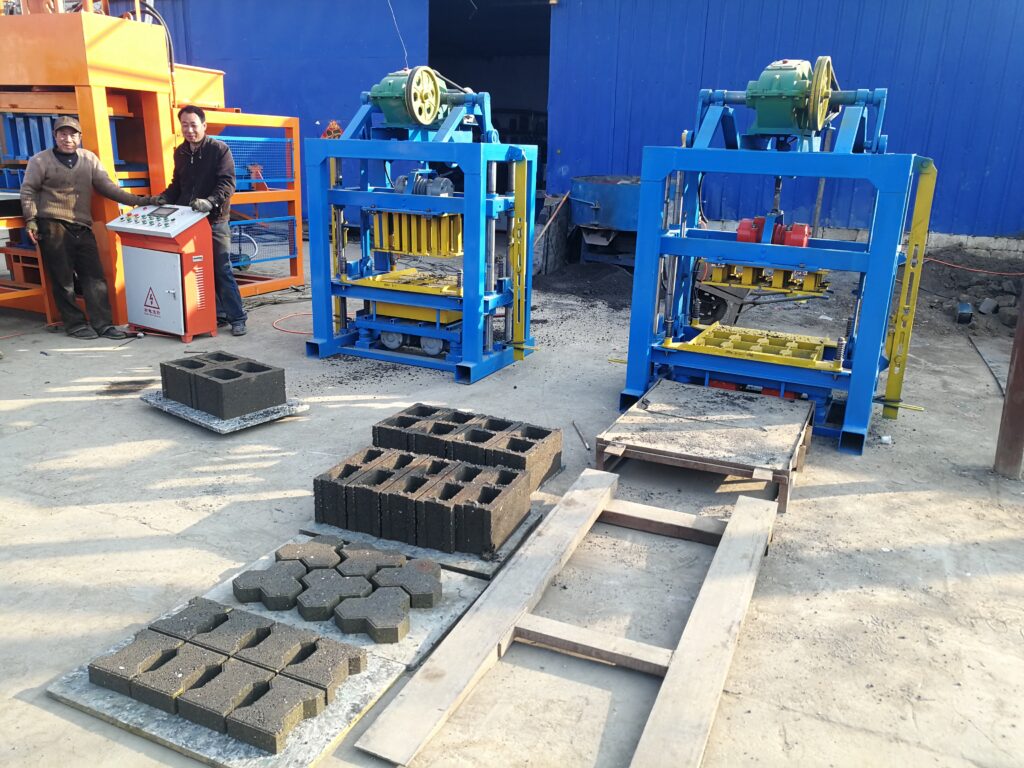
El proceso de fabricación de ladrillos con maquinaria es un ciclo continuo o semicontinuo. Aislar el tiempo para unúnicoEl ladrillo es un ejercicio académico; en la práctica, la productividad se mide en unidades por hora o por turno. Sin embargo, al desglosar cada etapa de la producción, podemos calcular con precisión un tiempo de ciclo completo y comprender los factores que aceleran o retrasan la producción.
1. Las Etapas Principales de Producción y sus Componentes de Tiempo
Una línea moderna de producción mecanizada de ladrillos consiste en una serie de etapas interconectadas.
1.1. Preparación y Alimentación de Materias Primas
- Impacto en el tiempo: de 2 a 8 horas (proceso por lotes) o continuo.
- Antes de que se forme cualquier ladrillo, la arcilla o el esquisto debe prepararse. Esto implica triturar, cribar y mezclar con agua y, a veces, otros aditivos para lograr la plasticidad perfecta. Para una planta de alto volumen, este suele ser un proceso continuo que alimenta directamente la siguiente etapa. Para operaciones más pequeñas, puede ser un proceso por lotes. El tiempo de preparación no se traduce directamente en "tiempo por ladrillo", pero cualquier cuello de botella aquí detiene toda la línea. Una preparación eficiente y continua es la base de una producción rápida de ladrillos.
1.2. Formación y Moldeado: El Corazón del Ciclo
- Impacto en el tiempo: Segundos por ladrillo.
- Esta es la etapa donde el material preparado se moldea en un ladrillo verde (sin cocer). La tecnología utilizada aquí es el principal determinante de la velocidad.
- Extrusión:Este es el método de alta velocidad más común. Una columna continua de arcilla se fuerza a través de una matriz del perfil deseado y luego se corta con alambre en ladrillos individuales. La velocidad es asombrosa, con extrudadoras modernas capaces de producir...15,000 a 25,000 ladrillos estándar por horaEsto se traduce en un tiempo de formación de aproximadamente0.15 a 0.24 segundos por ladrillo at peak output.
- Prensado Hidráulico: Used for high-density, precision bricks (like engineering bricks or pavers), this method involves pressing clay into a mold under immense pressure. Cycle times are longer but produce a superior product. A large multi-cavity press might produce a cycle (filling, pressing, ejecting) every 10-15 seconds, yielding, for example, 6 bricks per cycle. This equates to roughly 1.5 to 2.5 seconds of effective press time per brick.
1.3. Drying: The Critical Path
- Time Impact: 18 to 48 hours (or more).
- The newly formed green bricks contain significant moisture (15-25%) and must be dried meticulously to prevent cracking in the kiln. This is often the longest single phase in the production timeline. bricks are placed in controlled drying chambers where temperature, humidity, and airflow are carefully managed.
- Natural Drying: Rare in fully mechanized setups due to its inconsistency and slowness (days to weeks).
- Artificial Drying: Using tunnel dryers or chamber dryers, the process is accelerated but still requires a minimum of 18 to 48 hours, depending on brick type and climate. This is a batch process where thousands of bricks dry simultaneously, so while the dwell time per brick is long, the throughput is high.
1.4. Firing and Cooling: The Transformation
- Time Impact: 40 to 70 hours (total kiln cycle).
- Firing in a kiln (tunnel kiln or periodic kiln) vitrifies the clay, giving the brick its strength and permanence. Like drying, this is a batch process with a long dwell time.
- In a modern tunnel kiln, bricks on kiln cars move slowly through pre-heating, firing, and cooling zones. The total transit time through the kiln can range from 40 to 70 hours. The actual firing at peak temperature (900°C – 1200°C) lasts for several hours within this cycle. The key metric is the kiln’s output per car and the speed of car advancement.
1.5. Sorting, Packaging, and Palletizing
- Time Impact: Minutes per pallet.
- After cooling, bricks are automatically or manually sorted, counted, and packaged. Automated palletizers can handle thousands of bricks per hour. This stage adds a finite handling time before the product is warehouse-ready.
2. Key Variables Affecting Production Speed
Understanding these variables allows a procurement specialist to ask the right questions of a supplier.
2.1. Machine Type and Automation Level
- A fully automated line with robotic handling between stages operates 24/7 with minimal stoppages, maximizing annual output. A semi-automated line with manual unloading of dryers or kilns will have slower cycle times and lower effective hourly output.
2.2. Brick Specifications
- Size and Density: A large, solid clay block takes more material and may have a longer drying/firing cycle than a standard perforated brick. High-density pressed bricks have a longer press cycle.
- Composición: The type of clay or shale used affects its plasticity, drying sensitivity, and optimal firing curve. Some mixes require slower drying to prevent defects.
- Finish: If bricks require sand-coating, surface texturing, or other post-extrusion treatments, this adds incremental time to the process.
2.3. Plant Capacity and Operational Rhythm
- A plant designed for high-volume, single-product runs is more efficient than one frequently changing dies and formats. Scheduled maintenance, shift patterns, and energy supply also dictate the real-world weekly output.
3. Calculating Effective Output: A Practical Model
For business planning, focus on the overall lead time from order to shipment and the sustained production rate.
- Cycle Time Example (Extrusion Line):
- Forming: 20,000 bricks/hour = Continuous.
- Drying: 24-hour cycle (bricks enter and leave continuously).
- Firing: 48-hour kiln transit.
- Interpretation: The first brick from a new batch takes roughly 72 hours (3 days) to go from raw material to finished product. However, due to the continuous flow, finished bricks are emerging from the kiln every hour after the initial cycle is complete. Therefore, the plant’s output rate is defined by the slowest continuous stage (often the kiln speed).
- The Bottleneck Principle: The output of the entire factory is constrained by its slowest stage (usually drying or firing). Increasing extruder speed is useless if the kiln cannot process the green bricks faster.
Conclusion: Strategic Insights for the Supply Chain
For dealers, distributors, and procurement managers, the timeline for brick production is a symphony of interconnected processes, not a single note. The “time per brick” at the forming stage is impressively short—often less than a second. However, the more relevant metrics for supply chain logistics are the total manufacturing cycle time (typically 3-5 days) and the sustained production capacity of the plant (bricks per week/month).
When evaluating a supplier or planning inventory, inquire beyond simple hourly rates. Ask about their drying capacity relative to their extruder output, the length and throughput of their kiln, and their standard lead times for stocked versus custom products. Understand that while machinery defines the potential speed, the choice of raw material and product specification defines the necessary processing time. A supplier with a slightly slower but more consistent and quality-controlled process may be more reliable for just-in-time delivery than one pushing machinery to its limits at the expense of higher rejection rates. Ultimately, aligning your procurement strategy with a deep understanding of these production realities minimizes stock-outs, ensures consistent project supply, and builds stronger, more predictable partnerships with manufacturers.
FAQ
Q1: What is the average lead time I should expect when placing a large order for standard bricks?
A: For a standard product from a reputable mechanized plant, you should typically expect a lead time of 7 to 14 days from order confirmation to shipment. This accounts for the production cycle (3-5 days), plus time for scheduling, final quality checks, packaging, and loading. For made-to-order colors or special sizes, add 1-2 weeks.
Q2: Why does it sometimes take a factory longer to produce bricks in winter?
A: Ambient temperature and humidity significantly impact the drying stage. In colder, more humid conditions, the artificial drying process may need to be extended to prevent thermal shock and cracking, potentially adding 12-24 hours to the cycle. Some modern plants with fully climate-controlled drying chambers can mitigate this effect.
Q3: Can production speed be increased indefinitely by adding more machines?
A: Not linearly. The entire production line must be balanced. Adding a faster extruder creates a bottleneck if the dryer and kiln cannot handle the increased volume. True capacity increase requires simultaneous investment in all stages of the process. The kiln is often the most expensive and limiting component.
Q4: How does the choice between extrusion and pressing affect my ordering schedule?
A: Pressed bricks (like pavers or high-strength engineering bricks) generally have a longer forming cycle and may require more precise drying, leading to a slightly longer total production time. Their output rates in units per hour are lower than extrusion. Therefore, for large orders of pressed products, earlier order placement and potentially longer lead times should be anticipated.
Q5: What are the trade-offs between ultra-high-speed production and brick quality?
A: Excessive speed in extrusion can lead to imperfections in the clay column, causing internal stresses that manifest as cracks during drying or firing. It can also compromise dimensional accuracy. Reputable manufacturers optimize speed to maintain a defect rate within strict quality limits. A supplier promising unrealistic output may be sacrificing consistency and long-term durability, which can lead to issues on your client’s job site.
