
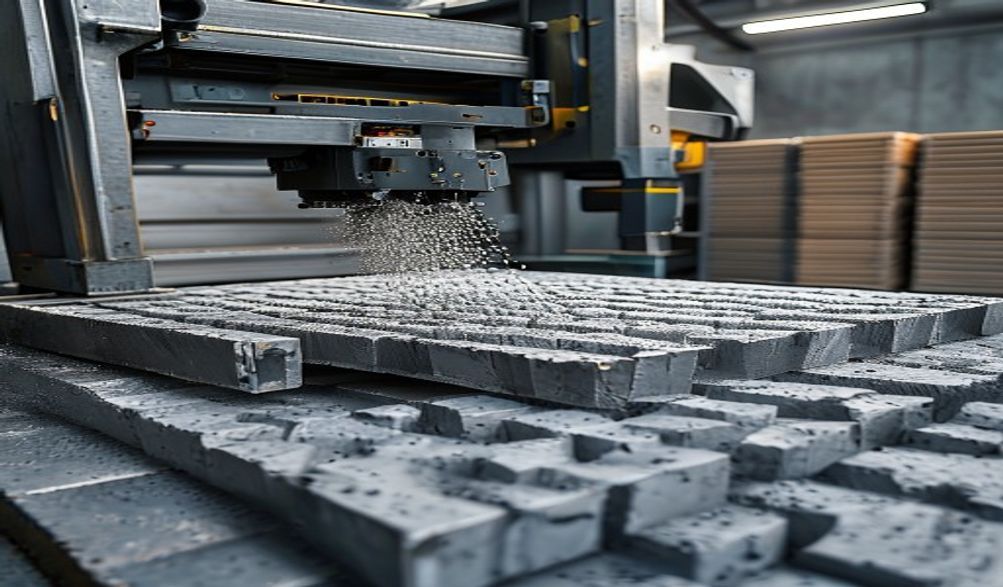
Cómo Elegir una Máquina para Hacer Ladrillos y Pavimentos: Guía Completa del Comprador
Introducción
Te encuentras al borde de un gran proyecto: una nueva urbanización, una renovación de paisaje urbano municipal, o quizás tu propio próspero negocio de pavimentación. La visión es clara: filas de adoquines perfectos, bloques de contención resistentes y ladrillos elegantes. Pero entre esa visión y la realidad se encuentra una decisión crítica, y a menudo abrumadora: elegir la máquina adecuada para fabricar ladrillos y adoquines.
El mercado es un laberinto de opciones, desde modelos simples de prensa manual hasta líneas de producción totalmente automatizadas y ruidosas. Aquí, una elección equivocada no es solo un contratiempo menor; puede significar tiempos de inactividad paralizantes, una calidad de producto inconsistente y una pérdida financiera significativa.
Esta guía está diseñada para ser tu brújula. Basándonos en evaluaciones técnicas, mejores prácticas de la industria y años de experiencia en los sectores de construcción y manufactura, desmitificaremos el proceso de selección. Ya seas propietario de un pequeño negocio, contratista a gran escala, funcionario de adquisiciones municipal o entusiasta del bricolaje dedicado a un proyecto sustancial, este recurso integral te ayudará a navegar las consideraciones clave. Nuestro objetivo es empoderarte para tomar una decisión informada que se alinee perfectamente con tus metas de producción, presupuesto y realidad operativa, ayudándote a evitar costosos errores e invertir con confianza.
Comprendiendo tus Necesidades Fundamentales y el Alcance del Proyecto
Antes de siquiera mirar una sola ficha técnica de una máquina, debes mirar hacia adentro. El error más común y costoso es comprar una máquina basándose en sus características o precio, en lugar de tus necesidades reales. Este paso fundamental consiste en definir el "porqué" detrás de tu compra.
Definiendo Tus Metas de Producción
Tus objetivos de producción son el principal factor determinante en la elección de tu maquinaria. Sé brutalmente realista.
- Cuantifique Su Producción:No pienses en términos vagos. Calcula tu estimación.daily or weekly output in number of pieces. Are you needing 500 pavers a day for a specific contract, or 10,000 blocks a week to supply a region?
- Understand Your Scale: Is this for a single residential driveway, a series of commercial plazas, a municipal pathway project, or an industrial supply business? Scale dictates everything from machine size to automation level.
- Consider Product Variety: Will you produce a single, standard block? Or do you need the flexibility to make multiple shapes, sizes, thicknesses, and textures (e.g., cobblestone, herringbone, patio slabs)? Variety requires a versatile mold system.
Evaluación de Sus Materias Primas
The machine must be a partner to your material, not work against it.
- Tipo de Material: The core material is paramount. Are you working with standard vibrated concrete, arcilla, cenizas volantes (a more sustainable option), or specialized mixes for bloques de suelo entrelazados? Machine pressure and vibration systems are optimized for specific materials.
- Local Aggregates: Investigate the availability, quality, and cost of local sand, gravel, and cement. Your mix design will impact the required compaction force.
- Mix Consistency: The moisture content and homogeneity of your raw material mix are critical for consistent brick quality. Some automated systems have precise feeding and mixing integration.
Evaluating Your Site and Operational Constraints
The perfect machine on paper can be a nightmare in practice if it doesn’t fit your physical and human resources.
- Espacio Disponible: Measure not just the machine’s footprint, but space for raw material storage, the production area, pallet circulation, and a curing yard. A small-scale operation might still need 2,000-3,000 sq ft for a functional workflow.
- Fuente de alimentación: What is available? Single-phase or three-phase electric? A diesel generator? High-output automatic machines typically require robust, stable three-phase power. Manual machines, of course, need only human power.
- Labor & Skill Level: Assess your available workforce. A fully automatic machine minimizes labor but requires technical skill for maintenance. A semi-automatic machine may need more operators but less specialized training.
Key Types of Brick and Paver Making Machines
Machines are broadly categorized by their level of automation and mobility. Understanding these categories is the first major filter in your selection process.
Máquinas Manuales o de Operación Manual
These are the simplest and most affordable entry point into block making.
- Ideal para: Very small-scale projects, community-led initiatives, NGOs in developing regions, proof-of-concept startups, or extremely budget-conscious buyers.
- Pros: Extremely low capital cost, zero energy costs, highly portable, and simple to understand and repair.
- Contras: Output is very low (often 100-500 blocks per day), intensely labor-intensive, and product quality can be inconsistent due to human variables in filling and compaction.
Máquinas Semiautomáticas
This category offers the best balance for many growing businesses, providing a significant upgrade from manual operation without the leap to full automation.
- Ideal para: Small to medium-sized businesses, contractors producing for specific projects, and operations with specialized or varied product lines.
- Pros: Good balance of output and cost. They significantly reduce physical labor and improve product consistency through mechanical vibration and compaction. Operators typically feed the mix and remove finished products, but the core forming process is powered.
- Contras: Output is limited by the pace of human intervention. They require a steady power supply and more maintenance than a manual machine.
Máquinas Estacionarias Completamente Automáticas
These are the workhorses of high-volume commercial production, designed for efficiency and consistency.
- Ideal para: Medium to large-scale block yards, suppliers to the construction industry, and large municipal or commercial projects with massive paver requirements.
- Pros: Very high output with excellent product uniformity. They minimize manual labor (often just for supervision and maintenance). Many are programmable via PLCs for different products and feature integrated systems for mixing, feeding, and stacking.
- Contras: High initial investment. They require a dedicated, solid foundation, stable three-phase power, and significant space. Maintenance is more complex and requires technical expertise.
Máquinas Móviles para Fabricar Bloques
A specialized solution that brings the factory to the job site.
- Ideal para: Very large, remote infrastructure projects (e.g., roads, dams), military applications, or situations where transporting finished blocks is more expensive than moving the production machine.
- Pros: Dramatically eliminates transport costs for finished products. Produces exactly what’s needed, where it’s needed, reducing waste and logistics.
- Contras: Often a significant investment. Can be complex to set up and calibrate on different sites. Absolute output may be lower than a large stationary plant of equivalent cost.
Critical Technical Specifications to Compare
Once you’ve narrowed the machine type, you must dive into the technical details. This is where you separate adequate machines from optimal ones.
Production Capacity and Cycle Time
Don’t be fooled by theoretical maximums.
- Cycles vs. Pieces: A spec sheet might say “300 cycles per hour.” You must multiply this by the “pieces per cycle” (how many blocks one mold produces). A 4-block mold at 300 cycles/hour = 1200 blocks/hour theoretically.
- Realistic Output: Account for real-world factors: time for mold changes, breaks, maintenance, and material loading. A good rule is to calculate with 70-80% of the theoretical maximum for a realistic daily output estimate.
Machine Pressure and Vibration System
This is the heart of your block’s strength and finish quality.
- Presión de Compactación: Measured in tons or kilonewtons (kN), this force compresses the raw mix. Higher pressure generally creates denser, stronger blocks with better surface finish. For standard concrete blocks, 100-200 tons is common; for high-quality pavers, you may need more.
- Sistema de Vibración: Vibration consolidates the mix, removing air pockets. Dual or multi-directional (e.g., vertical and horizontal) vibration systems provide superior compaction and density compared to single-direction systems, leading to stronger, more durable final products.
Mold and Pallet System
This is your interface for product creation and movement.
- Versatilidad del Molde: Investigate the Sistema de molde de cambio rápido. How long does it take to switch from producing a patio slab to a retaining wall block? Also, research the cost and lead time for additional custom molds.
- Sistema de Paletización: Pallets are the steel or plastic plates blocks are formed on. Consider:
- Material: Steel pallets are more durable but heavier; plastic is lighter but may wear faster.
- Circulation: How are pallets fed and returned? Automated systems have integrated pallet return conveyors, while semi-auto machines may require manual handling.
Control System and Automation Level
This dictates operational complexity and precision.
- PLC vs. Manual: A Controlador Lógico Programable (PLC) is a computerized brain. It allows for precise control over vibration time, pressure, and movement sequences. It enables easier programming for different products and often includes diagnostic features. Manual or relay-based controls are simpler but less precise and flexible.
- Integrated Features: Higher automation can include automatic mix feeding, weight-based batching, robotic product stacking, and pallet treatment systems. Each feature adds cost but reduces labor and improves consistency.
Beyond the Machine: Total Cost of Ownership & Support
The purchase price is just the ticket to the game. The real costs—and value—are found in the long-term operation.
Initial Investment vs. Long-Term Value
Budget for the entire ecosystem, not just the press.
- Hidden Start-Up Costs: Include shipping, import duties (if applicable), installation, and foundation work. A large stationary machine needs a perfectly level, reinforced concrete pad.
- Equipo Auxiliar: You will likely need a pan or planetary mixer, a conveyor system to feed the hopper, curing racks or shelves, and a forklift for handling raw materials and finished blocks. These can add 30-50% to your base machine cost.
Costos Operativos y de Mantenimiento
Plan for the ongoing expense of running your business.
- Consumables: Factor in power consumption (a major cost for auto machines), wear parts (mold liners, vibrator motors, hydraulic seals), and regular lubrication/oil.
- Labor Cost Implications: A higher upfront cost for automation often leads to dramatically lower long-term labor costs. Calculate the break-even point.
The Importance of Manufacturer Reputation and Support
This is perhaps the most critical non-technical factor. A machine is useless if it’s down and you can’t get help.
- Research the Brand: Look for established companies with a proven track record of 10+ years. Read case studies and look for machines still operating after long periods.
- Servicio Postventa: Before buying, ask: Is there local technical support? What is the spare parts supply chain? Are service engineers available for commissioning and major repairs? A supplier with a strong global or regional network is invaluable.
- Warranty Terms: Scrutinize the warranty. What is covered (parts, labor)? How long does it last (1 year is standard, 2+ is excellent)? What are the terms for claiming it?
A Step-by-Step Selection Checklist
Use this actionable checklist to guide your entire procurement process.
- Clarify Your Needs: Document your outputs from Section 1: required volume, product types, and raw materials.
- Set Your Total Budget: Define the all-inclusive investment you can make, including the machine, auxiliaries, shipping, and installation.
- Shortlist the Machine Type: Based on steps 1 & 2, decide on the category (e.g., Semi-Automatic Stationary).
- Research Reputable Brands: Identify 3-5 established manufacturers known for quality in your chosen category.
- Compare Technical Specs: Create a comparison table using the criteria from Section 3 (Pressure, Cycle Time, Mold System, Control Type).
- Request Detailed Quotes & Info: Ask for formal quotations, warranty documents, and a list of client references in your region.
- Evaluate Support & Verify Claims: Contact the provided references. Specifically ask about after-sales service and spare parts availability. Inquire about the lead time for a common wear part.
- Make Your Final Decision: Weigh all factors—specifications, total cost, brand reputation, and support—not just the lowest purchase price.
Frequently Asked Questions (FAQ)
What is the average cost range for a paver making machine?
Costs vary astronomically based on type and output. A basic manual machine can start at a few thousand dollars. A quality semi-automatic machine may range from $15,000 to $50,000. A fully automatic production line can easily run from $100,000 to over $500,000. Your project scope is the ultimate cost driver.
Can one machine produce different types of blocks and pavers?
Yes, absolutely. This is achieved by changing the mold. The key is to choose a machine with a Sistema de molde de cambio rápido to minimize downtime. Remember, each new mold shape is an additional purchase, so factor in the cost and lead time for extra molds.
How much space do I need for a small-scale operation?
For a small semi-automatic operation, you should plan for a minimum of 2,000 to 3,000 square feet. This needs to accommodate the machine, a raw material stockpile area, space for mixing, a production floor for fresh blocks, and a covered curing area.
What is the most common mistake first-time buyers make?
The twin pitfalls are underestimating total project costs (forgetting auxiliaries and setup) and overestimating their own production needs or operational capacity, leading to an over-specified, expensive machine that sits underutilized, or an underpowered one that can’t meet demand. A thorough, honest needs assessment is your best defense.
How important is after-sales service?
It is critical, not optional. A brick making machine is a mechanical system that will require maintenance and experience wear. A breakdown without access to technical guidance or spare parts can halt your business and bleed money. Always prioritize suppliers with a demonstrably strong and responsive service network.
Conclusión
Choosing the right brick and paving making machine is a significant investment that hinges on a clear-eyed assessment of your unique situation. We’ve walked through the essential pillars: starting with a deep understanding of your production needs and constraints, filtering options through the primary machine types, scrutinizing the critical technical specifications, and finally, looking beyond the sticker price to evaluate total cost of ownership and manufacturer support.
Remember, the “best” machine isn’t the one with the most features or the lowest price tag. It is the one that optimally aligns with your specific output goals, budget, site conditions, and long-term business vision. It is the machine that becomes a reliable partner in your growth.
Use the step-by-step checklist provided as your roadmap. Consult with multiple reputable suppliers, ask the detailed questions outlined here, and if possible, request to see the machines in operation. A well-researched, deliberate investment in the right equipment will pay for itself many times over through superior product quality, operational efficiency, and the long-term profitability of your venture.
<