
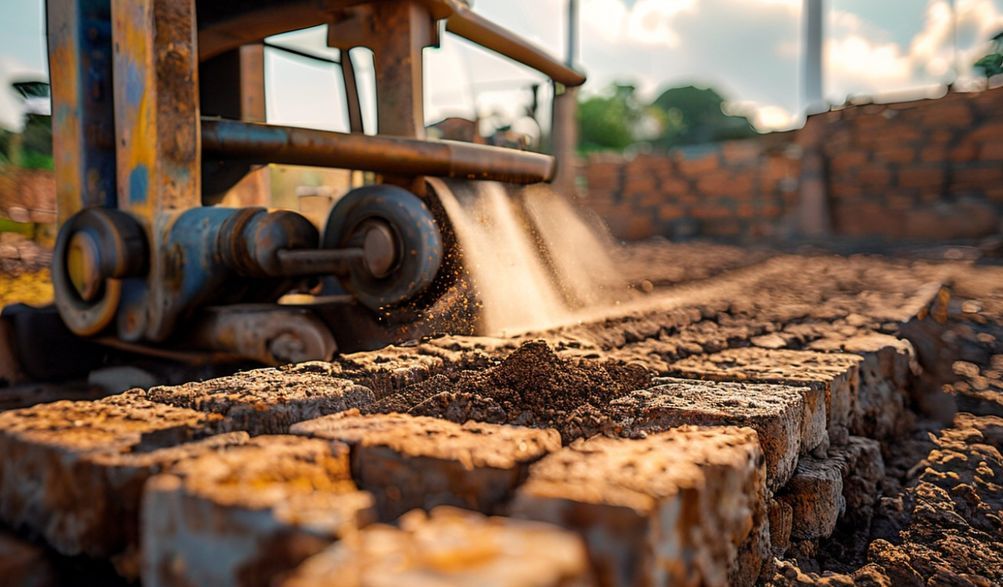
Precio de la Máquina de Ladrillos Entrelazados en Kenia (Guía del Comprador 2026)
Introducción
El sector de la construcción de Kenia está en auge, con el Programa de Vivienda Asequible del gobierno y el desarrollo privado impulsando una demanda de más de 250,000 unidades nuevas al año. En este panorama dinámico, una revolución silenciosa está ganando impulso: el cambio hacia los ladrillos de enclavamiento. Estos innovadores bloques de construcción están redefiniendo la asequibilidad, la velocidad y la sostenibilidad en la construcción keniana.
Para constructores, contratistas y emprendedores en ciernes, esta oportunidad conlleva un desafío crucial. Navegar por el mercado de máquinas para ladrillos entrelazados puede resultar abrumador. Los precios anunciados en línea y por proveedores varían enormemente, desde tan solo 30,000 chelines kenianos hasta varios millones de chelines. ¿Cómo sortear el ruido para encontrar una máquina que no solo sea rentable, sino también confiable, eficiente y adecuada para sus objetivos específicos?
Esta guía integral está diseñada para ser su recurso definitivo. Desentrañaremos las estructuras de precios, desglosaremos los factores clave que influyen en el costo y proporcionaremos estimaciones de precios transparentes para el mercado keniano en 2026. Nuestro análisis se basa en datos actuales del mercado, especificaciones de los fabricantes y perspectivas recopiladas de profesionales de la industria y operadores de máquinas en todo el país. Nuestro objetivo es brindarle el conocimiento necesario para realizar una inversión informada y segura que genere beneficios durante muchos años.
Comprender los Ladrillos de Entrelazado y sus Máquinas
Antes de sumergirse en los costos, es esencial comprender el producto y la tecnología que lo crea.
¿Qué son los Ladrillos de Interbloqueo (ISB)?
Los Bloques de Suelo Estabilizado Entrelazados (ISSB), o simplemente Ladrillos Entrelazados, son un material de construcción moderno diseñado para encajar como piezas de rompecabezas. Sus ranuras y crestas únicas les permiten unirse firmemente sin necesidad de mortero húmedo en las juntas verticales.
- Velocidad de Construcción:Las paredes se levantan de 2 a 3 veces más rápido que la mampostería convencional.
- Ahorros Significativos en Costos:Reducción drástica en el uso de mortero (hasta un 50%) y en los requisitos de mano de obra calificada.
- Fuerza Superior:La alta compresión de prensas hidráulicas o mecánicas crea ladrillos densos y duraderos.
- Excelente Aislamiento:La composición del suelo proporciona aislamiento térmico y acústico natural.
- Sostenibilidad Ambiental:Ellos utilizan suelo disponible localmente (hasta un 95%) con un pequeño estabilizador de cemento o cal, reduciendo la huella de carbono asociada con los ladrillos cocidos y el cemento.
¿Cómo Funciona una Máquina de Ladrillos Entrelazados?
The principle is straightforward but effective. A prepared mix of sieved soil and a small percentage of stabilizer (like cement) is fed into a mold chamber. A powerful mechanism—manual, mechanical, or hydraulic—then compresses the mixture under extreme pressure. The compacted block is ejected, ready for curing. The level of human effort and mechanical complexity in this process is the primary driver of price, which leads us to our next section.
Key Factors Determining Interlocking Bricks Machine Prices in Kenya
The price tag on a machine is a sum of its parts, capabilities, and origins. Understanding these factors is key to evaluating true value.
1. Machine Type and Level of Automation
Este es el determinante de precio más significativo.
-
Prensas Manuales: These are lever-operated machines requiring significant physical effort.
- Rango de Precio: KES 30,000 – 120,000.
- Mejor Para: Individual homeowners, youth group projects, community initiatives, and very small-scale startups testing the market.
-
Máquinas Semiautomáticas: These are the workhorses of the Kenyan SME sector. They often use a hydraulic system powered by an electric motor or diesel engine, requiring an operator to feed material and remove bricks.
- Rango de Precio: KES 150,000 – 800,000.
- Mejor Para: Growing construction businesses, housing cooperatives, and contractors undertaking multiple projects.
-
Máquinas Completamente Automáticas: These are production-line systems with automated material feeding, compression, and brick stacking. They require minimal operator intervention.
- Rango de Precio: KES 1,000,000 and above, often reaching KES 5,000,000+.
- Mejor Para: Large construction firms, dedicated commercial brick-making plants, and county government projects requiring massive, consistent output.
2. Production Capacity (Bricks Per Hour/Day)
Price scales directly with output potential. A machine’s capacity must align with your business plan.
| Capacity Tier | Estimated Output (Bricks/Day) | Price Estimate Range (KES) | Ideal Use Case |
| :— | :— | :— | :— |
| Low Capacity | 300 – 800 | 30,000 – 200,000 | Personal projects, very small business. |
| Medium Capacity| 1,500 – 3,500 | 250,000 – 600,000 | Small to medium business, steady contracts. |
| High Capacity | 5,000 – 10,000+ | 800,000 – 5,000,000+ | Commercial production, large-scale tenders. |
3. Brand, Origin, and Quality of Build
Where and how a machine is built critically impacts its price and longevity.
- Locally Assembled Machines: Kenyan fabricators offer competitive prices and the crucial advantage of easier access to spare parts and tailored support. Quality can vary, so vetting the fabricator is essential.
- Imported Machines (China/India): Often present as cost-effective options with modern features. However, consider hidden costs: longer lead times for spare parts, potential compatibility issues, and variable after-sales service.
- Established International Brands: Command a premium price due to proven durability, advanced engineering, and often better efficiency. The investment is in long-term reliability and potentially higher resale value.
Golden Rule: The cheapest machine can become the most expensive if it breaks down frequently, lacks service support, or produces poor-quality bricks.
4. Additional Features and Functionality
These add-ons enhance functionality but also add to the cost:
* Movilidad: Wheels for easy movement around a site.
* Multiple Mold Kits: Ability to produce different brick designs (straight, corner, etc.).
* Sistema de Vibración: Enhances compaction for stronger bricks.
* Power Source Options: Electric, diesel, or PTO (Power Take-Off from a tractor).
* Sistema de Control: Basic lever vs. advanced electronic control panels in automatic machines.
Detailed Price Breakdown of Machines in Kenya (2026 Estimates)
Descargo de responsabilidad importante: The following price ranges are estimates based on current 2024 market analysis and projected trends. Actual prices in 2026 will vary depending on supplier, specific location in Kenya, fluctuations in import duties, shipping costs, and raw material prices. Siempre solicite una cotización detallada y formal a sus proveedores preseleccionados.
Entry-Level / Manual Machine Prices
- Rango de Precio: KES 30,000 – 120,000
- Usuario ideal The individual builder, the entrepreneurial youth group starting a village project, or the small-scale farmer looking to construct farm buildings.
- Qué Esperar: At this price point, you are investing in basic functionality. Machines are typically entirely manual or use a simple mechanical advantage system. Production will be labor-intensive and output limited, but it provides a low-risk entry into ISSB technology.
Mid-Range / Semi-Automatic Machine Prices
- Rango de Precio: KES 150,000 – 800,000
- Usuario ideal This is the sweet spot for serious SMEs, growing construction contractors, and housing cooperatives. It balances upfront cost with meaningful production capacity for business growth.
- Market Note: This is the most crowded and competitive segment. You will find the widest variance in quality, features, and supplier reputation here. A KES 300,000 machine from a reputable local engineer may offer better long-term value than a KES 250,000 import with unclear support channels.
High-Capacity / Automatic Machine Prices
- Rango de Precio: KES 1,000,000 – 5,000,000+
- Usuario ideal Large construction firms executing big contracts, entrepreneurs setting up dedicated brick production yards to supply the market, or county governments implementing housing projects.
- Focus: At this investment level, the conversation shifts from mere price to Retorno de la Inversión (ROI), production consistency, and minimizing downtime. The machine is a core asset of the business.
Beyond the Machine: Calculating Your Total Investment
A savvy buyer looks beyond the sticker price. The true cost of ownership includes several often-overlooked factors.
Hidden and Recurring Costs
- Mold Sets: A standard straight mold may be included, but corner blocks, half blocks, or specialty designs require additional molds (KES 15,000 – 50,000 each).
- Transportation & Installation: Getting a heavy machine to your site can cost thousands. Large stationary machines may require a simple concrete foundation.
- Mantenimiento y Repuestos: Budget for regular greasing, replacement of wear parts like hydraulic seals, pressure gauges, and mold liners. A reliable supplier should provide a list of common spares and their costs.
Raw Material and Operating Costs
- Soil Stabilization: While soil is local, you must factor in the cost of cement (typically 5-10% mix) or lime for stabilization.
- Trabajo: Even for semi-automatic machines, you need operators and helpers for material preparation and brick handling.
- Power/Fuel: Calculate the electricity consumption of the motor or the diesel cost for engine-driven models.
Training and After-Sales Support
This is perhaps the most critical “value” factor that isn’t on the price tag.
* Entrenamiento: A supplier who provides comprehensive, hands-on training on machine operation, soil selection, and mix ratios is investing in your success. This prevents costly mistakes and brick wastage.
* After-Sales Service & Warranty: A one-year warranty on parts and labor is standard for good suppliers. More important is their responsiveness. Can they send a technician? Do they stock spares locally? This support network is invaluable and justifies a slightly higher initial price.
How to Choose the Right Machine for Your Needs & Budget
Assess Your Project Scale and Business Goals
Pregúntate a ti mismo:
* Is this for a single personal house, or a commercial business?
* How many bricks do I need per day to meet my project deadlines or market demand?
* What is my realistic budget, including the hidden costs outlined above?
Research and Vet Suppliers Thoroughly
- Go Beyond Google: Visit physical showrooms or workshops. A supplier with a tangible location is more accountable.
- Solicitar Referencias: Request contact details for 2-3 previous customers, preferably ones who bought a similar machine. Call them.
- Check History: How long has the supplier been in business? Do they specialize in brick machines?
Always Ask for a Demonstration
Never buy based on pictures or promises alone. Insist on seeing the machine in action.
* Can it produce a brick with the soil from tu site?
* Is the ejected brick solid, well-formed, and easy to handle?
* Observe the machine’s build quality and ask the operator about their experience.
Frequently Asked Questions (FAQ) on Interlocking Brick Machine Prices
Q1: What is the cheapest interlocking bricks machine I can get in Kenya?
A: You can find basic manual presses starting from around KES 30,000. However, be prepared for physically demanding work and lower output. Thoroughly inspect the welds and mechanics for durability.
Q2: Can I get a good quality machine under KES 200,000?
A: Yes, absolutely. Several reputable Kenyan fabricators offer robust semi-automatic or improved manual machines in the KES 150,000 – 200,000 range. The key is diligent supplier verification—ask for references and a live demonstration.
Q3: Are imported machines better than locally made ones?
A: It’s not a simple yes/no. Some imported machines offer advanced features. However, locally manufactured machines have major advantages: easier and faster access to spare parts, direct communication with the fabricator, and support tailored to Kenyan soil conditions. Prioritize the manufacturer’s reputation over the origin.
Q4: Does the price include installation and training?
A: This varies significantly. Some suppliers include basic training and installation guidance in the price. Others charge extra. This is a crucial question to ask before purchase. Always get a breakdown of what the quoted price includes.
Q5: What is the typical payback period for this investment?
A: For a commercial operation, the payback period can be attractive. A medium-scale semi-automatic machine (KES 400,000) producing 2,500 bricks/day can potentially recover its investment in 6-12 months, depending on your brick selling price, operational efficiency, and market demand. A machine for personal use pays back through saved construction costs.
Conclusión
Navigating the interlocking bricks machine market in Kenya is about understanding that “price” is a multi-layered concept. It encompasses the initial purchase cost, the operational expenses, and—most importantly—the long-term value derived from reliability, quality output, and dependable supplier support.
Our final recommendation is to prioritize total value over the lowest ticket price. An investment in the right machine from a reputable supplier is a foundational step toward successful, sustainable construction or a profitable business venture. Take your time, do your research, and let this guide be your roadmap.
Ready to take the next step? We recommend contacting at least 3-4 verified suppliers from different regions in Kenya to compare detailed quotations, warranty terms, and support packages.
For more insights, explore our companion guide on starting a successful interlocking brick business in Kenya, where we delve into business planning, marketing your bricks, and securing contracts.
We hope this unbiased, practical guide empowers you, the Kenyan builder and entrepreneur, to make a confident and informed decision that builds not just walls, but a stronger future.
<