
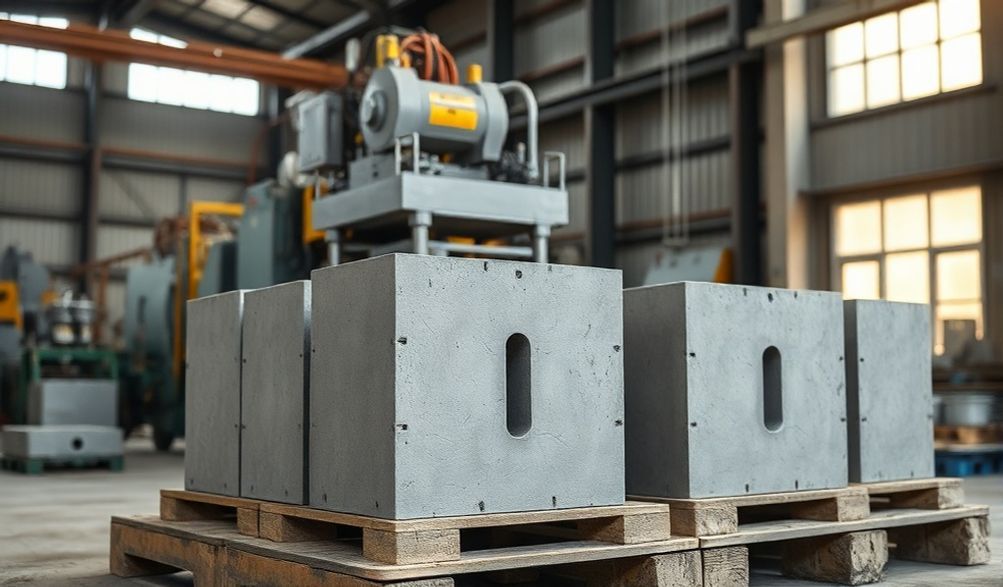
Máquina para Hacer Bloques de Concreto en Pakistán: Guía del Comprador y Análisis de Costos para 2024
Introducción
El sector de la construcción de Pakistán está experimentando un crecimiento sin precedentes. Impulsado por la expansión de la población, la urbanización y grandes iniciativas nacionales como el Naya Pakistan Housing Scheme, la demanda de materiales de construcción se ha disparado. Los informes de la industria sugieren que la contribución de la construcción al PIB está en un ascenso constante, creando inmensas oportunidades para los proveedores de materiales básicos, especialmente los bloques de hormigón.
Sin embargo, para los constructores, contratistas y emprendedores que buscan capitalizar este auge, surge un desafío significativo: conseguir maquinaria confiable y rentable para fabricar bloques de concreto. El mercado está inundado de opciones, desde fabricantes locales hasta marcas importadas, con precios y promesas que varían enormemente. ¿Cómo navegar los costos fluctuantes, evaluar la verdadera calidad y asegurarse de contar con el crucial soporte postventa para mantener su negocio en funcionamiento?
Esta guía integral es su solución. Atravesamos el ruido para ofrecer un análisis claro y experto del mercado de máquinas para fabricar bloques de concreto en Pakistán. Desglosaremos los rangos de precios reales para 2024, exploraremos los diferentes tipos de máquinas y describiremos los factores clave que debe considerar más allá del precio de etiqueta. Basada en las tendencias actuales del mercado y en información práctica de la industria, esta guía está diseñada para ser su recurso de confianza para realizar una inversión segura e informada que impulse el crecimiento de su negocio en los años venideros.
Comprensión de las Máquinas para Fabricar Bloques de Concreto y su Importancia en Pakistán
Antes de adentrarnos en los precios, es esencial comprender en qué estás invirtiendo y por qué es una decisión fundamental para un negocio pakistaní.
¿Qué es una Máquina para Hacer Bloques de Concreto?
En esencia, una máquina para fabricar bloques de concreto es un dispositivo que automatiza el proceso de formar bloques uniformes de hormigón. Mezcla materias primas—típicamente cemento, arena, grava triturada y agua—y las comprime en moldes bajo alta presión y vibración. Este proceso garantiza que cada bloque sea denso, resistente y dimensionalmente uniforme, superando con creces la calidad alcanzable con mano de obra manual. Las etapas básicas de producción que manejan estas máquinas incluyen dosificación, mezclado, moldeado y, en ocasiones, curado y apilado.
Por qué es crucial invertir en maquinaria de calidad para las empresas pakistaníes
No se trata solo de comprar una herramienta; se trata de tomar una decisión estratégica de negocio alineada con el desarrollo nacional. He aquí por qué la máquina adecuada es crucial:
- Se alinea con la demanda nacional.Los proyectos de vivienda gubernamental y el desarrollo de infraestructura privada requieren un suministro masivo y constante de bloques estandarizados. Su máquina es su boleto para abastecer estos proyectos a gran escala.
- Ahorros Significativos en Costos:Aunque la inversión inicial es considerable, elimina los altos costos a largo plazo y las inconsistencias del trabajo puramente manual, ofreciendo un retorno de la inversión (ROI) mucho más rápido.
- Consistencia y Calidad Inigualables:Una buena máquina produce bloques de tamaño uniforme y resistencia a la compresión. Esto reduce el desperdicio de material en la obra, garantiza la integridad estructural y construye su reputación como proveedor confiable.
- Permite la Escalabilidad Empresarial:Su capacidad de producción está directamente vinculada a la capacidad de su máquina. Invertir en el nivel adecuado de automatización le permite comenzar a pequeña escala y expandirse sin problemas a medida que sus pedidos aumentan.
Para el emprendedor pakistaní, esta inversión es un paso fundamental hacia la construcción de un negocio sostenible y rentable en un sector en auge.
Tipos de Máquinas para Fabricar Bloques de Concreto Disponibles en Pakistán
El "precio" de una máquina para fabricar bloques en Pakistán está determinado principalmente por su tipo y nivel de automatización. A continuación, se desglosan las tres categorías principales que encontrarás en el mercado.
Máquinas Manuales para Hacer Bloques
Estas son las máquinas más básicas y de operación manual. Requieren que los operadores llenen el molde a mano, apliquen presión mediante una palanca y luego retiren manualmente el bloque recién formado para su curado. La producción es intensiva en mano de obra.
- Salida Típica:300 – 800 bloques por turno de 8 horas.
- Rango de Precio en PKR: PKR 50,000 – PKR 200,000.
- Mejor Para:Individuos, nuevas empresas a muy pequeña escala, o para producir bloques para un único proyecto de construcción personal. Representan un punto de entrada con bajo capital, pero limitan el crecimiento.
Máquinas Semiautomáticas para Fabricar Bloques
Esta es la categoría más popular para pequeñas y medianas empresas. Estas máquinas incorporan un sistema de vibración mecánica (a menudo accionado por un motor eléctrico) para compactar el concreto, y pueden incluir un sistema hidráulico para el desmolde. Algunos procesos, como la alimentación de materia prima o el movimiento de bloques, aún son manuales.
- Salida Típica:1,000 – 2,500 bloques por turno de 8 horas.
- Rango de Precio en PKR: PKR 300,000 – PKR 1,200,000.
- Mejor Para:Empresas manufactureras de bloques en crecimiento, contratistas que emprenden proyectos de vivienda de mediana escala y sociedades cooperativas de vivienda. Ofrecen un excelente equilibrio entre costo, producción y calidad.
Máquinas de Fabricación de Bloques Completamente Automáticas
Estas son líneas de producción computarizadas de grado industrial. Automatizan todo el proceso, desde el dosificado y mezclado hasta el moldeado, curado y apilado en palés de bloques. Requieren un área de instalación considerable y una conexión estable de energía trifásica.
- Salida Típica:4,000 – 20,000+ bloques por turno de 8 horas.
- Rango de Precio en PKR: PKR 1,500,000 – PKR 10,000,000 and above.
- Mejor Para: Large-scale construction firms, dedicated block manufacturing plants aiming to supply entire cities or regions, and investors targeting government supply tenders. The high output justifies the substantial investment.
Key Factors Determining the Price in Pakistan
Why does one machine cost PKR 500,000 while another seems similar but costs PKR 1.5 million? Several technical and commercial factors drive the final price tag.
- Tipo de Máquina y Nivel de Automatización: As detailed above, this is the primary cost driver. Moving from manual to semi-automatic to fully automatic involves exponentially more complex engineering, motors, hydraulics, and control systems.
- Capacidad de Producción (Bloques por Hora): Within each category, a machine rated for 1,500 blocks per hour will cost less than one rated for 2,500 blocks per hour. Higher capacity means a larger, more robust frame, a more powerful vibration system, and bigger molds.
- Brand & Country of Origin:
- Fabricantes locales de Pakistán: Offer competitive prices (especially in the semi-automatic range), easier access to spare parts, and localized service. Brands established in Gujranwala or Lahore are common.
- Imported Machines (Chinese): Dominate the mid to high-end market. They offer advanced features at a relatively lower cost than European brands, but the quality can vary. Ensure the supplier has a strong service network.
- Imported Machines (European/Turkish): Represent the premium segment. They are known for exceptional durability, advanced technology, and high efficiency, but come with a significantly higher price tag and potentially costly imported spare parts.
- Tipo de Bloque y Configuración del Molde A standard hollow block mold is common. However, if you need to produce paving slabs, interlocking blocks, or designer blocks, you will need specialized molds. Each additional mold set can add PKR 20,000 to PKR 100,000+ to the cost.
- Compatibilidad de Materias Primas: Some machines are optimized for specific mixes. A machine designed to efficiently use fly ash (a cost-effective by-product) might have a different compression system. Ensure the machine you choose is suited for the materials readily available in your location.
Beyond the Sticker Price: Total Cost of Ownership
A savvy investor looks beyond the initial purchase price. The true cost of your machine includes all expenses from purchase to day-to-day operation.
- Initial Purchase Price Breakdown: This includes the base machine, any optional molds, and a standard set of spare parts (like springs and bolts).
- Installation, Commissioning, and Training Costs: Will the supplier set up the machine, calibrate it, and train your operators? This service may be included, quoted separately, or unavailable. Factor in potential costs for a leveled concrete foundation and power connection upgrades.
- Costos Operativos:
- Consumo de energía: Fully automatic lines consume significant electricity. Semi-automatic machines have lower, but still notable, power needs.
- Trabajo: Even automatic machines require operators, maintenance staff, and material handlers.
- Routine Maintenance: Regular greasing, part inspections, and replacements.
- The Critical Role of After-Sales Service & Spare Parts Availability: This is where many buyers face the biggest hidden cost. A cheap machine from a supplier with no service network can become a scrap metal monument if it breaks down. Prioritize suppliers who offer a clear warranty, have a service team, and stock common spare parts locally. The peace of mind is worth a slightly higher initial price.
How to Find Reliable Suppliers in Pakistan
Knowing where to look and how to vet a supplier is half the battle.
- Top Industrial Hubs for Machinery: Your primary physical markets will be in Lahore (along the Grand Trunk Road and in industrial estates), Gujranwala (known for manufacturing), Karachi (S.I.T.E., Korangi), and Sialkot. Major suppliers also have a strong online presence.
- Evaluating a Supplier: Checklist
- Insist on a factory visit to see their manufacturing capability.
- Ask for and actually contact past client references.
- Scrutinize the warranty terms (duration, what’s covered).
- Map their service network – do they have technicians in your city or region?
- Check the availability and price list of critical spare parts.
- The Pros and Cons of Buying New vs. Used Machines:
- Used: Can offer significant upfront savings (often 30-50% less than new). However, it carries high risk: unknown history, likely expired warranty, and difficulty finding parts. Only consider if you have a skilled mechanic to inspect it thoroughly.
- New: Comes with warranty, latest technology, training, and reliability. The higher price is an investment in lower risk and predictable performance.
Making the Right Investment: A Step-by-Step Guide
Follow this structured approach to ensure your investment aligns with your goals.
- Step 1: Assess Your Project Needs & Business Plan. Are you supplying your own projects or selling commercially? What is your target daily/weekly output? What block types are in demand in your area?
- Step 2: Define Your Budget (Including Contingencies). Set a budget based on Step 1. Crucially, add a contingency of 10-15% for unexpected installation, training, or initial raw material costs.
- Step 3: Shortlist & Compare Machines & Suppliers. Based on your needs and budget, shortlist 3-4 machine models and their suppliers. Use the evaluation checklist above to compare them side-by-side, not just on price, but on total value.
- Step 4: Negotiate and Finalize the Deal. Negotiate on the total package: machine price, mold costs, delivery, installation, and training. Get everything—payment terms, warranty, service agreement—in a clear, written contract before making any payment.
Frequently Asked Questions (FAQ)
Q1: What is the cheapest concrete block making machine price in Pakistan?
The cheapest options are manual block making machines, which can start from around PKR 50,000. However, it’s vital to understand that this low price comes with very low output, high physical labor requirements, and limitations on block quality and business growth.
Q2: Which is the best brand of block making machine in Pakistan?
There isn’t a single “best” brand for everyone. Reputable local manufacturers have strong standing for semi-automatic machines. Among imports, Chinese brands like Hongfa, QuangongyLontto are widely recognized. The “best” brand for you depends entirely on your budget, required capacity, and the supplier’s after-sales service strength in your location.
Q3: Can I get a loan or financing for a block making machine in Pakistan?
Yes, financing options are available. Many commercial banks offer SME financing for industrial equipment. Some machinery suppliers also have partnerships with leasing companies or offer their own installment plans. Be prepared to present a solid business plan.
Q4: What is the profit margin in the concrete block business in Pakistan?
Net profit margins can typically range from 20% to 35%. This depends heavily on factors like your operational efficiency, cost of raw materials (especially cement), local market competition, and your sales volume. Controlling production costs through an efficient machine is key to maintaining healthy margins.
Q5: How do I maintain my block making machine to ensure longevity?
* Daily: Clean the machine thoroughly after each shift to prevent concrete buildup.
* Weekly: Lubricate all moving parts as per the manual; check and tighten bolts and nuts.
* Monthly: Inspect hydraulic hoses for leaks, check vibration motor mounts, and inspect mold liners for wear.
* Always: Use a consistent, recommended concrete mix. Overly dry or wet mix can strain the machine.
Conclusión
Navigating the market for a concrete block making machine in Pakistan requires careful consideration. As we’ve explored, the price is a function of type, capacity, and brand, with semi-automatic machines in the PKR 300,000 to PKR 1.2 million range representing the sweet spot for many growing businesses. Remember, the true cost is the Costo Total de Propiedad, where supplier reliability and after-sales service are non-negotiable for protecting your investment.
Our final recommendation is to base your decision not on the lowest upfront cost, but on a clear analysis of your business needs, growth trajectory, and the long-term value a reliable machine and partner provide. This strategic approach will position your venture for success in Pakistan’s dynamic construction landscape.
Ready to take the next step? Download our free checklist for visiting and evaluating a block machine supplier in Pakistan to ensure you ask all the right questions before you buy.
<