
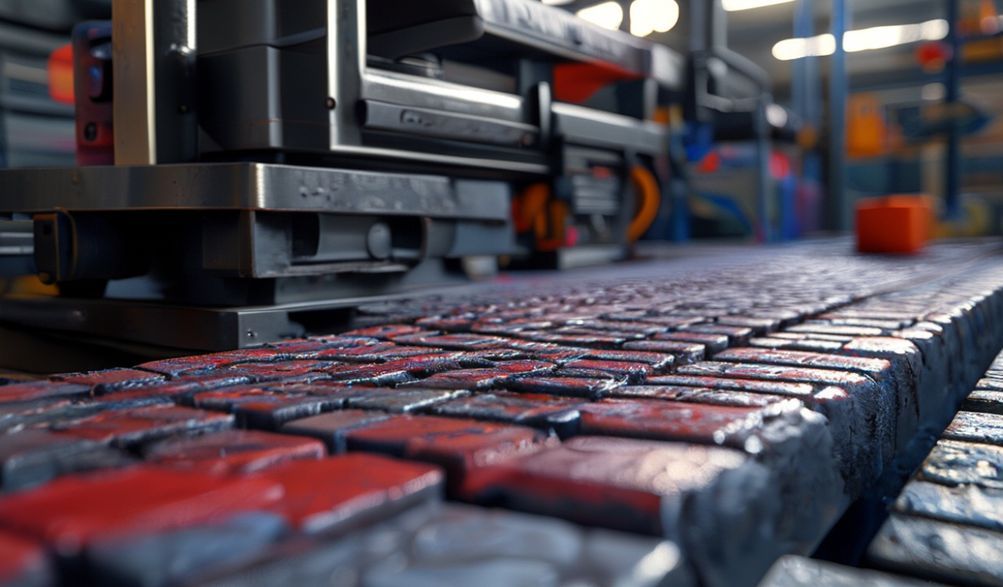
Precio de la Máquina para Ladrillos de Pavimentación: Guía del Comprador y Desglose de Costos para 2026
Encontrar un precio preciso para una máquina de ladrillos para pavimentación es frustrante, con cotizaciones que van desde unos pocos miles hasta más de un millón de dólares. Esta guía elimina la confusión.
Si eres contratista, fabricante o emprendedor, sabes que esta compra es una decisión fundamental. Basándonos en análisis del sector, datos de fabricantes y perspectivas prácticas de profesionales de la construcción, esta guía ofrece un marco de costos transparente. Aprenderás no solo el precio inicial, sino también el costo total de propiedad, las características clave que afectan el precio y cómo elegir la máquina adecuada para la escala de tu proyecto y tu presupuesto.
Ya sea que seas un pequeño contratista que busca expandir sus servicios, un fabricante a gran escala que pretende aumentar su capacidad, o un entusiasta del bricolaje que convierte una pasión en un negocio, comprender el panorama financiero completo es tu primer paso hacia una inversión rentable.
Comprensión de las Máquinas para Ladrillos de Pavimentación: Tipos y Aplicaciones
Antes de discutir números, es crucial entender lo que estás comprando. El tipo de máquina dicta su precio, capacidad y caso de uso ideal. Elegir el tipo equivocado es el error más costoso que puedes cometer.
1. Máquinas Prensas Manuales/Hidráulicas
Estos son los puntos de entrada más básicos en la producción de adoquines. Dependen en gran medida del trabajo manual para la mezcla, alimentación y prensado.
- Descripción:Operadas por una palanca manual o un sistema hidráulico simple, estas máquinas requieren que un operador llene los moldes, inicie la prensa y retire los bloques terminados.
- Salida Típica y Caso de Uso:La producción es baja, a menudo oscilando entre 100 y 500 bloques por turno de 8 horas. Son ideales para talleres artesanales, emprendimientos muy pequeños o para producir productos personalizados y de nicho donde el volumen no es la prioridad.
2. Máquinas Semiautomáticas para Fabricar Adoquines
Esta categoría ofrece el mejor equilibrio para empresas en crecimiento, automatizando las partes que requieren más mano de obra mientras mantiene los costos manejables.
- Descripción:Los procesos clave como la vibración, compactación y expulsión están automatizados, generalmente mediante un panel de control sencillo. Sin embargo, aún se necesita un operador para alimentar la mezcla de concreto crudo y, a veces, para retirar los pallets terminados.
- Salida Típica y Caso de Uso:La producción puede variar de 1,000 a 4,000 bloques por turno de 8 horas, dependiendo del modelo y la eficiencia del equipo. Ideal para pequeñas y medianas empresas con pedidos constantes de contratistas locales, paisajistas o municipios.
3. Máquinas Completamente Automáticas para Adoquines
Estas son líneas de producción industrial diseñadas para la máxima producción con la mínima intervención humana.
- Descripción:Equipado con Controladores Lógicos Programables (PLC), alimentadores automáticos de material, dispensadores de paletas y apiladores. Una vez iniciada, la máquina realiza todo el ciclo: llenado, vibración, prensado, curado y apilado, con quizás uno o dos supervisores.
- Salida Típica y Caso de Uso:La producción se mide en bloques porhorano por día. Las máquinas pueden producir desde 2,000 hasta más de 10,000 bloques por hora. Este es el ámbito de los fabricantes a gran escala que abastecen regionalmente o cumplen con importantes contratos de infraestructura.
4. Plantas Móviles vs. Plantas Estacionarias
Esta es una decisión estratégica crucial que impacta significativamente en el precio y las operaciones.
- Descripción:Las plantas móviles están montadas en remolques, lo que permite producir adoquines directamente en una obra grande, eliminando los costos de transporte de productos terminados. Las plantas estacionarias son instalaciones fijas en una fábrica o patio, optimizadas para una producción eficiente y de alto volumen.
- Implicaciones de Precio y Operativas:Las plantas móviles ofrecen flexibilidad, pero suelen tener un costo adicional por la ingeniería requerida. Su producción es típicamente menor que la de una planta estacionaria de precio similar. Las plantas estacionarias se benefician de economías de escala y son generalmente más rentables para la producción pura, pero lo atan a una sola ubicación.
Factores Clave Que Determinan el Precio de la Máquina de Adoquines
¿Por qué una máquina cuesta $30,000 y otra $300,000? El precio es un reflejo directo de varios factores de ingeniería y comerciales.
1. Capacidad de Producción (Bloques Por Hora)
Este es el factor más directo del costo. Una mayor producción requiere un motor más potente, un sistema de vibración más grande y robusto, hidráulica de mayor resistencia y un bastidor más sólido.
- Una máquina diseñada para 1,000 bloques por hora está construida con especificaciones diferentes a una que rinde 5,000 bloques por hora, incluso si tienen un aspecto similar.
- Pregunta Clave: Don’t just buy for today’s needs. Project your growth 2-3 years out. A machine operating at 80% of its capacity is more efficient and lasts longer than one running at 100% capacity constantly.
2. Automation Level and Technology
Every step of automation adds cost but reduces labor and improves consistency.
- Sistema de Control PLC: A basic relay system is cheaper than a touch-screen PLC with recipe memory for different block types.
- Sistema de Vibración: The quality, number, and power of vibrators (frequently unidirectional vs. bidirectional) affect block density and finish, and thus, price.
- Sistema Hidráulico: The brand, precision, and reliability of the hydraulic pump and cylinders are a major cost component. Reputable brands like Bosch Rexroth or Parker add to the cost but ensure longevity.
3. Machine Brand and Origin
Geography and reputation play a huge role in pricing structure.
- European Brands (e.g., Hess, Zenith): Often represent the premium tier. You pay for decades of engineering refinement, high-quality components, and (typically) comprehensive after-sales service and training. Prices are highest.
- Indian & Chinese Manufacturers: Offer highly competitive pricing and have made massive strides in quality. They dominate the mid-range market. The key differentiator here is often the supplier’s commitment to service, spare parts availability, and technical support. Thorough due diligence is essential.
4. Mold Type and Customization
The mold is the heart of your product. Its complexity directly impacts cost.
- Moldes Estándar: For common shapes like rectangles, cobbles, or fans are relatively inexpensive.
- Moldes Personalizados: For unique interlocking patterns, logos, or special designs require precise CNC machining and significantly higher-grade steel, increasing cost.
- Material del Molde: Standard carbon steel molds are cheaper but wear faster. Hardened chromium steel or special alloy molds cost 50-100% more but can last 5-10 times longer, saving money in the long run for high-volume production.
5. Additional Features and Accessories
The base machine is just the start. Integrated options add functionality and cost.
- Alimentador de Color Automatically sprinkles color powder on the block surface, ensuring consistency.
- Automatic Pallet Dispenser/Stacker: Eliminates manual pallet handling.
- Cube Splitter: For producing kerbstones or other large units.
- Mixer and Conveyor System: For a fully integrated plant.
2026 Paver Brick Machine Price Ranges (By Type)
Here is a transparent breakdown of current market price ranges. Remember: These are indicative estimates for 2026. Final quotes will vary based on configuration, brand, freight, and local taxes.
Entry-Level / Manual Machines
- Price Range: $3,000 – $15,000
- At this price, you are getting a simple, robust machine focused on the pressing function. It has minimal to no automation. Ideal for testing a market, producing specialty artistic pavers, or for a micro-business in a region with very low labor costs. Production will be limited.
Mid-Range / Semi-Automatic Machines
- Price Range: $25,000 – $80,000
- This is the most active and competitive market segment. For $40,000-$60,000, you can get a reliable semi-automatic machine from a reputable mid-tier manufacturer with decent output (e.g., 1,500-2,500 blocks per 8-hour shift). This range suits a serious small business aiming for steady growth.
High-Capacity / Fully Automatic Plants
- Price Range: $100,000 – $500,000+
- Here, you are buying a complete system, not just a machine. A price of $150,000 might get you a solid automatic machine with a basic mixer and conveyor. A $300,000+ investment gets you a high-speed production line with automated material handling, color feeding, and stacking—a true turnkey plant for industrial output.
Descargo de responsabilidad importante: Always request a detailed, itemized quote from multiple suppliers. The cheapest initial price can lead to the highest long-term cost due to downtime, poor support, and rapid wear.
Beyond the Sticker Price: Calculating Total Cost of Ownership
The machine’s purchase price is only the first line item. A savvy buyer budgets for the full lifecycle cost.
1. Initial Purchase and Installation
- Machine Cost: The base price.
- Envíos y Logística: Can be thousands of dollars for an international order, especially for a full container or heavy plant.
- Customs Duties and Taxes: Vary significantly by country. Factor in an additional 5-25%.
- Instalación y Puesta en Marcha: Some suppliers include basic setup; for complex plants, professional installation is an extra cost.
2. Operational Costs (The Daily Grind)
- Consumo de energía: A semi-automatic machine may run on a 15-20 HP motor; a full plant can require 80+ HP. Calculate your local electricity cost per running hour.
- Materias Primas: Cement, aggregates, sand, pigments, and release agent. This is often your largest recurring cost.
- Trabajo: Even automatic plants need supervisors, maintenance staff, and material handlers.
3. Maintenance and Spare Parts
- Scheduled Maintenance: Regular oil changes, filter replacements, and greasing.
- Piezas de desgaste: Budget for replacing molds, vibrator mounts, hydraulic seals, and liners. Ask suppliers for a spare parts price list upfront.
4. Hidden Costs to Consider
- Factory Space: Does your site have the necessary power supply, strong flooring, and clearance?
- Entrenamiento de Operadores: Improper operation is a leading cause of breakdowns.
- Costo del Tiempo de Inactividad: What is the financial impact if your machine is idle for a week waiting for a spare part? This highlights the value of local service support.
How to Get the Best Value for Your Investment
Shifting your mindset from “lowest price” to “best value” is the mark of a professional buyer.
1. Accurately Assess Your Needs
- Calculate your current and projected 3-year demand. Be realistic.
- Rule of Thumb: Choose a machine that can meet your peak demand without running 24/7. A 20-30% capacity buffer is ideal for maintenance and growth.
2. Research and Compare Suppliers
Create a vetting checklist:
* How many years has the company been manufacturing these machines?
* Can they provide references from clients in your region?
* What does their after-sales service network look like? Do they have local technicians or just a phone line?
* Request videos of the machine in operation at a client’s facility.
3. Request and Analyze Detailed Quotes
A professional quote should include:
* Detailed technical specifications sheet.
* Itemized list of all included and optional accessories.
* Clear warranty terms (parts, labor, duration).
* Delivery timeline and Incoterms (who handles shipping).
* List of recommended spare parts with prices.
4. Consider Financing and ROI
- Many equipment dealers offer financing plans. Explore options with your bank as well.
- Simple ROI Calculation: (Cost of Machine + Installation) / (Projected Annual Profit from Paver Sales) = Years to Payback.
- Projected Annual Profit = (Number of Blocks Sold per Year * Profit per Block).
- This exercise forces you to model your business, not just buy a machine.
Frequently Asked Questions (FAQ)
Q1: What is the cheapest type of paver brick machine I can buy?
A: Manual or small hydraulic press machines are the least expensive, starting around $3,000-$5,000. However, they require significant manual labor and have very low output, making them suitable only for niche or artisanal production.
Q2: Can I get a good quality automatic machine under $50,000?
A: Yes, it is possible. Several manufacturers offer entry-level semi-automatic or basic automatic models in the $40,000-$50,000 range. The key is to focus on suppliers with a verifiable track record of reliability and service support, not just the lowest ticket price.
Q3: How much does it cost to run a paver brick machine per day?
A: Operational costs vary dramatically. A small semi-automatic machine might incur $50-$150 per day in electricity and raw materials (excluding labor). A fully automatic plant can easily exceed $500-$1,000 per day in running costs. A detailed project-specific analysis is essential.
Q4: Are used paver brick machines a good option to save money?
A: They can be, but they carry inherent risk. Only consider used machines from top-tier brands where you can get a complete service history. Always budget 10-20% of the purchase price for immediate repairs and part replacements. If possible, have an independent mechanic inspect it.
Q5: Besides the machine, what other equipment do I need to start?
A: At a minimum, you’ll need a concrete mixer (pan or planetary type), a covered space for curing blocks, and pallets. For automatic plants, you’ll need conveyors, a stacker, and often a raw material storage and feeding system (hoppers, feeders).
Conclusión
Navigating the “paver bricks machine price” landscape means understanding it’s a broad spectrum defined by type, capacity, and features. From a $5,000 manual press to a $500,000 automated plant, the right choice hinges entirely on your business objectives and production scale.
The final, most critical piece of advice is to adopt a “value over price” mindset. The most economical machine is the one that runs reliably, produces quality blocks consistently, and is backed by a supplier who answers the phone when you need help. It’s an investment in your business’s productive capacity.
Use this guide as a framework to prepare detailed questions for suppliers. Go beyond the brochure. Request live demonstrations or, even better, visit existing client sites to see the machines in operation. This due diligence, grounded in the transparent cost framework we’ve outlined, is what empowers you to make a sound, confident financial decision for your construction or manufacturing venture.
<