
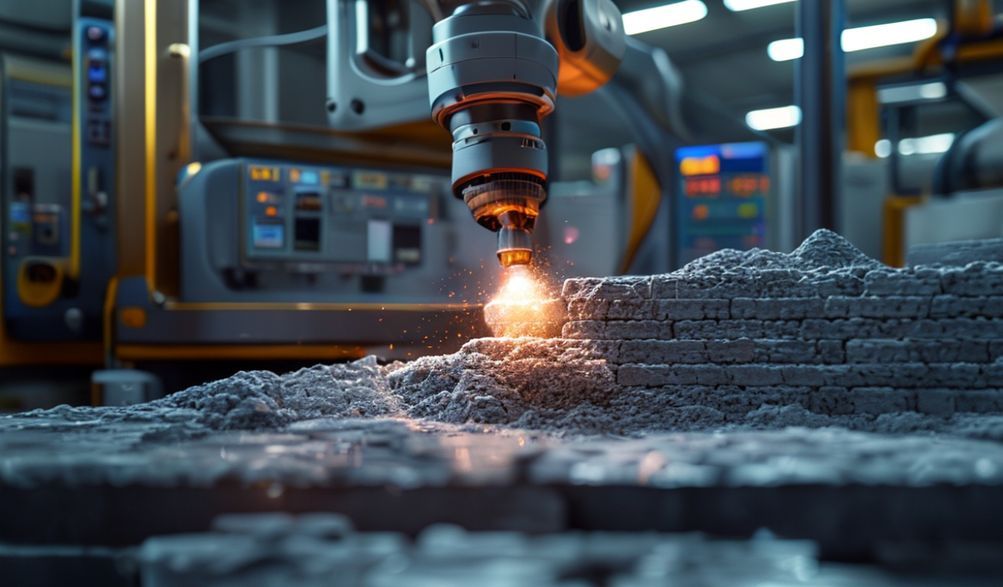
Guía Completa de Máquinas Automáticas Hidráulicas para Fabricar Ladrillos de Ceniza Volante (2026)
Introducción
La industria de la construcción global se encuentra en una encrucijada. A medida que la expansión urbana continúa a un ritmo implacable, la demanda de materiales de construcción se dispara. Sin embargo, este crecimiento está ensombrecido por una necesidad urgente de sostenibilidad: reducir las huellas de carbono, gestionar los residuos industriales y construir de manera más inteligente. La fabricación tradicional de ladrillos de arcilla, una práctica centenaria, es vista cada vez más como parte del problema: intensiva en energía, altamente contaminante y agotadora de la capa superior del suelo.
Ingrese la solución moderna: la máquina automática hidráulica para fabricar ladrillos de cenizas volantes. Esto no es solo una mejora incremental; es un cambio de paradigma. Al transformar un subproducto industrial problemático—las cenizas volantes de las centrales térmicas—en bloques de construcción de alta resistencia y precisión, esta tecnología aborda dos problemas críticos a la vez. Ofrece un modelo de negocio rentable y escalable mientras genera un impacto positivo tangible en el medio ambiente.
Esta guía integral está diseñada para emprendedores visionarios, fabricantes establecidos y profesionales de la construcción. Analizaremos cómo funcionan estas máquinas, cuantificaremos sus beneficios, detallaremos la lógica de inversión y proporcionaremos el conocimiento crítico necesario para tomar una decisión informada. Al fusionar la eficiencia industrial con la responsabilidad ecológica, las plantas automáticas de ladrillos de cenizas volantes representan el futuro de la producción de materiales de construcción.
¿Qué es una Máquina Automática Hidráulica para Fabricar Ladrillos de Ceniza Volante?
En esencia, esta máquina es un sistema de fabricación sofisticado diseñado para producir ladrillos y bloques de construcción mediante un proceso de compactación automatizada de alta presión. Reemplaza la mano de obra y las conjeturas de los métodos tradicionales con una mecanización precisa, programable y potente.
Definición del Núcleo y Principio de Funcionamiento
An automatic hydraulic fly ash brick making machine is a fully integrated production line. It uses a precisely controlled hydraulic system to compress a prepared mixture of raw materials—primarily fly ash, along with sand, cement, and water—into dense, uniform bricks or blocks. The “automatic” designation refers to the seamless, cyclical process from raw material feeding to finished product stacking, often managed by a programmable logic controller (PLC).
The basic automated cycle involves four key stages:
1. Alimentación: The raw material mix is automatically conveyed and fed into the machine’s mold cavity.
2. Compresión: A hydraulic ram applies immense, calibrated pressure to the mixture, compacting it into the desired shape.
3. Expulsión: The newly formed, green brick is gently pushed out of the mold onto a pallet or conveyor.
4. Apilamiento: An automated stacker collects the bricks and arranges them onto curing carts, ready for the next phase.
Componentes Clave y Sus Funciones
Comprender la anatomía de la máquina es clave para apreciar su capacidad.
- Hydraulic Power Pack (The “Heart”): This system generates the immense force required for compaction. It consists of a motor, pump, valves, and hydraulic fluid reservoir. The consistency and pressure (measured in tons or MegaPascals) it delivers directly determine the brick’s final strength and density.
- Control Panel (The “Brain”): Typically featuring a PLC or advanced digital interface, this is the command center. Operators can set pressure levels, cycle times, and production counts, ensuring every brick is identical to the last. It minimizes human error and allows for simple operation.
- Ensamblaje de Moldes: Constructed from high-grade, hardened steel, the mold defines the brick’s size and shape. A key feature of quality machines is a quick-change mold system, allowing a single machine to produce:
- Bloques Sólidos
- Bloques Huecos
- Pavers
- Ladrillos de Interconexión
- Conveying and Stacking System: This is what makes the system truly “automatic.” Belt conveyors or bucket elevators move raw material to the hopper. After ejection, another conveyor transfers green bricks to an automatic stacker, which palletizes them without manual handling, drastically reducing labor and breakage.
Top 5 Benefits of Automating Your Brick Production
Investing in this technology is a strategic business decision with multifaceted returns.
Unmatched Product Quality and Consistency
Hydraulic pressure is the game-changer. Unlike vibratory or manual methods, it applies force evenly throughout the material mix.
* This results in bricks with uniform high density and exceptional compressive strength, typically ranging from 7.5 MPa to over 21 MPa, suitable for load-bearing walls.
* Dimensional accuracy is superb, with tolerances within ±1 mm. This “precision engineering” for bricks means:
* Less mortar consumption during construction.
* Smother, plumper walls that require less plaster.
* A professional, high-quality finish that commands a market premium.
Remarkable Production Efficiency & Output
Automation unlocks unprecedented scale. While a manual operation might produce a few thousand bricks per day with a large crew, an automatic hydraulic machine can produce that many per hora.
* Production cycles are rapid and continuous, with outputs ranging from 1,000 to 10,000+ bricks per hour depending on the model.
* The system can operate in multiple shifts, maximizing ROI on the capital investment. The machine doesn’t tire, ensuring output remains constant from the first hour to the last.
Reducción Significativa en Costos Laborales y Dependencia
This is a major shift from a labor-intensive model to a skill-intensive one.
* A fully automatic plant may require only 1-3 skilled personnel for monitoring and supervision, compared to 20-30 workers for equivalent manual output.
* It mitigates risks associated with labor shortages, wage inflation, and human error in the production process. Your business becomes more predictable and manageable.
Superior Eco-Friendliness and Sustainability
This benefit operates on two powerful levels:
1. Aprovechamiento de Residuos: It consumes fly ash, a fine powder that is a major byproduct of coal-fired power plants. Using it in bricks prevents it from occupying landfill space or causing air and water pollution.
2. Green Product: The bricks themselves are more environmentally friendly than fired clay bricks. Their production:
* Uses no topsoil.
* Emits no greenhouse gases from firing.
* Offers better thermal insulation, reducing building energy consumption.
* Can contribute to LEED (Leadership in Energy and Environmental Design) certification points for construction projects.
Enhanced Operator Safety and Ergonomic Design
Automation inherently creates a safer work environment.
* Dangerous tasks like handling heavy raw materials, operating under high vibration, or manual brick stacking are eliminated.
* Moving parts are guarded, and the automated cycle keeps operators at a safe distance from the compression point.
* The ergonomic design reduces physical strain, leading to higher job satisfaction and lower incidence of work-related injuries.
Critical Technical Specifications to Consider Before Buying
Choosing the right machine is paramount. Your decision should be driven by your business plan, not just the machine’s brochure.
Production Capacity (Bricks per Hour)
This is your starting point. Analyze your target market demand, both current and projected for the next 3-5 years.
* Small-scale/Startup: Machines with 1,000 – 2,500 bricks/hour output.
* Medium-scale/Expanding: Machines with 3,000 – 6,000 bricks/hour output.
* Gran escala/Industrial: Machines with 8,000 – 12,000+ bricks/hour output.
Remember, it’s often more cost-effective to scale up slightly at the outset than to outgrow your machine too quickly.
Brick Types and Mold Compatibility
Your product mix determines your market reach. Ensure the machine manufacturer offers:
* A versatile range of standard mold sizes.
* The ability to produce custom shapes (e.g., specialty pavers, landscape blocks).
* A robust and simple quick-change mold system to minimize downtime between product runs.
Hydraulic Pressure and Brick Compaction Strength
Do not overlook this core specification. Hydraulic pressure, measured in tons (e.g., 150-ton, 300-ton), is directly proportional to the achievable compressive strength of the brick.
* Higher pressure = denser, stronger bricks suitable for multi-story construction.
* Discuss your target brick strength (e.g., Class A, Class B as per local standards) with the manufacturer to ensure the machine’s pressure rating is adequate.
Degree of Automation and Control Systems
“Automatic” can mean different things. Clarify:
* Totalmente Automático: Includes automatic material feeding, brick ejection, and stacking. Minimal human intervention.
* Semiautomático: May require manual feeding of the mix or manual removal of bricks.
* Sistema de Control: A PLC-based system is superior for precision, repeatability, and data logging. Simple button-based controls are less expensive but offer less consistency and diagnostic capability.
Power Requirements and Plant Footprint
This is crucial for your facility planning.
* Poder: These machines are power-hungry. Specifications will list required voltage (e.g., 380V 3-phase) and total connected load in Kilowatts (KW). Ensure your facility’s electrical infrastructure can support it.
* Huella: You need space not just for the machine, but for raw material storage, mixing area, brick curing yard, and finished goods storage. The manufacturer will provide detailed layout drawings for the production line.
Step-by-Step Process: How the Machine Transforms Fly Ash into Bricks
Step 1: Raw Material Preparation & Mixing
Quality begins here. The raw materials—fly ash (50-60%), sand/stone dust (30-40%), cement (5-10%), and water—are blended in a pan mixer or similar equipment. The moisture content is critical; too dry and the brick won’t bind, too wet and it will deform. A consistent, homogeneous mix is vital for the next stage.
Step 2: Automated Feeding into the Hopper
The prepared mix is transferred via conveyor belt or loader into the feed hopper of the brick making machine. In a fully automatic setup, this process is continuous and regulated by sensors to maintain an optimal level in the hopper.
Step 3: Hydraulic Compression in the Mold Chamber
The core of the process. A measured quantity of the mix is fed into the mold box. The hydraulic ram then descends with immense force, compacting the material into every corner of the mold. This pressure is held for a pre-set duration to ensure proper formation.
Step 4: Ejection and Curing
The hydraulic ram retracts, and an ejection plate pushes the freshly formed “green” brick out onto a pallet or conveyor. Crucially, the process is not complete. The bricks are then moved to a curing area.
* They are kept moist (often by water spraying or steam curing) for 21-28 days.
* This curing period allows the cementitious reactions to complete, enabling the brick to achieve its full design strength. Proper curing is non-negotiable for quality.
Investment Analysis: Cost, ROI, and Finding the Right Supplier
Understanding the Price Range and Key Cost Factors
Prices vary widely based on configuration. A basic semi-automatic machine may start from a lower price point, while a high-capacity, fully automatic turnkey plant with a mixer and stacker represents a more significant investment. Key factors influencing cost are:
* Nivel de Automatización: Fully automatic systems command a premium.
* Capacidad de Producción: Higher output = higher price.
* Brand & Origin: Established brands with proven reliability often cost more.
* Calidad de Construcción: Components like hydraulic systems, PLCs, and steel grade affect price and longevity.
* After-Sales Package: Included training, warranty, and service support add value.
Calculating Your Return on Investment (ROI)
A simplified framework:
ROI = (Net Annual Profit / Total Investment) x 100
To calculate Net Annual Profit:
1. Estimate Annual Revenue: (Bricks produced per year) x (Selling price per brick).
2. Subtract Annual Operational Costs:
* Raw Materials (Fly ash, cement, sand)
* Labor (Skilled operators)
* Utilities (Power for machine and plant)
* Maintenance & Spare parts
* Overheads (Land rent, administration)
Typical Payback Period: For a well-run plant with a clear market, the capital investment can often be recovered within 1 to 3 years. After this, the profit margin increases substantially as the major fixed cost (the machine) is amortized.
How to Vet a Reliable Machine Manufacturer
This is the most critical step in your journey. Prioritize E-E-A-T (Experience, Expertise, Authoritativeness, Trustworthiness) over the lowest price.
- Experiencia: How long have they been building these specific machines? Ask for a detailed client list and request permission to contact references. Visit an existing plant if possible.
- Experiencia: Do they have in-house engineering and R&D? Can they provide detailed technical drawings and process guidance? Do their salespeople have deep technical knowledge?
- Autoridad: Look for industry certifications (ISO, CE marking). Have they published technical papers or hold patents? Do they participate in major industry trade shows?
- Confianza: Scrutinize the warranty terms. Is there a clear, responsive after-sales service network? Are spare parts readily available? Is the sales contract detailed and fair? A trustworthy manufacturer will be transparent about both the capabilities and the limitations of their equipment.
Frequently Asked Questions (FAQ)
Q1: What is the typical compressive strength of bricks made with this machine?
A: With a proper mix design, automatic hydraulic machines can consistently produce bricks with compressive strengths ranging from 7.5 MPa (suitable for non-load-bearing walls) to over 15 MPa or even 21 MPa for load-bearing applications in multi-story buildings.
Q2: Can it use 100% fly ash, or is cement required?
A: A small percentage of cement (typically 5-10%) or an alternative activator like lime-gypsum is almost always required. This acts as a binder, reacting with the fly ash to form stable cementitious compounds. Machines designed for 100% fly ash usually employ a different binding technology (like geopolymerization) and are not standard hydraulic press machines.
Q3: What is the maintenance requirement for such a machine?
A: Maintenance is systematic but manageable. Daily tasks include cleaning the mold and hopper. Weekly/monthly tasks involve checking hydraulic oil levels and filters, lubricating all moving parts, and inspecting electrical connections. Reputable suppliers provide a comprehensive maintenance manual and schedule.
Q4: How does the brick quality compare to traditional clay bricks?
A: Fly ash bricks are generally superior in consistency, dimensional accuracy, and compressive strength. They also have better fire resistance and thermal insulation properties. They are more brittle than clay bricks, so handling before curing requires care, but their performance in a finished wall is excellent.
Q5: Is technical training provided by the manufacturer?
A: Yes, any credible manufacturer will include comprehensive training for your operators and maintenance staff as part of the purchase package. This covers machine operation, safety procedures, basic troubleshooting, and routine maintenance. Always confirm the scope and duration of training before purchasing.
Conclusión
The automatic hydraulic fly ash brick making machine is more than just a piece of industrial equipment; it is a catalyst for a smarter, greener, and more profitable construction materials business. It decisively addresses the triple challenge of quality, productivity, and environmental impact that plagues traditional brick manufacturing.
Looking ahead, this technology is set to become even more intelligent, with trends like IoT sensors for real-time monitoring and predictive maintenance already on the horizon. The foundation, however, remains a robust, well-engineered machine from a partner you can trust.
Your success hinges on the partnership you choose. Prioritize a manufacturer’s proven experience, technical expertise, and commitment to your long-term operation over short-term cost savings. By doing so, you’re not just buying a machine—you’re investing in the future-proof foundation of a resilient, responsible, and highly profitable enterprise.
Ready to transform your business and build a sustainable future? Begin your journey by conducting thorough due diligence, requesting live demonstrations from shortlisted manufacturers, and engaging their technical experts with your specific project plans.
<