
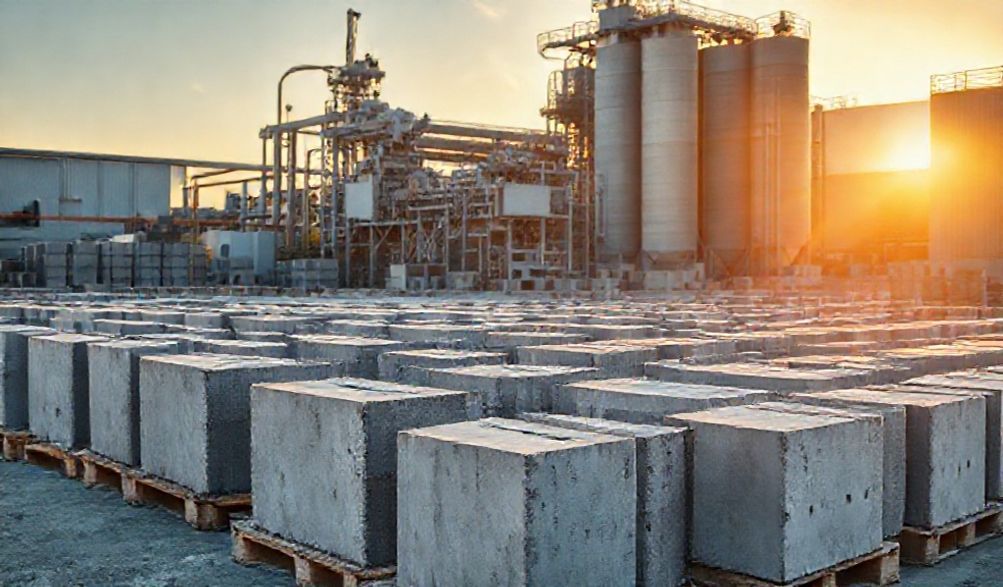
La Guía Completa para Iniciar y Operar una Planta de Bloques de Cemento Rentable
Introducción
Para emprendedores y profesionales de la construcción interesados en el mercado de materiales esenciales, establecer una planta de bloques de cemento representa una oportunidad tangible. Esta iniciativa aprovecha la demanda fundamental de la industria de la construcción, proporcionando los bloques literales para infraestructuras, proyectos comerciales y viviendas. Sin embargo, transformar materias primas en un negocio rentable y de buena reputación requiere mucho más que solo capital.
Drawing on decades of industry experience in construction materials manufacturing, this guide serves as your authoritative blueprint. We move beyond superficial overviews to provide a factual, step-by-step dissection of what it truly takes to succeed. From navigating complex regulations to mastering the nuances of the curing process, we’ll equip you with the critical technical, financial, and operational knowledge needed to make informed decisions.
Our goal is to help you build a venture that is not only profitable but also sustainable, efficient, and compliant with the highest industry standards. Let’s begin by solidifying your understanding of the core business.
Understanding Cement Block Manufacturing: Core Concepts
Before investing in land or machinery, a firm grasp of the fundamentals is non-negotiable. This knowledge forms the foundation of every operational decision you will make.
What is a Cement Block Plant?
A cement block plant, more accurately termed a Concrete Masonry Unit (CMU) plant, is an industrial facility designed to manufacture precision concrete blocks. Its core function is the systematic transformation of raw materials—primarily Portland cement, aggregates (like sand and gravel), and water—into standardized, high-strength masonry units. Using mechanized processes of batching, mixing, molding, and curing, these plants produce the durable blocks that form walls, pavements, and structures worldwide.
Tipos de Bloques Producidos
Modern plants can produce a diverse range of products to meet various construction needs. Understanding this product mix is key to defining your market niche.
- Hollow Load-Bearing Blocks: The most common type, featuring hollow cores that reduce weight, improve insulation, and allow for rebar and grout placement. Sizes vary, but the standard 8x8x16-inch block is a industry staple.
- Bloques Sólidos: Dense, heavy blocks used where maximum strength, sound insulation, or high fire resistance is required, such as in foundation walls or security barriers.
- Paving Blocks (Pavers): Dense, interlocking or non-interlocking blocks designed for hard-wearing surfaces like driveways, walkways, and patios. They come in various colors, shapes, and textures.
- Bloques de Interconexión: Designed with grooves and tongues, these blocks lock together without mortar, often used for retaining walls, landscaping, and some rapid construction systems.
- Formas Especializadas: This includes corner blocks, bullnose blocks, lintel blocks (with a channel for a reinforcing bar), and jamb blocks for door/window openings, which add value and cater to specific architectural needs.
Key Industry Standards and Specifications
Adherence to recognized standards is not optional; it’s the bedrock of trust, safety, and legality. In the United States, ASTM International standards are paramount.
- ASTM C90: Specifies the requirements for load-bearing concrete masonry units, covering minimum face shell and web thicknesses, compressive strength, and moisture absorption.
- ASTM C140: Covers the methods for sampling and testing concrete masonry units, ensuring consistent verification of properties like strength and dimensions.
Compliance with these (or equivalent local/regional standards like IS or BIS in India, BS in the UK) is critical. It protects you from liability, assures engineers and contractors of your product’s performance, and establishes your plant as a trustworthy supplier.
Essential Steps to Start Your Cement Block Plant
A successful launch is methodical. Rushing any of these steps can lead to costly corrections or outright failure.
Comprehensive Market Research and Feasibility Study
This is your reality check. It answers the fundamental question: Is there a viable business here?
- Analyzing Local Demand & Competition: Study ongoing and planned construction projects in your target region. Assess the number and capacity of existing block manufacturers. Are they operating at full capacity? Is there a gap in the market for a specific block type or quality tier?
- Identifying Target Customers: Your primary buyers will likely be:
- Construction contractors and builders.
- Masonry supply yards and building material retailers.
- Government agencies for public works projects.
- Large DIY chains (for smaller, packaged products like pavers).
- Pricing Analysis: Understand the prevailing market price per block. Reverse-engineer this to see if you can produce at a cost that allows for a sustainable profit margin.
Crafting a Robust Business Plan
Your business plan is your roadmap and your key to securing financing. It must be detailed and realistic.
- Financial Projections: Include all Capital Expenditures (CAPEX)—land, building, machinery, initial licenses. Then, detail Operational Expenditures (OPEX)—raw materials, labor, utilities, fuel, maintenance, marketing, and loan repayments. Project your cash flow and calculate a realistic Return on Investment (ROI) timeline.
- Sourcing Strategy: Identify reliable, cost-effective suppliers for cement, aggregates, and any additives. Consider transportation costs and negotiate bulk purchase agreements. A consistent supply of quality raw materials is crucial for consistent output.
Navigating Legal and Environmental Regulations
Navigating this maze is critical for uninterrupted operation.
- Business & Permits: Register your business entity (LLC, Corporation, etc.). Obtain necessary factory licenses, trade licenses, and a tax identification number.
- Zoning & Land Use: Ensure your chosen site is legally zoned for industrial/manufacturing activity. Check for any restrictions on heavy vehicle movement or noise.
- Environmental Compliance: A block plant must manage:
- Dust Control: From raw material handling and mixing. Systems like baghouse filters or water sprays are often required.
- Water Management: Recycling water from processes and managing runoff.
- Waste Management: Plans for concrete slurry, broken blocks, and used molds/oils.
Strategic Location Selection and Plant Layout
Location is a permanent operational cost factor. An efficient layout is free productivity.
- Site Selection Criteria:
- Proximity to Raw Materials: Being close to cement depots and aggregate quarries slashes transportation costs.
- Proximity to Market: Being near growing urban or industrial centers reduces delivery time and cost to customers.
- Utilities: Reliable access to three-phase electricity (for heavy machinery) and an ample water supply is essential.
- Transport Access: The site must allow easy ingress/egress for heavy trucks delivering materials and picking up finished blocks.
- Plant Layout Design: Design a logical, linear flow to minimize material handling:
- Raw Material Storage Bay: For sand, gravel, and cement (in silos).
- Production Shed: Housing the mixer, block machine, and conveyor.
- Curing Area: A large, covered space or specialized chambers.
- Finished Goods Storage Yard: Organized for easy loading and inventory management.
Core Machinery and Equipment for a Block Plant
Your equipment choices will define your production capacity, product quality, and labor requirements.
The Heart of Production: Block Making Machines
This is your most significant investment. The two main types are:
- Planta Estacionaria: High-output machines that produce blocks on stationary pallets. These require a system of conveyors to move pallets through mixing, molding, curing, and destacking. They are ideal for large-scale, automated production.
- Mobile Plant (Egg-Layer Type): The machine itself moves on rails, depositing (“laying”) blocks directly onto a concrete casting slab. Simpler and often more affordable, they are well-suited for small to medium-scale operations but require more manual labor for block collection.
Key specifications to evaluate: Output capacity (blocks per hour), level of automation (manual, semi-automatic, fully automatic), hydraulic pressure, vibration frequency, and the availability of different mold types.
Essential Supporting Equipment
The block machine doesn’t work alone. A synchronized system is needed.
- Mixers: Ensure a homogeneous, consistent concrete mix. Pan mixers are common for dry concrete mixes used in block making. Planetary mixers offer intense mixing, while Tilting Drum mixers are better for wetter mixes.
- Conveyors & Material Handling: Belt conveyors or bucket elevators move raw materials to the mixer and mixed concrete to the block machine hopper. Forklifts or front-end loaders are essential for handling bulk materials and pallets.
- Cubers/Palletizers: These automatically stack green (freshly molded) blocks onto curing racks or pallets in a stable, transportable cube, drastically reducing labor and handling damage.
The Curing Process: Systems and Importance
Curing is where the block gains its strength. Improper curing is a primary cause of weak, failing blocks.
- Steam Curing Chambers: Blocks are placed in a closed chamber and exposed to controlled steam heat (140-180°F) for 8-24 hours. This accelerates the chemical hydration process, allowing blocks to gain over 70% of their 28-day strength in less than a day. This is the standard for high-throughput, commercial plants.
- Water Curing / Ambient Curing: Blocks are kept moist by sprinkling or immersion for 7-28 days. It’s lower cost but ties up large areas of stock for longer and is weather-dependent. Proper curing, regardless of method, is critical for achieving the specified compressive strength and durability.
El Proceso de Producción: Desde la Materia Prima hasta el Bloque Terminado
Understanding this sequence is key to quality control and troubleshooting.
Phase 1: Batching and Mixing
Precision here dictates everything that follows. The mix design—the specific ratios of cement, sand, gravel, and water—is calibrated for the target block strength and finish.
- Ratio Control: A typical mix might be 1 part cement to 6-8 parts aggregate (a blend of sand and gravel). The water-cement ratio is kept relatively low to produce a “no-slump” or dry concrete that holds its shape immediately after molding.
- Consistencia: Every batch must be identical. Automated batching systems weigh each component, ensuring consistency that manual methods cannot match.
Phase 2: Molding and Compaction
The mixed concrete is fed into the block machine’s mold box.
- Vibration and Pressure: The mold is subjected to high-frequency vibration, which consolidates the concrete and removes air pockets. Simultaneously, a hydraulic head applies downward pressure (compaction). This combination is what creates a dense, well-formed block with sharp edges.
- Factors Affecting Quality: Insufficient vibration leads to porous, weak blocks. Too much water in the mix can cause the block to slump or stick in the mold.
Phase 3: Curing for Optimal Strength
As discussed, the green blocks are moved to the curing system. In steam curing, the temperature ramp-up and cool-down must be controlled to prevent thermal stress cracking. The blocks continue to gain strength even after initial curing.
Phase 4: Quality Control, Testing, and Storage
Quality is not inspected in; it is built in, then verified.
- In-Process Testing: Regularly check the weight and dimensions of fresh blocks. Test the compressive strength of sample blocks using a compression testing machine at 7 days and 28 days as per ASTM C140.
- Final Storage: Blocks must be stored on a flat, dry surface, stacked neatly in stable cubes. They should be protected from direct rain and contamination before sale.
Operational Excellence and Best Practices
Once running, continuous improvement separates the market leaders from the strugglers.
Optimizing Production for Efficiency and Cost
- Mantenimiento Preventivo: Create and religiously follow a schedule for lubricating, inspecting, and replacing wear parts on the block machine, mixer, and conveyors. Downtime is the biggest profit killer.
- Reducción de Residuos: Implement systems to collect and reuse concrete returned from the mixer hopper or from cleaning. Crush broken or rejected blocks to use as a recycled aggregate in non-structural applications.
Workforce Management and Safety Protocols
- Essential Training: Operators must understand the machinery, the mix design, and the signs of a process going out of spec. Cross-train staff for flexibility.
- Critical Safety Measures: Enforce strict use of Personal Protective Equipment (PPE): safety glasses, hearing protection, steel-toe boots, and gloves. Establish lock-out/tag-out procedures for machine maintenance. Keep walkways clear and ensure proper dust extraction to prevent silicosis.
Quality Assurance as a Business Strategy
A reputation for consistent, reliable quality is your most powerful marketing tool.
- Systematic QC: Implement a simple but documented Quality Control plan. Record daily mix proportions, test results, and any production issues.
- Construyendo Confianza: Provide customers with test certificates for batches of blocks. This transparency builds immense credibility with engineers and large contractors, allowing you to command a premium price.
Financial Insights: Costs, Pricing, and Profitability
Let’s talk numbers with transparency.
Breakdown of Initial Investment and Ongoing Costs
- Capital Costs (CAPEX): This can range widely. A very small manual plant might start at $50,000 – $100,000. A medium-scale semi-automatic operation can cost $200,000 – $500,000. Large, fully automated plants require $1 million+. This covers land, shed, machinery, and initial setup.
- Operational Costs (OPEX):
- Raw Materials (60-70% of variable cost): Cement is the largest single cost.
- Trabajo: Wages for operators, laborers, and administrative staff.
- Utilities: Significant electricity for motors and compressors; water for mixing and curing.
- Mantenimiento y Reparaciones: Typically 3-5% of machinery value annually.
- Transportation & Marketing.
Effective Pricing Strategies for Cement Blocks
- Cost-Plus Pricing: Calculate your total cost per block (material + labor + overhead + depreciation) and add your target profit margin (e.g., 15-25%). This ensures you cover costs.
- Market-Based Pricing: Set your price in line with or slightly below competitors, assuming your costs allow it. The final price is influenced by block type (pavers command more than standard hollow blocks), strength rating (2000 psi vs. 3000 psi), and regional demand-supply dynamics.
Pathways to Profitability and Scaling
- Key KPIs to Monitor: Production Cost per Block, Rejection Rate, Machine Utilization %, On-Time Delivery %, and Gross Profit Margin.
- Scaling Strategies: Once stable, consider:
- Adding new product lines (e.g., color-coated blocks, permeable pavers).
- Increasing automation to boost output and reduce labor costs.
- Expanding your delivery radius or opening a second depot in a new market.
Frequently Asked Questions (FAQ)
What is the minimum investment required to start a small-scale cement block plant?
A very basic, manual or small mobile “egg-layer” operation can potentially start with an investment of $50,000 to $150,000. This would typically cover a basic machine, a mixer, a small shed, and initial raw material inventory on leased land. However, this scale has significant labor and output limitations. A more viable, semi-automatic small-to-medium plant usually requires $200,000 to $500,000.
What is the typical profit margin for a cement block manufacturing business?
Net profit margins vary significantly based on operational efficiency, scale, and local competition. A well-run plant can typically achieve a net profit margin between 10% and 20%. High-volume plants with strong cost controls and a premium product mix can reach the higher end of this range.
How much land is needed to set up a block plant?
For a minimal operation with just production and immediate curing, you might manage on 5,000 to 10,000 square feet. For a sustainable operation with proper raw material storage, production shed, steam curing chamber, and a finished goods yard for 2-4 weeks of inventory, 1 to 2 acres (approx. 40,000 to 80,000 sq ft) is a more realistic and recommended range.
What are the most common challenges faced by new plant owners?
Based on industry experience, the top challenges include:
1. Maintaining Consistent Quality: Fluctuations in raw material quality or mix water can lead to batch failures.
2. Raw Material Cost Volatility: Cement and fuel prices can erode margins quickly.
3. Finding & Retaining Skilled Operators: A good machine operator is key to efficiency and quality.
4. Intense Market Competition: Competing on price alone in a crowded market is a race to the bottom.
5. Managing Cash Flow: Bridging the gap between paying for materials and receiving payment from customers (who often demand credit).
How long does it take for a newly produced block to be ready for sale?
This depends entirely on the curing method. With accelerated steam curing, blocks can be demolded, palletized, and ready for shipment in 24-48 hours. Using traditional ambient (water/mist) curing, blocks need to be kept moist and typically require 7 to 28 days to reach a strength suitable for sale and shipment. The 28-day period is when blocks are considered to have reached their full design strength.
Conclusión
Starting and operating a successful cement block plant is a significant undertaking that blends industrial manufacturing, construction science, and savvy business management. It is not a get-rich-quick scheme but a foundational business that serves a perennial need.
This guide has walked you through the fundamental pillars: from the imperative of deep market research and meticulous planning to the critical choices of machinery and the science of the production process. We’ve emphasized that financial viability hinges on controlling costs and that long-term success is built on a relentless commitment to consistent quality, operational efficiency, and fostering strong customer relationships.
By adhering to industry standards, investing in your team’s knowledge, and continuously optimizing your processes, you can build more than just a profitable enterprise—you can build a reputable brand that becomes an indispensable part of your region’s construction ecosystem. Your next step is to take this framework and conduct a detailed, localized feasibility study. Consult with established equipment suppliers, speak with industry veterans, and ground your dream in the reality of your specific market.
<