
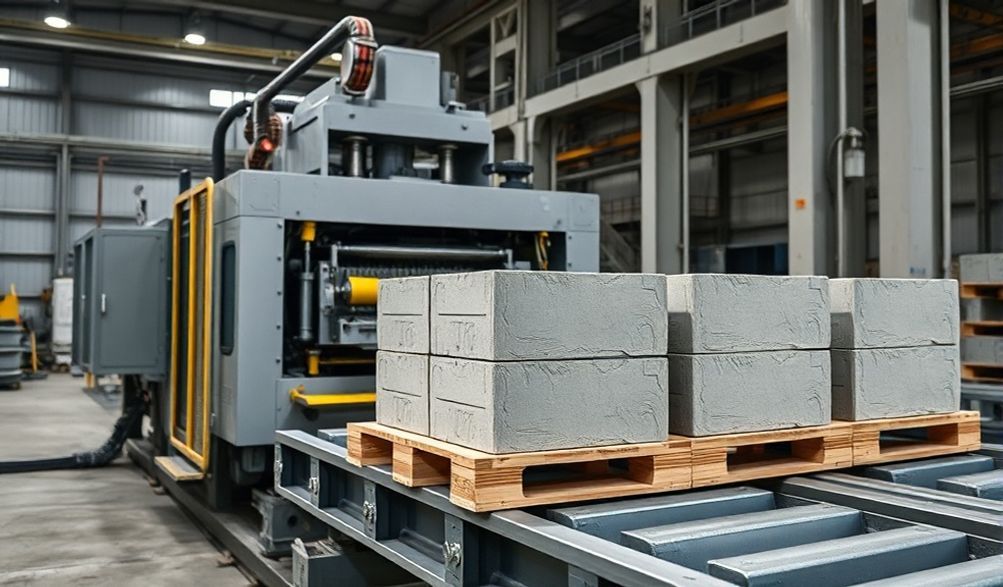
The Ultimate Guide to Block Making Machines: Types, Prices & How to Choose
Are you looking to start a construction business, scale up production, or find a cost-effective solution for building materials? Choosing the right block making machine is a critical decision that impacts your project’s quality, efficiency, and profitability. With over 25 years of experience in the construction machinery industry, our team has guided countless businesses—from small startups to large contractors—in selecting the perfect equipment for their needs. This comprehensive guide synthesizes expert engineering insights, hands-on operational experience, and thorough market analysis to help you make an informed, trustworthy decision. We’ll cut through the confusion and provide clear, authoritative information on machine types, costs, and key selection criteria.
What is a Block Making Machine? Core Function & Industry Importance
At its heart, a block making machine is a device that automates the production of concrete masonry units (CMUs). These are the fundamental building blocks—quite literally—of modern construction, used for walls, pavements, and landscaping. The industry’s reliance on these machines stems from their ability to produce uniform, high-strength blocks far more efficiently than manual methods, directly supporting global infrastructure and housing development.
Basic Operating Principle
The process, while sophisticated in execution, follows a logical sequence. Understanding this demystifies the machine’s function:
- Mezcla: Raw materials (cement, aggregates like sand or crushed stone, and water) are combined in a concrete mixer to form a semi-dry mix.
- Alimentación:Esta mezcla se alimenta en la tolva de la máquina.
- Moldeo y Compactación: The mix is dispensed into a mold (or molds). A combination of high mechanical pressure (from a hydraulic or mechanical ram) and powerful vibration compacts the mix, removing air pockets and ensuring density.
- Eyección/Endurecimiento: The freshly formed block is ejected onto a pallet or directly onto a curing slab. It then undergoes a curing process, often involving moisture retention, to reach its full structural strength.
The Role in Modern Construction
Block making machines are engines of development. They enable:
* Escalabilidad: From producing hundreds to tens of thousands of blocks daily.
* Consistencia: Ensuring every block meets precise dimensional and strength tolerances, which is crucial for structural integrity and construction speed.
* Rentabilidad: Drastically reducing labor costs and material waste compared to manual casting.
* Versatilidad: Modern machines can produce a wide array of block types—from standard hollow blocks to decorative pavers and interlocking blocks for dry-stack construction—catering to diverse architectural needs.
Types of Block Making Machines: A Detailed Expert Breakdown
Navigating the different types of machines is your first major decision. The right choice balances your production goals, budget, and labor resources.
By Operation: Manual, Semi-Automatic, and Fully Automatic
Manual Machines
- Operación: Entirely human-powered. Operators manually fill molds, apply pressure via a lever, and remove finished blocks.
- Salida:Bajo (típicamente de 200 a 500 bloques por turno de 8 horas).
- Mejor Para: Very small-scale projects, DIY enthusiasts, community-based building in remote areas with low labor costs, and producing specialty blocks in low volume.
- Pros: Very low initial investment, simple to understand, no power required.
- Contras: Labor-intensive, low output, inconsistent block quality dependent on operator skill, physically demanding.
Máquinas Semiautomáticas
- Operación: The core compaction process (vibration and pressure) is powered mechanically (hydraulically or electrically), but tasks like feeding raw material, moving pallets, and stacking blocks often require operator intervention.
- Salida: Medium to High (1,000 to 5,000+ blocks per 8-hour shift).
- Mejor Para: Small to medium-sized enterprises (SMEs), growing block yards, and contractors needing a reliable output for multiple projects. This is the most popular category for businesses.
- Pros: Excellent balance of price and productivity, more consistent block quality than manual machines, less physically demanding for workers.
- Contras: Requires a steady crew, output is limited by human-paced steps.
Máquinas Completamente Automáticas
- Operación: Computer-controlled (PLC systems) with automated material batching, feeding, molding, curing rack handling, and block stacking. Minimal human oversight is required.
- Salida: Very High (5,000 to 30,000+ blocks per 8-hour shift).
- Mejor Para: Large-scale commercial block manufacturing plants, major infrastructure projects, and businesses focused on maximum output with minimal labor costs.
- Pros: Maximum production efficiency, superior consistency, lowest labor cost per block, often includes advanced diagnostic systems.
- Contras: Very high initial capital investment, requires skilled technicians for maintenance and programming, significant space and infrastructure (power, foundation) needed.
By Mobility: Stationary vs. Mobile Block Making Machines
Stationary Plants
These are fixed installations, typically the semi-automatic and fully automatic models. They require a solid concrete foundation and are designed for long-term, high-volume production in a dedicated yard. They often integrate with conveyor systems and automated curing racks.
Mobile Machines (Block Making Machines on Wheels)
A game-changer for specific applications. These are compact, self-contained units often mounted on a trailer.
* Ventaja Clave: Produce blocks directly on the construction site.
* Beneficio: Eliminates the massive cost and logistics of transporting blocks from a remote plant, making them ideal for road construction in remote areas, large housing projects on-site, and military or disaster-relief construction.
By Block Type and Output System
Egg-Laying Machines
These machines are so named because they “lay” the finished block directly onto the casting slab or ground, then move forward to produce the next one in a line.
* Proceso: Simple and robust. Blocks cure exactly where they are made.
* Pros: Lower cost, easier maintenance, excellent for producing solid blocks and kerbstones directly on a level surface.
* Contras: Requires a large, level casting area, blocks are less dense than those from a static press, retrieving blocks can be more labor-intensive.
Static Press Machines (Stationary)
The industry standard for high-quality block production. The machine remains stationary while it compacts concrete into a mold on a pallet. The block, on its pallet, is then transferred to a curing area.
* Proceso: Allows for much higher compaction pressure.
* Pros: Produces blocks with higher density and compressive strength, enables organized pallet handling and rack curing for better quality control, more efficient use of vertical space for curing.
* Contras: Generally more expensive and complex than egg-layers.
Key Features & Technical Specifications: What the Experts Look For
Don’t just look at the marketing brochure. These technical details translate directly to your bottom line.
Métricas Centrales de Rendimiento
- Capacidad de Producción: Never rely on “theoretical maximum” numbers. Ask for realistic, sustainable output per hour with a standard block mix and including time for mold changes and maintenance.
- Tipos y Tamaños de Bloques: Ensure the machine can produce the specific blocks your market demands: Hollow Blocks (4″, 6″, 8″), Solid Blocks, Pavers, Interlocking Blocks. Check the mold changeover process and cost of additional molds.
- Pressure Force (Tonnes): This is critical for block strength. Higher pressure creates denser blocks with better compressive strength, lower water absorption, and improved surface finish. For standard hollow blocks, look for machines offering 100+ tonnes of pressure.
Critical Components for Durability & Performance
- Sistema de Vibración: A high-frequency, amplitude-controlled vibration system is essential. It fluidizes the concrete mix, allowing it to flow into every corner of the mold for a perfect finish and uniform density. Look for isolated vibration systems that protect the machine’s frame.
- Calidad del Molde y Material: The mold is a consumable part, but its lifespan matters. Hardened steel or alloy steel molds with chrome plating last 5-10 times longer than standard steel molds, saving significant long-term costs.
- Sistema de Control: For semi- and fully-automatic machines, a reliable, user-friendly PLC (Programmable Logic Controller) is key. It should be from a known brand (e.g., Siemens, Allen-Bradley) for easier service. Hydraulic systems should be robust and sealed against concrete dust.
- Requisitos de Energía: Match the machine to your available power source. Options typically include:
- Three-Phase Electrical: Standard for most industrial machines.
- Single-Phase Electrical: For smaller, semi-automatic models.
- Motor Diésel: Provides independence from the grid, crucial for mobile machines or sites with unreliable power.
How to Choose the Right Block Making Machine: A Step-by-Step Guide
Follow this experience-based framework to avoid costly mistakes.
Step 1: Assess Your Project Requirements & Business Goals
Be brutally honest with your numbers.
* Daily Output: How many blocks do you need to sell or use per day? Add a 20-30% buffer for growth.
* Block Portfolio: What specific types and sizes are in demand?
* Project Timeline: Is this for a one-off project or a long-term business? Your answer dictates whether to buy or perhaps even lease.
Step 2: Evaluate Your Budget & Total Cost of Ownership (TCO)
The purchase price is just the entry ticket. Consider:
* Costo Inicial: Machine, spare molds, shipping, installation.
* Costos Operativos: Electricity/fuel, routine maintenance, labor.
* Long-Term Costs: Replacement parts (molds, liners, hydraulic seals), potential downtime costs.
Step 3: Source Reliable Raw Materials
Your machine must match your available materials.
* Test your local sand, aggregate, and cement with the machine supplier’s recommended mix design.
* Some advanced machines are optimized for using fly ash or other additives. Ensure compatibility.
Step 4: Research and Vet Manufacturers Thoroughly
This step is paramount for confiabilidad.
* Green Flags:
* A long, verifiable company history.
* Willingness to provide customer references and visit existing installations.
* Clear, comprehensive warranty (at least 12 months on core parts).
* Detailed technical documentation and manuals.
* A visible stock of commonly needed spare parts.
* Offers installation supervision and operator training.
* Red Flags:
* Vague or overly optimistic performance claims.
* Unusually low prices compared to the market.
* No physical address or verifiable factory.
* Pressure to pay 100% upfront.
* Unclear or very limited warranty terms.
Understanding Block Making Machine Prices & Investment ROI
Price Range Overview
Prices vary astronomically based on type and capability:
* Máquinas Manuales: $1,000 – $5,000
* Máquinas Semiautomáticas: $10,000 – $60,000
* Plantas Completamente Automáticas: $70,000 – $500,000+
Factors That Influence Cost
- Nivel de Automatización: The single biggest cost driver.
- Brand & Origin: Established brands command a premium for reliability and service.
- Capacidad de Producción: Higher output = higher price.
- Calidad de Construcción: Thicker steel frames, premium components, and hardened molds increase cost but reduce TCO.
- Shipping & Installation: Can add 10-20% to the landed cost, especially for large plants.
Calculating Your Return on Investment (ROI)
Use this simplified framework:
ROI Timeframe (in months) = (Total Machine Investment) / (Monthly Profit from Block Sales)
Key Variables:
1. Local Block Selling Price: Research your market.
2. Production Cost per Block: (Raw Materials + Energy + Labor + Maintenance) / Blocks Produced.
3. Monthly Output: Based on your machine’s realistic capacity and your sales.
Ejemplo: If a $50,000 machine helps you net a profit of $5,000 per month from block sales, your simple payback period is 10 months. After that, it’s nearly pure profit.
Essential Maintenance & Safety Best Practices
A well-maintained machine is a profitable and safe machine.
Daily, Weekly, and Monthly Maintenance Checklists
- Daily: Clean all concrete residue from molds, hopper, and frame. Check hydraulic oil levels and for leaks. Inspect electrical connections.
- Weekly: Thoroughly clean and lubricate all moving parts (guide rods, bearings). Check and tighten all bolts and nuts. Inspect mold liners for wear.
- Monthly: Change hydraulic oil and filters as per manufacturer schedule. Perform a detailed inspection of the vibration motors, hydraulic cylinders, and the control panel.
Operator Safety Protocols
- Entrenamiento: Never allow untrained personnel to operate the machine.
- Equipo de Protección Personal (EPP): Safety glasses, hearing protection, gloves, and steel-toe boots are mandatory.
- Lock-Out/Tag-Out: Always disconnect and lock the power source before performing any maintenance or clearing a jam.
- Guarding: Ensure all moving parts and pinch points have proper safety guards installed.
Frequently Asked Questions (FAQ)
Q1: What is the average lifespan of a quality block making machine?
A: With diligent maintenance and proper operation, a high-quality machine from a reputable manufacturer can have a productive lifespan of 10 to 20 years. The key factors are the quality of core components (frame, hydraulics) and adherence to the maintenance schedule.
Q2: Can one machine produce different types and sizes of blocks?
A: Yes, this is a standard feature. Machines are designed to allow for mold changes. However, the process requires time, labor, and calibration. Some high-end models offer “quick-change” mold systems to minimize this downtime, which is a valuable feature for plants producing a diverse product range.
Q3: What after-sales support should I expect from a manufacturer?
A: A trustworthy supplier must provide:
* Detailed installation drawings and guidance (or on-site installation service).
* Comprehensive operator and maintenance training.
* Clear, well-illustrated parts and service manuals.
* A transparent warranty covering defects in parts and workmanship.
* Ready access to a catalog of spare parts with reasonable shipping times.
Q4: How much space is needed to install and operate a block making plant?
A: Space requirements vary dramatically:
* Small Semi-Automatic Machine: Requires ~150-300 sqm for the machine, raw material storage, and block curing/stacking.
* Large Fully Automatic Plant: Can require 2,000+ sqm to accommodate the production line, raw material silos, pallet return systems, and a large block storage yard.
Q5: Are there financing options available for these machines?
A: Absolutely. Many established manufacturers have partnerships with financial institutions to offer equipment financing or leasing plans. This is very common for semi- and fully-automatic machines, making the investment more accessible by spreading the cost over time.
Conclusión
Selecting the ideal block making machine is not just a purchase; it’s a strategic investment in your construction business’s future. By understanding the different machine types, meticulously evaluating your specific needs against technical specifications, and partnering with a reputable manufacturer, you lay a solid foundation for productivity and profit. Remember, the cheapest option upfront can often be the most costly in the long run due to downtime, poor output quality, and lack of support.
Ready to Take the Next Step? Our team of experienced consultants is here to help. Contact Us Today for a personalized consultation. We can provide specific machine recommendations based on your project scope and budget, drawing on our extensive industry experience to ensure you get the right solution.
Author Bio & E-E-A-T Statement:
This guide was meticulously researched and compiled by the engineering and industry specialist team at Construction Machinery Insights. With over 25 years of hands-on experience in manufacturing, operating, and advising on construction machinery across 40+ countries, our expertise is grounded in practical reality. We are committed to providing accurate, unbiased, and trustworthy information to help our readers make confident decisions. Our content is regularly reviewed and updated to reflect the latest industry standards and technological advancements.