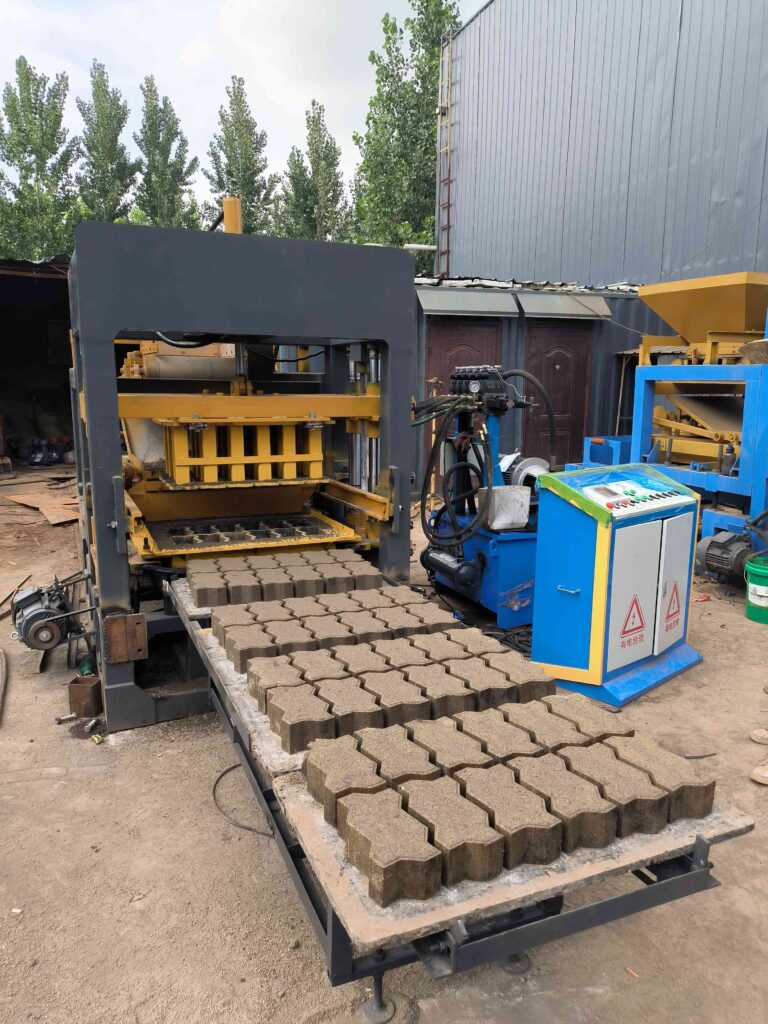
Ventajas Multifacéticas de las Máquinas de Bloques
1. Eficiencia de producción y escalabilidad sin igual
1.1. Alto volumen de producción y calidad constante
Las máquinas de bloques modernas están diseñadas para una productividad excepcional. Capaces de operar en ciclos continuos, pueden producir miles de unidades al día, superando con creces los métodos manuales o semiautomáticos. Esta producción de alto volumen es constante, y cada unidad cumple con tolerancias dimensionales precisas y especificaciones de resistencia. Para un distribuidor, esto significa la capacidad de garantizar un suministro confiable para proyectos a gran escala, desde desarrollos de viviendas hasta complejos comerciales, sin cuellos de botella. La automatización asegura que la calidad no dependa de la habilidad individual del trabajador, lo que reduce los rechazos y ofrece un rendimiento constante del producto que genera confianza en el usuario final.
1.2. Flexibilidad en el Diseño y Personalización de Productos
Las máquinas contemporáneas ofrecen una versatilidad notable. Al simplemente cambiar el molde, una sola máquina puede producir una línea diversa de productos: bloques huecos estándar, bloques sólidos, bloques aislados, adoquines en varios patrones (como entrelazados o de adoquín), bordillos e incluso productos para jardinería. Esta flexibilidad permite a los distribuidores atender múltiples segmentos del mercado —construcción estructural, pavimentación dura y proyectos decorativos— con una sola inversión de capital. Permite una rápida adaptación a las tendencias arquitectónicas regionales y a las demandas específicas de los clientes, mejorando su propuesta de valor como proveedor integral.
1.3. Reducción en la Dependencia Laboral y Costos Asociados
La escasez de mano de obra y el aumento de los costos salariales son desafíos significativos a nivel global. Las máquinas bloqueras reducen drásticamente la dependencia de grandes equipos para la producción. Los procesos automatizados de mezclado, alimentación, compactación, curado y paletizado minimizan la intervención manual. Esto no solo reduce los costos laborales directos, sino que también disminuye los gastos de gestión, mitiga los riesgos asociados con errores humanos y lesiones laborales, y asegura que la producción continúe de manera fiable independientemente de las fluctuaciones del mercado laboral.
2. Beneficios económicos y operativos significativos
2.1. Optimized Material Utilization and Waste Reduction
Precision engineering in block machines ensures optimal use of raw materials—primarily cement, aggregates, and water. The controlled vibration and compression processes create dense, strong blocks with minimal material variance. This precision translates directly into lower raw material costs per unit. Furthermore, waste from off-spec production is drastically reduced. Some advanced systems even allow for the incorporation of certain industrial by-products (like fly ash) into the mix, offering potential for further cost savings and a unique selling point regarding sustainable composition.
2.2. Accelerated Production Cycles and Faster ROI
The integrated curing systems, often using controlled steam chambers, significantly accelerate the hardening process. Blocks achieve handling strength in hours rather than the weeks required for traditional air curing. This rapid turnaround time means faster inventory turnover, the ability to fulfill urgent orders, and a quicker return on the initial machinery investment. For procurement specialists, this efficiency is a key metric in calculating total cost of ownership and profitability.
2.3. Long-Term Durability and Low Maintenance
Engineered for industrial use, high-quality block machines are built with robust materials and components. While they represent a substantial upfront investment, their operational lifespan is measured in decades with proper maintenance. The long-term cost-per-block produced becomes exceedingly competitive. Reliable machinery also minimizes costly downtime, ensuring consistent revenue flow for production facilities that supply your distribution network.
3. Enhanced Product Quality and Performance
3.1. Superior Structural Integrity and Consistency
The static pressure and high-frequency vibration applied during the molding process create blocks with exceptional compressive strength and uniform density. This consistency is crucial for structural engineers and builders, as it allows for accurate load calculations and safer, more reliable constructions. Distributors offering machine-produced blocks can confidently provide certified strength reports, enhancing their credibility in competitive bidding processes.
3.2. Improved Aesthetic Finish and Dimensional Accuracy
Automated production yields blocks and pavers with sharp edges, smooth surfaces, and consistent color (when using integral pigments). This dimensional accuracy simplifies and speeds up the bricklaying or paving process for the end-user, reducing mortar usage and labor time on-site. For hardscape products, precise interlocking designs result in more stable and visually appealing installations. This quality advantage allows dealers to command premium pricing and secure contracts for high-visibility projects.
3.3. Innovation in Block Design for Enhanced Functionality
Block machine technology enables the production of sophisticated designs that are impractical manually. This includes blocks with integrated insulation (for improved thermal efficiency), pre-formed channels for utilities, and specialized shapes for seismic zones or retaining walls. By supplying these innovative products, distributors can position themselves as leaders in advanced building solutions, accessing niche markets with higher margins.
4. Strategic Market and Environmental Advantages
4.1. Supporting Sustainable Construction Practices
The construction sector faces increasing pressure to adopt greener practices. Block machines contribute to sustainability in several ways: they optimize material use, can utilize recycled aggregates, and the blocks they produce contribute to energy-efficient buildings (especially insulated varieties). Furthermore, local production using these machines reduces the carbon footprint associated with long-distance transportation of heavy materials. For the environmentally conscious procurement department or end-client, this is a powerful competitive edge.
4.2. Enabling Localized Production and Supply Chain Resilience
Investing in block machine technology facilitates decentralized, local production. This model reduces vulnerability to global supply chain disruptions for building materials. A distributor can partner with or establish local production hubs, ensuring steady supply, reducing transportation costs and delays, and allowing for agile response to local demand. This resilience is a highly attractive feature for regional developers and contractors.
4.3. Creating a Competitive Edge in a Dynamic Market
In a crowded marketplace, the ability to offer a consistent, high-quality, and diverse product range reliably is paramount. Block machine technology provides this foundation. It allows your business to compete not just on price, but on quality, innovation, supply guarantee, and the ability to support large-scale projects. This transforms a distributor from a mere intermediary into a strategic partner in the construction value chain.
Conclusion: A Foundational Investment for Future Growth
For distributors, dealers, and procurement professionals in the construction materials industry, the block machine represents far more than a piece of factory equipment. It is a strategic asset that catalyzes business growth, enhances market relevance, and future-proofs operations. The advantages are comprehensive and interconnected: from the direct economic benefits of efficiency and cost-saving to the strategic benefits of product quality, supply chain control, and sustainability alignment. As global infrastructure and housing needs continue to grow, and as efficiency and environmental standards become stricter, demand for precisely manufactured, high-performance masonry products will only intensify. By embracing and promoting the advanced capabilities of modern block machines, B2B stakeholders position themselves at the forefront of industry evolution, ensuring profitability, resilience, and long-term partnerships with their clients. The initial investment is significant, but the return—measured in market share, client loyalty, and operational excellence—is profound and enduring.
Frequently Asked Questions (FAQ)
Q1: For a distributor new to this segment, what is the typical lead time from machine installation to full-scale production?
A1: The timeline varies based on machine complexity, foundation preparation, and staff training. For a standard stationary plant with automated curing, the process from installation and commissioning to consistent, full-capacity production typically ranges from 8 to 14 weeks. This includes site preparation, machine setup, trial runs, and operator certification.
Q2: How does the automation level of a block machine impact the required technical expertise of the end-user (our client, the producer)?
A2: Higher automation reduces the need for manual labor but increases the need for basic mechanical, electrical, and PLC system maintenance skills. Reputable manufacturers provide comprehensive training. For distributors, it’s advisable to recommend clients hire or train at least one dedicated technician. Many modern machines also feature user-friendly HMIs (Human-Machine Interfaces) and remote diagnostic support, simplifying operation and troubleshooting.
Q3: What are the key factors in determining the optimal block machine model for a specific market?
A3: Critical factors include: Local Demand Analysis: Predominant block types (solid/hollow/paver) and sizes. Disponibilidad de Materias Primas: The machine must be compatible with locally available aggregates (size, hardness). Target Daily Output: Volume requirements based on projected sales. Available Space & Utilities: Plant layout and power supply (some high-output machines require substantial electrical infrastructure). Investment Budget: Balancing upfront cost with desired automation and long-term ROI.
Q4: Can block machines effectively use alternative or recycled materials?
A4: Yes, many modern machines are designed to handle a percentage of recycled content, such as crushed concrete or certain industrial wastes, within the aggregate mix. This must be carefully controlled, as inconsistent material can affect block strength and machine wear. It is a valuable feature for markets with sustainability incentives or regulations promoting recycled content in construction.
Q5: What after-sales support should a distributor look for from the machinery manufacturer?
A5: Essential support includes: Detailed Technical Training for operators and maintenance staff. Availability of Spare Parts with a reliable supply chain. On-site and Remote Technical Service for installation and breakdowns. Warranty Terms that cover critical components. Strong after-sales support is crucial for minimizing client downtime and protecting your reputation as a distributor.