The Essential Guide to Block Making Machinery: Core Technology for Modern Construction
Defining the Technology: Principles and Core Components
Fundamental Operating Principle
A block making machine is a specialized industrial device designed to manufacture concrete blocks, paving stones, kerbstones, and related precast concrete products through the process of compaction and vibration. Unlike simple brick molding, modern block machines employ high mechanical pressure and controlled vibration to densify a semi-dry concrete mix into a rigid form with consistent dimensions and structural integrity. The process is cyclical, involving filling, compaction, molding, and ejection, often at remarkably high speeds.
Critical System Components and Their Functions
Understanding the machine’s anatomy is key to appreciating its capabilities and differentiating between models.
- The Main Frame and Structure: This is the machine’s backbone, typically constructed from heavy-duty steel to withstand constant dynamic loads and vibration. Its rigidity ensures precise alignment of all moving parts and consistent product quality over years of operation.
- The Mix Feeding System: This subsystem is responsible for delivering the raw concrete mix to the mold box. It can be a simple overhead hopper with a feed drawer or a more sophisticated belt-driven system with a rotating feeder. Accuracy here is crucial for maintaining consistent block weight and density.
- The Mold System (The Heart of the Machine): This is a customizable assembly consisting of the mold box, mold liners, and core inserts (for creating hollow blocks). The design and quality of the mold directly determine the block’s shape, surface finish, and dimensional tolerance. High-hardness steel is standard for durability.
- The Compaction and Vibration System: This is the core mechanism that gives the block its strength. It typically involves:
- Mesa Vibratoria: A heavy steel plate mounted on high-capacity vibration motors. It transmits high-frequency vibrations through the mold to fluidize and settle the concrete mix.
- Compaction Head: A hydraulic or mechanical ram that applies downward pressure from above, working in tandem with the vibration to achieve maximum density and remove air pockets.
- The Hydraulic Power Unit: In most industrial machines, a robust hydraulic system provides the force for the compaction head, the movement of the feed system, and the ejection of the finished block pallet. Its reliability and control precision are paramount.
- The Control System: The machine’s nervous system. Modern machines use Programmable Logic Controllers (PLCs) and touch-screen Human-Machine Interfaces (HMIs) to manage the production cycle, monitor pressures and vibrations, store product recipes, and diagnose faults. This is the point of interaction for the operator.
- The Pallet Handling System: Blocks are formed on wooden or steel pallets. The machine includes a conveyor system to feed empty pallets into the mold area and transport freshly pressed blocks out to a curing area. This can be a simple roller conveyor or a fully automated stacker/loader system.
A Spectrum of Technology: Machine Classifications and Types
Block making machines are not a one-size-fits-all solution. They are categorized by operation mode, production output, and level of automation, catering to vastly different project scales and investment levels.
By Operation Mode and Mobility
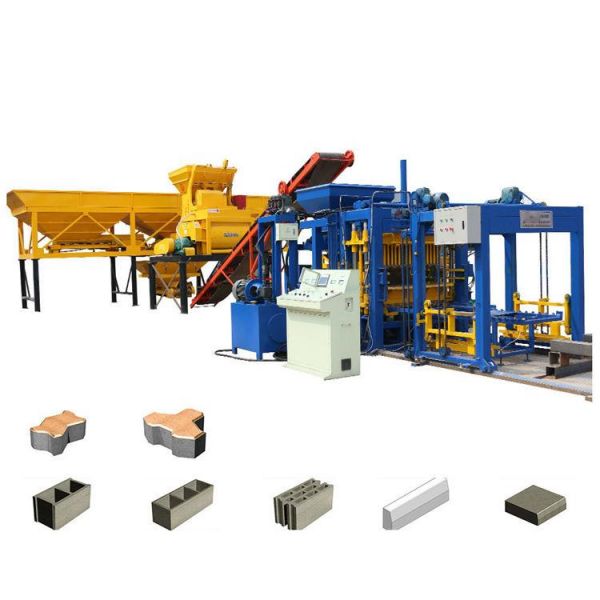
- Plantas Estacionarias: These are high-output, fixed-installation machines designed for large-scale production in a dedicated factory setting. They are often part of a fully integrated production line including mixers, conveyor systems, and automated curing racks. They represent the pinnacle of volume production and product consistency.
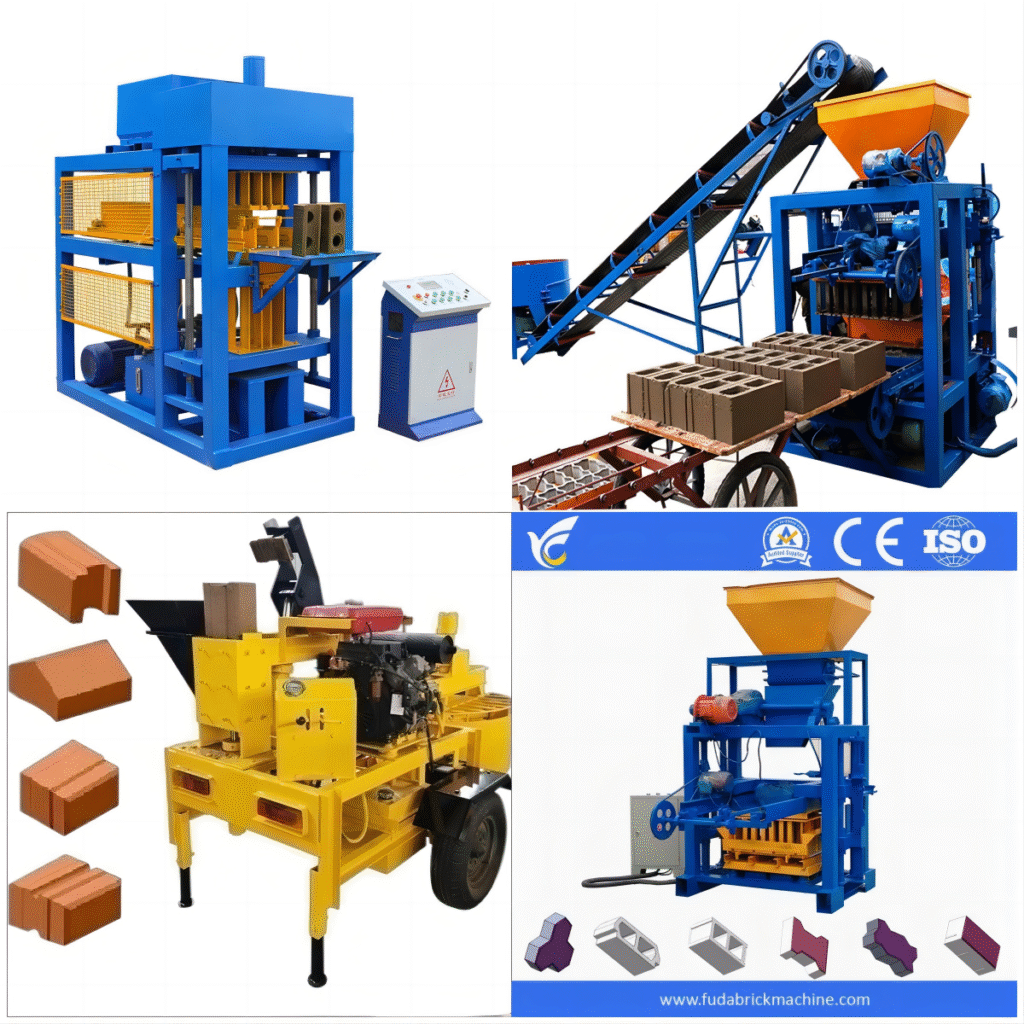
- Mobile or Portable Machines: Engineered for on-site or near-site production. These self-contained units can be towed or transported to a construction project, enabling the production of blocks directly where they are needed. This eliminates transport costs for the final product and is ideal for remote locations or large, singular projects like housing developments.
By Production Output and Cycle Time
- Máquinas Manuales y Semiautomáticas: These require significant operator involvement for feeding mix, placing pallets, and removing finished blocks. They have lower upfront costs and are suitable for small businesses, start-ups, or markets with lower labor costs. Production rates are comparatively lower.
- Máquinas Completamente Automáticas: These represent the industry standard for commercial production. Once loaded with raw materials and pallets, the entire cycle—filling, compacting, molding, and ejection—is performed automatically under PLC control. They offer high speed, exceptional consistency, and optimized labor efficiency.
- High-Capacity Automatic Lines: These are systems where the block making machine is synchronized with pallet feeders, block stackers, and transfer cars to form a continuous production stream. Output can reach thousands of blocks per hour with minimal human intervention, serving national or regional distribution networks.
The Production Process: From Raw Material to Cured Block
A clear grasp of the production workflow highlights the machine’s role within a broader system.
- Preparación de Materias Primas: The process begins with the batching of aggregates (sand, gravel, crushed stone), cement, and water to create a semi-dry “zero-slump” concrete mix. Precise mix design is critical for strength, finish, and machine performance.
- Feeding and Metering: The prepared mix is conveyed to the machine’s feed hopper. An automatic metering system, often a rotating feeder or precisely controlled feed drawer, deposits a measured amount of mix into the empty mold box on its pallet.
- Compactación y Moldeo: The mold box, now filled, moves under the compaction head. Simultaneously, the vibration table activates, and the head descends, applying substantial pressure (measured in tons). This dual action of vibration and pressure compresses the mix to its final shape and density.
- Stripping and Ejection: After compaction, the mold box lifts vertically. The compacted block, now holding its shape, remains on the pallet. Stripper shoes may gently hold the block in place to ensure a clean release from the mold.
- Block Handling and Curing: The pallet with the fresh, “green” block is conveyed out of the machine. The blocks are then typically moved to a curing chamber or rack. Here, they gain strength through controlled humidity and temperature (often using steam) over 18-24 hours before being de-palletized, sorted, and prepared for shipment or site storage.
Key Commercial Considerations for Distributors and Buyers
Critical Selection Criteria
When evaluating machinery for a client or for inventory, several technical and commercial factors must be weighed.
- Product Range and Mold Flexibility: Can the machine produce a diverse portfolio—solid blocks, hollow blocks in various thicknesses, paving slabs, landscaping products? Quick mold changeover systems are a valuable feature.
- Production Capacity (Blocks/Hour or Shifts/Day): This must align with the client’s market demand and business plan. Over- or under-investing in capacity is a common pitfall.
- Nivel de Automatización: This decision balances capital cost against long-term labor costs, consistency requirements, and the availability of skilled operators in the target market.
- Build Quality and Component Heritage: The durability of critical components like the hydraulic system, vibration motors, and structural welding directly impacts uptime, maintenance costs, and machine lifespan.
- Ecosistema de Soporte Postventa: The availability of spare parts, technical documentation, and factory-trained service support is often more important than a marginal difference in purchase price. This is a key value proposition for distributors to provide.
Understanding Total Cost of Ownership (TCO)
Sophisticated buyers look beyond the invoice price. An effective TCO analysis includes:
- Inversión Inicial: Machine cost, shipping, installation, and commissioning.
- Costos Operativos: Energy consumption (a major focus of newer, efficiency-driven designs), labor, routine maintenance supplies.
- Productivity & Downtime Costs: A reliable machine with higher output and less unplanned downtime will outperform a cheaper alternative in the long run.
- Residual Value: Well-built machinery from reputable sources holds its value far better on the secondary market.
The Future Trajectory: Trends Shaping Block Machinery Development
The industry is not static. Several powerful trends are influencing machine design.
- Eficiencia Energética: As covered in previous analyses, there is a strong drive to reduce the electrical load of hydraulic systems and vibration tables through variable frequency drives (VFDs) and optimized motor design, lowering operational costs.
- Smart Manufacturing and Industry 4.0: Integration of IoT sensors for predictive maintenance, data logging for production analytics, and remote machine diagnostics are becoming standard on premium equipment, enabling proactive service and optimization.
- Sustainability and Material Innovation: Machines are being engineered to handle higher percentages of alternative materials like recycled aggregates, fly ash, and slag, supporting the production of “greener” blocks with lower embodied carbon.
- Enhanced Customization: While mass production remains core, advanced control systems and adaptable mold technologies are making short runs of specialty or architectural blocks more economically viable, opening new market niches.
Conclusión
A block making machine is far more than a simple mold; it is the engineered heart of a modern, efficient construction materials production system. Its ability to consistently transform raw materials into precise, strong, and versatile building products makes it an indispensable asset for entrepreneurs and established manufacturers alike. For the distribution and procurement channel, success hinges on moving beyond a transactional view of this equipment. By developing deep expertise in its technical nuances, operational requirements, and economic models, you elevate your role to that of a trusted consultant. You become capable of matching the right machine technology to a client’s specific market opportunity, production goals, and financial parameters. In a world where infrastructure and housing needs continue to grow, the block making machine remains a cornerstone technology, and your expertise in it is a critical link in building the future.
FAQ
Q1: What is the fundamental difference between a block making machine and a traditional brick making machine?
A: The key differences lie in the material, process, and product. Traditional brick machines often process clay and use extrusion or soft-mud molding, followed by high-temperature kiln firing. Block machines use a semi-dry concrete mix and employ high-pressure compaction with vibration (without firing) to form cured cementitious products. Blocks are typically larger, hollow-core versions offer better insulation, and the curing process is hydraulic (water-driven) rather than thermal.
Q2: For a new market entrant, is it better to start with a mobile/on-site machine or a stationary factory setup?
A: The choice depends on the business model. A mobile machine is ideal for a contractor-focused model, producing blocks for specific projects or local clusters of clients, minimizing transport. A stationary plant suits a manufacturer aiming to supply a wider market, such as retailers and builders’ merchants, requiring higher, consistent volume and a broader product range. The mobile option often has a lower initial barrier to entry.
Q3: How critical is the quality of the raw material mix to the machine’s operation and final product?
A: It is absolutely paramount. The machine is designed for a specific “zero-slump” mix consistency. If the mix is too wet, it will stick in the mold and deform. If it’s too dry, it won’t compact properly, leading to weak, crumbly blocks. Consistent aggregate grading and precise cement/water ratios are essential. A good block machine must be supported by a reliable batching and mixing system.
Q4: What are the most common maintenance requirements for an automatic block machine?
A: Regular maintenance is vital for longevity. Key tasks include daily cleaning of residual concrete, weekly greasing of bearings and guide rods, regular checking of hydraulic fluid levels and filters, and inspection of mold liners and wear parts for damage. The vibration motors also require specific periodic maintenance as per the manufacturer’s schedule. A well-executed preventive maintenance plan prevents costly downtime.
Q5: Can one machine produce different sizes and types of blocks, and how complex is it to change over?
A: Yes, versatility is a standard feature. By changing the mold box and core inserts, a single machine can produce different block dimensions (e.g., 4-inch, 6-inch, 8-inch) and styles (solid, hollow, cellular). The complexity of changeover varies. Basic machines may require manual bolt changes (taking 1-2 hours), while advanced models feature quick-change mold systems with hydraulic clamping, allowing changeovers in 15-30 minutes, significantly improving flexibility for multi-product production.