
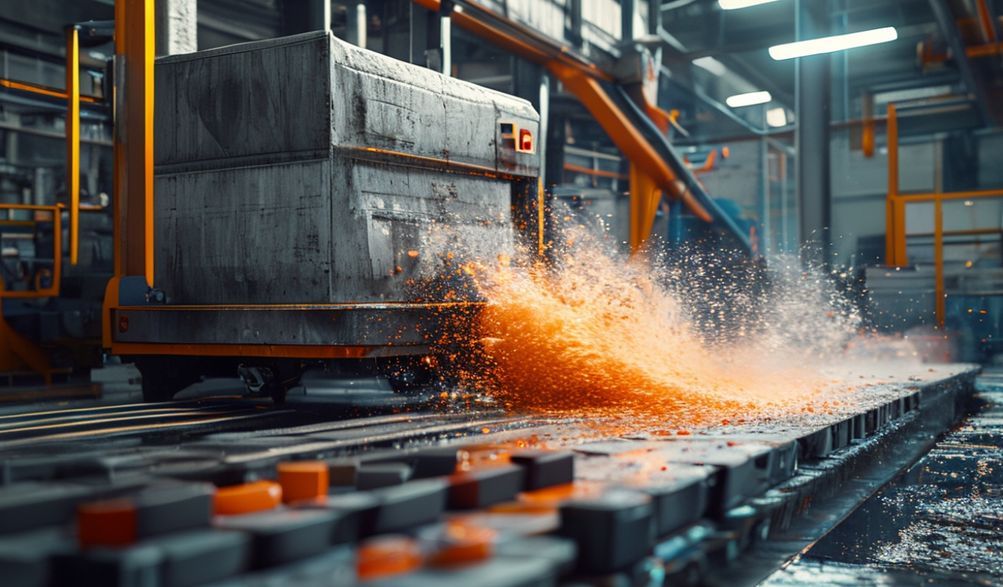
Comprehensive Guide to Different Types of Block Making Machines: Insights from FUDA Brick Making Factory
Introducción
In the world of construction and manufacturing, the choice of block making machinery is a pivotal decision. It directly impacts productivity, cost, and the ultimate quality of your structures. Selecting the wrong machine can lead to bottlenecks, inconsistent output, and eroded profits.
As a leading innovator in the industry, FUDA Brick Making Factory has spent decades engineering and refining a diverse range of machines to meet global construction demands. Our journey has taken us from small-scale workshops to massive industrial plants, giving us unparalleled hands-on experience.
This guide draws directly from our expertise in designing, operating, and servicing these machines. We will provide a detailed, expert breakdown of the various types of block making machines, their applications, and how to select the right one for your project. Our goal is to ensure you make an informed decision backed by authoritative industry knowledge and real-world practice.
Comprendiendo las Máquinas de Fabricación de Bloques: Principios Fundamentales y Aplicaciones
¿Qué es una máquina para hacer bloques?
At its core, a block making machine is a device that compresses raw materials into precise, uniform shapes known as blocks or bricks. The process involves feeding a mixture—typically concrete, fly ash, soil, or clay—into a mold cavity. Through a combination of high mechanical pressure and often vibration, the material is densely compacted and then ejected as a solid, cohesive unit.
This mechanization transforms loose, bulk materials into standardized building components, ready for curing and use.
The Critical Role in Modern Construction
These machines are the unsung heroes of modern development. They enable:
- Escalabilidad: From producing hundreds to tens of thousands of blocks per day, machinery allows projects of any size to be feasible.
- Eficiencia: Automated production drastically reduces time and labor compared to manual methods.
- Consistencia y Calidad: Machines produce blocks with uniform size, density, and strength, which is critical for structural integrity and ease of construction.
- Sostenibilidad: Modern machines can efficiently utilize industrial by-products like fly ash, contributing to greener construction practices.
FUDA’s Philosophy on Machine Design
Every machine we build is guided by three non-negotiable principles:
- Durabilidad: We use high-grade steel, robust hydraulics, and reinforced components to ensure our machines withstand high-cycle production for years.
- Eficiencia: Our designs focus on optimal power use, faster cycle times, and streamlined workflows to maximize your output per energy unit.
- Adaptabilidad: We engineer machines that can handle various raw material mixes and can often be configured to produce different block types with mold changes.
Main Categories of Block Making Machines
Block making machines can be classified in several ways, each important for your selection process.
Classification by Operation Method
-
Máquinas Manuales para Fabricar Bloques:
- Operación: Entirely human-powered. Operators manually fill molds, apply pressure via a lever, and remove the finished block.
- Salida: Low (typically 300-500 blocks per 8-hour shift).
- Mejor Para: Small-scale startups, community projects, remote areas with limited electricity, or businesses testing the market with minimal investment.
-
Máquinas Semiautomáticas para Fabricar Bloques:
- Operación: A blend of mechanical automation and manual intervention. The compression and vibration are powered (electrically or diesel), but tasks like feeding raw material or removing blocks may be manual.
- Salida: Medium (1,000 to 4,000 blocks per 8-hour shift).
- Mejor Para: Growing businesses, medium-scale production runs, and operators seeking higher quality and output than manual machines without the full cost of automation.
-
Máquinas de Fabricación de Bloques Completamente Automáticas:
- Operación: Computer-controlled (PLC) production lines. They automate feeding, mixing, compaction, molding, stacking, and pallet return with minimal human oversight.
- Salida: High to very high (5,000 to 20,000+ blocks per 8-hour shift).
- Mejor Para: Large-scale manufacturers, industrial brick yards, and projects where consistent, high-volume output is critical to ROI.
Classification by Mobility
-
Plantas Estacionarias para la Fabricación de Bloques:
- These are fixed installations designed for a dedicated production facility. They are typically larger, more powerful, and connected to permanent power sources and raw material silos.
- Ventaja: Highest potential output and integration for continuous, streamlined production.
-
Mobile or Egg-Laying Block Making Machines:
- These machines move on wheels or tracks, producing blocks directly onto a level ground surface (like a chicken laying eggs). After producing a batch, the machine moves forward to a new spot.
- Ventaja: Eliminates the need for pallets and dramatically reduces block transportation costs, as blocks are made and cured right on the construction site.
Classification by Block Output Type
- Máquinas para Hacer Bloques Huecos: Produce blocks with void chambers. These blocks are lighter, provide better thermal and acoustic insulation, and are standard for non-load-bearing walls and partitions.
- Solid Block Making Machines: Produce dense, solid blocks used where high compressive strength is needed, such as in foundations, load-bearing walls, and retaining structures.
- Máquinas para Hacer Adoquines: Specialized for producing interlocking concrete pavers used in driveways, walkways, patios, and parking lots. They often feature high-pressure vibration for a smooth, durable finish.
- Special Shape & Curbstone Machines: Designed for customized products like grass pavers, slope protection blocks, decorative garden edging, and roadside curbstones.
In-Depth Analysis: Key Machines from FUDA’s Factory Lineup
FUDA Fully Automatic Block Production Line
This represents the pinnacle of our engineering for high-volume, precision manufacturing.
- Technical Specifications & Workflow: The system integrates a mixer, conveyor, host machine, and stacker. It uses a Programmable Logic Controller (PLC) for seamless operation, precise hydraulic vibration for optimal compaction, and an automatic pallet circulation system. The entire process, from raw material input to stacked blocks, is synchronized.
- Ideal Use Cases & Production Capacity: Perfect for established block manufacturers supplying large construction projects or retail networks. Capacities can be configured from 8,000 to over 20,000 standard blocks per day.
FUDA Mobile Block Making Machine (Egg-Laying Type)
Our solution for on-site efficiency and cost reduction.
- On-Site Production Advantages: By manufacturing blocks directly at the project location, it completely eliminates transportation costs for the finished blocks. This is a game-changer for large housing developments or remote infrastructure projects.
- Operational Flexibility and Cost Benefits: It requires only a prepared plot of land. You save on fuel, truck wear-and-tear, and block breakage during transit. The machine can produce a variety of block types (hollow, solid) by changing molds.
FUDA Semi-Automatic Concrete Block Machine
The workhorse for businesses poised for growth.
- The Optimal Balance for Growing Businesses: It offers a significant leap in productivity from a manual machine, with a much lower entry cost than a fully automatic line. It allows owners to scale their operations and refine their process before investing in full automation.
- Key Features and Daily Output Expectations: Features include a robust hydraulic system, vibration motor, and optional automatic feeder. A typical model can produce 2,500-3,500 blocks in an 8-hour shift, depending on block size and operator efficiency.
Factores Críticos para Elegir la Máquina Adecuada
Selecting a machine is not about buying the biggest or cheapest option. It’s about the best fit.
- Assessing Your Production Volume and Scale: Be realistic about your current needs and 5-year growth plan. A machine operating at 20% of its capacity is inefficient, while one at 120% will break down prematurely.
- Raw Material Analysis: The composition of your mix is crucial. Machines are calibrated for different material properties (particle size, moisture content). Will you use standard concrete, fly ash, or local soil? FUDA engineers can advise on machine specifications based on your available materials.
- Land, Power, and Labor Considerations:
- Land: Do you have a fixed factory space, or do you need mobile, on-site production?
- Poder: What is your available voltage and phase? Automatic lines have higher power requirements.
- Trabajo: How many skilled operators do you have? Automatic lines require fewer but more technically trained personnel.
- Budgeting: Initial Investment vs. Long-Term Operational Costs: Look beyond the purchase price. Consider:
- Energy consumption per block.
- Availability and cost of spare parts.
- Expected maintenance costs and ease of service.
- Potential downtime and its impact on your business.
Maintaining Your Block Making Machine for Longevity
A well-maintained machine is a profitable machine. Here is a condensed version of FUDA’s maintenance philosophy:
- Daily Checklist: Clean the machine thoroughly after each shift, especially molds and feed hoppers. Check hydraulic oil levels and look for visible leaks. Inspect bolts and fittings for tightness.
- Weekly/Monthly Checklist: Lubricate all moving parts as per the manual. Check vibration motors and bearings. Inspect hydraulic hoses for wear. Test safety devices.
- Common Operational Issues:
- Calidad deficiente del bloque. Often caused by incorrect raw material mix (too wet/dry), worn mold liners, or insufficient vibration/pressure.
- Hydraulic Issues: Overheating or slow cycles can point to low oil, clogged filters, or pump problems.
- Vibration Imbalance: Can lead to cracked blocks and machine damage. Check motor mounts and eccentric weights.
- The Importance of Genuine Spare Parts: Always use OEM-specified parts. Non-genuine parts may seem cheaper but can cause improper function, damage other components, and void warranties, leading to higher costs and safety risks.
FAQ: Expert Answers from FUDA Engineers
Q1: What is the most versatile type of block making machine for a new startup?
A: Based on our experience with thousands of clients, a semi-automatic machine often provides the best versatility. It offers a substantial increase in production over manual machines while remaining affordable and allowing operators to learn the process before automating further.
Q2: How does a fully automatic machine improve block quality and consistency?
A: Automation removes human variability. Our fully automatic lines use precise, programmable hydraulic pressure and vibration frequency for each cycle, ensuring every block has identical density, dimensions, and surface finish, which is critical for structural integrity and professional aesthetics.
Q3: Can your machines use eco-friendly materials like fly ash?
A: Absolutely. Expertise in material science is central to our design. Many FUDA machines are specifically calibrated to optimally compact fly ash, slag, and other industrial by-products, producing high-strength, sustainable blocks. We can provide mix design guidance.
Q4: What kind of after-sales support and training does FUDA provide?
A: Trust is built on support. We provide comprehensive installation supervision, on-site operator training, detailed operation manuals, and a global network for spare parts. Our technical support team is available for remote diagnostics and guidance.
Q5: What’s the typical lifespan of a FUDA block making machine?
A: With proper maintenance as outlined in our manuals, our machines are engineered for a lifespan of 15-20 years. Key structural components are made from high-grade steel and cast iron, reflecting our commitment to durability and your long-term trust.
Conclusión
Selecting the right block making machine is a strategic investment in the future of your construction or manufacturing business. It requires careful consideration of your specific production needs, material sources, and growth trajectory.
At FUDA Brick Making Factory, we combine decades of hands-on engineering experience with a deep expertise in global construction trends to build machines that are not just tools, but partners in productivity. We encourage you to use this authoritative guide as a foundation for your research.
The next step is to translate this knowledge into a solution tailored for you. We invite you to consult directly with our expert team to find the machine that will lay a solid foundation for your success.
<