
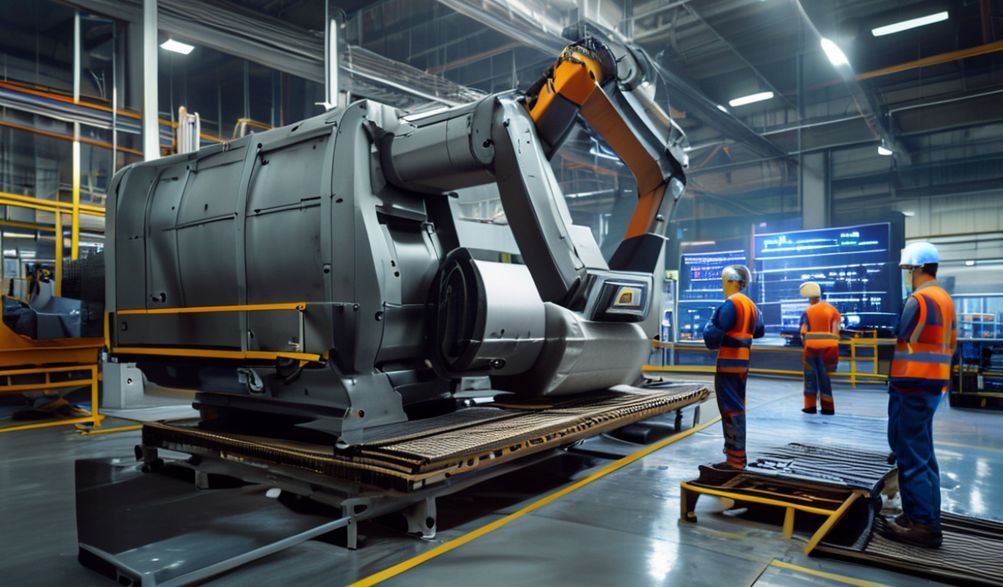
Your Ultimate Guide to China Cement Block Making Machine Suppliers in 2026
Introducción
The global construction materials market is projected to exceed $1.3 trillion by 2026, driven by relentless urbanization and infrastructure development. At the heart of this growth lies a critical piece of equipment: the cement block making machine. For businesses worldwide, one sourcing destination stands paramount—China, which manufactures over 40% of the world’s construction machinery.
Navigating this vast and complex marketplace, however, can be daunting. How do you separate reputable manufacturers from mere trading companies? What technical specs truly matter? How do you ensure quality from halfway across the globe?
This guide is your comprehensive, expert-vetted roadmap. We cut through the noise to provide a strategic framework for sourcing reliable, high-quality, and cost-effective block making machinery from China. Built on industry analysis, proven supplier evaluation methods, and hard-won best practices, this post will equip you with the knowledge to make a confident investment.
We’ll cover why China dominates this sector, how to identify and vet top suppliers, the critical technical specifications to compare, and a step-by-step walkthrough of the procurement and logistics process. Let’s begin.
Why Source Cement Block Machines from China?
Sourcing from China is not merely about finding the lowest price; it’s about accessing an unparalleled industrial ecosystem. Understanding the “why” is the first step to sourcing strategically.
Market Dominance and Scale
China is not just a participant in the heavy machinery market; it defines it. The country’s concentrated industrial clusters—particularly in regions like Fujian, Shandong, and Henan—create a powerful ecosystem. This means easier access to specialized components, a deep pool of skilled engineering talent, and relentless competition that drives both innovation and efficiency. You’re tapping into the world’s most extensive and integrated manufacturing network for construction equipment.
Competitive Pricing and Value
The cost advantage is significant, stemming from massive economies of scale and hyper-efficient supply chains. However, the key insight is to shift your mindset from “lowest cost” to “best value.” A slightly higher initial investment in a machine with a reputable brand-name hydraulic system or a sturdier frame can save tenfold in reduced downtime and maintenance costs over its lifespan. Chinese suppliers offer a spectrum from budget to premium; your goal is to find the optimal point on that value curve for your operation.
Technological Advancement and Variety
Gone are the days when China was synonymous only with basic manual machines. Today, Chinese manufacturers produce a staggering variety:
* From Manual & Semi-Automatic: Ideal for small-scale or startup projects.
* To Fully Automatic Lines: Computer-controlled behemoths with robotic pallet handling, capable of producing thousands of blocks per hour with minimal human intervention.
* Máquinas Móviles: For on-site production.
Modern machines often feature Programmable Logic Controller (PLC) systems, touch-screen interfaces, and are increasingly designed with IoT connectivity for performance monitoring.
Understanding the Challenges
A trustworthy guide must address the hurdles openly. Common challenges include:
* Variación de Calidad: The market has both exceptional engineers and cut-corner workshops.
* Communication & Language Barriers: Technical specifications can get lost in translation.
* Complex Logistics: Shipping heavy machinery requires careful planning.
* Intellectual Property Concerns:Los diseños de moldes personalizados necesitan protección.
These aren’t reasons to avoid sourcing from China; they are factors a savvy buyer learns to manage systematically—which is precisely what this guide will help you do.
How to Identify Reputable Chinese Suppliers
Your success hinges on the supplier you choose. This process requires diligence, not guesswork.
Starting Your Search: Platforms and Methods
- B2B Marketplaces (Alibaba, Made-in-China): These are your starting point. Use advanced filters (e.g., “Verified Supplier,” “Trade Assurance,” “On-site Checked”). Caution: View these platforms as directories, not vetting agencies. A “Gold Supplier” status is a paid membership, not a quality guarantee.
- Industry Directories & Trade Shows: Research exhibitors at major international trade shows like Bauma China. Companies investing in these venues are often more established and export-focused.
- Professional Sourcing Agents: For a first-time buyer or a large order, a reputable agent based in China can provide invaluable on-ground vetting, negotiation, and quality control. Their fee can be a wise investment in risk mitigation.
Vetting Suppliers: A Due Diligence Checklist
Once you have a shortlist, deep due diligence begins.
- Business License & History: Request their Chinese business license. Use a service like Tianyancha to verify their registration, legal status, and operating history. Look for a company that has been operating for at least 5-7 years.
- Informes de Auditoría de Fábrica: This is non-negotiable. Request a recent third-party audit report from agencies like SGS, Bureau Veritas (BV) o TÜV. If unavailable, insist on a live video factory tour. Don’t accept pre-recorded marketing videos. Ask them to walk you through the production floor, welding stations, assembly lines, and quality control areas in real-time.
- Production Capacity & R&D: Ask specific questions: Do you manufacture the core components (frame, hydraulic system) in-house? Can we see your R&D or engineering department? A genuine manufacturer will have detailed answers and evidence.
- Client Portfolio & References: Ask for contact information for 2-3 international clients (outside of China). A credible supplier will have this, often with client testimonials or case studies. Make an effort to contact them.
Red Flags and Green Flags
Red Flags to Walk Away From:
* Unwillingness to provide a live video tour or factory address.
* Prices that seem too good to be true (they always are).
* Vague or evasive answers to technical questions.
* Pressure to pay via insecure methods (e.g., Western Union).
* No clear warranty or after-sales policy.
Green Flags to Look For:
* Proactive, detailed communication with technical staff available.
* Willingness to provide customizations and discuss your specific project needs.
* Transparency about their process, timeline, and costs.
* Comprehensive, English-language documentation (manuals, spec sheets).
* A clear, written warranty and spare parts policy.
Key Technical Specifications to Compare
Now, we move from company vetting to machine evaluation. This is where your technical due diligence separates a good buy from a costly mistake.
Tipo de Máquina y Nivel de Automatización
Your choice here dictates your labor needs and output.
* Manual/Semiautomático: Lower upfront cost, higher labor intensity. Suitable for ~500-2000 blocks per day.
* Totalmente Automático: Significant investment, minimal labor, high consistency. Capable of 10,000+ blocks per shift. Analyze your project scale, local labor costs, and desired ROI timeframe.
Métricas Centrales de Rendimiento
Compare suppliers directly on these points:
* Capacidad de Producción: Never accept “high capacity.” Demand a specific number (e.g., 2,000 blocks/hour for a 400x200x200mm hollow block) under standard conditions.
* Tipos y Tamaños de Bloques: What molds are included? Can the machine produce solid blocks, hollow blocks, pavers, and interlocking blocks? What is the maximum and minimum mold size?
* Presión (Tonelaje): This directly impacts block density and compressive strength. A 1,000-ton press will produce a stronger, denser block than a 600-ton press for the same mix design. Match the tonnage to your required block strength standards (e.g., ASTM C90).
Critical Components and Build Quality
This is the heart of machine longevity. Interrogate the supplier on these components:
- Sistema Hidráulico: This is the machine’s lifeblood. Ask for the brand. Reputable suppliers use known brands like Bosch Rexroth, Kawasaki, or Yuken. A generic or “self-made” system is a major risk for leaks and failures.
- Marco y Estructura: What grade of steel is used? Thick, reinforced steel plate ensures stability under constant vibration.
- Sistema de Vibración: The power (kW) and frequency of the vibration motors determine how well the concrete is compacted. Multiple, high-power motors are preferable.
- Sistema de Control: A branded PLC (Siemens, Mitsubishi, Schneider) is more reliable and easier to troubleshoot than a generic controller.
Power Requirements and After-Sales Support
- Poder: Confirm voltage (e.g., 380V/50Hz/3 Phase) and total connected load (kW). Ensure your facility can support it.
- Servicio Postventa: This is a critical trust factor. A reliable supplier will offer:
- A clear warranty (12-24 months on core components).
- Availability of a spare parts list with prices.
- Provision of installation manuals, electrical diagrams, and wiring guides.
- Options for remote video supportoonsite engineer dispatch (for a fee).
The Procurement and Logistics Process
With a vetted supplier and chosen machine, you enter the execution phase.
From Inquiry to Proforma Invoice (PI)
- The Inquiry: Send a detailed, standardized inquiry to all shortlisted suppliers. Include required machine model, automation level, desired block specs, output capacity, and preferred payment/delivery terms. This allows for apples-to-apples quotes.
- Negotiation & PI: Negotiate based on the total package: Price, Payment Terms (typically 30% T/T deposit, 70% before shipment), Delivery Terms (FOB port is common), and Garantía. Everything agreed upon must be clearly stated in the Proforma Invoice (PI), which serves as your purchase contract.
Ensuring Quality: Pre-Shipment Inspection (PSI)
Never skip this step. Before the final payment is released, hire an independent third-party inspection company (like the ones mentioned earlier) to visit the factory. Their job is to:
* Verify the machine is built as per the agreed specifications.
* Conduct a test run with actual materials to confirm performance.
* Check the quality of components and welding.
* Inspect the export packaging (heavy-duty timber crates) for safe ocean freight.
The inspection report is your final go/no-go decision point.
Navigating Shipping, Customs, and Installation
- Shipping: Heavy machinery ships via sea freight (LCL or FCL). Your supplier or freight forwarder will handle bookings. Insurance is mandatory.
- Customs Clearance: Ensure your supplier provides a complete set of documents:
- Commercial Invoice
- Packing List
- Bill of Lading
- Certificate of Origin
- Equipment Manuals
- Installation: Discuss this upfront. Many suppliers provide detailed instructions and video guides. For complex automatic lines, budgeting for a technician from the supplier to travel for installation and training is highly advisable.
Top Considerations for Your Investment
Think beyond the purchase order.
Costo Total de Propiedad (CTP) frente a Precio Inicial
The cheapest machine can be the most expensive. Calculate TCO by factoring in:
* Energy consumption per cycle.
* Expected maintenance costs and spare parts pricing.
* Potential downtime costs due to failures.
A robust machine with quality components will have a lower TCO, even with a higher price tag.
Customization and Future-Proofing
Discuss future needs. Can the machine accommodate different molds easily? If you plan to produce a new block design in two years, investing in a machine with a versatile mold system and control flexibility today can save a major capital outlay later.
Building a Long-Term Supplier Relationship
View this as the start of a partnership. A reliable supplier is a source for genuine spare parts, technical advice for troubleshooting, and potential upgrades. Good communication and a successful first transaction lay the foundation for this valuable relationship.
Frequently Asked Questions (FAQ)
Q1: What is the typical price range for a cement block making machine from China?
A: Prices vary dramatically based on automation and capacity. A small manual machine can start around $5,000 – $10,000. A mid-range semi-automatic system may cost $25,000 – $50,000. Large, fully automatic production lines can range from $80,000 to over $200,000. Always request a detailed quote based on your specific technical requirements.
Q2: How can I verify if a Chinese supplier is a real factory and not a trading company?
A: Insist on a live video tour of the production facility. Ask them to show raw materials, the welding shop, assembly lines, and their quality testing area. Request photos of their workshop with today’s newspaper or a specific code word written on a whiteboard. Check their business license address against known industrial zones.
Q3: What is the standard warranty period, and what does it usually cover?
A: A standard warranty is typically 12 months for core components (hydraulic system, frame, motors, PLC) from the date of shipment or commissioning. It should be explicitly stated in writing. Consumable parts like molds, seals, and wear plates are usually covered for a much shorter period (e.g., 3-6 months) or not at all.
Q4: How long does it take from order to delivery?
A: Expect a total timeline of 3 to 5 months. Breakdown: Production/manufacturing lead time: 30-60 days. Ocean shipping: 30-45 days. Customs clearance and inland transport in your country: 1-4 weeks. Always build buffer time into your project plan.
Q5: Do suppliers provide installation guidance and training?
A: Reputable suppliers always provide comprehensive installation manuals, electrical wiring diagrams, and operational videos. Many offer free remote guidance via video call. Dispatching an engineer for on-site installation and training is a common, but usually extra-cost, service that should be negotiated in the contract.
Conclusión
Sourcing a cement block making machine from China is a significant but manageable investment that can yield exceptional returns. The key lies in a disciplined approach: conducting thorough supplier vetting, focusing on technical specifications and Total Cost of Ownership, insisting on a Pre-Shipment Inspection, and understanding the logistics chain.
Our final recommendation is to prioritize suppliers who demonstrate transparency, deep technical expertise, and a robust commitment to after-sales service. The absolute lowest price often carries the highest long-term risk.
Use this guide as your actionable checklist. Compile your specific technical questions and supplier vetting list from the sections above before you make contact. With this diligent, informed framework, partnering with a Chinese manufacturer can be a highly successful strategy, providing you with reliable, productive machinery that forms the foundation of your business growth for years to come.
<