
Votre guide ultime pour trouver des fournisseurs fiables de machines à briques creuses en 2026
Introduction
Le paysage mondial de la construction est en pleine évolution. Avec une attention toujours croissante portée à la durabilité, à la rentabilité et aux délais d'exécution rapides des projets, les briques creuses sont devenues un matériau fondamental pour les projets de construction modernes. Des ensembles résidentiels aux infrastructures à grande échelle, la demande pour ces blocs légers, isolants et économes en matériaux est en forte hausse. Mais derrière chaque brique parfaite se trouve une machine qui l'a fabriquée – et le fournisseur qui la garantit.
Pour les propriétaires d'entreprise, les entrepreneurs en construction et les directeurs d'usine, cela représente un défi critique. S'approvisionner en une machine à briques creuses n'est pas simplement un achat ; c'est un partenariat à long terme qui peut faire ou défaire votre rentabilité. Le marché est vaste, avec des options allant des annonces en ligne suspectement bon marché à l'ingénierie européenne haut de gamme. Les risques sont bien réels : des machines qui tombent en panne en quelques mois, des temps d'arrêt paralysants dus à un manque de pièces de rechange, et des fournisseurs qui disparaissent après la vente, vous laissant avec un presse-papiers coûteux.
Ce guide est votre plan stratégique. Nous éliminons les distractions pour vous offrir un cadre professionnel et étape par étape afin d'identifier, évaluer et vous associer avec les meilleurs fournisseurs de machines à briques creuses. Compilé à partir d'avis de l'industrie, de références techniques et de l'expérience acquise par des acheteurs chevronnés, cette ressource est conçue pour transformer votre approvisionnement d'un pari en un investissement confiant et fondé sur des données.
Comprendre les machines à briques creuses et leur marché
Avant d'évaluer les fournisseurs, vous devez avoir une compréhension solide du produit et de son écosystème. Cette connaissance fondamentale est ce qui distingue un acheteur bien informé d'un acheteur vulnérable.
Qu'est-ce qu'une machine à briques creuses et comment fonctionne-t-elle ?
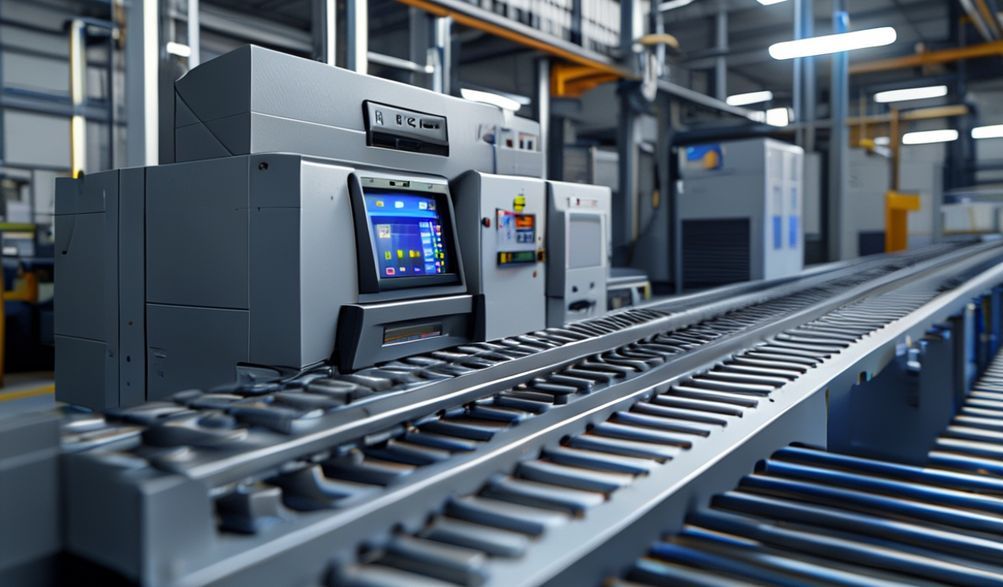
Au cœur de son fonctionnement, une machine à briques creuses automatise le processus de fabrication de blocs de béton creux. Elle transforme les matières premières—généralement un mélange de ciment, de sable, de poussière de pierre et d’eau—en briques de haute résistance, précisément moulées et dotées de cavités creuses.
Le principe de fonctionnement de base implique trois étapes clés :
1. Mélange :Les matières premières sont introduites dans un mélangeur pour obtenir une consistance de béton homogène et semi-sèche.
2. Moulage & Compactage :Le mélange est transféré dans une boîte à moules. Par vibration et compactage à haute pression (hydraulique ou mécanique), le matériau est densément tassé dans la forme désirée.
3. Durcissement & Sortie :Le bloc fraîchement formé est éjecté sur une palette. Il subit ensuite un processus de durcissement (souvent par cure à la vapeur pour un gain de résistance plus rapide) avant d'être prêt à l'emploi.
Les machines varient considérablement en termes de sophistication :
* Manuel/Semi-automatique :Production réduite, main-d'œuvre importante requise pour l'alimentation et le retrait des blocs. Un point de départ à faible capital.
* Entièrement Automatique :Contrôlé par ordinateur, avec dosage automatique, moulage, empilage et retour des palettes. Production élevée avec un minimum de main-d'œuvre.
* Stationnaire contre Mobile : Stationary plants are for fixed-site production. Mobile machines can be towed to different construction sites.
Key Benefits of Using Hollow Bricks in Modern Construction
ComprendrePourquoi hollow bricks are in demand underscores the importance of your machine investment:
* Isolation thermique et acoustique : The hollow cores create air pockets that provide excellent insulation, reducing heating and cooling costs and noise transmission.
* Structural Efficiency & Reduced Weight: They are lighter than solid blocks, decreasing the dead load on a building’s foundation and structure, leading to potential savings in steel and concrete.
* Économies de matériaux et de coûts Using less raw material per block reduces both material costs and environmental footprint.
* Vitesse de construction : Their larger size and lighter weight allow for faster laying, accelerating project timelines.
* Green Building Compliance: They contribute directly to points in green building certification systems like LEED or BREEAM due to their resource efficiency.
Global Market Overview for Hollow Brick Machinery
The supplier landscape is international, with each region carving out a specific niche:
* Chine : The global manufacturing hub, offering the widest spectrum from basic to highly advanced automatic machines. Known for competitive pricing and scalability.
* Germany/Italy: Synonymous with high-end, precision-engineered, fully automated production lines. Leaders in innovation, energy efficiency, and smart factory integration.
* India & Turkey: Strong players offering robust, often mechanically simpler machines well-suited to regional raw materials and market conditions. Excellent value in the mid-range segment.
Current Market Trends:
* Automation & IoT: The shift towards fully automatic lines with PLC controls and IoT sensors for remote monitoring and predictive maintenance.
* Efficacité énergétique : Machines designed with variable frequency drives (VFDs) and optimized hydraulic systems to slash power consumption.
* Polyvalence : Growing demand for multi-purpose machines that can produce a wide array of block, paver, and curbstone designs with quick mold changes.
Core Criteria for Evaluating Hollow Brick Machine Suppliers
This is your evaluation checklist. Use these pillars to score and compare every supplier you encounter.
Technical Expertise and Manufacturing Capability
A supplier’s internal capabilities are the best predictor of machine longevity.
* In-House R&D & Engineering: Do they design their own machines? A dedicated engineering team indicates innovation and the ability to solve unique problems or offer customization.
* Quality of Core Components: Ask specifically about:
* Qualité d'acier : For the frame and mold. High-tensile steel resists deformation.
* Système hydraulique : Brand reputation (e.g., Bosch Rexroth, Yuken) versus generic. Quality here dictates pressure stability and reliability.
* Electrical & Control Panels: Are they using reputable brands like Siemens or Schneider?
* Certifications :RecherchezISO 9001 (Quality Management) as a baseline. Marquage CE is crucial for the European market, indicating compliance with EU safety, health, and environmental standards.
Machine Quality, Performance, and Specifications
Move beyond brochure claims to tangible, verifiable specs.
* Capacité de production : Don’t just look at “bricks per hour.” Ask for the temps de cycle (seconds per cycle) and the bricks per cycle. Calculate based on an 8- or 24-hour operational day for a realistic output figure.
* Brick Specification Range: What are the minimum and maximum brick sizes (length, width, height) the machine can produce? How quickly can molds be changed?
* Exigences en matière d'alimentation électrique : Detailed power consumption (kW) for the mixer, vibrator, hydraulic system, and conveyor. This is a major operational cost.
* Durability Indicators: Ask about the expected lifespan of key wear parts under normal operating conditions.
After-Sales Support and Service Network
This is where reputable suppliers truly separate themselves from traders.
* Garantie : A minimum of 12 months on the entire machine is standard for quality suppliers. Scrutinize the terms—what is covered (parts, labor, shipping)?
* Services de mise en service : Will they send an engineer for installation, calibration, and on-site operator training? This is often non-negotiable for automatic machines.
* Politique relative aux pièces de rechange : Do they maintain a comprehensive spare parts inventory? What is their guaranteed dispatch time for critical parts? Do they provide a recommended spare parts list for initial stock?
* Support technique : Is support available via phone, email, and remote desktop? What are the service hours? Is there a local service agent or partner in your region?
Supplier Reputation and Proven Track Record
Verify, don’t just trust.
* Longévité des entreprises : How many years have they been manufacturing this specific type of machinery? Experience matters.
* Client Portfolio & Case Studies: Ask for project references in a geographical region or climate similar to yours. A video of a machine running in a customer’s plant is worth a hundred brochures.
* Third-Party Verification: Check for reviews on independent B2B platforms. Can they provide contact information for 2-3 previous clients who you can speak to directly?
A Step-by-Step Guide to Vetting and Selecting a Supplier
Follow this actionable process to navigate your sourcing journey methodically.
Step 1: Define Your Precise Requirements
Clarity here prevents you from being upsold unnecessary features or buying an underpowered machine.
* Budget: Set a realistic range, including costs for shipping, installation, and initial spare parts.
* Required Daily/Annual Output: Base this on your market demand, not optimistic guesses.
* Niveau d'automatisation : How much manual labor are you prepared to manage versus automate?
* Raw Material Analysis: Have your local sand, aggregate, and cement tested. The machine must be compatible with their properties (gradation, moisture content).
Step 2: Conduct Comprehensive Market Research
Cast a wide, intelligent net.
* Primary Sources: Use B2B platforms like Alibaba.comouMade-in-China.com, but treat them as directories, not vetting agencies. Cross-reference with industry-specific directories and official websites found via search engines.
* Trade Shows: Attending exhibitions like BAUMA (Germany) or bC India is invaluable for seeing machines in action and meeting engineering teams face-to-face.
* Create a Long-List: Aim for 10-15 potential suppliers that appear to meet your basic criteria from Step 1.
Step 3: Deep-Dive Evaluation and Request for Quotation (RFQ)
Your RFQ is a filtering tool. Be detailed.
* What to Include in Your RFQ:
* Clear required output and brick specifications.
* Request for a complete technical data sheet.
* Ask for FOB (Free On Board) and CIF (Cost, Insurance, Freight) price breakdowns.
* Specify desired payment terms (e.g., 30% deposit, 70% before shipment).
* Ask for delivery time from order confirmation to shipment.
* Analyzing Proposals: Create a spreadsheet. Compare not just price, but every spec and term side-by-side. The cheapest quote often reveals its cost in missing features or support.
Step 4: Due Diligence and Verification
This step eliminates pretenders.
* Document Verification: Request and validate business licenses, factory registration, and all claimed certificates (ISO, CE, etc.).
* Virtual Factory Tour: Insist on a live video call tour of their manufacturing workshop, not a pre-recorded video. Ask to see the assembly floor and quality control area.
* Client Reference Check: Actually call the references provided. Ask about machine performance, downtime, and the supplier’s responsiveness to service requests.
Step 5: Final Negotiation and Contract Safeguards
Protect your investment legally.
* Key Contract Clauses:
* Payment Milestones: Tie payments to clear stages (e.g., upon order confirmation, after pre-shipment inspection, upon shipment).
* Performance Guarantee: The machine must meet the agreed-upon output and brick quality specifications after installation.
* Penalty for Delay: A daily or weekly penalty for delivery delays beyond the contracted date.
* Warranty & Service Terms: The entire after-sales agreement should be explicitly written into the contract.
Common Pitfalls to Avoid When Sourcing Machinery
Learn from the common mistakes of other buyers.
Prioritizing Lowest Price Over Total Cost of Ownership
The initial price is just the entry fee. A machine that is 30% cheaper but has 50% higher energy consumption, frequent breakdowns, and no local service will cost you far more in 2-3 years. Calculate Coût total de possession (CTP) including energy, maintenance, spare parts, and potential downtime.
Overlooking Local Support and Service Agreements
A brilliant machine is useless if you wait six weeks for a technician to fly in from another continent. Before signing, understand exactly how after-sales service will be delivered in your location. Is there a local partner? What is the guaranteed response time for critical breakdowns?
Ignoring Raw Material Compatibility Tests
A machine calibrated for fine, dry sand will struggle with coarse, moist aggregate. Industry practice shows that one of the top reasons for underperformance is material mismatch. Always request that the supplier test a sample of your local raw materials, or at minimum, provide detailed material specifications their machine is designed for.
FAQ: Your Questions About Hollow Brick Machine Suppliers Answered
Q1: What is the average price range for a hollow brick machine?
A : Prices vary enormously based on capability. A small manual/semi-automatic machine can start from $5,000 – $15,000. A robust stationary semi-automatic plant may range from $25,000 – $50,000. High-capacity, fully automatic production lines from leading global brands can easily range from $80,000 to over $300,000. Always correlate price with output, automation, and component quality.
Q2: Which country’s suppliers are considered the best for hollow brick machines?
A : There is no single “best.” It’s a spectrum:
* Germany/Italy: Best for unparalleled engineering, automation, and long-term precision (high investment).
* Chine : Best for a vast selection, technological competitiveness, and scalability across all budgets (requires diligent vetting).
* Turkey/India: Best for robust, value-oriented machines often well-adapted to specific regional markets and raw materials.
The “best” supplier is the one that perfectly matches your specific technical needs, budget, and support requirements.
Q3: How important is it for the supplier to provide installation and training?
A : It is critical, especially for automatic machines. Proper installation ensures the machine is level, calibrated, and integrated safely. Comprehensive training for your operators is essential for achieving the advertised production rate, ensuring safety, and performing basic maintenance. Consider it a non-negotiable part of your ROI.
Q4: Can I get a customized machine for a unique brick design?
A : Yes, most reputable manufacturers with strong R&D departments offer customization. The process typically involves:
1. Providing detailed drawings of your unique brick design.
2. The supplier engineering a custom mold (incurring a one-time mold cost).
3. Potentially adjusting machine parameters (vibration, pressure) to suit the new design.
Expect higher costs and longer lead times for custom projects.
Q5: What are the key spare parts I should keep in stock?
A : Based on common feedback from plant operators, you should initially stock:
* Pièces d'usure : Mixer blades, conveyor belts, vibration motor bearings.
* Composants hydrauliques : Seals, O-rings, filters.
* Mold Components: Liner plates, wear plates for the mold box.
* Électrique : Common sensors and relays.
Always ask your supplier for their Recommended Spare Parts List (RSPL) tailored to your specific model and expected usage.
Conclusion
Choosing a hollow brick machine supplier is a strategic decision that will impact your business for a decade or more. It transcends a simple transaction; it’s the foundation of your production capability. As this guide has outlined, the path to a successful partnership is built on diligent evaluation of technical expertise, machine quality, iron-clad after-sales support, and verifiable reputation—not just the allure of the lowest price.
Trust the process of verification. Demand evidence in the form of certificates, client videos, and live factory tours. Let data and documented performance be your guide over marketing promises.
Ready to start your search? Go back to the Core Criteria in Section 2 and transform it into your own supplier evaluation scorecard.
Have a specific question about a machine model or a supplier you’re considering? Share your scenario in the comments below for further, tailored insights.
For a deeper dive into calculating your potential production costs and ROI, explore our detailed guide: [The Complete Business Plan for a Hollow Brick Manufacturing Plant].
<