
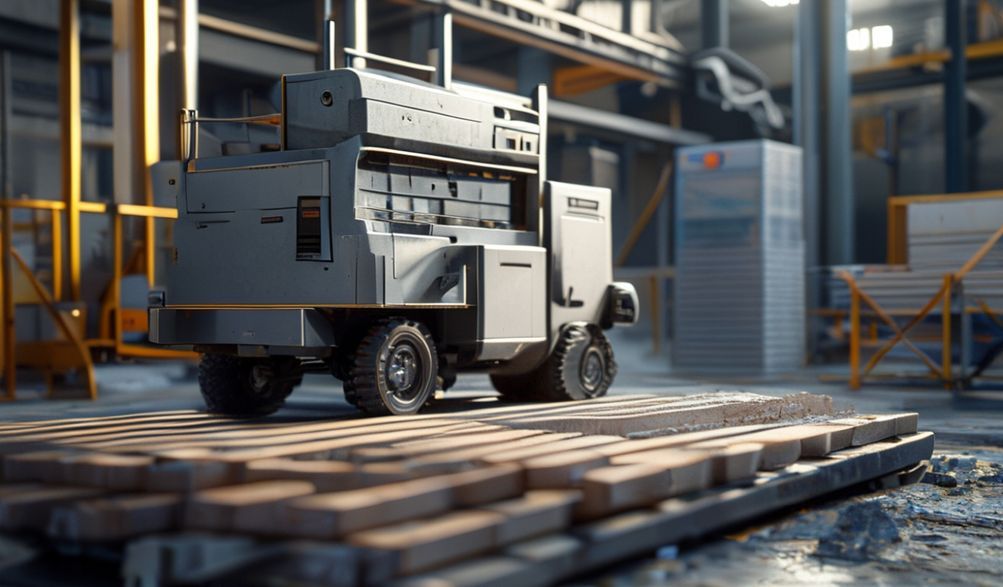
Coût des Machines à Briques de Bloc : Guide de l'Acheteur 2026 et Détail des Prix
Si vous recherchez le coût d'une machine à blocs de béton, vous vous trouvez probablement à un carrefour crucial pour votre entreprise. Il ne s'agit pas simplement d'acheter un équipement, mais de faire un investissement stratégique qui définira votre capacité de production, la qualité de vos produits et votre rentabilité pour les années à venir. En tant que personne ayant conseillé des startups et des entreprises en croissance dans l'industrie des matériaux de construction, je peux vous dire que la plus grande erreur n'est pas de dépenser trop, mais de dépenser trop peu pour la mauvaise machine.
Le terme « coût » est trompeusement simple. En réalité, le prix affiché en ligne ou dans une brochure n'est que le droit d'entrée. Le coût véritable englobe la production, le niveau d'automatisation, les dépenses opérationnelles et la durée de vie de la machine. Ce guide est conçu pour aller à l'essentiel. Nous fournirons une ventilation détaillée et transparente des prix pour 2026 et, plus important encore, le cadre nécessaire pour évaluer cet achat en investisseur avisé, et non simplement en acheteur. À la fin, vous saurez exactement comment budgéter et quelles questions poser pour éviter les erreurs coûteuses qui pourraient entraver votre projet avant même son démarrage.
Comprendre ce que vous payez vraiment : Coût contre investissement
Changer votre état d'esprit de « coût » à « investissement » est la première étape vers un achat intelligent. Une machine bon marché peut être un trou noir financier, tandis qu'une machine correctement spécifiée, même à un prix initial plus élevé, devient un actif qui génère des rendements. Cette évaluation s'appelle leCoût total de possession (CTP).
Prix d'achat initial : le point de départ évident
Voici le montant de la facture pour la machine elle-même. C'est le chiffre le plus visible et l'objet principal de la plupart des premières demandes. Les prix peuvent varier de quelques milliers de dollars pour une unité manuelle de base à plusieurs centaines de milliers pour une ligne de production clé en main. Bien qu'important, ce chiffre seul vous en dit très peu sur la valeur de la machine ou son impact à long terme sur votre rentabilité.
Coûts cachés et opérationnels : la réalité continue
Voici les dépenses qui auront un impact sur vos opérations quotidiennes et votre rentabilité :
* Consommation d'énergie :Les machines hydrauliques entièrement automatiques consomment une quantité importante d'énergie. L'utilisation en kWh d'une machine représente un coût opérationnel clé.
* Exigences en matière de main-d'œuvre :Une machine manuelle peut être peu coûteuse mais nécessite 4 à 6 travailleurs. Une machine automatique pourrait n’en nécessiter que 1 à 2. Intégrez les taux de salaires locaux dans votre modèle.
* Entretien et pièces de rechange :La lubrification régulière, le changement des filtres et le remplacement des pièces (comme les revêtements de moule et les joints hydrauliques) sont inévitables. La disponibilité et le coût des pièces sont cruciaux.
* Fondation et installation :Certaines machines fixes nécessitent une fondation en béton armé. Prenez en compte les coûts de génie civil.
* Formation : Can your team operate and perform basic maintenance? Supplier-provided training may be an added cost.
Return on Investment (ROI) Factors: The Payback
This is where your investment earns its keep. Key factors include:
* Capacité de production : A machine that produces 5,000 blocks per day generates revenue 5x faster than a 1,000-block machine.
* Product Quality & Consistency: High, uniform density and precise dimensions mean fewer rejects, better customer satisfaction, and the ability to command premium prices.
* Polyvalence : Can it produce hollow blocks, solid bricks, pavers, and curbs with quick mold changes? This allows you to adapt to market demand.
* Durabilité et durée de vie : A machine built with premium steel and robust components may last 20+ years with minimal downtime, while a lighter-duty model may wear out in half the time.
2026 Price Ranges for Block Brick Machines
The market offers a tiered structure. The following price ranges are for guidance based on current industry trends and projected 2026 values. Always get detailed, itemized quotes.
Manual & Semi-Automatic Machines: The Entry Point
Ideal for small-scale projects, rural construction, or startups testing the market.
* Manual Machines (Hand-operated): $2,500 – $8,000. Cost is driven by mold quality and construction material. Output is low and labor-intensive.
* Machines semi-automatiques : $10,000 – $25,000. These often feature hydraulic compression and mechanical vibration but require manual feeding of raw material and removal of finished blocks. They offer a good balance, significantly increasing output over purely manual options.
Fully Automatic Stationary Machines: The Production Workhorse
The standard for profitable, medium to large-scale commercial production. They integrate mixing, conveying, compacting, and stacking.
* Gamme de prix : $25,000 – $120,000+
* Basic Models ($25k – $50k): Often feature a simple PLC, single hopper, and produce one block type at a time.
* Mid-Range ($50k – $90k): Include features like automatic pallet feeders/stackers, multi-layer brick cars, and more sophisticated vibration systems for higher density.
* High-Capacity ($90k+): Feature advanced PLCs with touchscreen interfaces, integrated mixers, and outputs exceeding 10,000 blocks per 8-hour shift.
Fully Automatic Mobile Machines & Production Lines: High-Volume Giants
Designed for maximum output with minimal manual intervention.
* Mobile (“Egg-Laying”) Block Machines: $50,000 – $150,000. These machines move along a concrete slab, depositing blocks directly on the ground. They eliminate the need for pallets but require a large, level casting yard.
* Lignes de production clés en main complètes : $150,000 – $500,000+. This is a full factory setup. It includes automated batching plants, conveyor systems, block making machines, robotic pallet handling, and sometimes integrated curing chambers (steam or air). The price reflects a complete, synchronized system.
Key Factors That Directly Impact Machine Cost
Understanding these technical specifications will help you decipher why one machine costs double another that looks similar.
Capacité de production et rendement
Capacity is the primary cost driver. Doubling the output does not double the price—it often increases it exponentially. This is due to the need for:
* A larger, more powerful vibration table.
* Heavier-duty hydraulic systems.
* More robust frames and structures to handle the stress.
* Faster, more complex material handling systems.
Niveau d'automatisation
Each step of automation adds cost but reduces long-term operational expense.
* Manuel : Lowest machine cost, highest labor cost.
* PLC Control: Adds $5k-$15k+ but enables precise control over vibration time, pressure, and cycle times for consistent quality.
* Robotic Pallet Handling & Stacking: Can add $20k-$50k+ but drastically reduces labor and increases safety and speed.
Type de machine et technologie
- Vibration-Press Technology: Common for standard concrete blocks. Uses high-frequency vibration to compact concrete in a mold. Generally more cost-effective for a given output level.
- Hydraulic Press Technology: Used for high-precision paver blocks and bricks. Applies intense, silent pressure, producing extremely dense and strong products. Typically more expensive than vibration-based machines.
- Stationnaire contre Mobile : Mobile machines have the added complexity of a drive system and are built to withstand movement, commanding a premium over stationary models of similar output.
Compatibilité des matières premières
A machine that can only process fine, sandy concrete mix is less complex than one designed to handle:
* Coarse aggregates (requiring a stronger, more wear-resistant mixing and conveying system).
* Fly ash or other industrial by-products.
* Low-cement mixes. This versatility in input materials expands your sourcing options and can protect against price fluctuations, but it increases the initial machine investment.
Beyond the Machine: Additional Cost Considerations
Failing to budget for these “gotchas” can derail your project before production starts.
Shipping, Installation & Training
- Shipping: Heavy machinery incurs significant freight costs, especially for international orders (FOB, CIF, DDP terms matter greatly). Budget thousands, not hundreds, for this.
- Installation: Will the supplier send a technician for commissioning? This is often a separate line item costing $2,000-$5,000+, plus their travel and board.
- Formation : Proper training for 2-3 of your key operators is essential. Ensure it’s included or budget for it separately.
Mold & Spare Part Pricing
- Moisissures : Standard block molds can cost $1,000-$3,000 each. Custom shapes or sizes can be 50-100% more. You’ll need multiple molds for different products and as wear items.
- Pièces de rechange : Before buying, request a spare parts price list. Check the cost and lead time for critical wear parts like hydraulic pumps, vibration motors, and controller boards. A reliable supply chain is non-negotiable.
Supplier Choice: Manufacturer vs. Local Dealer
- Direct from Manufacturer: Often yields a better price and direct access to technical expertise and R&D. However, logistics, import duties, and after-sales service response time can be challenges.
- Through a Local Dealer/Agent: The machine will likely cost more due to dealer markup. The benefit is local support, faster service calls, readily available spare parts, and handling of logistics. This relationship is invaluable for minimizing downtime.
How to Get the Best Value for Your Budget
Accurately Assessing Your Needs
Don’t buy a machine based on a dream; buy it based on data.
1. Calculate Realistic Demand: How many blocks do you need to produce per day to meet current orders and growth projections? Add a 20-30% buffer.
2. Audit Your Resources: Do you have reliable 3-phase power? What is your available floor space or casting yard area? What are your local labor rates?
3. Match the Machine: A small, semi-automatic machine is a better value for a 1,000-block/day need than an underutilized, expensive automatic line.
Vetting Suppliers & Requesting Quotes
Your supplier is as important as the machine. Create a checklist:
* Request customer references and actually contact them. Ask about machine performance and after-sales service.
* Ask for videos of the exact machine model in operation, not just promotional footage.
* Demand a detailed, itemized quote. It should clearly separate machine price, mold costs, shipping terms, installation, and warranty.
* Clarify warranty terms: What is covered (parts, labor)? For how long? What is the process for making a claim?
Smart Financing & Leasing Options
If capital expenditure is a constraint, explore:
* Equipment Financing: Banks or specialized lenders provide loans using the machine as collateral.
* Leasing: Allows you to use the machine for a monthly fee, often with a buyout option at the end. This preserves working capital.
* Supplier Financing: Some large manufacturers offer in-house financing plans.
Frequently Asked Questions (FAQ) About Block Brick Machine Costs
Q: What is the cheapest block machine I can buy?
A : New, manual hand-press machines are the least expensive upfront, often found for under $5,000. However, it’s critical to understand the trade-off: extremely high labor costs, low output (a few hundred blocks per day), and physical fatigue limit scalability. The cost per block can end up being higher than with a more automated system.
Q: How much does a fully automatic block making machine cost?
A : As outlined above, prepare for a starting budget of $25,000 to $35,000 for a basic, lower-capacity automatic stationary machine. For a robust machine capable of serious commercial production (5,000+ blocks/day), a realistic budget is $50,000 to $90,000. High-capacity lines or mobile machines push into the $100,000+ range.
Q: Are used block machines a good way to save money?
A : They can be, but caution is paramount. The key risk is the unknown maintenance history and potential for hidden wear. It’s best for buyers with in-house mechanical expertise. Always insist on seeing the machine running under load, review maintenance logs, and prioritize well-known brands where spare parts are still available. Avoid obsolete models.
Q: Does a higher price always mean better quality?
A : Not toujours, but it is a very strong general rule. Premium pricing from established brands reflects better materials (e.g., high-grade steel for frames and molds), precision engineering, rigorous testing, and investment in R&D. This translates to longer service life, less downtime, and consistent product quality. Be deeply skeptical of prices that seem “too good to be true”; they usually are.
Q: What ongoing costs should I budget for monthly?
A : Create a monthly operational budget for:
* Energy: Based on the motor’s kW rating and your shift patterns.
* Routine Maintenance: Lubricants, filters, and general upkeep.
* Pièces d'usure : Budget a monthly reserve for eventual replacement of mold liners, springs, and hydraulic seals.
* Main-d'œuvre : Wages for operators.
* Matériaux bruts : Your largest ongoing cost—cement, aggregates, water.
Conclusion
Navigating the “block brick machine cost” landscape requires seeing beyond the initial price tag. It’s a multifaceted calculation where production capacity, automation, operational expenses, and supplier reliability are all critical variables in your profitability equation.
The right machine is not an expense; it’s an investment that pays back through reliable, efficient production day after day. Use this guide as your framework when speaking with suppliers. Ask the detailed questions, demand transparency, and always run the numbers for Total Cost of Ownership.
Let me leave you with one final piece of hard-won advice: Prioritize total value—reliable output, unwavering supplier support, and proven durability—over the lowest initial ticket price. In this industry, the cheapest machine can become the most expensive asset you own if it fails to produce or causes constant downtime. Invest wisely, and build a foundation for long-term success.
<