
Votre guide ultime des fabricants et fournisseurs de machines à fabriquer des blocs de couverture
Introduction
Dans le monde de la construction en béton armé, les plus petits composants portent souvent la plus grande responsabilité. Les cales de béton—ces entretoises discrètes en béton ou en plastique—sont les gardiens silencieux de l'intégrité structurelle. Elles assurent l'enrobage critique qui protège les armatures en acier de la corrosion, du feu et des dommages environnementaux, influençant directement la durée de vie et la sécurité d'une structure. Pourtant, la qualité et la constance de ces composants essentiels dépendent d'un facteur crucial : la machine qui les produit.
Pour les entreprises de construction, les fabricants de produits préfabriqués et les entrepreneurs, trouver une machine fiable pour fabriquer des cales de béton peut représenter un défi de taille. Le marché regorge d'options, mais s'y retrouver est souvent source de frustrations : des machines qui produisent des cales aux dimensions irrégulières, qui subissent des pannes fréquentes, ou qui sont accompagnées d'un support technique quasi inexistant. Un mauvais choix n'affecte pas seulement la production ; il risque de compromettre les spécifications du projet, entraînant des retouches coûteuses et des problèmes potentiels de conformité.
C'est là que la décision transcende la machine elle-même et se concentre sur la source. Choisir le bonFabricant de machines à fabriquer des blocsC'est un investissement stratégique pour votre productivité à long terme, votre rentabilité et votre tranquillité d'esprit. Un partenaire réputé ne se contente pas de vous vendre de l'équipement ; il offre une solution soutenue par une expertise technique, une construction durable et un soutien après-vente inébranlable.
Ce guide complet est élaboré à partir d'aperçus de l'industrie et de connaissances techniques pour vous donner les moyens d'agir. Notre objectif est de vous amener au-delà de la simple comparaison des étiquettes de prix et de vous fournir les critères pour évaluer les fabricants sur leurs mérites techniques, leur réputation avérée et leur engagement en matière de service. Jetons les bases d'une décision d'achat plus intelligente.
Qu'est-ce qu'une machine à fabriquer des blocs de couverture?
Avant d'évaluer qui construit la meilleure machine, il est essentiel de comprendre ce qu'elle fait et pourquoi sa précision est non négociable.
Fonction principale et importance
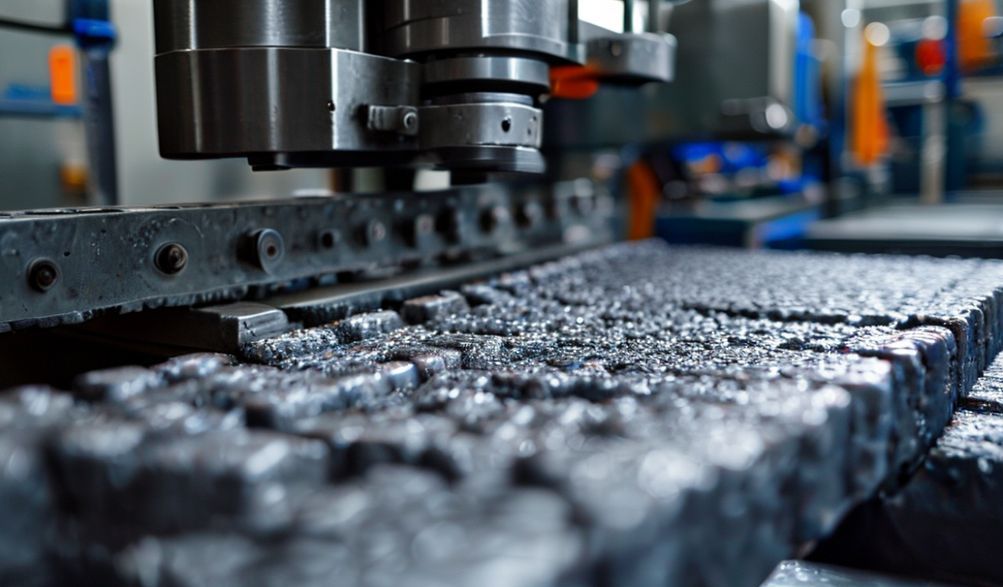
Une machine à fabriquer des cales de couverture est un équipement spécialisé conçu pour la production à grand volume d’écarteurs en béton ou en PVC (cales de couverture). Ces machines fonctionnent généralement à l’aide d’une pression hydraulique ou de mécanismes de vibration (ou d’une combinaison des deux) pour compacter la matière première—un mélange de béton sec ou un composé plastique—en blocs précis, denses et uniformes à l’intérieur d’un moule.
L'importance de la machine ne peut être surestimée. Sa précision dicte directement la justesse dimensionnelle de chaque bloc de couverture qu'elle produit. Dans la construction, même une déviation de quelques millimètres dans le recouvrement du béton peut enfreindre les normes d'ingénierie, telles queIS 456:2000 (Béton ordinaire et armé – Code de pratique)En Inde, qui spécifie les exigences minimales de couverture en fonction de l'exposition environnementale. Une machine de haute qualité garantit que chaque bloc atteint la hauteur exacte spécifiée (par exemple, 20 mm, 40 mm, 50 mm), assurant ainsi que la protection de l'acier conçue est systématiquement atteinte sur le chantier.
Types courants et sorties
Les machines sont classées selon leur niveau d'automatisation et leur méthode opérationnelle.
- Machines manuelles :Actionné par des leviers manuels ou des mécanismes simples. Coût le plus bas, adapté à une utilisation à très petite échelle ou occasionnelle. La production dépend de la main-d'œuvre et est relativement faible.
- Machines semi-automatiques :Implique un mélange d'alimentation manuelle et de pressage/éjection automatisé. Offre un bon équilibre entre coût, rendement et constance pour les petites et moyennes entreprises.
- Machines entièrement automatiques :Ils disposent d'une alimentation automatique des matériaux, d'un pressage et d'une éjection des blocs, souvent contrôlés par un API (Automate Programmable Industriel). Ils offrent la production la plus élevée avec une intervention manuelle minimale, idéale pour la production à grande échelle.
Ces machines peuvent produire une grande variété de types de blocs de couverture, notamment :
* Blocs circulaires/cylindriques
* Blocs cubiques
* Blocs de type roue/bobine
* Espaces de type chaise
* PVC Cover Blocks (using a different mold and material hopper)
Key Factors When Choosing a Cover Block Machine Manufacturer
This is the heart of your decision-making process. Look beyond glossy brochures and evaluate manufacturers on these critical pillars.
Technical Expertise and Machine Quality
The core of a manufacturer’s value lies in their engineering capability and the build quality of their machines.
-
Material & Build: Inspect the fundamentals.
- The machine frame should be constructed from heavy-duty, welded steel sections to withstand constant vibration and pressure without deformation.
- Molds must be precision-machined from high-grade, hardened steel to resist wear and maintain dimensional accuracy over thousands of cycles.
- Hydraulic systems should use reputed brand pumps, valves, and cylinders. For vibration-based machines, the motor and vibrator assembly quality is paramount.
-
Capacité de production : Align the machine with your needs.
- Output is typically measured in blocks per hour or per 8-hour shift. A small contractor might need 2,000-5,000 blocks/day, while a large precast plant may require 20,000+.
- Clearly communicate your volume requirements and ask for the tested output capacity of the specific model under consideration.
-
Niveau d'automatisation : Choose based on your operational scale.
- Manual/Semi-Auto: Lower capital cost, higher variable labor cost, suitable for fluctuating demand.
- Entièrement Automatique : Higher initial investment, but significantly lower per-unit labor cost, superior consistency, and higher output. Justifies itself quickly for steady, high-volume production.
-
Customization Ability: A sign of a responsive manufacturer.
- Can they modify the machine’s pressure settings for different concrete mix designs?
- Do they offer custom mold designs for proprietary or non-standard block shapes?
- This flexibility can be crucial for niche applications or optimizing production for your specific raw materials.
Manufacturer’s Reputation & Industry Experience
A manufacturer’s past performance is the most reliable indicator of your future experience.
-
Years in Business: Longevity in the heavy machinery sector generally suggests resilience, accumulated technical knowledge, and an established supply chain for parts. It indicates they’ve evolved with industry demands.
-
Client Portfolio & Case Studies: Ask for specifics.
- Request a list of clients, particularly those in a similar industry (e.g., other precast plants, construction firms).
- Genuine testimonials, photos, or videos of machines operating in client facilities are powerful validators.
- Case studies that detail a client’s challenge and the solution provided are excellent indicators of problem-solving capability.
-
Certifications & Compliance: Look for objective standards.
- ISO 9001:2015 Certification is a strong signal of a structured quality management system in design, manufacturing, and service.
- Compliance with industrial machinery safety standards (like those from the Bureau of Indian Standards) is essential.
- Certifications demonstrate a commitment to process-driven quality, not just ad-hoc assembly.
After-Sales Support and Service
This is where many manufacturers are separated from the suppliers. The machine will need support; ensure it’s part of the package.
-
Warranty Period: Scrutinize the details.
- A standard warranty of 12-24 months on the machine is common for reputable manufacturers.
- Understand what is covered (e.g., parts, labor) and, crucially, what is excluded (e.g., wear-and-tear items like mold liners, misuse).
-
Disponibilité des pièces de rechange : Critical for minimizing downtime.
- Inquire about the inventory of critical spares (hydraulic seals, electrical components, mold parts).
- Do they have a systematic parts catalog and a streamlined process for ordering?
- Long lead times for imported parts can be a major operational risk.
-
Technical Support & Training:
- Will they provide an engineer for installation and commissioning?
- Do they offer comprehensive training for your operators on machine use, routine maintenance, and basic troubleshooting?
- Is technical support available via phone, email, or remote diagnostics?
-
Réseau de service Evaluate responsiveness.
- What is the geographical coverage of their service engineers?
- What is the typical response time for a service call?
- A manufacturer with a wide network or trained local partners can resolve issues faster.
The Manufacturing Process: A Sign of a Quality Manufacturer
Understanding how a manufacturer builds their machines offers deep insight into their commitment to quality. A transparent process is a hallmark of a trustworthy partner.
From Design to Assembly
A vertically integrated manufacturer with in-house control over key stages typically delivers more reliable products.
- R&D & Design: It begins with engineering design using CAD software, focusing on structural integrity, force distribution, and ergonomics. This phase should consider real-world operational stresses.
- Sourcing: Quality components (hydraulic systems, electrical panels, motors) should be sourced from reputable, traceable suppliers. The best manufacturers have long-standing relationships with their component vendors.
- Fabrication: Cutting, drilling, and welding of the steel frame should occur in a controlled workshop environment using skilled labor and precision tools, ensuring perfect alignment.
- Assembly: This is where components come together. Look for manufacturers who perform assembly in-station, with rigorous checks at each step, rather than just bolting together outsourced sub-assemblies.
Quality Control and Testing Protocols
The final gate before dispatch separates exceptional manufacturers from the rest. Rigorous testing should be non-negotiable.
- Hydraulic System Testing: The system is pressure-tested to well above its standard operating pressure to check for leaks, gauge accuracy, and valve function.
- Vibration & Electrical Tests: For vibration machines, frequency and amplitude are measured. Electrical panels are checked for proper earthing, insulation, and safe operation of all controls.
- Trial Run & Output Inspection: The machine should undergo a full production trial run with the material you intend to use (or a standard mix).
- The produced blocks are checked for dimensional accuracy (length, width, height, density).
- The surface finish should be smooth and consistent.
- The output rate is verified against the claimed capacity.
- Final Inspection: A comprehensive check of all safety features, guards, lubrication points, and paint finish before crating.
Questions to Ask Potential Cover Block Machine Suppliers
Arm yourself with this due-diligence checklist during your discussions with shortlisted manufacturers.
Questions About the Product
- “Can you provide the technical data sheet for this model, detailing motor power, hydraulic pressure, cycle time, and power consumption?”
- “What is the expected output (in blocks per hour) for a standard 40mm concrete cover block using a XYZ mix design?”
- “Which specific brands are used for the hydraulic pump, PLC, and electrical components? Can I see them during a unit visit?”
- “How many block impressions can I expect from the standard mold before re-lining or significant wear?”
- “Can we arrange a live video demonstration or, preferably, visit your facility to see this model under production?”
Questions About Business Practices
- “Please share the detailed warranty document. What is the process for claiming warranty support?”
- “What is your standard delivery timeline ex-works? What are the installation and commissioning timelines at our site?”
- “Can you provide 2-3 references from clients who purchased a similar model in the last 18 months?”
- “Do you offer any financing options or partnerships with financial institutions?”
- “What is the estimated cost and lead time for a standard set of critical spare parts (e.g., hydraulic seal kit, main relay set)?”
FAQ: Cover Block Making Machine Manufacturers
Q1: What is the approximate price range for a cover block making machine?
A : Prices vary significantly based on automation, capacity, and brand. A basic manual machine may start around ₹ 1.5 – 2.5 lakhs, while semi-automatic models typically range from ₹ 3 – 6 lakhs. High-capacity, fully automatic machines with advanced features can range from ₹ 8 lakhs to over ₹ 20 lakhs. It’s imperative to get detailed, model-specific quotations based on your technical requirements.
Q2: How do I maintain my cover block machine for optimal lifespan?
A : Consistent maintenance is key:
* Clean the machine daily to prevent concrete buildup.
* Check hydraulic oil levels and quality monthly; change oil as per the manufacturer’s schedule.
* Lubricate all moving parts (guide rods, bearings) regularly with recommended grease.
* Inspect electrical connections for tightness and wear.
* Store molds properly when not in use to prevent rust.
Q3: Can one machine produce different sizes and shapes of cover blocks?
A : Yes, this is a standard and vital feature. Reputable manufacturers provide interchangeable molds. You can purchase additional mold sets for different block sizes (e.g., 20mm, 30mm, 40mm) and shapes (circular, cubical). Changing molds is usually a straightforward process.
Q4: What is the typical delivery and installation timeline?
A : For a standard, in-stock model, delivery might take 2-4 weeks after order confirmation. For customized machines, it can extend to 6-10 weeks. Installation and commissioning by a technician typically add 3-7 days on-site, depending on machine complexity.
Q5: Are there any safety features I should look for?
A : Absolutely. Essential safety features include:
* Emergency Stop Buttons: Prominently placed at multiple points.
* Safety Guards: Physical guards covering all pinch points, moving parts, and the vibration unit.
* Electrical Safety: Proper earthing, overload protection in the circuit, and moisture-protected panels.
* Two-Hand Operation: On semi/auto machines, to ensure the operator’s hands are clear during the pressing cycle.
Conclusion
Selecting a Fabricant de machines à fabriquer des blocs is a decision that reverberates through your projects and balance sheet for years. It’s a choice between a mere transaction and forging a productive partnership. As we’ve outlined, the key lies in a balanced evaluation of technical quality (robust design, precision), proven reputation (experience, client proof), and comprehensive support (warranty, service, training).
Move forward by shortlisting 2-3 manufacturers who score well on these criteria. Request their detailed technical proposals, scrutinize the warranty terms, and insist on client references. If feasible, a visit to their manufacturing facility is invaluable—it allows you to witness their processes, quality checks, and operational ethos firsthand.
Ready to discuss your specific requirements with a trusted partner? Contact our team of experts today for a personalized consultation and a detailed, transparent quote tailored to your production goals.
Want to ensure you don’t miss any critical details? Download our comprehensive checklist for evaluating machinery suppliers to guide your final decision.
<