
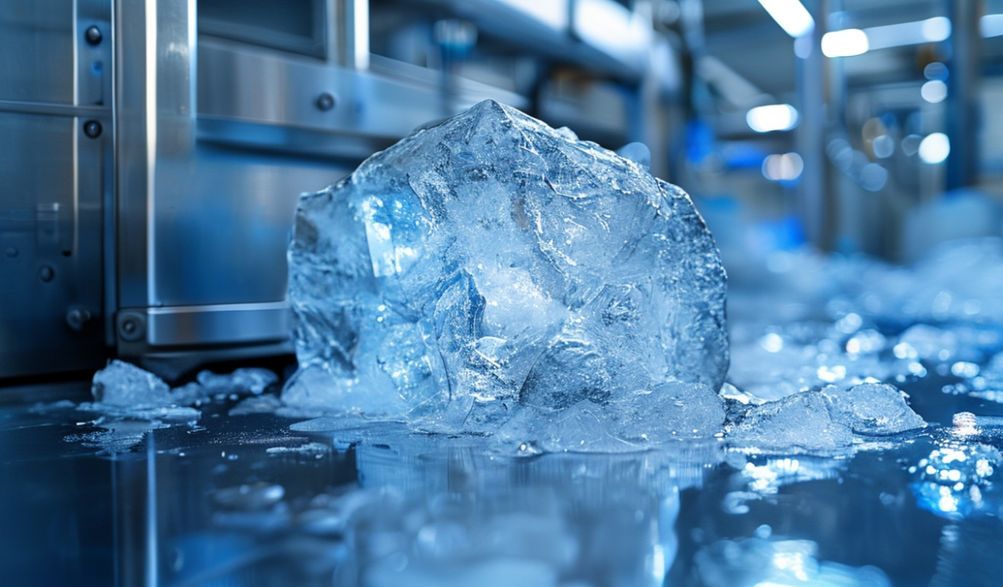
Machine à Glaçons à Prix Personnalisé : Votre Guide Ultime sur le Coût, les Caractéristiques et la Sélection
Introduction
Dans les industries où le contrôle de la température n'est pas un luxe mais une exigence opérationnelle stricte, la fiabilité de votre approvisionnement en glace est primordiale. Qu'il s'agisse de préserver la pêche du jour dans les pêcheries, d'assurer le durcissement adéquat du béton dans la construction ou de gérer des procédés chimiques critiques, une production constante de blocs de glace de haute qualité est le sang vital de nombreuses entreprises. Les machines standards imposent souvent un compromis, vous laissant avec un équipement soit sous-alimenté, inefficace, soit produisant des blocs inadaptés à vos systèmes spécifiques de manutention et de stockage.
C'est là que l'investissement stratégique dans unmachine à fabler des blocs de glace à prix personnalisésépare les propriétaires d'entreprise proactifs de ceux qui sont coincés par des goulots d'étranglement opérationnels. Le terme « prix sur mesure » signifie bien plus qu'un chiffre final ; il représente une solution adaptée, construite selon vos spécifications exactes. Ce guide complet est conçu pour les responsables des achats, les superviseurs d'usine et les propriétaires d'entreprise prêts à réaliser un investissement en capital. Nous démystifierons les variables qui façonnent leprix personnaliséPlongez dans les caractéristiques techniques que vous pouvez spécifier et fournissez un cadre clair et étape par étape pour la sélection. Notre objectif est de vous permettre de prendre une décision qui équilibre l'investissement initial avec l'efficacité opérationnelle à long terme, la fiabilité et le rendement maximal du capital investi (RCI).
Comprendre le « prix personnalisé » : c’est bien plus que le coût sur l’étiquette
Dans la machinerie industrielle, un « prix sur mesure » reflète une solution configurée, et non un prix de détail fixe. C'est un montant variable calculé à partir d'un coût de base, augmenté par la valeur des personnalisations choisies, et influencé par des considérations de support à long terme. Comprendre cette décomposition est la première étape pour s'assurer que vous payez pour les fonctionnalités dont vous avez besoin — et évitez de payer pour celles dont vous n'avez pas besoin.
Composants de base qui déterminent le prix de départ
Ce sont les éléments d'ingénierie fondamentaux et non négociables qui constituent la plus grande partie de votre devis.
- Capacité de production (tonnes par 24 heures) :C'est le principal facteur de coût. Une machine évaluée à 5 tonnes/24h sera nettement moins chère qu'une machine évaluée à 20 tonnes/24h. La capacité est déterminée par la taille et la puissance du système de réfrigération. Soyez réaliste quant à votre demande de pointe, et pas seulement votre utilisation moyenne.
- Dimensions et poids du bloc de glace :La taille physique des blocs de glace influence directement la conception de la machine. Les blocs plus grands et plus lourds (par exemple, 50 kg, 100 kg ou 150 kg) nécessitent des moules plus robustes, des mécanismes d'éjection plus puissants et un système de congélation plus performant que les blocs plus petits (par exemple, 25 kg). Précisez vos dimensions exactes requises (L x l x H).
- Type de système de réfrigération et marque du compresseur :Le cœur de la machine. Les unités industrielles utilisent généralement un système à détente directe (DX) ou à saumure. La marque et le modèle du compresseur (par exemple, Bitzer, Copeland, Frascold) sont essentiels. Les compresseurs haut de gamme, reconnus internationalement, exigent un prix plus élevé, mais offrent une fiabilité éprouvée, une grande efficacité et une facilité d'entretien à l'échelle mondiale.
Fonctionnalités de personnalisation qui ajoutent de la valeur (et du coût)
C'est ici que vous adaptez la machine à votre flux opérationnel et aux conditions du site.
- Niveau d'automatisation :C'est un différenciateur de prix majeur.
- Manuel :Nécessite une intervention de l'opérateur pour la récolte et le stockage. Coût le plus bas.
- Semi-Automatique :Automatise soit le cycle de congélation, soit le processus de récolte. Prix moyen de gamme.
- Entièrement Automatique :Intègre la congélation, la récolte et souvent l'empilage ou le transport avec contrôle par API. Coût initial le plus élevé, mais coût de main-d'œuvre le plus bas et constance la plus élevée.
- Améliorations des matériaux :Les cadres et panneaux standard peuvent être en acier revêtu par poudrage. Pour les environnements très corrosifs (par exemple, près de l'eau de mer dans les pêcheries), il est recommandé de passer à304 or 316-grade stainless steel for critical components adds cost but dramatically extends the machine’s lifespan.
- Specialized Molds for Unique Block Shapes: Need a block with handles for easy lifting? A specific shape for your bunker? Custom mold design and fabrication is a premium service that solves unique logistical challenges.
The Hidden Factors in Your Final Quote
These are the often-overlooked elements that define the true cost of ownership.
- Energy Efficiency Rating & Long-Term Operating Costs: A machine with a high-efficiency compressor and optimized thermal design may have a 15-20% higher purchase price but can save 30% or more on electricity over its lifetime. Always calculate the operational cost.
- After-Sales Service, Warranty, and Technical Support: A comprehensive warranty (e.g., 5 years on the compressor, 2 years on parts) and access to responsive technical support is invaluable. This security often comes from established manufacturers and factors into the price.
- Logistics, Installation, and Training Requirements: Is the price FOB (Free On Board) at the factory, or does it include delivery to your site? Does the quote cover installation, commissioning, and operator training by a qualified engineer? These services ensure a smooth start-up.
Key Features to Specify for Your Custom Ice Block Maker
Moving beyond price, specifying the right technical features ensures the machine performs its job effectively in your specific context.
Production Capacity & Scalability
Your machine must match your business rhythm.
- Matching Output to Demand: Conduct a detailed audit of your current daily and weekly ice consumption during different seasons. Then, forecast future growth. It’s often wiser to invest in a slightly larger capacity than to run a smaller machine at 100% load constantly, which increases wear.
- Impact of Ambient Conditions: A machine’s rated capacity is typically based on standard conditions (e.g., 90°F ambient temperature, 50°F water inlet). If your plant is in a hotter climate or uses warmer source water, the actual output will be lower. Discuss derating factors with your supplier.
Ice Block Quality and Characteristics
Not all ice is created equal. The machine’s design dictates the ice’s properties.
- Clarity and Hardness: Clear ice is denser and harder, melting slower than cloudy, aerated ice. For fish preservation where meltwater should be minimal, or for concrete cooling where longevity is key, high clarity and hardness are essential. This is achieved through controlled freezing cycles and water treatment.
- Melting Rate: A slow melt rate is critical for transport and extended cooling applications. It is primarily a function of ice hardness and temperature. A well-designed machine produces blocks at a lower core temperature, which melt more slowly.
Operational Efficiency and Control
Modern features that save money and simplify management.
- Systèmes de contrôle par API (Automate Programmable Industriel) A Programmable Logic Controller (PLC) is the machine’s brain. It allows for precise control of freeze cycles, automates harvesting, provides diagnostic alerts, and can even offer remote monitoring capabilities. It enhances consistency and reduces operator error.
- Water and Energy Consumption Metrics: Request specific data on kWh per ton of ice produced and water consumption rates. Compare these figures between shortlisted models to understand operational efficiency.
- Ease of Cleaning and Maintenance: Look for design features that simplify upkeep: easy-access panels, removable parts, and drip trays. A machine that is easy to clean and service will have less downtime and better hygiene.
A Step-by-Step Guide to Getting an Accurate Custom Quote
A disciplined approach to procurement prevents costly mistakes and ensures you get a machine that truly fits.
Step 1: Conduct a Thorough Needs Assessment
Before you speak to a single supplier, know your own requirements inside out.
- Audit Your Ice Consumption: Measure actual usage over a representative period. Don’t guess.
- Define Feature Priorities: Create two lists: “Must-Haves” (e.g., 10-ton capacity, 50kg block, stainless steel contact parts) and “Nice-to-Haves” (e.g., full automation, remote monitoring). This clarifies your negotiation stance.
Step 2: Research and Shortlist Reputable Manufacturers
Your partner is as important as the product.
- Verify Credentials: Look for manufacturers with a proven track record in industrial ice making. How long have they been in business? Do they specialize in block ice machines?
- Review Case Studies and Testimonials: Ask for references from clients in a similar industry. A credible manufacturer will have documented projects and willing references.
Step 3: Preparing Your Request for Quotation (RFQ)
A detailed RFQ invites accurate, comparable quotes.
- Essential Questions for Your RFQ Checklist:
- Qu'est-ce que leexact capacity under my site’s ambient and water conditions?
- Can you provide a detailed breakdown of the price (machine, optional features, shipping, duties, installation)?
- Qu'est-ce que lefull specification of the compressor and PLC brand/model?
- What does the warranty cover and for how long? What is the response time for technical support?
- Can you provide certificates of compliance (CE, UL, etc.)?
- Comparing Quotes “Apples-to-Apples”: Line up the quotes based on identical specifications. The cheapest initial price may hide lower-quality components or inadequate support, making it the most expensive option over five years.
Maximizing Your Investment: ROI and Long-Term Considerations
View this purchase as a long-term asset, not an expense.
Calculating Total Cost of Ownership (TCO)
The purchase price is just the beginning. TCO includes:
* Coût initial : Machine price, shipping, installation.
* Coûts opérationnels : Electricity, water, water treatment chemicals.
* Coûts d'entretien : Routine service, replacement parts, filter changes.
* Coûts d'immobilisation : The lost productivity if the machine fails.
A machine with a 20% higher purchase price but 35% lower energy use and a robust warranty often has a far better TCO over a 7-10 year lifespan.
Ensuring Reliability and Minimizing Downtime
- Quality Components and Service Networks: The reliability of name-brand compressors and electrical parts is proven. Ensure the manufacturer or their local agent has the technical expertise and spare parts inventory to support you.
- Preventive Maintenance Plan: Adhere strictly to the manufacturer’s recommended maintenance schedule. A simple act like cleaning condensers regularly can prevent major failures.
Safety and Compliance Standards
Do not compromise on safety. Insist that the machine meets the relevant standards for your region.
* Key Certifications: Look for the CE mark (European Conformity) for the European market or UL certification (Underwriters Laboratories) for North America. These indicate the machine has been designed and tested to meet stringent health, safety, and environmental standards.
FAQ Section
Q1: What is the typical price range for a custom ice block making machine?
A : There is no single “typical” price due to the high degree of customization. However, as a broad guideline, a small-capacity (2-5 ton) semi-automatic unit might start around $10,000 – $25,000. Large, fully automated industrial systems (20+ tons) with advanced features can range from $50,000 to well over $150,000. A detailed custom quote based on your specifications is the only way to get an accurate price.
Q2: How long does it take to get a custom machine built and delivered?
A : From order confirmation to delivery, lead times typically range from 8 to 16 weeks. This allows for engineering design, procurement of specific components, manufacturing, factory testing, and sea freight. Complex customizations or global supply chain conditions can extend this timeline.
Q3: Can I customize the size and shape of the ice blocks?
A : Absolutely. This is a primary advantage of a custom machine. You can specify exact dimensions (e.g., 40cm x 20cm x 15cm) and weight. Special shapes, such as blocks with grooves for handling or specific geometries for storage racks, are also possible through custom mold fabrication.
Q4: What are the most important factors for energy efficiency?
A : Focus on three areas: 1) A high-efficiency, name-brand compressor, 2) Superior insulation on the freezing tank and water lines, and 3) An intelligent PLC control system that optimizes the freeze/harvest cycle to avoid unnecessary energy use. Request the machine’s specific energy consumption data (kWh/ton).
Q5: What should I look for in a manufacturer’s warranty?
A : Seek clarity and comprehensiveness. A strong warranty will explicitly cover the compressor for 3-5 years, other core components (evaporator, condenser) for 1-2 years, and include parts and labor. Crucially, understand the process for making a claim and the expected response time from their service team.
Conclusion
Investing in a machine à fabler des blocs de glace à prix personnalisé is a decisive step toward securing operational independence and efficiency. As we have detailed, the final price is a synthesis of precise engineering, tailored functionality, and the assurance of quality support—it is the cost of a solution, not just a piece of equipment.
By meticulously assessing your needs, understanding the core drivers of cost and value, and partnering with a credible, experienced manufacturer, you transform a capital expenditure into a long-term strategic asset. The most economical machine over its lifetime is the one engineered to perform reliably within the unique parameters of your business.
Use the structured steps in this guide to prepare your specifications and engage in informed, confident discussions with potential suppliers. For final validation of complex technical proposals, consider a consultation with an independent industrial refrigeration expert. Your perfect ice supply solution awaits a clear and detailed specification.
<