
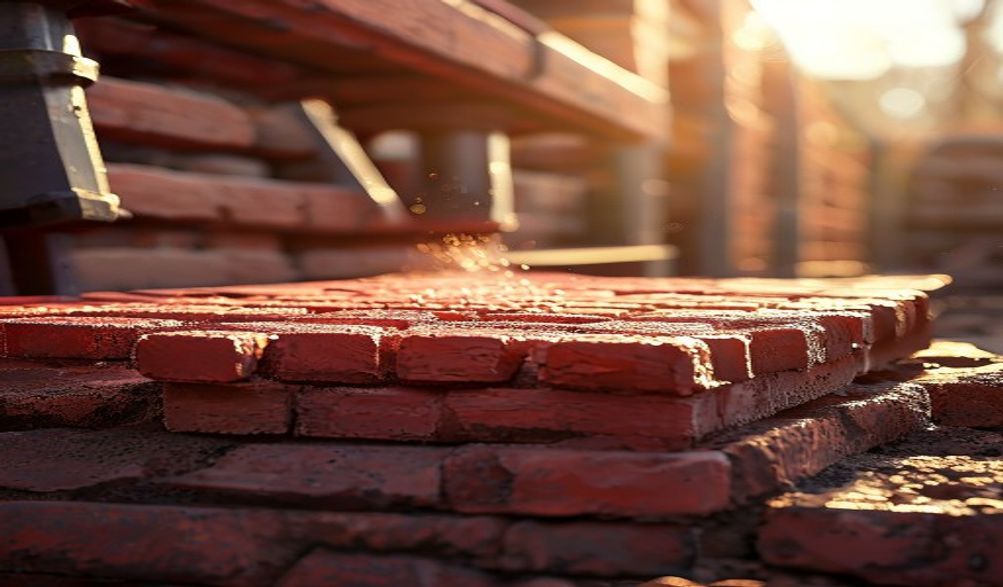
Comment choisir une machine de fabrication de briques en argile : Guide d'expert 2026
À une époque où la construction durable passe d'une tendance à une nécessité mondiale, les briques en terre crue se distinguent comme une solution intemporelle. Elles offrent une combinaison convaincante de respect de l'environnement, de régulation thermique naturelle et de rentabilité. Cependant, le pont entre la terre brute et un projet de construction réussi est la machine qui forme la brique. Choisir le mauvais équipement peut entraîner des temps d'arrêt paralysants, des produits de qualité inférieure et des tensions financières.
Ce guide est conçu pour être votre feuille de route ultime. Nous synthétisons des décennies de connaissances industrielles, de spécifications techniques d'ingénierie et de conseils pratiques durement acquis auprès de constructeurs chevronnés et d'experts en machinerie. Que vous soyez un entrepreneur à petite échelle dans une région en développement ou un gestionnaire de projet pour un grand écodéveloppement, notre objectif est de vous permettre de réaliser un investissement éclairé et confiant, parfaitement aligné sur vos objectifs de production, votre budget et votre marché local.
Comprendre les exigences et l'ampleur de votre projet
Avant même de consulter une seule brochure de machine, vous devez regarder à l'intérieur de vous-même. L'erreur la plus courante est d'acheter une machine en fonction de ses caractéristiques, et non de vos besoins. Cette étape fondamentale de planification, tirée de l'expérience opérationnelle réelle, est incontournable.
Définir vos objectifs de production
Votre objectif de production est l'étoile polaire de l'ensemble de vos opérations. Commencez par des chiffres clairs.
- Estimer la demandeFournissez-vous des briques pour 10 maisons par an ou pour un projet de logement de 500 unités ? Calculez vos besoins quotidiens ou hebdomadaires moyens en briques, puis ajoutez une marge de 20 à 30 % pour la croissance et les pertes d’efficacité.
- L'échelle dicte la technologie :
- À petite échelle (100-1500 briques/jour)Idéal pour les machines manuelles ou semi-automatiques. Convient aux projets de bricolage, aux constructions communautaires ou aux très petites startups.
- Moyenne à Grande Échelle (1500-20 000+ briques/jour)Exige des machines semi-automatiques ou entièrement automatiques. Nécessaire pour la rentabilité commerciale et l'approvisionnement des entrepreneurs.
- Planification pour l'évolutivité :Si vous prévoyez une croissance, envisagez une machine pouvant être mise à niveau (par exemple, en ajoutant un moteur) ou un fournisseur offrant une voie claire vers des modèles plus avancés.
Analyse de votre matière première (argile)
L'argile est votre matière première ; sa qualité détermine la performance de votre machine. Vous ne pouvez pas sauter cette étape.
- Conduct Soil Testing: A simple test determines composition (clay, silt, sand ratio), plasticity, and shrinkage. Ideal brick-making clay has enough plasticity to bind but enough sand to reduce cracking.
- Match Machine to Material: Poor, stony clay may require an integrated crusher. Low-plasticity soil might need a pan mixer to add and blend water evenly. High-quality, pre-screened clay allows for simpler, less expensive equipment.
- Factor in Preparation: Account for the cost and labor of sourcing, transporting, weathering, and primary preparation of your clay before it even reaches the machine.
Budget and Investment Planning
View this as a total investment, not a simple purchase.
- Coût total de possession (CTP) : Include:
- Machine price
- Shipping, customs, and installation
- Cost of auxiliary equipment (mixer, conveyor)
- Foundation and shed costs
- Operating costs (power, labor, water)
- Annual maintenance and spare parts
- ROI Calculation: Research your local brick selling price. Based on your machine’s output, calculate how long it will take to recoup your TCO. A slightly more expensive, reliable machine with higher output often has a faster ROI than a cheap, problematic one.
Principaux types de machines à fabriquer des briques en argile expliqués
Understanding the core technologies available is where expertise becomes critical. Each type serves a distinct purpose.
Machines manuelles et semi-automatiques
These are the workhorses of entry-level and low-volume production.
- Idéal pour : DIY enthusiasts, micro-enterprises, NGOs in remote areas, and projects with very low capital.
- Avantages :
- Investissement initial très faible.
- Minimal to no electricity required (for manual types).
- Facile à utiliser et à réparer.
- Inconvénients :
- High labor intensity and physical strain.
- Lower, inconsistent output.
- Brick density and strength can vary based on operator skill.
Machines entièrement automatiques
These are production lines designed for volume and consistency with minimal human intervention.
- Idéal pour : Commercial brick yards, large construction companies producing for their own projects, and industrial-scale operations.
- Avantages :
- Very high, consistent output (thousands of bricks per hour).
- Superior and uniform brick quality and density.
- Drastically reduced labor costs (often just 1-2 operators).
- Programmable for different brick types.
- Inconvénients :
- Investissement en capital élevé.
- Require stable, significant power supply (three-phase electricity common).
- Complex maintenance requiring trained technicians.
- Need significant space for the full line.
Specialized Machines: Extruders vs. Presses
The forming technology defines the brick’s character.
- Clay Brick Extrusion Machines: These machines force plastic clay through a die to form a continuous column, which is then wire-cut into bricks.
- Idéal pour : Hollow bricks, perforated bricks, roofing tiles, and pipes.
- Processus : Softer, wetter clay is used. The “extrusion” process aligns clay particles, which can affect strength.
- Hydraulic or Mechanical Press Machines: These use high pressure (often hundreds of tons) to compress semi-dry clay into a mold.
- Idéal pour : High-density solid bricks, interlocking bricks, and pavers.
- Processus : Uses clay with lower moisture content. The high pressure creates a very strong, dense brick with excellent dimensional accuracy.
Spécifications techniques critiques à évaluer
Now, drill down into the numbers. Comparing these specs side-by-side is how you separate marketing hype from genuine capability.
Spécifications de base de la machine
- Capacité de production : Never go by the manufacturer’s “theoretical maximum.” Ask for a practical, 8-hour day output figure considering loading and minor stoppages.
- Exigences en matière d'alimentation électrique : Is it electric (single/three-phase), diesel-engine driven, or a hybrid? This is crucial for locations with unreliable grids. Check the horsepower (HP) or kilowatt (kW) rating.
- Pressure Force (for Presses): Measured in tons. Higher pressure generally yields stronger bricks with lower water absorption. For standard solid bricks, 150-300 tons is common. For high-strength interlocking bricks, 500+ tons may be needed.
- Système de moulage : Can molds be changed easily? What is the cost of additional molds for different brick sizes (e.g., standard, jumbo, interlocking)? Are custom mold designs possible?
Auxiliary Equipment Needs
The brick making machine is often just the core. The supporting cast is vital for efficiency.
- Clay Mixer/Crusher: Essential for achieving a homogeneous, lump-free clay mixture with consistent moisture content. A double-shaft mixer is often superior to a single-shaft.
- Conveyor Belts & Stackers: For automatic lines, conveyors move raw material and finished bricks. Automatic stackers palletize bricks, saving immense labor.
- Séchage et durcissement : The machine produces green bricks. Factor in space and time for proper drying (often under shaded, ventilated sheds) and, if required, a kiln for firing. Some modern presses produce bricks stable enough to be stacked immediately.
Vetting Manufacturers and Ensuring Quality
Your relationship with the manufacturer lasts as long as your machine. This step builds the trust your investment relies upon.
Researching Reputable Manufacturers
- History & Certifications: Look for established companies (5-10+ years). Certifications like ISO (quality management) and CE (meets EU safety/health standards) indicate a commitment to formalized processes.
- Beyond Website Testimonials: Seek out independent reviews on B2B platforms. Ask the supplier for detailed case studies with contactable references, preferably in a region with similar clay and climate to yours.
- Service après-vente : This is paramount. What is the warranty period (1 year is standard, 2+ is excellent)? Is there a local service agent or technician? How quickly can they ship spare parts? Request a list of common spare parts and their prices.
The Importance of Machine Trials and References
- “Show Me” Demonstration: Insist on a video demonstration of the exact model you’re considering, processing clay. Even better, visit the factory for a live trial using a sample of your own clay. This reveals more than any spec sheet.
- Talk to Real Clients: Contact the provided references. Ask about machine reliability, actual output vs. promised, brick quality, and the supplier’s responsiveness to problems.
- Physical Inspection (or Proxy): If possible, inspect the machine’s build: the thickness of the steel frame, the quality of the hydraulic cylinders and hoses, the brand of electrical components (e.g., Siemens, Schneider vs. unknown brands). Robustness here dictates longevity.
Making the Final Decision: A Step-by-Step Checklist
Synthesize all your research into actionable steps. This checklist embodies the experienced, methodical approach.
- Re-Confirm: Solidify your final production goals, clay analysis report, and firm budget (including a 15% contingency).
- Shortlist: Based on Sections 2 & 3, narrow down to 3-5 machines from different manufacturers that technically match your needs.
- Detailed Inquiry: Contact each manufacturer with a specific query list: finalized specs, FOB/CIF price, shipping time, installation/training offered, warranty terms, and spare parts catalog.
- Compare Holistically: Create a comparison matrix. Place quotes side-by-side, ensuring all costs (machine, shipping, installation, initial spares) are included. The cheapest machine price often leads to the highest TCO.
- Finalize for Value: Choose the option that offers the best long-term value—reliability, service support, and proven performance—not just the lowest upfront price.
Foire aux questions (FAQ)
Q1: What is the average cost range for a clay brick making machine?
A : The range is vast. Simple manual machines can start from $2,000 – $5,000. Robust semi-automatic presses range from $10,000 – $30,000. High-capacity fully automatic production lines can range from $50,000 to $200,000+. Your budget must always include auxiliary equipment and setup costs.
Q2: Can one machine produce different sizes and types of bricks?
A : Yes, through interchangeable molds. This is a key flexibility feature. When getting a quote, confirm the cost and delivery time for additional molds for different brick designs (e.g., solid, hollow, interlocking).
Q3: How much manpower is required to operate a semi-automatic vs. automatic machine?
A : A semi-automatic machine typically requires 3-6 people for material feeding, machine operation, removing green bricks, and stacking. A fully automatic line, with integrated feeders and stackers, may only need 1-2 trained operators for monitoring and minor adjustments.
Q4: What are the most common maintenance issues?
A : Top issues include: clay hardening and clogging in the mixer or hopper (solved by thorough cleaning), hydraulic oil leaks or contamination (regular oil checks and seal replacement), and wear on mold liners and extrusion dies (planned replacement based on production volume).
Q5: How do I ensure the bricks meet local construction standards?
A : Once your machine is installed, produce a batch of bricks using your local clay and follow proper drying/curing. Then, send samples to a certified construction materials laboratory for tests like résistance à la compression, water absorptionetefflorescence. Ensure your machine is capable of producing bricks that meet or exceed these standards.
Conclusion
Selecting the right clay brick making machine is a strategic decision that forms the bedrock of your entire operation. It’s not merely a purchase; it’s a partnership with a technology and a manufacturer. By methodically understanding your own needs, demystifying the types of machines, scrutinizing technical details, and rigorously vetting suppliers, you dramatically reduce risk.
Remember, the goal is sustainable profitability. Investing time in this selection process is your first and most crucial step toward building that success. For a major investment, consider having your final choice and plant layout reviewed by a local mechanical or civil engineer. Move forward with the confidence that comes from deep research, and lay the foundation for a venture that is both economically solid and ecologically sound.
<