L'art et l'ingénierie des machines à pavés
Définition de la spécialisation : objectif principal et distinctions
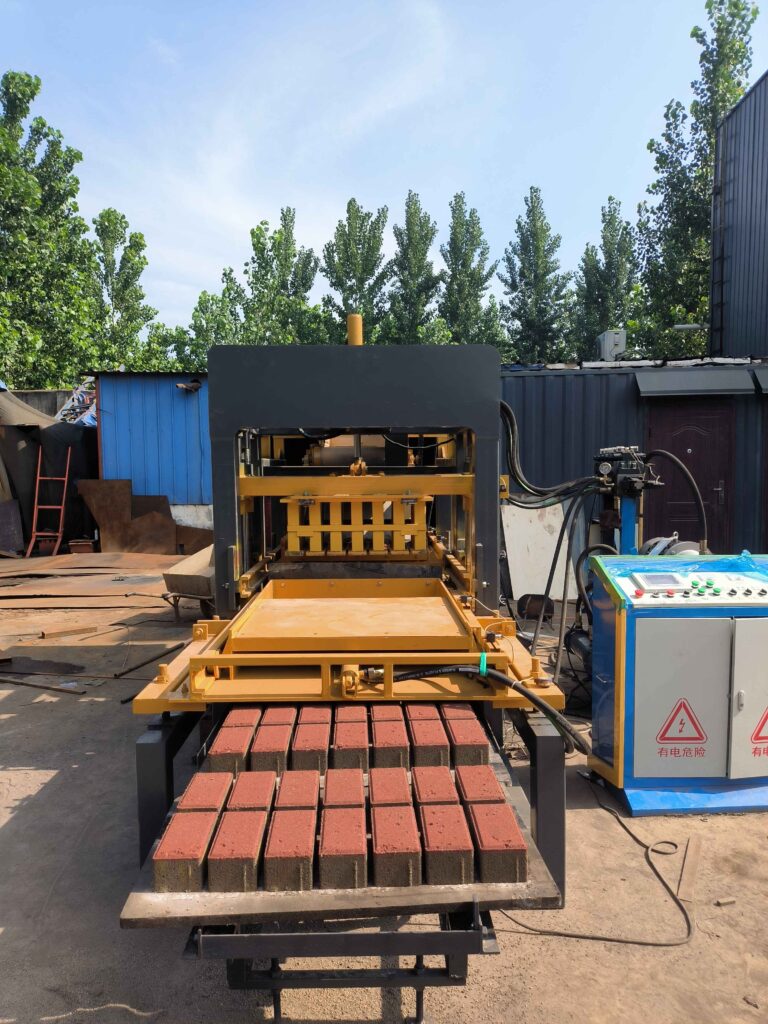
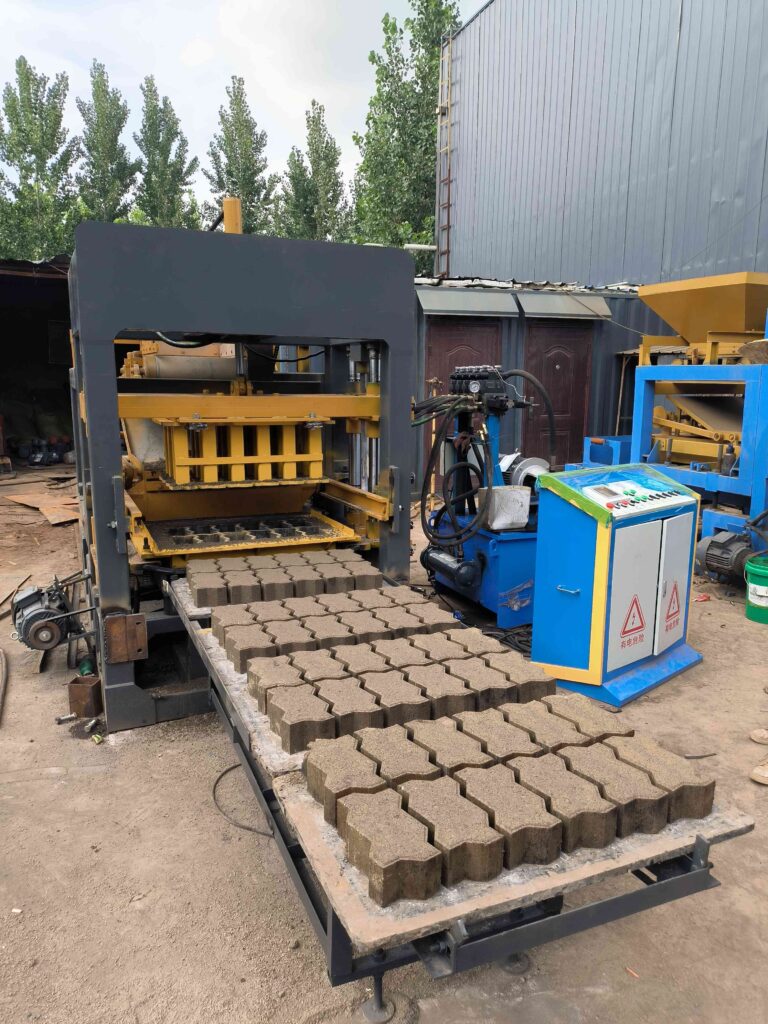
Une machine à pavés est un type spécialisé de presse à béton conçu exclusivement pour la fabrication de pavés, de dalles et de produits d'aménagement paysager connexes. Bien qu'elle partage des principes fondamentaux avec les machines à blocs standard—tels que l'utilisation de vibrations et de pression pour compacter un mélange de béton à affaissement nul—sa philosophie de conception diverge de manière significative pour répondre à des exigences distinctes du produit final.
Les principales distinctions proviennent des critères de performance des pavés eux-mêmes. Les pavés sont des éléments de surface usables; ils sont plus minces (généralement 50 à 100 mm), nécessitent une précision dimensionnelle exceptionnelle pour des joints serrés, exigent une finition de surface et une consistance de couleur supérieures pour l'esthétique, et doivent atteindre une très haute densité pour la résistance au gel-dégel et la résistance mécanique. Par conséquent, la machinerie est optimisée non pas pour le volume brut de matériau compacté, mais pour la précision, la qualité de surface et la capacité d'intégrer la couleur et la texture.
Différenciateurs clés par rapport aux machines à blocs standard :
- Priorité de la finition de surface :La machine doit produire une surface supérieure parfaitement lisse et uniforme, exempte de piqûres ou d'irrégularités, car cette surface sera exposée en permanence.
- Tolérance dimensionnelle :Les tolérances sont mesurées en fractions de millimètre afin d'assurer une largeur de joint uniforme et un alignement parfait des motifs lors de l'installation.
- Intégration des couleurs :La plupart des machines sont conçues pour fonctionner avec des systèmes d'alimentation en couleur qui dispersent uniformément le pigment sec ou liquide dans le mélange de surface.
- Manutention des produits :En raison de leur profil plus mince et de leurs textures souvent plus délicates, les pavés nécessitent des systèmes de manutention plus doux après l'éjection pour éviter l'écaillage ou les marques.
Composants principaux et sous-systèmes spécialisés
La conception d’une machine à blocs de pavage intègre plusieurs sous-systèmes spécialisés qui, ensemble, atteignent ces objectifs de qualité rigoureux.
1. Le système de presse à plusieurs couches ou à plusieurs étages
Voici la caractéristique technologique la plus déterminante. Contrairement à une machine à blocs à moule unique standard, une presse à pavés comprend souvent plusieurs boîtes de moulage (plateaux) empilées verticalement dans un seul cadre de presse.
- Opération :Pendant un cycle de pressage, la machine compacte des pavés simultanément sur plusieurs niveaux. Par exemple, une machine à 10 plateaux pourrait produire 10 pavés (ou un motif de palette complet) par cycle. Cela multiplie la production sans augmenter le temps de cycle, rendant économiquement viable la production de grands volumes de produits minces.
- Avantage :Obtient une production élevée de pavés de qualité, car le long cycle de pressage nécessaire pour une densité optimale est amorti sur plusieurs unités.
2. Precision Mold and Pallet System
- Conception de moule : Paver molds are shallow but extremely precise. They are machined from high-grade alloy steel to create sharp, clean edges and can include intricate surface textures (split-face, tumbled, polished, exposed aggregate) via specialized mold liners or rubber inserts.
- Pallet Requirements: The pallet serves as the bottom formwork and must be flawlessly flat and smooth, as it defines the paver’s bedding surface. Steel or composite pallets are common to maintain dimensional stability under high pressure and thermal cycling.
3. Integrated Color Feeding and Mixing Systems
To create the colored wear layer (typically the top 5-10mm of the paver), advanced machines are coupled with automated color dosing systems.
- Processus : A base layer of gray concrete is first deposited in the mold. Then, a precisely metered amount of dry pigment or colored sand/cement mix is spread uniformly across the surface. During compaction, the two layers fuse integrally. Some systems use a “facemix” hopper that deposits a pre-mixed colored concrete layer directly.
4. High-Frequency, Low-Amplitude Vibration
Paver compaction relies on a specific vibration regime.
- Caractéristiques : High-frequency (70-100 Hz) vibration is used to fluidize the fine concrete mix, allowing it to flow into every detail of the textured mold. This is often combined with “press vibration,” where vibration continues during the initial stage of hydraulic pressure application to ensure perfect surface reproduction and eliminate air voids.
5. Automated Handling and Stacking Systems
Given the high output and need to protect surfaces, downstream automation is integral.
- Functions: Systems automatically place empty pallets, transport pressed pallets of green pavers to a curing area, and, after curing, de-palletize and stack the finished pavers using robotic arms or stackers with protective interleaf sheets. This minimizes manual contact and damage.
The Production Workflow: From Raw Material to Finished Paver
The manufacturing process in an automated paving plant is a continuous, synchronized sequence.
- Raw Material Batching & Base Mix Preparation: Aggregates (crushed stone, sand), cement, and water are batched to create a zero-slump concrete mix. Consistency in moisture content and grading is paramount.
- Color Preparation: In a separate line, colored cement or dry pigment is prepared for the face layer.
- Pallet Circulation: Empty pallets are fed from a magazine into the press.
- Layering and Feeding: The machine’s feed system first deposits a layer of base mix into each mold cavity across all decks. Immediately after, the color feeder applies the precise layer of colored material on top.
- Simultaneous Compaction: The press closes, and the multi-deck system applies high hydraulic pressure (often 150-250 tons total force) combined with vibration. This compacts both layers into a dense, homogeneous unit with a distinct colored face.
- Mold Stripping and Ejection: After the press opens, the molds lift, and the pressed pallets, each now carrying a full set of green pavers, are conveyed out.
- Guérison : Pallets enter a controlled curing chamber (often low-pressure steam curing) for 12-24 hours to achieve sufficient handling strength.
- De-palletizing and Stacking: Robots or automated arms lift the cured pavers off the pallets, which are then returned to circulation. Pavers are stacked into cubes, often with plastic sheets between layers, and wrapped for shipment.
Product Versatility: Beyond the Basic Paver
A well-configured paving block machine is a platform for a diverse product portfolio, far exceeding simple rectangles.
- Pavés autobloquants : The core product, in shapes like herringbone, cobblestone, fan, and 45-degree designs, which lock together mechanically.
- Permeable Pavers: Special units with larger joints or open cells designed to allow water infiltration for sustainable urban drainage systems (SUDS).
- Slabs and Flags: Larger format units for plazas and pedestrian areas.
- Retaining Wall Units & Edgers: Complementary landscaping products with textured faces, often produced on the same machine with different mold sets.
- Specialty Architectural Units: Custom shapes, colors, and textures for high-design projects.
Market Drivers and Strategic Considerations for Distributors
The demand for paving blocks is fueled by urban development, infrastructure renewal, and a shift towards aesthetically pleasing, durable, and sustainable surfaces. For equipment distributors, several strategic factors emerge.
- Selling a System, Not a Machine: The sale is often a complete production line, including the press, mixer, color system, pallet circulator, and curing system. Technical competency in integrating these components is key.
- Emphasis on ROI Through Product Value: The business case for clients hinges on producing a high-value product. The machine enables premium pricing for colored, textured, and specialty pavers compared to standard concrete or asphalt.
- After-Sales for Precision: Given the tight tolerances, technical support for mold maintenance, calibration, and color system cleaning is a critical value-added service and potential revenue stream.
- Sustainability Alignment: The ability to produce permeable pavers positions clients to access green infrastructure projects and meet environmental regulations, a growing market segment.
Conclusion
The paving block machine is a masterpiece of applied industrial engineering, where the brute force of hydraulic compaction is harnessed to achieve remarkable levels of precision and aesthetic control. It is a technology that transforms raw mineral aggregates into the building blocks of beautiful and resilient landscapes. For the informed distributor or procurement expert, this equipment category represents more than a capital good; it is an enabler of entrepreneurship in the hardscape sector and a critical tool for modern urban development.
Success in this niche requires a dual understanding: the mechanical intricacies of high-frequency vibration and multilayer pressing, and the market dynamics of architectural trends and municipal specifications. By providing clients with the technology to produce consistent, high-quality, and diverse paving products, you equip them to compete not on price alone, but on design, performance, and sustainability. In the final analysis, a paving block machine does more than manufacture units; it fabricates the very surface of our constructed world, and your expertise is fundamental to bringing that potential to market.
FAQ
Q1: Can a standard block machine be used to produce pavers?
A: In a limited capacity, yes, but with significant compromises. A standard machine can produce basic, thick pavers but typically lacks: 1) The multi-deck system, resulting in very low output for thin products; 2) The precision mold and pallet system for perfect surface finish; 3) An integrated color feeding system. The product will be a utilitarian “concrete block” suitable for a warehouse floor but not a commercial landscaping or architectural project. For serious paver production, dedicated machinery is essential.
Q2: What is the importance of the “facemix” or color layer system?
A: The facemix system is crucial for economic and aesthetic reasons. It allows the manufacturer to use expensive pigment only in the top 5-10mm of the paver that is visible, while the majority of the paver’s body uses less expensive gray concrete. This reduces material cost significantly. Technically, it ensures full, rich color on the surface without the risk of color streaking or inconsistency that can occur if pigment is mixed throughout the entire paver thickness.
Q3: How does the machine produce different patterns (e.g., herringbone vs. cobblestone)?
A: The pattern is determined by the physical shape of the mold cavities. A “herringbone” mold has cavities shaped like symmetrical rectangles arranged at 90-degree angles. A “cobblestone” mold has cavities with rounded, irregular outlines. To change the pattern, the entire mold plate on each deck of the machine is changed. Modern machines with quick-change systems allow a full pattern changeover in 30-60 minutes.
Q4: What are the key maintenance challenges specific to paver machines?
A: The primary challenges revolve around precision and wear:
- Mold Maintenance: Textured mold liners must be kept clean and free of concrete buildup to prevent sticking and surface defects. They are also wear items.
- Pallet Flatness: Pallets must be regularly inspected and resurfaced or replaced if they warp, as this directly causes uneven paver thickness.
- Color System Cleaning: Hoppers and feeders for colored material must be meticulously cleaned when changing colors to prevent cross-contamination.
- Vibration System Balance: Unbalanced vibration can lead to inconsistent density and surface quality, requiring regular checks.
Q5: Is the market for paving blocks susceptible to economic cycles?
A: While there is some cyclicality tied to construction generally, the market has proven resilient and diversified. Downturns in new residential construction may be offset by:
- Municipal & Infrastructure Projects: Roadscapes, public plazas, and pedestrian zones are often government-funded.
- Renovation & Repair: The homeowner renovation market for driveways and patios is less volatile.
- Commercial et industriel : Warehouses, ports, and logistics centers require heavy-duty pavers.
Furthermore, the value proposition of durability and low lifetime maintenance helps pavers compete effectively against asphalt, providing stability across cycles.