
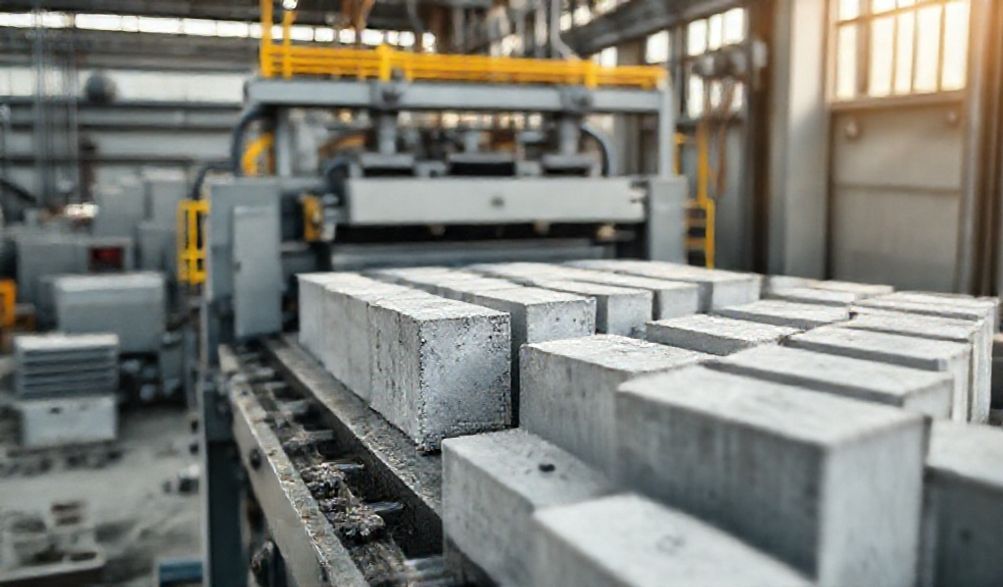
The Ultimate Guide to Choosing a Concrete Block Making Machine in 2024
Introduction
From towering skyscrapers to humble garden walls, the global construction industry runs on a simple, ubiquitous building component: the concrete block. The demand for these versatile, durable units is constant, but the key to capitalizing on this demand lies not just in making blocks, but in making them right. The pivotal factor separating a profitable, high-quality operation from a struggling one is often the choice of machinery. Selecting the ideal Machine à fabriquer des blocs de béton is a critical business decision that impacts your product quality, production efficiency, operational costs, and ultimately, your bottom line.
This comprehensive guide distills decades of collective industry experience and technical expertise into a clear, actionable framework. Whether you are a construction entrepreneur launching a block yard, a project manager aiming for on-site production, or a business owner looking to upgrade, our goal is to empower you with knowledge. We will demystify the different types of machines, provide a detailed checklist of selection criteria, offer a realistic look at operations and costs, and guide you through the process of sourcing reliable equipment. By the end, you will possess the insights needed to make a confident, strategic investment that aligns perfectly with your production goals and business vision.
Comprendre les machines de fabrication de blocs de béton : types et applications
Before diving into specifications and quotes, it’s essential to understand the fundamental categories of block-making machinery. Each type serves a distinct purpose and business model, and choosing the right category is your first major decision.
Machines manuelles et semi-automatiques
These machines represent the entry point into block production, relying significantly on human labor for material handling, molding, and block removal.
- Description & Use Case: Manual machines are simple, often hand-operated presses. Semi-automatic models incorporate some mechanical or hydraulic assistance for compaction but still require operators to feed material and remove finished blocks. They are the ideal choice for:
- Small-scale startups with limited capital.
- Low-volume production for local, specialized projects.
- Markets where labor costs are low and automation isn’t yet a priority.
- Avantages :
- Investissement initial inférieur Significantly cheaper to purchase.
- Simplicité : Easier to understand, operate, and repair.
- Low Infrastructure Needs: Often require less space and no complex electrical setups.
- Inconvénients :
- À forte intensité de main-d'œuvre : High dependency on a consistent workforce.
- Sortie réduite : Production is limited by human speed and endurance.
- Incohérence : Product quality can vary more due to manual processes.
Machines stationnaires entièrement automatiques
These are the workhorses of established block manufacturing plants, designed for high-volume, consistent production in a fixed location.
- Description & Use Case: These integrated systems automate almost the entire process: raw material feeding, precise mixing, high-pressure compaction, curing, and sometimes even palletizing. They are built for:
- Medium to large-scale block production yards.
- Businesses supplying regional construction markets.
- Operations where consistent quality and high output are non-negotiable.
- Avantages :
- Rendement élevé : Can produce thousands of blocks per shift with minimal human intervention.
- Qualité constante : Programmable controls ensure every block has identical dimensions and density.
- Reduced Labor Costs: Typically require only 1-3 personnel for monitoring and maintenance.
- Inconvénients :
- Higher Capital Cost: A substantial upfront investment.
- Fixed Location: Not designed to be moved easily.
- Infrastructure complexe : Require strong foundations, three-phase power, and sometimes compressed air systems.
Fully Automatic Mobile Block Machines
Also known as “egglayers” or mobile block makers, these units bring the factory directly to the construction site.
- Description & Use Case: A self-contained machine that travels on wheels or tracks, producing blocks directly onto a prepared concrete slab or the ground. They are perfect for:
- Massive infrastructure projects (dams, roads, large housing developments).
- Situations where transporting finished blocks over long distances is prohibitively expensive.
- Creating a localized supply chain for a specific, large-scale project.
- Avantages :
- Eliminates Transport Costs: Saves massively on logistics for the finished product.
- Unmatched Flexibility: Can be moved around a site or between projects.
- Production à la demande : Blocks are made exactly where and when they are needed.
- Inconvénients :
- Operational Complexity: Requires skilled setup and level ground at each new location.
- Maintenance Challenges: Moving the machine frequently can lead to more wear and tear.
- Output Limitations: While efficient, they generally don’t match the peak output of large stationary plants.
Specialized Machines for Hollow Blocks, Pavers, and Interlockers
Beyond the basic categorization, machines are often optimized for specific products. This showcases the depth of engineering in the field.
- Machines à blocs creux : Designed with specific mold and compaction systems to create the cavities within hollow blocks efficiently, ensuring proper wall thickness and strength.
- Machines à fabriquer des pavés : These often feature higher vibration frequencies and pressure to produce the dense, wear-resistant surface required for paving stones. They may include automatic color feeder systems for textured or colored pavers.
- Interlocking Block Machines: Engineered to produce blocks with precise, complex geometries that lock together without mortar, crucial for retaining walls and some construction systems.
Key Factors to Consider Before Buying Your Machine
With the landscape mapped out, you can now drill down into the specifics. This evaluation framework will help you compare apples to apples and avoid costly mistakes.
Production Capacity and Output Requirements
This is your starting point. Your business plan should dictate your machine’s capacity, not the other way around.
- Calculez vos besoins : Estimate the average number of blocks you need per day, week, or month. Consider:
- Current order book and projected growth.
- Market demand in your region.
- Your operational hours (e.g., single 8-hour shift vs. continuous operation).
- Machine Specs: Manufacturers rate machines in “blocks per hour” or “blocks per cycle.” Always derate these figures by 15-20% for real-world conditions (maintenance, mold changes, breaks). Choose a machine that meets your average demand with room to handle peaks.
Block Type, Size, and Mold Compatibility
What you produce is as important as how much you produce.
- Portefeuille de produits : List every block type you plan to make now and in the foreseeable future (e.g., 4″, 6″, 8″ hollow blocks; different paver patterns; solid blocks).
- Système de moulage : Investigate the machine’s mold changing process. How quickly and easily can it be done?
- Systèmes de Changement Rapide : More expensive but minimize downtime, allowing for high-mix production.
- Fixed/Bolted Systems: Cheaper but require hours to change, favoring long production runs of a single product.
- Personnalisation : Can the supplier provide or create custom molds for unique block designs? This can be a significant competitive advantage.
Level of Automation: Balancing Cost and Labor
Automation is a spectrum, and its cost must be justified by a return on investment (ROI).
- Analyse du retour sur investissement (ROI) : Create a simple 5-year cost projection comparing different automation levels.
- Manual/Semi-Auto: Lower machine cost, but higher, ongoing labor costs and lower output.
- Entièrement Automatique : High machine cost, but lower labor costs, higher output, and better quality consistency.
- Consider Your Local Context: In regions with high and rising labor costs, automation pays for itself quickly. Where labor is readily available and affordable, a semi-automatic solution might be more financially prudent initially.
Power Source: Electrical, Hydraulic, or Hybrid Systems
The drive system affects performance, maintenance, and running costs.
- Fully Electrical (Vibration Motors): Common for stationary plants. Offers precise vibration control, is generally cleaner, and has lower thermal output. Maintenance is often simpler (motor replacement).
- Systèmes hydrauliques : Provide immense, consistent pressure. Excellent for producing very dense blocks (like pavers) and are often found in high-end machines. Require careful maintenance of hydraulic fluid and seals.
- Hybrid Systems: Combine electrical vibration with hydraulic compression. This can offer the best of both worlds: efficient compaction and precise vibration for optimal material distribution and surface finish.
Machine Durability, Build Quality, and After-Sales Support
This is where trust is built—or broken. Do not compromise here.
- Qualité de construction : Look for:
- Cadre et structure : Heavy-duty, welded steel frames. Lighter frames will flex under load, leading to misalignment and rapid wear.
- Composants critiques : Brands matter. Are the vibration motors, hydraulic pumps, PLCs, and bearings from reputable manufacturers (e.g., Siemens, Bosch Rexroth, SKF)?
- After-Sales Support (The Non-Negotiable): A machine is a long-term asset. The supplier’s support is crucial.
- Support technique : Is 24/7 phone or remote support available?
- Disponibilité des pièces de rechange : What is the guaranteed lead time for critical spare parts? Do they maintain a local parts depot?
- Garantie : What is covered (parts, labor, travel)? For how long? What are the terms?
- Training & Installation: Does the quote include comprehensive on-site training for your operators and maintenance staff?
The Operational Blueprint: Setup, Running Costs, and Maintenance
Owning a machine is one thing; running a profitable operation with it is another. Let’s look at the practical realities.
Site Preparation and Machine Installation
Proper setup prevents countless future problems.
- Espace : You need space for the machine, raw material storage (sand, aggregate, cement), a mixing area, a curing area, and finished product storage. Plan for material handling flow.
- Foundation: A massive, fully automatic machine requires a reinforced concrete foundation as per the manufacturer’s specifications to absorb vibrations and prevent settling.
- Utilities: Ensure you have:
- Pouvoir : Correct voltage and amperage (often three-phase industrial power).
- Eau : A consistent supply for the concrete mix.
- Compressed Air: Required for many automated functions (mold release, cylinder movement).
Raw Material Considerations: Cement, Aggregates, and Mix Design
The machine is only as good as the concrete you feed it.
- Qualité des matériaux : Use clean, well-graded aggregates and fresh cement. Impurities or inconsistent gradation will lead to block defects and machine wear.
- Conception du mélange: The ideal water-cement ratio and aggregate-cement mix is critical. Too wet, and blocks will slump or stick in the mold. Too dry, and they won’t compact properly, leading to weak, crumbly blocks. Consult with a concrete technologist or use the supplier’s recommended mix as a starting point.
Analyzing Operational and Per-Block Costs
To price your blocks competitively, you must understand your true cost per unit.
- Cost Breakdown:
- Raw Materials (60-70%): Cement, sand, aggregate.
- Labor (10-20%): Operators, maintenance staff, forklift drivers.
- Energy (5-10%): Electricity for the machine, mixer, and lighting.
- Maintenance & Depreciation (5-10%): Scheduled maintenance, spare parts, and the machine’s loss of value over time.
- Tracking: Implement a simple system to track these costs monthly. This data is invaluable for quoting jobs and identifying areas for efficiency gains.
Essential Maintenance Schedule for Longevity
Preventive maintenance is the cheapest insurance policy you can buy.
- Daily:
- Clean the machine thoroughly, removing all concrete buildup.
- Check hydraulic oil levels and for leaks.
- Lubricate all moving parts as per the manual.
- Inspect molds for wear or damage.
- Weekly/Monthly:
- Tighten all bolts and nuts (vibration loosens them).
- Check the condition of vibration motors and drives.
- Inspect electrical connections.
- Change hydraulic and gear oil filters as recommended.
- Annually: A comprehensive inspection by a qualified technician, potentially from the supplier.
Navigating the Market: How to Source a Reliable Machine
Armed with your requirements, you can now engage the market as an informed buyer.
Top Global Manufacturers and Brands: A Comparative Overview
While we avoid outright endorsements, reputable manufacturers have established reputations in specific niches.
- Europe (e.g., Germany): Known for engineering precision, high automation, and durability. Often the premium choice for large, fully automatic stationary plants.
- China: Offers the widest range, from very affordable manual machines to sophisticated automatic lines. The key is extensive due diligence, as quality can vary dramatically between factories.
- India & Turkey: Strong players in the mid-range market, offering a good balance of cost, durability, and automation. Often excel in machines suited for specific regional materials and conditions.
The Importance of Factory Audits and Machine Trials
If the investment is significant, this step is worth the travel cost.
- Visit the Factory: See the manufacturing process. Are they using quality steel and components? What is their quality control process?
- Witness a Running Test: Ask to see a machine similar to your specification running. Observe its operation, noise level, and the quality of blocks it produces.
- Test with Your Materials: The gold standard. If possible, send a sample of your local sand and aggregate for them to run a production test. This reveals how well the machine is tuned for your specific conditions.
Understanding Quotations: What’s Included and Hidden Costs
A low initial quote can become expensive with add-ons.
- Clarify Inclusions: Does the price include:
- A standard set of molds?
- A starter kit of critical spare parts?
- On-site installation and commissioning?
- Operator and maintenance training?
- Shipping and insurance to your port or site?
- Watch For: Costs for special foundations, local taxes and duties, costs for a technician’s travel and accommodation during installation.
Key Questions to Ask Your Supplier
Go into negotiations with a prepared list.
- “Can you provide contact information for 2-3 clients in my region who have purchased a similar machine in the last 3 years?”
- “What is your average response time for technical support inquiries and your guaranteed lead time for shipping spare parts [Part X, Y, Z]?”
- “What does the warranty explicitly cover and exclude? What is the process for making a warranty claim?”
- “Do you offer any training resources, like detailed video manuals or an online portal, in addition to on-site training?”
- “What is the expected energy consumption (kWh) for this machine per 8-hour shift under normal load?”
Frequently Asked Questions (FAQ)
What is the average price range for a concrete block making machine?
The range is vast, from around $5,000 for a basic manual machine to over $300,000 for a high-capacity, fully automatic production line. Your budget should be defined by the factors discussed earlier: your required output, level of automation, and product types. Focus on Total Cost of Ownership, not just the purchase price.
Can one machine produce different types of blocks?
Yes, absolutely. This is achieved by changing the mold (also called a “die” or “box”). The critical factor is the machine’s mold changeover system. Quick-change systems allow for product diversity with minimal downtime, while simpler systems are better for long production runs of a single block type.
What is the typical lifespan of a well-maintained block machine?
With rigorous preventive maintenance and proper operation, a high-quality machine can last 15 to 25 years or more. The lifespan is directly tied to the build quality of the machine and the diligence of the maintenance schedule. Critical components like motors and hydraulic systems may need refurbishment or replacement during this time.
How much skilled labor is required to operate an automatic machine?
A fully automatic stationary plant typically requires:
* 1-2 Machine Operators: To monitor the control panel, feed raw material hoppers, and perform basic quality checks.
* 1 Maintenance Technician: For daily lubrication, cleaning, and addressing minor mechanical issues. For larger plants, this might be a dedicated role.
The key is skill, not numbers. Well-trained personnel are essential for efficiency and machine care.
What are the most common operational challenges and how to solve them?
- Blocks Sticking in the Mold: Usually caused by an incorrect concrete mix (too wet), worn mold liners, or insufficient mold release agent. Check the mix design and mold condition.
- Inconsistent Block Strength/Density: Often stems from inconsistent raw material quality, an inaccurate mix ratio, or uneven vibration/compaction. Calibrate your batching and mixing process and ensure the machine’s vibration system is functioning correctly.
- Poor Surface Finish on Blocks: Can be due to worn mold faces, inadequate vibration, or a harsh aggregate mix. Inspect and refurbish molds as needed.
Conclusion
Choosing the right Machine à fabriquer des blocs de béton is a strategic decision that forms the cornerstone of a successful block production business. It is a complex balance of your immediate production needs, financial capacity, and long-term growth strategy. There is no universal “best” machine—only the best machine for Votre specific context.
This guide, built on industry expertise and practical experience, has provided you with the framework to navigate that decision. You now understand the types of machines available, the critical factors for evaluation, the realities of daily operation, and the process for sourcing reliable equipment.
Your next step is to transform this knowledge into action. Create a detailed requirement sheet based on your calculated output needs, desired product mix, and automation level. Use this document as your benchmark when you begin consultations with shortlisted, reputable suppliers. Ask the tough questions, demand transparency, and never underestimate the value of robust after-sales support.
As you move forward, keep an eye on the horizon. The industry continues to evolve with trends like IoT sensors for predictive maintenance and a growing emphasis on sustainable production using recycled aggregates. Investing in a versatile, well-built machine today positions you to adapt and thrive in the construction landscape of tomorrow.
<