
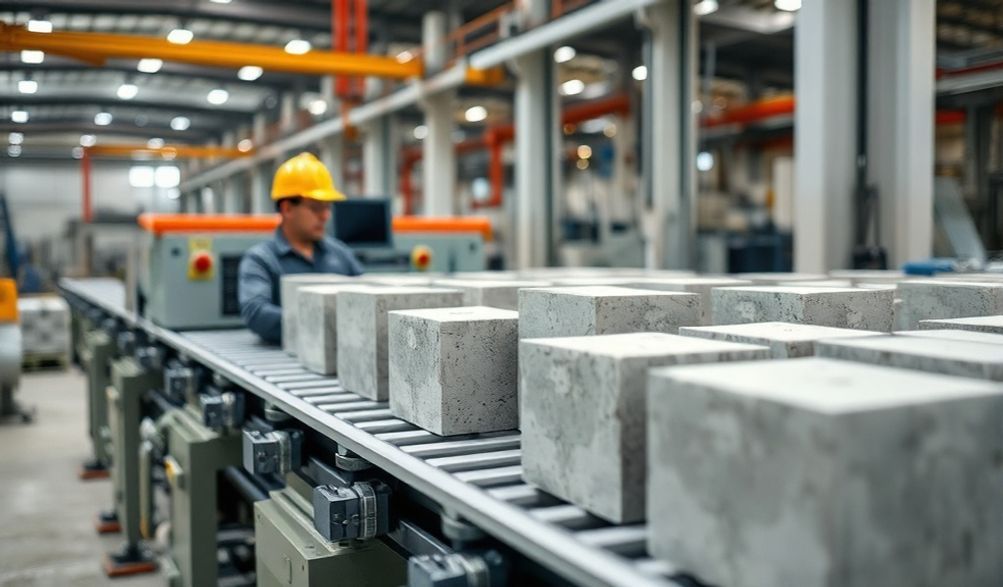
Votre guide ultime pour trouver la meilleure machine de moulage de blocs à vendre en Chine.
Introduction
Le monde se construit. Des gratte-ciels urbains aux projets de logements ruraux, la demande mondiale de matériaux de construction est insatiable. Au cœur de cette croissance se trouve un élément fondamental : l'humble bloc de béton. Produire ces blocs de manière efficace, constante et rentable nécessite un équipement clé : une machine à mouler les blocs fiable.
Pour les entreprises du monde entier, la Chine s'est imposée comme le pôle manufacturier incontesté de ces machines essentielles. La promesse est attrayante : technologie avancée, vaste sélection de modèles et prix très compétitifs. Pourtant, pour un acheteur situé à des milliers de kilomètres, naviguer sur ce marché peut ressembler à un labyrinthe intimidant. Comment trier parmi les innombrables fournisseurs sur Alibaba ? Comment vérifier la qualité d'une usine que vous n'avez jamais visitée ? Quels sont les pièges cachés dans les spécifications techniques, les conditions de paiement et la logistique ?
Ce guide est votre feuille de route définitive. En nous appuyant sur des années d'expérience directe dans l'industrie, des engagements en usine et une compréhension approfondie du parcours de l'acheteur, nous coupons à travers le bruit. Notre objectif est de vous transformer d'un prospect prudent en un acheteur informé et confiant. Nous vous fournirons les étapes concrètes, les questions cruciales et les conseils d'experts nécessaires pour obtenir une machine de moulage de blocs de haute qualité en Chine—un achat qui formera la base solide de votre entreprise pour les années à venir.
Comprendre les machines de moulage de blocs : types et applications
Avant de commencer à contacter des fournisseurs, vous devez comprendre ce que vous achetez. Connaître les différents types de machines et leurs applications est la première étape vers un investissement réussi.
Fonctionnement des machines de moulage de blocs
Au cœur du processus, la méthode est élégamment simple. Une machine à blocs automatise la transformation des matières premières — généralement un mélange de ciment, de sable, de granulats et d'eau — en blocs denses et uniformes.
- Mélange :Les matières premières sont combinées dans un mélangeur pour créer une pâte de béton homogène.
- Moulage:Cette pâte est introduite dans une cavité de moule sur la machine. Une combinaison de vibrations à haute fréquence et de pression hydraulique compacte le matériau, éliminant les poches d'air et assurant l'intégrité structurelle.
- Guérison :Le bloc fraîchement formé (ou « vert ») est éjecté sur une palette. Il subit ensuite un processus de durcissement, souvent dans une chambre contrôlée, pour atteindre sa pleine résistance.
La sophistication de ce processus varie considérablement, allant de simples machines manuelles à des lignes de production entièrement automatisées.
Principaux types de machines à vendre
Le marché chinois répond à tous les besoins imaginables. Voici un aperçu des principales catégories :
- Machines de moulage de blocs manuelles :Ce sont les options les plus basiques et les plus abordables pour commencer.
- Opération :Entièrement actionné par la force humaine. Les opérateurs remplissent les moules à la main et utilisent un levier pour appliquer la pression.
- Idéal pour :Micro-entreprises, projets communautaires ou startups à très faible budget ayant des exigences de production minimales (par exemple, quelques centaines de blocs par jour).
- Machines à blocs semi-automatiques : This is the most popular category for small to medium-sized businesses (SMBs).
- Opération : They automate the critical processes of vibration and compaction (often with a hydraulic system) but may require manual feeding of raw material or manual removal of finished blocks.
- Idéal pour : Offering an excellent balance between output (1,000 to 5,000 blocks per 8-hour shift), cost, and operational simplicity.
- Usines de fabrication de blocs entièrement automatiques : These are industrial-grade production lines.
- Opération : Fully automated from raw material batching and mixing to molding, curing, stacking, and pallet returning. Controlled by a central PLC (Programmable Logic Controller).
- Idéal pour : Large-scale commercial block yards, major construction companies, or entrepreneurs targeting high-volume markets. Output can exceed 10,000 blocks per shift.
- Machines à blocs mobiles : Also known as egg-laying or movable block machines.
- Opération : Self-contained units that produce and cure blocks directly on the ground, moving forward after each production cycle.
- Idéal pour : On-site production for large projects (like building a housing colony) where transporting blocks from a central factory is impractical or too costly.
Choisir la machine adaptée à l'échelle de votre projet
Your choice should be dictated by your business plan, not just the machine’s price tag. Use this simple matrix as a starting point:
- Project: Small Home Extension, Fencing, Very Small Startup
- Recommended Machine Type: Manual or Small Semi-Automatic.
- Considération clé : Minimizing initial capital outlay.
- Project: Establishing a Local Block Supply Business, Medium Housing Project
- Recommended Machine Type: Semi-Automatic.
- Considération clé : Achieving a reliable daily output to meet steady market demand.
- Project: Large Infrastructure Project, Major Block Supply Factory
- Recommended Machine Type: Fully Automatic Plant.
- Considération clé : Maximizing output efficiency, labor savings, and product consistency.
- Project: Building a Remote Housing Development
- Recommended Machine Type: Mobile Block Machine.
- Considération clé : Eliminating transport costs for finished blocks.
Why Source a Block Moulding Machine from China?
The decision to source from China is strategic. Let’s weigh the undeniable advantages against the valid concerns, with an expert lens on how to mitigate the latter.
The Advantages: Cost, Variety, and Manufacturing Scale
- Unbeatable Cost Competitiveness: China’s integrated supply chains, economies of scale, and manufacturing efficiency result in prices that are often 30-50% lower than Western counterparts for comparable machinery.
- Vast Selection and Customization: No matter how niche your block design (interlocking, hollow, paving, curbstone), you will find multiple Chinese manufacturers specializing in it. Customization of mold designs and machine configurations is also common and relatively affordable.
- Adoption rapide de la technologie : Chinese manufacturers are quick to integrate proven international components (like German hydraulics or Japanese PLCs) and continuously innovate, offering modern features at accessible price points.
Addressing Common Concerns: Quality and Communication
Yes, the concerns are real. The market has both exceptional manufacturers and subpar workshops. The key is knowing how to separate them.
- Concern: “Quality is inconsistent and risky.”
- Expert Solution: Quality is not a lottery. It is a direct result of a manufacturer’s processes. You must vet for it by requesting evidence of quality control protocols, inspecting core component brands, and demanding pre-shipment testing videos. We detail this in the vetting section below.
- Concern: “Communication barriers and cultural differences.”
- Expert Solution: Reputable suppliers employ competent international sales staff. Insist on clear, written communication (email is best for records). Use video calls for virtual factory tours—seeing the facility and the people you’re dealing with builds immense trust and clarity.
A Step-by-Step Guide to Buying from Chinese Suppliers
This is your actionable playbook. Follow these steps methodically to de-risk your purchase.
Step 1: Research and Shortlist Reputable Manufacturers
Go beyond a simple Alibaba search.
- Use B2B Platforms Wisely: On sites like Alibaba and Made-in-China, look for “Gold Suppliers” or “Assessed Suppliers.” However, this is just a first filter.
- Verify Business Credentials: Ask for the company’s Chinese business license number. Use a service like Tianyancha to verify their legal registration, years in operation, and registered capital. A factory operating for 10+ years is generally a safer bet.
- Specialization is Key: Prefer suppliers whose entire business is block making machinery and molds. A factory focused on this niche will have deeper expertise than a general machinery trader.
- Look for In-House R&D: A manufacturer with its own engineering and R&D department is more likely to offer technical support, innovation, and reliable customization.
Step 2: Vetting Suppliers and Requesting Quotes
Your initial communication sets the tone. Be professional and specific.
- Initial Contact Script: “Hello, we are interested in your [specific model name/number] for producing [type of block, e.g., 4″ hollow blocks]. Please provide your detailed catalog, company profile, and a quotation based on FOB Shanghai port. We also require information on your quality control process and after-sales support.”
- Request These Documents:
- Detailed product catalog with clear specifications.
- Company profile and business license.
- ISO 9001 or CE certification (where applicable).
- List of customer references (with country).
- Factory audit reports or quality control certificates.
- The Non-Negotiable: Virtual Factory Tour: Schedule a video call. Ask them to walk you through the production workshop, show you the assembly line, and let you see their testing area. This is the single most effective way to gauge legitimacy.
Step 3: Technical Specifications and Customization
A vague quote is a red flag. Your quote must be a detailed technical document.
Must-Ask Specification Checklist:
* Capacité de production :Pas seulement « des blocs par heure », mais“how many 400x200x200mm hollow blocks per 8-hour shift under standard conditions?”
* Exigences en matière d'alimentation électrique : Voltage (e.g., 380V/3Phase/50Hz) and total installed power (KW).
* Mold Details: What standard mold types are included? What is the mold material (e.g., #45 steel, high-chrome alloy)? Can you provide a drawing for a custom mold?
* Marques de composants de base :
* Hydraulic System: Pump, valve, cylinder brands.
* Vibration Motor: Brand and power.
* Control System: PLC brand (e.g., Siemens, Mitsubishi, Delta).
* Electrical Components: Brands for switches, sensors (e.g., Schneider, Omron).
* Dimensions et poids de la machine : Critical for shipping and factory floor planning.
Step 4: Negotiation, Payment, and Contract Essentials
- Negotiation: Negotiate on the total package—price, payment terms, warranty, and included spare parts. Don’t just haggle on price alone.
- Secure Payment Terms: The industry standard is 30% deposit via T/T (Bank Transfer), with 70% balance paid against a copy of the Bill of Lading. Never use 100% upfront payment. Consider using Alibaba’s Trade Assurance for an added layer of protection.
- The Contract/Proforma Invoice (PI): This is your legal safeguard. Ensure it includes:
- Detailed, itemized technical specifications.
- Total price, payment terms, and Incoterms (e.g., FOB Shenzhen, CIF Durban).
- Warranty period and scope (typically 12 months for parts, excluding wear items like molds).
- Delivery timeline.
- Details of after-sales support.
Step 5: Logistics, Shipping, and After-Sales Support
- Logistics: For a full machine, you’ll likely need a 20ft or 40ft container (FCL). Your supplier should handle inland delivery to the port and customs declaration. You or your freight forwarder handle sea freight and destination port clearance.
- After-Sales Support – The True Test of a Supplier: Reliable support is not optional. Confirm they provide:
- Comprehensive installation manuals and video guides in English.
- Remote troubleshooting via WhatsApp/WeChat/Video call.
- A detailed spare parts catalog with part numbers.
- A policy for supplying spare parts for the long-term (e.g., 10 years).
Critical Factors for Machine Quality and Performance
Look beyond the shiny paint. These are the components that determine your machine’s productivity and lifespan.
Core Components That Define a Machine’s Lifespan
- Structure de trame : It must be made of thick, high-grade steel plate (e.g., Q235) with robust, continuous welding—not spot welding. A shaky frame leads to misalignment and rapid wear.
- Système hydraulique : This is the powerhouse. Ask for the brand of the hydraulic pump, valves, and seals. Reputable brands (like Yuken, Rexroth, or even reliable Chinese brands) ensure consistent pressure, less leakage, and longer service life.
- Système de Vibration : The quality of the vibration motor and the design of the vibration table are crucial for block density. Look for high-power, forced synchronous vibration motors.
- Système de contrôle : A branded PLC (Siemens, Mitsubishi) is far more reliable and user-friendly than a generic or no-name controller. It ensures stable, programmable operation.
Mold Quality: The Heart of Your Production
The machine makes the block, but the mold defines it. A poor-quality mold will wear out quickly, produce blocks with rough edges, and cause constant downtime.
* Matériau : High-quality molds use high-chrome alloy steel for exceptional abrasion resistance.
* Processus : They undergo heat treatment (quenching and tempering)etprecision CNC machining to ensure perfect dimensions and a smooth finish for easy block release.
Warranty, Testing, and Quality Control Protocols
- Garantie significative A serious manufacturer will specify exactly which parts are covered and for how long. They will also commit to sending replacement parts promptly.
- Tests avant l'expédition : Demand a video. The supplier should run the machine with concrete, produce a batch of blocks, and demonstrate all functions. This proves the machine works before it leaves the factory.
Top Regions in China for Block Machine Manufacturing
Knowing the industrial hubs can add context to your search.
- Fujian Province (Quanzhou, Jinjiang): Arguably the largest and most famous cluster for block making and brick making machinery. Known for a high concentration of manufacturers, fierce competition, and a strong export focus.
- Shandong Province (Linyi, Qingdao): A major heavy industrial base. Manufacturers here often produce robust, heavy-duty machinery and have strong capabilities in steel fabrication.
- Province du Guangdong : A hub for advanced manufacturing and electronics. Suppliers here may have an edge in integrating higher-end automation and control systems.
While you may not visit in person, knowing a supplier is located in one of these established clusters can be a positive indicator.
Foire aux questions (FAQ)
Q1: What is the average price range for a block moulding machine from China?
A : Prices vary enormously based on type and automation. A small manual machine can start from $1,500 – $3,000. A quality semi-automatic machine typically ranges from $8,000 – $25,000. Fully automatic production lines can cost anywhere from $50,000 to over $200,000. The final price depends on output capacity, component brands, and level of customization.
Q2: How do I ensure the machine meets my local safety and quality standards?
A : Explicitly discuss this with your supplier. Request relevant international certifications like CE (for Europe) or ISO 9001. For absolute assurance, you can hire a third-party inspection company (like SGS, BV, or Intertek) to conduct a pre-shipment inspection at the Chinese factory.
Q3: Can suppliers provide installation and training support?
A : Most reputable suppliers provide detailed English manuals, electrical diagrams, and video guides. On-site installation and training by a Chinese engineer are almost always an additional, paid service (covering their airfare, accommodation, and daily rate). This must be negotiated and included in the contract upfront if required.
Q4: What are the typical shipping costs and delivery times?
A : This depends entirely on Incoterms, machine size, and destination port. As a rough guide, sea freight for a 20ft container to a major port in Africa or the Middle East might cost $2,000 – $4,000. Door-to-door delivery times, from order confirmation to machine arrival, typically range from 30 to 60 days.
Q5: How do I handle maintenance and source spare parts?
A : This is critical. Choose a supplier with a clear spare parts supply policy. Before purchasing, request their spare parts catalog. It is highly recommended to purchase a starter kit of common spare parts (seals, sensors, relays) with your machine to avoid minor downtime waiting for international shipments.
Conclusion
Securing the right block moulding machine from China is a significant but highly rewarding investment. The journey hinges on a disciplined approach: first, clearly defining your production needs and scale; second, conducting meticulous, document-driven supplier vetting; third, focusing relentlessly on the quality of core components and molds; and finally, cementing the deal with a clear contract and robust after-sales agreement.
China offers unparalleled value and choice, but the onus is on you, the buyer, to navigate the market with informed caution. This guide has equipped you with the specific questions to ask, the documents to demand, and the red flags to spot. Use this knowledge as your toolkit. Approach each supplier not as a novice, but as a prepared professional. By doing so, you transform the perceived risk of an international purchase into the solid foundation for your business growth and success.
<