
Le Guide Ultime des Machines à Fabriquer des Blocs de Pavement : Types, Coûts et Comment Choisir
Introduction
Vous ne cherchez pas seulement une machine ; vous cherchez un partenaire fiable pour bâtir votre entreprise. Que vous soyez un entrepreneur cherchant à internaliser la production, un chef d'entreprise lançant une usine de fabrication de blocs, ou un planificateur municipal approvisionnant des équipements, le monde des machines à fabriquer les pavés peut être complexe et rempli d'affirmations contradictoires. Ce guide est conçu pour faire abstraction de ce bruit.
Les blocs de pavage—qu'il s'agisse de pavés autobloquants élégants ou de robustes bordures—constituent l'épine dorsale des aménagements paysagers modernes, des entrées de cour et des infrastructures urbaines. La machinerie qui les produit est le moteur d'une opération rentable et efficace. Mais choisir la mauvaise machine peut entraîner des temps d'arrêt paralysants, une qualité irrégulière et des difficultés financières.
Élaboré à partir de connaissances pratiques et d’aperçus de l’industrie, ce guide complet constitue votre ressource fiable. Nous irons au-delà des brochures commerciales pour expliquer les fonctions essentielles, détailler les coûts réels et offrir un cadre clair pour la prise de décision. Notre objectif est de vous doter de l’expertise nécessaire pour réaliser un investissement éclairé et confiant, en adéquation avec vos objectifs de production et votre budget.
Qu'est-ce qu'une machine à fabriquer des blocs de pavage ? Explication de la fonction principale
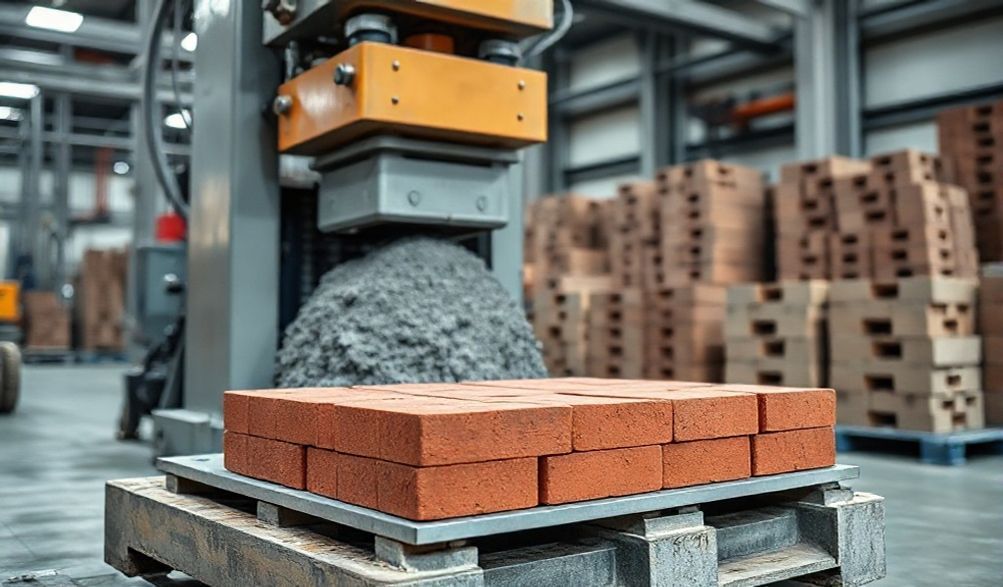
Au cœur de l'appareil, une machine à fabriquer des pavés est un dispositif qui transforme un mélange de béton brut et sec en un bloc dense et de forme précise, grâce à un processus de compactage et de vibration. Elle automatise et standardise ce qui serait une tâche manuelle laborieuse et irrégulière, garantissant que chaque bloc respecte des tolérances spécifiques de résistance et de dimensions.
Le principe de fonctionnement de base
Le processus, bien que sophistiqué dans son exécution, suit une séquence logique :
1. Mélange et alimentation :Un mélange pré-mélangé de ciment, d’agrégats (sable, éclats de pierre) et de pigment (si coloré) est chargé dans la trémie de la machine.
2. Mesurage et Moulage :Une quantité mesurée de ce mélange est introduite dans une cavité de moule (la forme de votre bloc souhaité) positionnée sur une palette en acier robuste.
3. Compactage et Vibration :C'est la phase critique. La tête d'une presse hydraulique descend sur le mélange tandis qu'une vibration haute fréquence est appliquée simultanément. Cette double action expulse les poches d'air et comprime les particules, créant un bloc dense et résistant.
4. Démoulage et Éjection :La tête hydraulique se rétracte et le moule s'élève, laissant le bloc fraîchement formé sur la palette.
5. Guérison :Le bloc, toujours sur sa palette, est déplacé vers une zone de cure. Là, il acquiert de la solidité sur plusieurs jours grâce à un contrôle de l'humidité et de la température, un processus distinct de la machine mais essentiel pour la qualité finale.
Composants clés et leurs rôles
Comprendre l'anatomie de la machine aide à évaluer la qualité et à résoudre les problèmes.
* Hopper :Le point d'entrée pour le mélange de matières premières. Sa taille détermine la fréquence à laquelle il doit être réapprovisionné.
* Moisissure :Le cœur interchangeable de la machine. Il définit la forme, la taille et le motif de surface du bloc (par exemple, pavé, ardoise).
* Table de vibration :La plateforme qui supporte le moule et la palette. Elle abrite les moteurs vibrants qui fournissent l'énergie de compactage essentielle.
* Système hydraulique :Le groupe motopompe. Il fournit l'immense pression pour la tête de presse et contrôle le mouvement du moule. La qualité des pompes, des vannes et des vérins est primordiale.
* Panneau de configuration :Le cerveau. Dans les modèles semi et entièrement automatiques, ce système basé sur un API gère la séquence des cycles, le temps de vibration et les réglages de pression pour une production uniforme.
Types de machines de fabrication de blocs de pavage : Trouvez celle qui vous convient parfaitement
Votre choix ici dicte fondamentalement votre échelle de production, votre modèle de main-d'œuvre et votre potentiel commercial. Il n'y a pas de type « meilleur », seulement celui qui convient le mieux à votre situation actuelle.
Machines à blocs manuelles
Ce sont les presses les plus élémentaires, actionnées par la force humaine.
* Sortie :Très bas, généralement 200 à 500 blocs par quart de 8 heures, selon l'endurance du travailleur.
* Main-d'œuvre : Highly labor-intensive. Requires 2-3 operators for constant filling, pressing, and block removal.
* Applications & Ideal For: Ultra-small startups with minimal capital, community projects, remote locations with no power, or producing specialty, low-volume blocks.
* Idée clé : While cheap to acquire, the cost-per-block in terms of human labor is the highest. They are a stepping stone, not a long-term growth solution.
Machines semi-automatiques
This category offers the best balance for most small to medium-sized enterprises (SMEs). The core compaction cycle (feed, vibrate, press, lift mold) is automated, but an operator is needed to initiate the cycle, retrieve the filled pallet, and often feed raw material.
* Sortie : Significantly higher than manual, ranging from 800 to 2,500 blocks per 8-hour shift, depending on model and block size.
* Main-d'œuvre : Requires 1-2 attentive operators. Their role shifts from brute force to machine supervision and material handling.
* Applications & Ideal For: Growing block yards, contractors supplying local projects, and businesses with variable order sizes. They offer excellent flexibility.
* Idée clé : The most common “sweet spot” for businesses serious about block manufacturing. They provide automation where it counts most (quality and consistency) while keeping the initial investment manageable.
Machines de fabrication de blocs entièrement automatiques
These are production lines, not just machines. They integrate automatic raw material feeding, pallet circulation, block stacking, and sometimes curing.
* Sortie : High-volume, from 4,000 to over 15,000 blocks per 8-hour shift.
* Main-d'œuvre : Minimal. Often just 1-2 operators for monitoring, quality checks, and managing the input/output flow.
* Applications & Ideal For: Large-scale commercial plants supplying city projects, distributors, and markets with constant, high demand.
* Idée clé : The investment is substantial, not just in the machine but in the plant infrastructure (strong concrete foundation, material silos, large curing area). The ROI is based on massive, consistent volume.
Machines à blocs stationnaires vs mobiles
- Machines stationnaires : The standard. They are installed on a solid foundation in a factory or yard. All semi- and fully-automatic machines are stationary. They offer higher stability, precision, and capacity.
- Machines mobiles : These are smaller, trailer-mounted units designed for on-site production. They eliminate transport costs for large projects (e.g., paving a remote parking lot) but sacrifice output and block variety. They are niche tools for specific contracting scenarios.
Facteurs critiques à considérer avant d'acheter
Look beyond the glossy catalog. These factors determine your long-term satisfaction and profitability.
Capacité de production (Blocs par heure/jour)
Never buy based on the manufacturer’s peak theoretical output. Ask for the proven output for the specific block type you want to make. A machine may make 1,000 small pavers per hour but only 200 large curbstones.
* Correspondance aux objectifs : Calculate your current and projected market demand. A common mistake is overbuying—a massive, underutilized machine is a financial drain. It’s often wiser to start with a capacity you can reliably use and sell, then scale up.
Block Types, Sizes, and Designs
Versatility equals market agility.
* Système de moulage : Investigate how easily molds are changed. A quick-change system allows you to switch from producing interlocking pavers to garden edging in under an hour, letting you fulfill diverse orders.
* Pression et Vibration : Ensure the machine has sufficient hydraulic pressure and vibration force (measured in kN and Hz) to produce thicker, heavier blocks like retaining wall units or solid concrete blocks, even if you start with pavers.
Compatibilité des matières premières
The machine only compacts what you feed it. The mix design is 50% of the quality equation.
* Standard Mixes: Most machines are designed for conventional mixes of cement, sand, and 6-10mm aggregates.
* Alternative Materials: If you plan to use fly ash, slag, or even processed plastic waste, discuss this explicitly with the manufacturer. Some machines may require liners or modified hoppers to handle different material flow characteristics. The right vibration frequency is also crucial for non-standard mixes.
Exigences en matière d'alimentation et coûts d'exploitation
The sticker price is just the beginning.
* Electrical Load: A semi-automatic machine may require a robust 3-phase connection (e.g., 15-25 HP). Verify your site’s power availability. Inconsistent power can damage electronic controls.
* Cost-Per-Block Analysis: Factor in electricity, wear parts (like mold liners and hydraulic oil), and labor. A slightly more expensive but energy-efficient and reliable machine will often have a lower operational cost per block, which is the true measure of efficiency.
After-Sales Support and Service
This is the most critical, yet most overlooked, factor. A machine is a long-term asset.
* Supplier Reputation: Research the manufacturer’s history. How long have they been in business? Look for client testimonials and, if possible, visit an existing installation.
* Disponibilité des pièces de rechange : Are common wear parts (hydraulic seals, vibrator motors, control relays) readily available locally or through quick shipping? Downtime waiting for a part flown in from overseas can bankrupt a project.
* Technical Training & Warranty: Does the purchase include comprehensive training for your operators on setup, daily operation, and basic troubleshooting? What does the warranty actually cover, and for how long?
Understanding the Investment: Pavement Block Machine Price Range
Prices vary wildly based on automation level, build quality, brand, and region. The figures below are broad, illustrative brackets. Always get multiple, detailed quotations.
Cost Breakdown by Machine Type
| Machine Type | Approximate Price Range (USD) | Key Determinants of Price |
| :— | :— | :— |
| Manuel | $1,000 – $4,000 | Build quality, material (steel grade), and press mechanism. |
| Semi-Automatique | $15,000 – $50,000+ | Capacity, level of automation (e.g., auto feeder), hydraulic system brand, control panel sophistication. |
| Entièrement Automatique | $60,000 – $250,000+ | Degree of integration (pallet return, robotic stacker), output speed, and brand prestige. |
Crucial Caveat: A $20,000 machine from an unknown supplier is not equivalent to a $25,000 machine from an established brand with local support. The latter is almost always the wiser investment.
Beyond the Sticker Price: Hidden and Recurring Costs
- Initial Hidden Costs: Molds ($500-$2,000 each), spare pallets ($100-$300 each), raw material handling equipment (concrete mixer, loader), installation, and foundation work.
- Recurring Costs: Electricity, regular maintenance supplies (grease, oil), wear parts, and labor.
Calculating Your Return on Investment (ROI)
Use this simplified framework:
1. Total Investment: Machine price + initial hidden costs.
2. Monthly Operating Cost: (Electricity + Labor + Maintenance + Raw Materials) per month.
3. Monthly Revenue: (Number of blocks produced per month) x (Selling price per block in your market).
4. Monthly Gross Profit: Monthly Revenue – Monthly Operating Cost.
5. Simple Payback Period: Total Investment / Monthly Gross Profit.
Exemple : If your total investment is $30,000 and your monthly gross profit is $3,000, your payback period is approximately 10 months. This is a healthy target for the industry.
Best Practices for Operation and Maintenance
Treat your machine like a prized asset. Proper care prevents 90% of major breakdowns.
Daily and Weekly Maintenance Checklists
Daily (Before/After Shift):
* Lubricate all moving joints and guide rods as per manual.
* Check hydraulic oil level and look for leaks.
* Clean the mold, hopper, and press head of hardened concrete.
* Inspect electrical connections for tightness.
* Check pallets for warping or damage.
Weekly:
* Thoroughly clean the entire machine, including under the vibration table.
* Check the tension of drive belts (if any).
* Inspect mold liners for excessive wear.
* Test safety interlocks and emergency stop functions.
Troubleshooting Common Issues
- Block Breakage (Low Strength): Usually a raw material issue (too much water, poor sand quality, incorrect cement ratio) or insufficient compaction (check vibration motor function and vibration time setting).
- Poor Surface Finish/Sticking in Mold: Caused by a worn mold liner, insufficient mold release agent, or an overly wet mix. Polish or replace the mold liner.
- Slow or Erratic Cycling: Often related to the hydraulic system. Check oil temperature (overheating), filter clogs, or pressure settings. For electronic issues, consult the manual for error codes.
Protocoles de sécurité pour les opérateurs
- Lockout/Tagout: Always disconnect power before performing any maintenance or clearing a jam.
- Équipement de protection individuelle (EPI) : Safety glasses, hearing protection (vibration is loud), steel-toe boots, and gloves are mandatory.
- Never Bypass Guards or Safety Interlocks. These are there for a reason.
- Keep Hands Clear: Never reach into the mold area or under the press head while the machine is powered on, even if it appears stopped.
The Future of Pavement Block Production
The industry is moving towards greater efficiency and sustainability.
Trends in Automation and Smart Controls
The next generation of machines features IoT (Internet of Things) sensors that monitor production data in real-time: blocks counted, cycle times, hydraulic pressure, and motor health. This data can be accessed via smartphone, allowing for predictive maintenance (fixing a problem before it causes downtime) and optimizing production flow from anywhere.
Sustainable Practices and Eco-Friendly Machines
The push for green construction is driving innovation:
* Water Recycling Systems: Closed-loop systems that recycle water used for curing and cleaning, drastically reducing consumption.
* Innovation des Matériaux : Machines are being adapted to efficiently use high percentages of recycled aggregates, industrial by-products like fly ash, and even post-consumer plastic waste, creating eco-pavers.
* Efficacité énergétique : Variable-frequency drives (VFDs) on motors and pumps are becoming standard, reducing energy consumption by matching power to the actual load.
FAQ Section
Q1: What is the average lifespan of a pavement block making machine?
With proper maintenance and operation, a well-built machine from a reputable manufacturer can last 15-20 years. Key components like the hydraulic system and vibration table may require overhaul or replacement during this time.
Q2: Can one machine produce different block designs?
Absolutely. This is one of the key advantages. By changing the mold (the cavity that shapes the block), the same machine can produce hundreds of different paver patterns, curbstones, and landscaping blocks. Invest in a machine with a user-friendly mold change system.
Q3: How much space is required to install a semi-automatic machine?
As a general rule, you need a clear, covered area of at least 500-800 sq. ft. (approx. 50-75 sq. meters). This accommodates the machine itself, space for pallet movement, a raw material staging area, and a curing area for fresh blocks. Always consult the specific machine’s layout diagram.
Q4: What is the most common reason for block defects, and how can I fix it?
The most common culprit is an inconsistent or incorrect raw material mix. Too much water causes weakness and sticking; poor-quality sand leads to crumbling; incorrect cement ratio affects strength. The fix is to rigorously standardize your mix design and source quality materials. The machine can only compact what you give it.
Q5: Are there financing options available for these machines?
Yes, many established manufacturers and their dealers offer financing plans or can connect you with industrial equipment lenders. Banks may also provide business loans for capital equipment. Be prepared to present a solid business plan.
Q6: How do I find a reputable supplier or manufacturer?
* Industry References: Ask other block manufacturers in non-competing regions for their recommendations.
* Trade Shows: Visit construction equipment expos to see machines in action and talk to engineers.
* Due Diligence: Ask for a list of past clients and actually contact them. Inquire about after-sales service responsiveness. Search online for the company’s name alongside keywords like “reviews” or “complaints.”
* Avoid Red Flags: Extreme low-ball pricing, pressure to pay upfront, and vague warranty terms are major warnings.
Conclusion
Choosing the right pavement block making machine is a strategic decision that hinges on aligning technology with your business reality. Remember to match the machine type—manual, semi-automatic, or fully automatic—to your true production scale and growth trajectory. Look beyond the initial purchase price to the total cost of ownership, where factors like energy efficiency, maintenance needs, and operational cost-per-block define long-term profitability.
Above all, prioritize the intangible asset of supplier support. A reliable partner for training, spare parts, and technical advice is invaluable insurance for your investment. Use the framework and questions in this guide as your checklist when evaluating options. By investing in the right equipment and knowledge, you’re not just buying a machine; you’re laying the foundation for a durable and successful enterprise in the vital construction materials industry.
<