
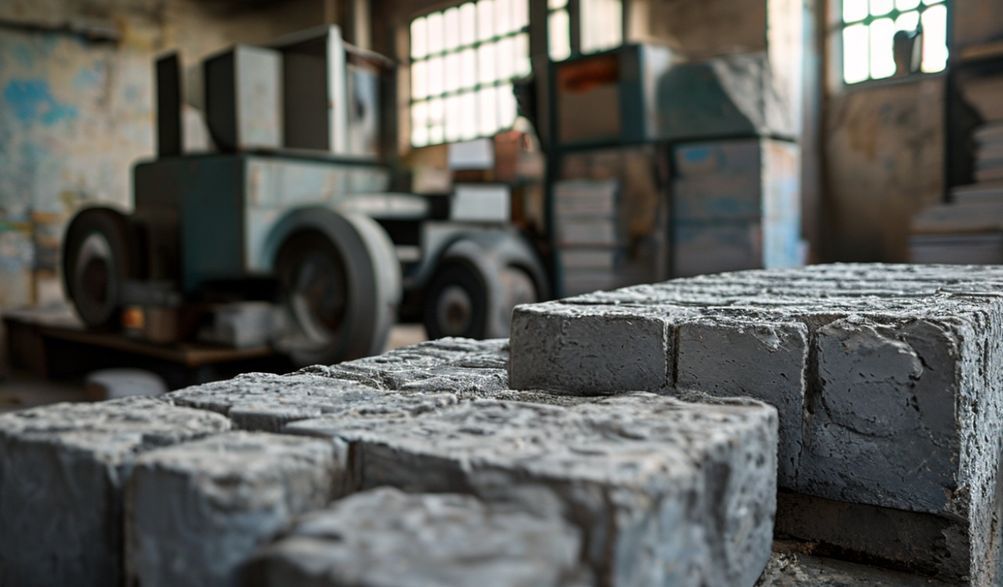
Prix de la Machine à Blocs Gal au Sri Lanka 2026 : Un Guide Complet pour l'Acheteur
Introduction
Imaginez que vous êtes un entrepreneur à Kurunegala, en train de finaliser le devis pour la maison d’un nouveau client. Ou peut-être êtes-vous un constructeur amateur déterminé à Gampaha, observant votre budget de projet se tendre sous la hausse des coûts des briques traditionnelles. Partout au Sri Lanka, des grands chantiers de Colombo aux constructions individuelles de Matara, un défi commun persiste : comment se procurer des matériaux de construction abordables et de haute qualité sans compromettre la solidité ni le calendrier.
Le problème est clair. Le coût des briques conventionnelles et des blocs de béton achetés ne cesse d’augmenter, en raison des dépenses liées aux matériaux et au transport. Cette réalité pousse les constructeurs et les entrepreneurs vers une solution puissante et économique : produire leurs propres blocs de béton sur place. Au cœur de cette solution se trouve la machine Block Gal. Mais avec un marché saturé d’options – des presses manuelles simples aux usines entièrement automatisées – comment naviguer dans cet investissement ? Combien devriez-vousvraimentun budget pour une machine qui répond à vos besoins sans surcapitaliser?
Ce guide est conçu pour dissiper toute confusion. Basé sur des études de marché approfondies, des consultations avec des fournisseurs locaux de machinerie et une analyse des tendances de l'industrie pour 2026, nous offrons une répartition transparente et détaillée des prix des machines Block Gal au Sri Lanka. Notre objectif est de vous fournir les connaissances nécessaires pour prendre une décision éclairée et confiante. À la fin de cet article, vous aurez une compréhension claire des fourchettes de prix actuelles, des principaux facteurs qui influencent les coûts, une comparaison des types de machines et une liste de contrôle pratique pour choisir le bon fournisseur. Démystifions l'investissement et aidons-vous à construire de manière plus intelligente.
Qu'est-ce qu'une machine Block Gal ? Comprendre la technologie
Avant de parler des prix, il est essentiel de comprendre dans quoi vous investissez. Une machine Block Gal, communément appelée machine à fabriquer des parpaings, est un dispositif qui compacte un mélange de ciment, de sable et de granulats pour produire des blocs de haute densité aux formes précises.
Le rôle des machines à blocs dans la construction moderne au Sri Lanka
The Sri Lankan construction landscape is steadily shifting towards concrete hollow and solid blocks. They offer superior thermal insulation, better earthquake resistance due to their lighter weight, and can be more cost-effective than traditional brickwork. A Block Gal machine empowers you to produce these blocks on-demand, right at your project site or in a small yard. This eliminates supply chain delays, reduces transportation costs for finished blocks, and gives you complete control over the production schedule and mix design.
How a Block Gal Machine Works: Basic Operation
The core process is straightforward, though the level of automation varies:
1. Mélange : Cement, sand, and aggregate (usually 3/4″ metal or quarry dust) are mixed with water to create a semi-dry concrete mix.
2. Remplissage : This mix is fed into a mold box (or “hopper”) on the machine. The mold defines the block’s shape—whether it’s a 6″ hollow block, a 9″ solid block, or a paving slab.
3. Compactage : The machine applies intense vibration and pressure. This is the most critical step, as it removes air pockets and compresses the material, ensuring the block’s structural strength and durability.
4. Éjection en cours : The freshly formed block is ejected from the mold onto a pallet or the ground, ready for curing.
Key Benefits of Owning a Block Making Machine
- Économies de coûts substantielles : Producing blocks in-house can reduce material costs by 30-50% compared to buying ready-made blocks, especially for larger projects.
- Unmatched Schedule Control: No more waiting for deliveries. Produce blocks as needed, keeping your project on track.
- Guaranteed Quality: You control the raw material mix and compaction, ensuring every block meets your required strength standard.
- Opportunité d'affaires : For entrepreneurs, it opens a path to a small-scale manufacturing business, supplying blocks to other local builders and projects.
Current Market Price Range of Block Gal Machines in Sri Lanka (2026)
Prices can vary significantly based on type, brand, and specifications. The following ranges are estimates for 2026, compiled from industry data and supplier consultations. A critical disclaimer: These figures are indicative. Final costs are subject to change based on import duties, raw material costs, brand premiums, and specific dealer pricing. Always obtain direct, itemized quotations from suppliers.
Manual Block Gal Machine Prices
- Gamme de prix : LKR 80,000 – LKR 250,000
- What You Get: This range covers basic, hand-operated or lever-operated machines. A lower-priced model might be a single-mold, stationary press. As you move up the range, you find machines with multiple mold options (interchangeable molds for different block types) and sometimes an integrated pan mixer. They are entirely human-powered or use a small vibration motor.
- Idéal pour : Individual homeowners, very small-scale DIY projects, and builders with extremely low, intermittent block needs. Output is low, typically 80-200 blocks per 8-hour day, and requires significant physical labor.
Semi-Automatic Block Gal Machine Prices
- Gamme de prix : LKR 300,000 – LKR 800,000
- What You Get: This category introduces significant efficiency improvements. These machines are electrically powered, featuring hydraulic systems for compaction and ejection, and often include a vibrating table. The process is mechanized, but feeding the raw mix and removing finished blocks is typically manual. They offer much higher output and consistent block quality.
- Idéal pour : Small to medium-sized contractors, those starting a dedicated block manufacturing business, and housing development projects. They offer a strong balance between investment and productivity, with outputs ranging from 300 to 800 blocks per hour.
Fully Automatic Block Gal Machine Prices
- Gamme de prix : LKR 1,000,000 – LKR 3,500,000+
- What You Get: These are complete production systems. They feature automated material feeding, mixing, block molding, curing, and sometimes stacking. Many include conveyor belts and programmable logic controller (PLC) systems. They require minimal human intervention and produce blocks with exceptional uniformity at very high volumes.
- Idéal pour : Established block manufacturing plants, large construction companies undertaking mega-projects, and serious entrepreneurs targeting the commercial block supply market. Output can exceed 2,000 blocks per hour.
Key Factors Influencing Block Gal Machine Price
ComprendrePourquoi machines are priced differently will help you evaluate quotes effectively.
Automation Level (Manual vs. Semi-Auto vs. Fully Auto)
As outlined above, this is the primary price driver. Automation increases output, reduces labor dependency, and improves consistency, but it comes at a higher capital cost.
Capacité de production (blocs par heure)
Within each automation category, price scales with capacity. A semi-automatic machine rated for 500 blocks per hour will cost less than one rated for 1,000 blocks per hour from the same brand.
Brand & Country of Origin (Local vs. Imported)
- Local Assemblage: Some Sri Lankan companies assemble machines using imported and local components. These can offer good value and easier access to spare parts.
- Imported Brands (India, China): Indian machines are renowned for their durability and are very popular in Sri Lanka. Chinese machines often compete on aggressive initial pricing. Consider that the country of origin impacts the availability and cost of after-sales service and spare parts.
Machine Specifications & Build Quality
- Puissance du moteur et système hydraulique : A more powerful motor and a robust, branded hydraulic pump ensure longer life and consistent performance under load.
- Qualité d'acier et Fabrication: The frame and mold should be made from high-grade, reinforced steel to withstand constant vibration and pressure without warping.
- Mold Quality & Versatility: Hardened steel molds last longer and produce blocks with sharper edges. The ability to easily switch between different mold types (e.g., 5″, 6″, 9″ hollow, solid) adds to the machine’s value and versatility.
Service après-vente et garantie
This is a critical, often overlooked part of the total cost equation. A cheaper machine with no local service support can become a costly paperweight if it breaks down. A reputable supplier offering a comprehensive warranty (typically 1 year on major components), readily available spare parts, and technical support is worth a premium. Always factor in the long-term cost of ownership, not just the purchase price.
How to Choose the Right Block Gal Machine for Your Needs
Making the right choice involves honest assessment and planning. Follow this practical framework.
Assess Your Project Volume and Business Goals
- Calculate the total number of blocks needed for your immediate project.
- Are you buying for a one-off build, or do you plan continuous production for multiple projects or a business?
- Rule of Thumb: If your total need is under 5,000 blocks, a manual machine may suffice. For 5,000 to 50,000 blocks, look at semi-automatic models. For ongoing commercial production, a fully automatic system is the target.
Consider Your Available Space and Power Supply
- Espace : Do you have a covered, level area for the machine, raw material storage, and block curing? Semi- and fully-automatic machines need more operational space.
- Pouvoir : Manual machines need little to no power. Semi-automatic machines typically require a standard 3-phase industrial power connection. Verify your site’s electrical capacity.
Budget Planning: Initial Investment vs. Long-Term ROI
- Look beyond the machine price. Create a comprehensive budget that includes:
- Machine cost
- Site preparation (level concrete base)
- Raw material stock (cement, sand, metal)
- Labor for operation
- Curing area (water supply, plastic sheeting)
- For a business, project your potential revenue per block against these costs to calculate your payback period and ROI.
The Importance of Supplier Reputation and Service Support
- Research: Look for suppliers with a long-standing physical presence in Sri Lanka (e.g., in Colombo, Kandy, or Galle industrial zones).
- Demander des références : A confident supplier will connect you with past customers. Contact them to ask about machine performance and after-sales service.
- Clarify Warranty: Get the warranty terms in writing. What is covered? What is excluded? How are service calls handled?
Trusted Suppliers and Where to Buy in Sri Lanka
Navigating the supplier landscape is key to a successful purchase.
Leading Local Machinery Suppliers and Dealers
Sri Lanka has several established industrial machinery suppliers specializing in construction equipment. You will find reputable dealers in major commercial hubs:
* Colombo and its Suburbs: Home to the highest concentration of machinery importers and distributors, offering the widest range of brands and types.
* Kandy and the Central Province: Several well-known suppliers cater to the growing construction demand in the hill country and surrounding areas.
* Galle and Matara: Suppliers in the Southern Province serve the coastal and regional construction industry.
It is highly recommended to visit these suppliers in person to inspect the machine build quality and discuss your needs face-to-face.
Direct Import Considerations
Importing a machine yourself from India or China might seem cheaper initially, but it comes with hidden complexities:
* Avantages : Potentially lower unit cost from the factory.
* Inconvénients : High shipping and freight forwarding costs, Sri Lankan customs duties and VAT (which can be substantial), the challenge of arranging technical inspections, and most critically, the lack of local service and warranty support. Any breakdown will require sourcing parts internationally, leading to costly project delays.
Tips for Getting the Best Quotation and Deal
- Get Multiple Quotes: Approach at least 3-4 different suppliers with your exact specifications.
- Compare Like-for-Like: Ensure each quote includes the same items (machine, molds, mixer, training, delivery, warranty).
- Inspect Before Buying: If possible, see a demonstration of the exact model you intend to buy.
- Negotiate on Package: Sometimes, you can negotiate a better deal on a package that includes essential extras like a mixer or additional mold sets.
Frequently Asked Questions (FAQ) About Block Gal Machines
Q1: What is the cheapest type of Block Gal machine available in Sri Lanka?
The most affordable option is a basic, single-mold manual press, which can start from around LKR 80,000. However, carefully evaluate if its low output meets your project’s needs.
Q2: Can I manufacture different block sizes (6″, 9″, hollow, solid) with one machine?
Yes, most quality machines are designed to work with interchangeable molds. You can purchase additional mold sets for different block types. Ensure the machine’s pressure and vibration system is rated for the different block volumes.
Q3: What is the typical warranty period, and what does it cover?
A standard warranty is 12 months on major components like the motor, hydraulic pump, and frame. Wear-and-tear parts like mold liners are often covered for a shorter period (e.g., 3-6 months). Always get the specifics in writing.
Q4: Besides the machine price, what other costs should I budget for?
Factor in costs for: a concrete base, 3-phase electrical connection (for automatic models), raw material inventory (cement, sand, metal), labor for operation, water for curing, and space rental if applicable.
Q5: How do I calculate the potential profit or cost savings from owning a machine?
For savings: Compare your cost-per-block (material + labor + machine depreciation) to the market price of a purchased block. For profit: Subtract your cost-per-block from your selling price. A semi-automatic machine producing 500 blocks/day can often pay for itself within a few projects.
Q6: Are there any government regulations or standards for block production in Sri Lanka?
Yes. The Sri Lanka Standards Institution (SLSI) has specifications for concrete blocks (e.g., SLS 855). If you are selling blocks, producing them to meet these standards is crucial for credibility and compliance in official projects.
Conclusion
Investing in a Block Gal machine is a significant decision that can lead to substantial cost savings and greater project autonomy. As we’ve explored, the price in Sri Lanka is not a single figure but a spectrum—from LKR 80,000 for a basic manual press to over LKR 3.5 million for a fully automated plant—dictated primarily by the level of automation, production capacity, and build quality.
The most crucial takeaway is to align your investment with your actual needs. For the vast majority of individual builders and small to medium contractors in Sri Lanka, a robust semi-automatic machine from a reputable local supplier represents the ideal balance. It provides a dramatic leap in efficiency over manual labor without the daunting capital outlay and complexity of a fully automatic system.
Use this guide as your checklist. When you speak to suppliers, ask detailed questions about warranty, service, and machine specifications. Prioritize long-term reliability and support over the lowest possible sticker price. A well-chosen Block Gal machine isn’t just a purchase; it’s a partner in building your project, your business, and ultimately, Sri Lanka’s future, one block at a time.
<