Duality of Demand: Contrasting Construction and Landscaping Blocks
While produced on similar machinery, blocks for these two sectors are engineered for fundamentally different primary purposes, which dictates their design and production parameters.
- 1.1. The Construction Block: Engineered for Performance
The paramount requirements are structural integrity and consistency. These blocks are governed by strict building codes and standards (e.g., ASTM C90). Their value lies in their predictable, quantifiable properties:- Résistance à la compression : Must meet a guaranteed minimum (e.g., 2,000 psi or higher) to bear loads.
- Tolérance dimensionnelle : Tight tolerances are crucial for level coursing, proper mortar joint thickness, and structural stability.
- Fonction principale : To be a concealed, load-bearing component of a building’s envelope or infrastructure.
- 1.2. The Landscaping Block: Designed for Form and Function
Here, the primary requirements are aesthetic appeal and durability in exposed conditions. While strength is important for retaining walls, the performance metrics differ:- Visual Characteristics: Color, texture, and shape are the primary selling points. A variety of finishes (smooth, split-face, rock-face, tumbled) are desirable.
- Weathering Resistance: Must withstand freeze-thaw cycles, UV exposure, and moisture without spalling or significant color fading.
- Modularity and Installation: Often designed for dry-stack or mortarless installation, requiring interlocking features or precise shapes for ease of use by homeowners and landscapers.
2. Machine Adaptability: Tooling and Process Modifications
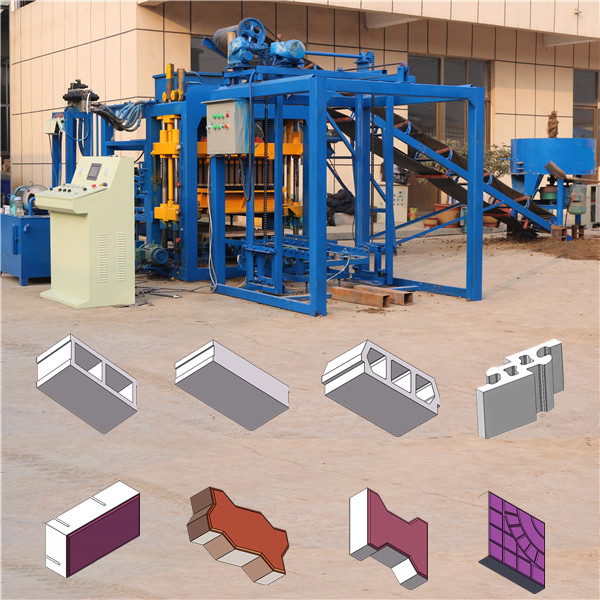
A standard block machine can produce both types, but transitioning requires specific changes, primarily “above the mold.”
- 2.1. The Central Role of Interchangeable Molds
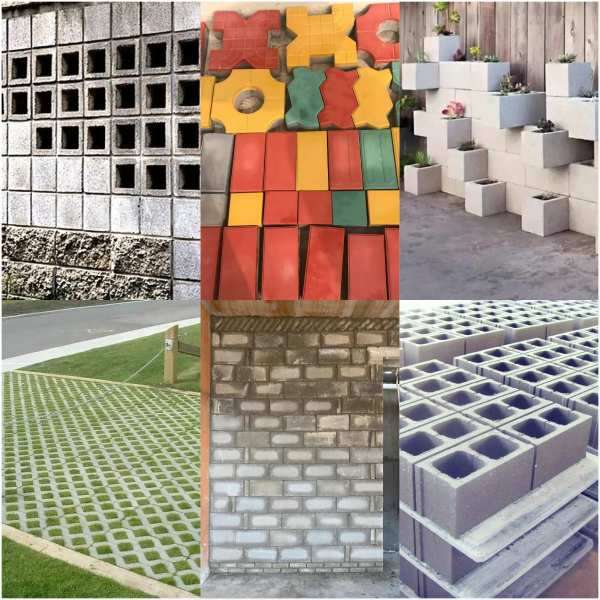
The mold is the key to product diversification. A single machine frame can accommodate a library of different mold boxes.- Construction Molds: Typically produce standard shapes like stretchers, corners, and jamb blocks with functional voids. The focus is on precision and volume.
- Landscaping Molds: These create a wide array of specialty units: retaining wall blocks (with lips or pins), pavers in various patterns (herringbone, cobblestone), garden edging, caps, and pilaster blocks. These molds may include features to create textured surfaces directly during compaction.
- 2.2. Mix Design and Finishing Processes
The core machine makes the blank; finishing often defines the product.- Mix Design for Color and Texture: Landscaping blocks frequently use integral pigments, specialized aggregates (like crushed glass or colored stones), and exposed aggregate techniques. This requires dedicated, separate mix formulations and batching protocols to avoid cross-contamination with standard grey construction mix.
- Secondary Processing (Curing & Finishing): Construction blocks are typically cured and shipped. Landscaping blocks may undergo additional processes:
- Splitting: Fresh-cured blocks are mechanically split to reveal a natural, rough aggregate face.
- Tumbling: Blocks are tumbled in a drum to soften edges and create a weathered, antique appearance.
- Surface Coatings: Application of sealants or color-enhancing treatments.
3. Strategic Business Implications for Production and Supply
Diversifying output presents both opportunities and operational complexities for the supply chain.
- 3.1. Production Scheduling and Inventory Management
Switching between product lines is not instantaneous. A changeover involves:- Swapping the mold box and potentially the pallet type.
- Purging the old mix from the system and cleaning thoroughly to introduce a new colored or textured mix.
- Adjusting machine parameters (vibration time, head pressure) for the new product’s optimal density.
Efficient production requires batching similar products in large runs to minimize changeover downtime and material waste.
- 3.2. Market Positioning and Sales Channels
- Construction Market: Sales are high-volume, project-based, driven by contractor relationships, bid pricing, and compliance documentation.
- Landscaping/Hardscape Market: Sales channels include masonry supply yards, big-box retail, and direct-to-landscaper. Marketing focuses on visual catalogs, sample displays, and demonstration areas. The value is perceived more in aesthetics and design flexibility than in pounds-per-square-inch.
- 3.3. The Competitive Advantage of Diversification
A producer with this dual capability gains resilience. They can supply a home builder with foundation blocks and the same homeowner’s contractor with patio pavers and retaining wall units. It allows for efficient use of capital assets, spreads market risk, and creates opportunities for bundled supply agreements.
Conclusion
A modern block-making machine is a highly adaptable production platform capable of manufacturing units for both the rigorous demands of construction and the aesthetic needs of landscaping. The transition is enabled through strategic investments in interchangeable tooling, specialized mix designs, and, in some cases, secondary finishing equipment. For distributors and producers, mastering this duality is a powerful business strategy. It transforms a single-purpose asset into a multi-market engine, fostering resilience against sector-specific downturns and unlocking new revenue streams. The critical success factor lies in managing the operational complexities of changeovers and understanding the distinct sales, marketing, and logistical pathways required for each product type. By doing so, a business can effectively build from the ground up and decorate from the ground out.
FAQ
Q1: Does producing landscaping blocks require a completely different machine?
A : No, it typically requires the same core machine (vibration table, compaction head, hydraulic system) but with different molds and often different mix handling systems. The base machine provides the pressing force; the tooling defines the product. Some highly specialized finishes (like automated tumbling) require separate, downstream equipment.
Q2: Are landscaping blocks as strong as construction blocks?
A: They do not need to meet the same structural code standards for load-bearing walls in buildings. However, blocks for retaining walls must be engineered for significant lateral earth pressure and have their own strength requirements (e.g., ASTM C1372). Pavers and garden walls have different, less stringent strength focuses. Durability against weathering is often a more critical metric.
Q3: What is the biggest operational challenge in switching between product types?
A: Material contamination and changeover time. Thoroughly cleaning the mixer, conveyors, and hopper when switching from a standard grey mix to a colored or exposed-aggregate mix is essential. Any residual material will spoil the appearance of the new batch. Efficient changeover procedures are vital to maintain profitability.
Q4: As a distributor, how should I inventory these different products?
A : Construction blocks (standard sizes) are often stocked based on predictable regional demand. Landscaping products, with their wider variety of colors and styles, require a more nuanced approach: stock high-volume, popular items (like standard retaining wall blocks in common colors), and use a “made-to-order” or quick-turnaround production model for more niche or custom items to avoid excessive inventory costs.
Q5: Can the same raw materials be used for both types of blocks?
A : The base materials (cement, standard aggregates) are similar. However, landscaping blocks frequently incorporate additives like iron-oxide pigments for integral color, different aggregate blends for texture, and sometimes admixtures to enhance freeze-thaw resistance for exterior exposure. These specialized materials represent an additional cost and inventory component.