Core Capability: The Role of the Mold and Pallet System
The primary determinant of whether a machine can produce hollow blocks lies not in its core compression or vibration mechanism, but in its tooling—specifically, the mold and the pallet.
- 1.1. The Mold Design
A standard solid block mold is a simple cavity. To produce a hollow block, this must be replaced with a specialized hollow block mold. This mold contains cores—typically metal projections attached to the top or bottom of the mold box. These cores create the voids (hollow cells) within the block during the compaction process. The size, shape, and arrangement of these cores define the block’s void percentage, web and face shell thickness, and ultimate structural and thermal properties.- 1.1.1. Interchangeability: Many modern block-making machines are designed with a quick-change mold system. This allows operators to swap between a solid block mold and various hollow block molds (producing different sizes and void patterns) with relative efficiency, maximizing the flexibility and output of a single machine.
- 1.2. The Pallet Requirement
Hollow block production places a greater demand on the pallet (the flat steel plate on which the block is formed). The cores from the mold descend and make contact with the pallet surface to form the bottom of the voids. Therefore, pallets must be:- Perfectly Flat: Any warping or damage will prevent the cores from sealing properly, leading to poorly formed voids and “flash” (excess concrete) on the block bottom.
- Smooth and Clean: A damaged or heavily coated pallet can cause the freshly formed block to stick, leading to destruction during the ejection and stripping process.
2. Machine Specifications and Material Considerations
Beyond the mold, certain machine characteristics and material formulas become more critical when producing hollow units.
- 2.1. Vibration and Compaction Force
Hollow blocks require excellent compaction to ensure the thinner webs and face shells achieve sufficient strength. The machine must deliver high-frequency, high-amplitude vibration combined with substantial compaction pressure from the head. This forces the concrete mixture into every part of the mold, surrounding the cores, to create a dense, homogeneous matrix with sharp corners and clean voids. A machine with insufficient vibration or pressure will produce weak, poorly formed blocks with low structural integrity. - 2.2. Concrete Mix Design
The mix design must be precisely tailored for hollow block production.- Aggregate Size: The maximum aggregate size must be smaller than the thickness of the webs and face shells to prevent bridging and ensure proper compaction around the cores. A typical mix uses a well-graded sand and gravel or crushed stone with a top size of 6mm or less.
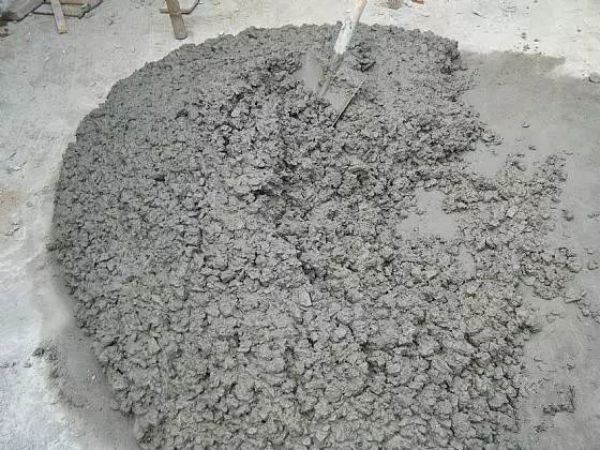
- Workability and Water Content: The mix must be moist but lean. It requires enough water for hydration and workability, but excess water will cause the block to slump or collapse around the cores upon mold stripping. A low water-to-cement ratio is essential for early green strength and dimensional stability.
3. Operational and Commercial Implications for the Supply Chain
Understanding the production shift to hollow blocks has direct business ramifications.
- 3.1. Production Speed and Cycle Time
Producing hollow blocks can sometimes result in a slightly slower cycle time compared to solid blocks. The machine may require a longer vibration period to ensure complete compaction in the more intricate mold. Additionally, the stripping (lifting the mold off the formed block) process must be perfectly vertical and controlled to avoid dragging the cores against the delicate webs of the block, which could cause damage. - 3.2. Quality Control Focus
For procurement specialists and distributors, quality checks for hollow blocks should be stringent. Key inspection points include:- Précision dimensionnelle : Consistent face shell and web thickness.
- Void Integrity: Clean, fully-formed voids without obstructions or misshapen areas.
- Finition de surface : Absence of cracks on the webs or face shells, which are more prone to damage due to their thinner profile.
- Weight and Strength: Ensuring units meet the minimum compressive strength requirements for their classification.
- 3.3. Market Advantage and Product Line Expansion
For a dealer or distributor, a source capable of producing both solid and hollow blocks from the same primary equipment offers significant flexibility. It allows for responding dynamically to project-specific demands (e.g., hollow blocks for load-bearing walls, solid blocks for paving) without requiring separate production lines, thereby optimizing inventory and expanding addressable market share.
Conclusion
Producing high-quality hollow blocks using a concrete block machine is not only possible but is a standard practice in the industry. The conversion hinges on the integration of specialized hollow block molds and the use of robust, well-maintained pallets. Success further depends on the machine’s ability to deliver intense compaction and on the use of an optimally designed concrete mix. For members of the supply chain, partnering with or evaluating a manufacturer who understands these nuances is crucial. It ensures the ability to supply a fundamental building product that meets performance specifications, opening doors to a broader range of construction projects and providing a critical competitive edge in the marketplace.
FAQ
Q1: Can any concrete block machine produce hollow blocks?
A : Most stationary block-making machines can be adapted to produce hollow blocks by installing the appropriate mold. However, the machine must have sufficient vibration energy and compaction force. Very small, manual, or low-pressure machines may not be capable of producing structurally sound hollow blocks with adequate density and strength.
Q2: What is the main operational difference in producing hollow vs. solid blocks?
A : The two key differences are the tooling (the hollow block mold with cores) and the need for even more precise mix design and moisture control. The production cycle itself is similar, but attention to pallet condition and the stripping phase is heightened to prevent damaging the more delicate hollow block structure.
Q3: How does the cost of producing hollow blocks compare to solid blocks?
A : While the raw material cost per unit volume may be slightly lower for hollow blocks (due to the voids), this is often offset by the cost of specialized molds and potentially a slight reduction in production speed. The overall cost-effectiveness comes from the high market demand and the value-added capability of a single production line offering multiple products.
Q4: What should we look for when sourcing hollow blocks from a new producer?
A : Inspect sample blocks for consistent geometry, clean voids, and absence of web cracks. Inquire about their mix design philosophy and quality control tests for compressive strength. Ask about their mold changeover process to gauge production flexibility. Visiting the plant to observe block handling and pallet condition is highly recommended.
Q5: Are there limitations to the types of hollow blocks that can be made on a standard machine?
A : Yes, limitations are defined by the machine’s table size (pallet dimensions) and the maximum mold box size it can accommodate. Very large or specially shaped hollow units (e.g., extreme lintel blocks) may require a machine with a larger format. However, standard stretcher, corner, and jamb blocks in common dimensions (e.g., 8x8x16 inch equivalents) are universally producible.