
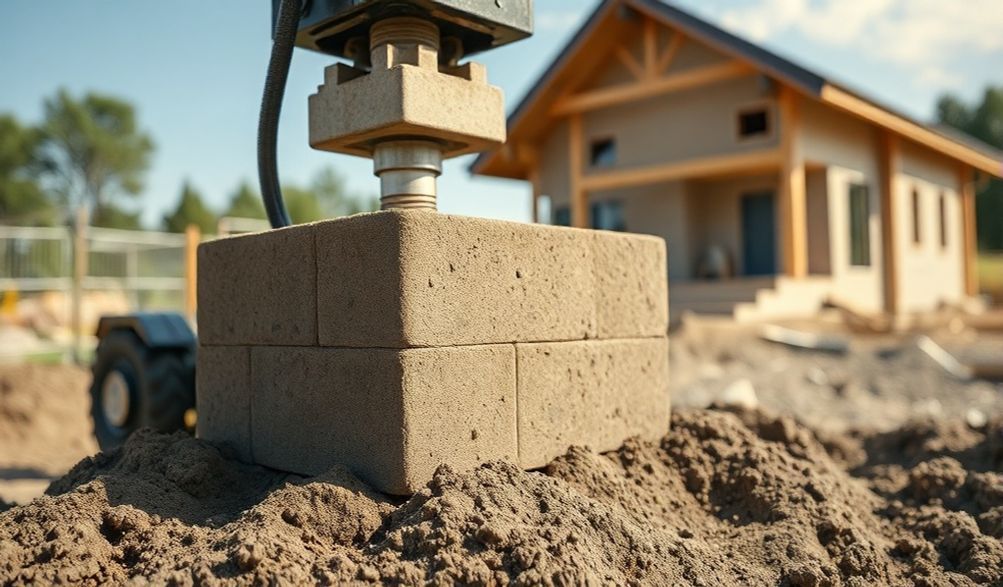
Machine de brique de terre comprimée : Votre guide ultime de la technologie des blocs de terre comprimée
Imaginez construire une maison naturellement fraîche en été, chaude en hiver, ignifuge et principalement bâtie à partir du sol sur lequel vous vous tenez. À une époque de hausse des coûts des matériaux et de conscience environnementale, et si la solution de construction la plus durable était aussi l’une des plus anciennes, désormais renforcée par l’ingénierie moderne ? C’est la promesse du bloc de terre comprimée (CEB), et au cœur de cette révolution de la construction se trouve une seule pièce d’équipement : la presse.Machine CEB.
Une machine à blocs de terre compressée est la technologie clé qui transforme le sol brut en blocs de construction précis et à haute résistance. Elle représente l'évolution des techniques millénaires de construction en terre—comme l'adobe et le pisé—vers un processus cohérent, efficace et évolutif. Ce guide est votre ressource de référence. Nous allons démystifier le fonctionnement des machines à blocs de terre compressée (BTC), détailler leurs avantages profonds, fournir un cadre pratique pour choisir la bonne machine, et explorer comment cette technologie façonne l'avenir d'une construction résiliente et écologique.
En synthétisant les principes d'ingénierie, les expériences pratiques des utilisateurs et les meilleures pratiques de l'industrie, ce guide est conçu pour vous offrir des conseils fiables et concrets pour votre projet de construction.
Qu'est-ce qu'une machine CEB ? Le cœur de la construction moderne en terre.
À la base, une machine CEB automatise et perfectionne la compréhension ancestrale selon laquelle la terre compactée constitue un excellent matériau de construction. C’est l’outil qui fait le pont entre la terre brute et un système mural moderne conforme aux normes.
Principe fondamental : la compression est la clé
Le processus fondamental est d'une simplicité élégante :
* Entrée :Un mélange de sol préparé (contenant généralement de l'argile, du sable et du limon) est humidifié à un niveau optimal. Une petite quantité de stabilisateur, comme du ciment ou de la chaux, peut être ajoutée.
* Processus :Ce mélange est introduit dans une chambre et soumis à une pression mécanique extrême.
* Sortie :La pression comprime les particules du sol, éliminant les vides d'air et créant un bloc dense et cohésif qui est éjecté, prêt pour le durcissement.
Cette compression à haute pression est ce qui différencie les BCC des briques en adobe traditionnelles séchées au soleil. Alors que l’adobe repose sur le séchage, les BCC tirent leur résistance du compactage, ce qui donne :
* Résistance à la compression plus élevée.
* Une plus grande cohérence dimensionnelle.
* Improved resistance to erosion.
Key Components of a Typical CEB Machine
While designs vary, most CEB machines share these essential components:
- Hopper : The funnel where the prepared soil mix is loaded.
- Compression Chamber/Die: This is the mold that defines the block’s shape (e.g., standard rectangular or interlocking).
- Ram System: The powerhouse that applies pressure. This is either:
- Hydraulique : Uses fluid power for high, consistent pressure; common in commercial machines.
- Mécanique : Uses a lever, screw, or manual press; typical for smaller, manual models.
- Système d'éjection : Mechanisms that release the freshly pressed block onto a pallet or rack.
The Output: Understanding Compressed Earth Blocks
The product of this process is a uniform, durable building block.
* Tailles et formes : Common dimensions are similar to conventional masonry (e.g., 10″ x 14″ x 4″). Interlocking shapes are popular as they reduce mortar needs and can enhance wall stability.
* Force : A properly made and cured CEB can achieve compressive strengths ranging from 300 to over 1,000 PSI. For context, a residential concrete block might be around 1,500-2,000 PSI, making CEBs more than capable for one and two-story structures.
Why Choose a CEB Machine? Benefits and Applications
Investing in a CEB machine isn’t just about making bricks; it’s about embracing a different paradigm for construction. The advantages span ecological, economic, and performance categories.
Unmatched Sustainability and Eco-Footprint
CEB construction is a leader in green building:
* Énergie intrinsèque ultra-faible : The primary material (soil) requires minimal processing and is often sourced on-site, slashing the energy used for manufacturing and transportation associated with fired bricks or concrete.
* Local & Natural: It turns a local resource—often considered “waste” on a construction site—into the primary building asset.
* Zero Waste & Non-Toxic: Unused blocks or demolition material can simply return to the earth. The blocks off-gas no volatile organic compounds (VOCs), creating healthier indoor air.
Economic Advantages: From Cost Savings to Enterprise
The financial case is compelling:
* Coûts des matériaux considérablement réduits The main ingredient is virtually free. Stabilizer (if used) is the primary material expense.
* Owner-Builder Empowerment: It enables individuals and communities to directly control the construction of their homes, schools, or community centers, reducing labor costs.
* Fondation d'entreprise A single machine can form the basis of a small business, producing blocks for local markets, social housing projects, or eco-resorts.
Performance and Livability Benefits
The benefits extend far beyond the initial build:
* Masse Thermique: Earth blocks absorb heat during the day and release it slowly at night. This natural thermal regulation can drastically reduce heating and cooling costs, often by 50% or more.
* Fire Resistance & Durability: Compressed earth is inherently non-combustible. Properly stabilized and rendered blocks can last for centuries, as evidenced by ancient earth structures worldwide.
* Acoustic Insulation & Air Quality: The dense mass provides excellent sound dampening. The blocks also naturally regulate humidity, absorbing excess moisture and releasing it when the air is dry.
A Practical Guide to Choosing the Right CEB Machine
Selecting a machine is a critical decision that depends on your project scope, soil, and budget. Here’s a structured approach.
Assessing Your Soil: The First Critical Step
This is the most important step. Not all soil is perfect. The ideal mix is roughly:
* 30-40% Clay:Agit comme le liant.
* 50-70% Sand and Silt: Provides the structural skeleton.
Conduct simple field tests first:
* Jar Test: Place soil in a clear jar with water, shake, and let settle. The layers will show approximate proportions of clay, silt, sand, and gravel.
* Ribbon Test: Moisten soil and try to roll it into a thin ribbon. How long it holds indicates clay content.
For a major project, a professional lab analysis (proctor or sieve test) is a wise investment, providing precise data on composition and optimal moisture content for compression.
Manual vs. Hydraulic vs. Mobile Machines: Matching Type to Need
| Machine Type | Best For | Output (Approx.) | Key Considerations |
| :— | :— | :— | :— |
| Manual/Lever Press | DIY enthusiasts, small garden walls, workshops, very low budget. | 50-150 blocks/day | High physical labor, low output, lowest cost. Great for learning. |
| Hydraulic Stationary | Serious owner-builders, small businesses, community projects. | 200-800 blocks/day | Good balance of output and cost. Requires electric power. More consistent block quality. |
| Mobile/Tractor-PTO | Large-scale projects, commercial production, disaster relief. | 1,000+ blocks/day | Highest output and price. Often diesel-powered or run from a tractor’s power take-off (PTO). Maximizes on-site efficiency. |
Key Specifications and Features to Compare
When evaluating machines, look beyond the price tag:
* Capacité de production : Blocks per hour/day. Be realistic about your timeline.
* Cote de pression : Measured in tons or PSI. Higher pressure generally yields stronger, denser blocks.
* Block Size/Shape Options: Does it offer the block style you want? Can you change dies?
* Source d'alimentation : Electric (needs grid/generator), diesel (mobile), or manual.
* Build Quality & Support: Is it robustly built? Are spare parts and manufacturer support readily available?
Budgeting: Beyond the Machine Purchase Price
Your total project investment includes:
* Machine cost.
* Soil testing and site preparation.
* Stabilizer (cement, lime) if required.
* Foundations, roofing, and finishes (windows, doors, etc.).
* Labor (your time or hired help).
* Curing supplies (tarps, pallets).
Operating Your CEB Machine: From Soil to Wall
Owning the machine is step one. Operating it effectively is key to success.
The Production Process: A Step-by-Step Overview
- Soil Sourcing & Prep: Excavate, screen to remove rocks and organic matter, and allow to dry if too wet.
- Mélange : Combine soil, stabilizer (if used), and water to achieve “optimum moisture content”—damp enough to bind, dry enough to eject cleanly. A rotary mixer or mortar mixer works well.
- Compression : Feed the mix consistently into the hopper. Operate the machine according to its manual, ensuring a steady production rhythm.
- Guérison : This is critical for strength development. Stack blocks on a pallet, cover with plastic sheeting to retain moisture, and leave undisturbed for 14-28 days. Keep them protected from rain and direct sun during this period.
Common Challenges and Troubleshooting
- Blocks Crack While Curing: Usually indicates the mix was too dry. Increase moisture content slightly.
- Blocks Stick in the Die: The mix is too wet, or you need a dry powder release agent (like stone dust) in the mix.
- Inconsistent Block Density/Height: Caused by uneven feeding of soil into the chamber or a worn/damaged die.
Safety First: Essential Operational Protocols
- Always wear PPE: Safety glasses, gloves, and sturdy, closed-toe shoes.
- Follow Lock-Out/Tag-Out: Disconnect power before performing any maintenance or clearing jams.
- Mind Your Back: Use proper lifting techniques when handling soil and blocks.
Building the Future: The Role of CEB Technology
CEB machines are more than niche tools; they are catalysts for positive change.
CEB Machines in Sustainable Development and Disaster Relief
Their ability to use local materials quickly makes them ideal for:
* Building affordable, durable housing in developing regions.
* Rapid reconstruction after natural disasters, reducing dependency on imported, costly materials.
Integration with Modern Building Science
CEB construction is not a step backward. It integrates seamlessly with modern techniques:
* Renforcement : Steel rebar can be incorporated into bond beams and for seismic reinforcement.
* Utilities: Conduits for electrical and plumbing can be chiseled into the blocks or planned within chases.
* Passive Solar Design: When paired with strategic window placement and overhangs, a CEB home’s thermal mass becomes a powerful tool for net-zero energy living.
The Growing Community and Resources
You are not alone. A vibrant global community of natural builders, engineers, and architects is growing. Seek out:
* Workshops and hands-on training courses.
* Online forums and social media groups dedicated to earth building.
* Organizations like the Earth Architecture NetworkouRammed Earth Works.
Foire aux questions (FAQ)
Q: Can I use the soil from my own property?
A : Possibly, but it requires testing. Most soils need some adjustment—adding sand if too clay-rich, or clay if too sandy. The simple jar and ribbon tests described above are your first step to finding out.
Q: Do earth blocks need to be stabilized with cement?
A : Not always. For protected applications (e.g., interior walls, plasters in dry climates), “raw” or unstabilized blocks can suffice. Cement or lime stabilization (typically 5-10% by volume) is recommended for exposed elements in wet or freeze-thaw climates to enhance durability and weather resistance.
Q: How does the cost of a CEB home compare to a conventional one?
A : Material costs for the wall system itself can be 50-80% lower. The total project cost depends heavily on labor (owner-builder vs. hired), design complexity, and finishes (roofing, flooring, cabinetry). The most significant saving is in the primary wall structure.
Q: Are compressed earth block homes safe in earthquakes?
A : Like any masonry construction, they require proper engineering. With a reinforced concrete bond beam, proper wall connections, and potential vertical reinforcement, CEB structures can be designed for seismic resistance. Always consult a structural engineer familiar with alternative building codes in your area.
Q: Where can I get building plans or find a contractor experienced with CEBs?
A : Start by searching for “natural building” associations, sustainable architecture firms, and workshops in your region. Online directories and networks specific to alternative construction are valuable resources for finding plans and professionals.
Conclusion
A CEB machine is more than a piece of equipment; it is a gateway to a more autonomous, sustainable, and cost-effective relationship with the built environment. It empowers you to build durable, beautiful structures in harmony with the local landscape and ecology.
This guide has aimed to provide the expert, evidence-based information you need to make a confident, informed decision. You are now equipped not just with knowledge, but with a connection to a timeless building tradition, brilliantly refined for the modern age.
Your logical next steps are clear: conduct a simple soil test on your site, reach out to machine manufacturers with your project specifics, or connect with a natural building consultant to discuss your vision. The foundation for your project, quite literally, is right beneath your feet.
<