
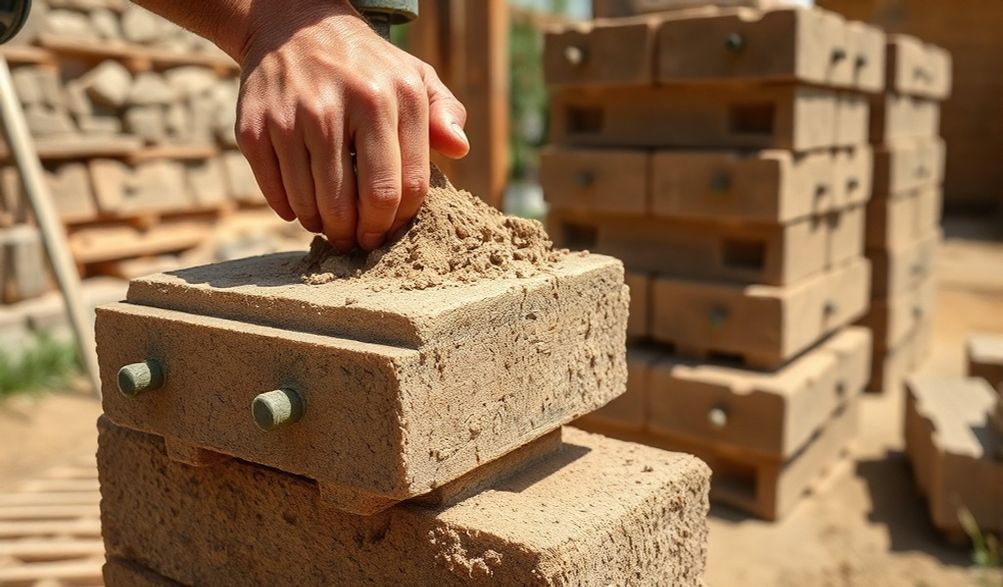
The Ultimate Guide to Earth Block Presses: Building Sustainably from the Ground Up
Imagine building a home, a school, or a community center that is durable, beautiful, and inherently healthy—using the very earth beneath your feet. This isn’t a return to primitive mud huts, but a forward-looking approach to construction that combines ancient wisdom with modern engineering. Yet, for anyone looking to build, the conventional path is often fraught with high costs, significant environmental impact, and material waste from products like fired brick and concrete block.
Entrez leearth block press: the elegant, powerful tool that makes this vision a practical reality. This machine is the cornerstone of modern compressed earth block (CEB) construction, transforming raw soil into precise, high-strength building blocks without the need for firing. It’s a technology empowering DIY builders, sustainable architects, and development NGOs alike to create structures that are both code-compliant and deeply ecological.
This guide serves as your comprehensive, expert resource. We will demystify the earth block press, providing the authoritative information you need to understand how it works, choose the right type for your project, and navigate the entire process from soil to finished wall. You’ll learn about:
- The mechanics behind different types of presses.
- The critical science of soil selection and preparation.
- The step-by-step building process with CEBs.
- The key benefits and honest considerations before you invest.
Let’s dig in and explore how to build sustainably, from the ground up.
What is an Earth Block Press and How Does It Work?
At its heart, an earth block press is a device designed to create building blocks through compaction. It bypasses the energy-intensive kiln-firing process used for traditional bricks, offering a simpler, cleaner, and more localized way to produce construction materials.
The Core Principle: Mechanical Compression
The science is beautifully simple. When suitable soil—a mix of clay, sand, and silt—is subjected to high mechanical pressure, the particles are forced closer together. This compression eliminates air voids, creates friction between particles, and allows the clay to act as a natural binder. The result is a dense, coherent block with substantial compressive strength, achieved purely through force, not heat.
Key Components of a Typical Press
While designs vary, most presses share common components:
- Chambre de saut/moule This is where the prepared soil mix is loaded. It defines the block’s shape and dimensions (typically rectangular interlocking blocks).
- Mécanisme de presse This is the source of the compressive force. It can be a manual lever system, a hydraulic ram, or a mechanical drive.
- Système d'éjection : Once pressed, a mechanism pushes the finished block out of the mold, ready for curing.
- Cadre et structure : A robust steel frame houses all components and withstands the high pressures involved.
From Soil to Building Block: The Basic Process
The transformation follows a logical sequence:
- Préparation du sol : Suitable soil is excavated, broken down, and sieved to remove large rocks and organic matter.
- Mélange : The soil is blended with the correct amount of water (and often a stabilizer like cement) to achieve “optimum moisture content.”
- Chargement : The moist mix is fed into the press’s hopper.
- Pressage : The mechanism is activated, applying high pressure (often 500+ PSI) to form the block.
- Éjection et durcissement : The new block is ejected onto a pallet. Blocks are then protected and kept slightly damp for a period of days to weeks to gain strength—a process called curing.
Types of Earth Block Presses: Choosing the Right Machine
Selecting the right press is a crucial decision, balancing project scale, budget, labor, and desired output. They generally fall into two broad categories.
Manual Earth Block Presses
These are human-powered machines, perfect for hands-on building and contexts with limited infrastructure.
- The Experience: Operating a manual press is physical. You load the mix and use a lever to mechanically compress the block. It’s a rhythmic, labor-intensive process that directly connects the builder to the material.
- Cas d'utilisation idéaux : Small-scale projects (homes, garden walls, sheds), remote locations without reliable power, community-led builds, and those with very tight equipment budgets.
- Exemples : The iconic Cinva Ram style press, developed in the 1950s, is the archetype. Many similar lever-operated models exist worldwide.
Hydraulic & Motorized Earth Block Presses
These presses use hydraulic rams powered by electric motors, diesel engines, or tractor PTOs (Power Take-Offs) to generate compression.
- Expertise & Efficiency: They offer significantly higher production rates (hundreds of blocks per hour) and more consistent block quality due to uniform, high pressure. Labor is shifted from raw compression to machine operation and material handling.
- Power & Complexity: They require a power source and are a larger capital investment. They range from mobile units suitable for on-site production to large stationary industrial machines.
- Exemples :Marques commeAECT Earth Block presses or Vela presses represent this category, often used for commercial and large residential projects.
Comparing Cost, Output, and Complexity
| Feature | Manual Press | Hydraulic/Motorized Press |
| :— | :— | :— |
| Price Range | $500 – $3,000+ | $5,000 – $50,000+ |
| Blocks Per Hour | 40 – 150 | 200 – 800+ |
| Power Needed | Human labor | Electric, Diesel, or PTO |
| Niveau de compétence | Moderate (physical technique) | Higher (machine operation & maintenance) |
| Meilleur pour | DIY, remote projects, low volume | Professional builders, large projects, businesses |
The Foundation: Soil Selection and Preparation for CEBs
The press is just the tool; the soil is the raw material. Success begins here. Not all dirt is building dirt.
The Ideal Soil Mix: Clay, Silt, Sand, and Aggregate
You need a balanced blend. Think of it as a recipe:
- Argile : The binder. It holds the block together after compression. Too little, and the block crumbles; too much, and it will shrink and crack.
- Silt & Sand: The skeleton. They provide stability, reduce shrinkage, and add compressive strength.
- Agrégat : Small gravel or crushed rock can add further stability and reduce clay content.
A good starting mix is roughly 30% clay, 70% sand/silt/aggregate. Simple field tests are essential:
* Jar Test: Fill a clear jar with 1/3 soil and 2/3 water, shake, and let settle. The layers will reveal approximate proportions of sand, silt, and clay.
* Ribbon Test: Moisten soil and try to roll it into a thin ribbon. If it forms a long, flexible ribbon, clay content is high. If it crumbles quickly, sand/silt is high.
Stabilization: When and Why to Use It
Stabilization involves adding a small percentage (typically 5-10%) of cement or lime to the soil mix.
* Purpose: It chemically binds the soil particles, increasing:
* Compressive and tensile strength.
* Durability and resistance to erosion from water.
* Consistency in variable soil conditions.
* When it’s crucial: In areas with high rainfall, freeze-thaw cycles, or for structural elements requiring higher strength. For protected, arid climates, unstabilized blocks can be sufficient.
Moisture Content: The Critical Factor
This is the most finicky but vital step. The soil must be at “optimum moisture content”—damp enough for particles to slide and compact densely, but not so wet that the block deforms. A simple test: squeeze a handful of mix. It should hold its shape firmly and show slight moisture on your fingers without dripping.
The Building Process with Compressed Earth Blocks
With your press chosen and your soil mix perfected, the building journey begins.
Block Production and Curing
Consistency is key during production. Once pressed, blocks must be cured properly.
* Stack them in a protected, shaded area.
* Cover them with plastic sheeting or burlap to prevent rapid moisture loss.
* Keep them slightly damp (by misting) for 7-14 days. This allows stabilizers like cement to hydrate and gain strength fully. Properly cured blocks will continue to harden over time.
Laying CEBs: Mortar and Methods
CEBs can be laid similarly to conventional masonry.
* Mortar: A soil-cement slurry (similar to your block mix but wetter) is commonly used, creating a monolithic wall with similar thermal and mechanical properties. Traditional cement mortar is also an option.
* Foundations & Caps: A solid, raised concrete (or stabilized earth) foundation is non-negotiable to protect blocks from ground moisture. A poured concrete bond beam at the top of the wall ties everything together and provides a level surface for the roof. Wide roof overhangs (18-24 inches minimum) are your wall’s primary defense against rain.
Finishing and Protecting Your Earth Block Walls
The beauty of earth building is in the finish.
* Plasters: Natural earth or lime-based plasters are the perfect complement. They are vapor-permeable, allowing walls to “breathe,” and can be beautifully sculptural.
* The Golden Rule: Keep water off the walls. This means good site drainage, effective gutters and downspouts, and those critical roof overhangs. A well-detailed earth building can last for centuries.
Key Benefits of Using an Earth Block Press
Why go through this process? The advantages are profound and multi-layered.
Exceptional Sustainability and Low Embodied Energy
- Local Material: Sourced on or near-site, eliminating transport emissions.
- Minimal Processing: No high-temperature firing, drastically reducing energy use.
- Non-Toxic & Recyclable: Blocks are made of natural earth. At end-of-life, they can simply return to the earth or be crushed and reused.
Cost-Effectiveness and Material Accessibility
- Low Material Cost: The primary material—soil—is often free or very low cost.
- Reduced Transportation: On-site production cuts out middlemen and freight costs for bricks or blocks.
Thermal Mass and Energy Efficiency
CEB walls have high thermal mass. They absorb heat during the day and release it slowly at night, naturally regulating indoor temperatures. This can drastically reduce the need for mechanical heating and cooling, lowering energy bills and increasing comfort.
Durability and Fire Resistance
- Historical Proof: Structures like the Alhambra in Spain stand as testament to the longevity of well-built earth construction.
- Inherent Safety: Earth does not burn. CEB walls have an excellent fire-resistance rating, providing inherent safety.
Important Considerations Before You Invest
A realistic understanding of the challenges is as important as knowing the benefits.
Local Building Codes and Regulations
This is your first step. Building codes are slowly adapting to include CEBs, but you must check with your local permitting authority.
* Reference Standards: Point to established standards like ASTM E2392 / E2392M (Standard Guide for Design of Earthen Wall Building Systems) to demonstrate the engineering basis for CEB construction.
* Professional Help: You may need an engineer or architect experienced with earth building to approve plans.
Climate and Site Suitability
- Humid/Rainy Climates: Require meticulous detailing, higher stabilization (cement), and excellent roof and drainage systems.
- Arid Climates: Are ideally suited for earth building, with unstabilized or lightly stabilized blocks often performing excellently.
Skill Development and Labor Investment
There is a learning curve. Operating the press efficiently, mastering soil mix, and learning specialized laying and plastering techniques take time. Consider attending a hands-on workshop from organizations like the Earthbuilders’ GuildouCob Cottage Company before committing to a large project.
Total Project Cost Analysis
Avoid the “free dirt” fallacy. Your budget must include:
* Cost of the press (or rental).
* Soil testing and amendment (sand, stabilizer).
* Foundations, roof, windows, and doors.
* Labor (your time or hired help).
* Finishes (plaster, paints).
Frequently Asked Questions (FAQ)
Q: How strong are compressed earth blocks?
A : With proper soil and stabilization (5-10% cement), CEBs typically achieve a compressive strength between 2.8 MPa (400 PSI) and 10 MPa (1450 PSI). This meets or exceeds the strength of many conventional fired clay bricks and is more than sufficient for load-bearing walls in low-rise construction.
Q: Are earth block homes safe in earthquakes?
A : Earth buildings can be seismically resilient, but they must be engineered and reinforced. This involves incorporating reinforced concrete or wooden bond beams, vertical reinforcement in corners and openings, and ensuring good connections between walls, beams, and the foundation. Always consult a structural engineer in seismic zones.
Q: How long do earth block presses last?
A : A well-made steel press, properly maintained, is a lifetime investment. Manual presses like the Cinva Ram from the 1950s are still in use today. Hydraulic presses also have long lifespans, with wear parts (like seals) being replaceable.
Q: Can I use soil from my own property?
A : Possibly, and it’s the ideal scenario. However, you must test it first using the jar and ribbon tests described earlier. You may need to amend your native soil with sand or clay to achieve the perfect blend.
Q: Where can I buy an earth block press?
A : Reputable manufacturers include Vela (global), Verma Industries (India), and Earth Blox (USA). For manual presses, search for “Cinva Ram for sale” or check with appropriate technology organizations like DTF Machines. A local search for “[Your Region] earth block press supplier” is always a good start.
Conclusion
The earth block press is more than just a piece of equipment; it is a key that unlocks a more sustainable, affordable, and deeply satisfying path to creating shelter. It empowers you to build with a material that is local, healthy, and full of character, resulting in structures that are energy-efficient, durable, and fire-resistant.
The journey requires research, preparation, and a willingness to learn. We encourage you to start by testing your soil, speaking with local builders who have experience with CEBs, and thoroughly investigating your local building codes. Attend a workshop, connect with sustainable building networks online, and request quotes from press manufacturers to understand your options.
With the right knowledge and this powerful tool, the dream of building a beautiful, healthy home from the earth is not just a romantic idea—it’s an achievable, practical, and profoundly rewarding reality.
<